
10 Things Your Customers Should Know About Battery Stains

Battery stains on concrete are more than cosmetic. They are toxic, corrosive, and — if left untreated — will eat through an entire 6-inch slab. Most homeowners have no idea. That gap between what they see (an ugly orange spot) and what's actually happening (active sulfuric acid destroying their concrete) is where you earn the job.
The following ten points come from Craig Harrison, founder of F9. Use them when quoting battery stain removal — they turn a "maybe later" into a signed work order.
10 Facts About Battery Acid Stains
- They are hazardous, toxic, corrosive, and carcinogenic. Battery stains are not inert residue. The acid remains active in the concrete.
- Battery acid is 31–50% sulfuric acid. That concentration causes chemical burns on contact — skin, eyes, respiratory tissue.
- Walking through a stain can burn bare feet. Children and pets in the area are at real risk. Point this out during the site visit.
- The acid tracks indoors. Shoes carry it onto tile, carpet, and hardwood. If your customer has been walking through the stain, recommend they have interior flooring cleaned too — that's a referral or upsell.
- Water reactivates the stain. Rain, hose runoff, or pressure washing without neutralization spreads active acid across the slab and into drainage.
- Dry white stains become airborne. When dried battery residue flakes into dust, inhaling it causes lung damage. Respiratory protection is mandatory during removal.
- Untreated stains grow. The acid migrates deeper and outward through the slab. An active battery stain can compromise a full 6-inch pour, leading to premature deterioration and an expensive tear-out-and-replace.
- Orange runoff reaches storm drains. Once the acid enters the storm system, it becomes an EPA issue — not just a cleaning issue.
- Fines reach $37,500 per day. Homeowners can be cited for allowing hazardous material to enter the storm drain. That number gets attention in a quote.
- Removal costs less than any of the alternatives. Slab replacement, environmental fines, health liability — your service is the cheapest option on the table.
The Right Product for the Job
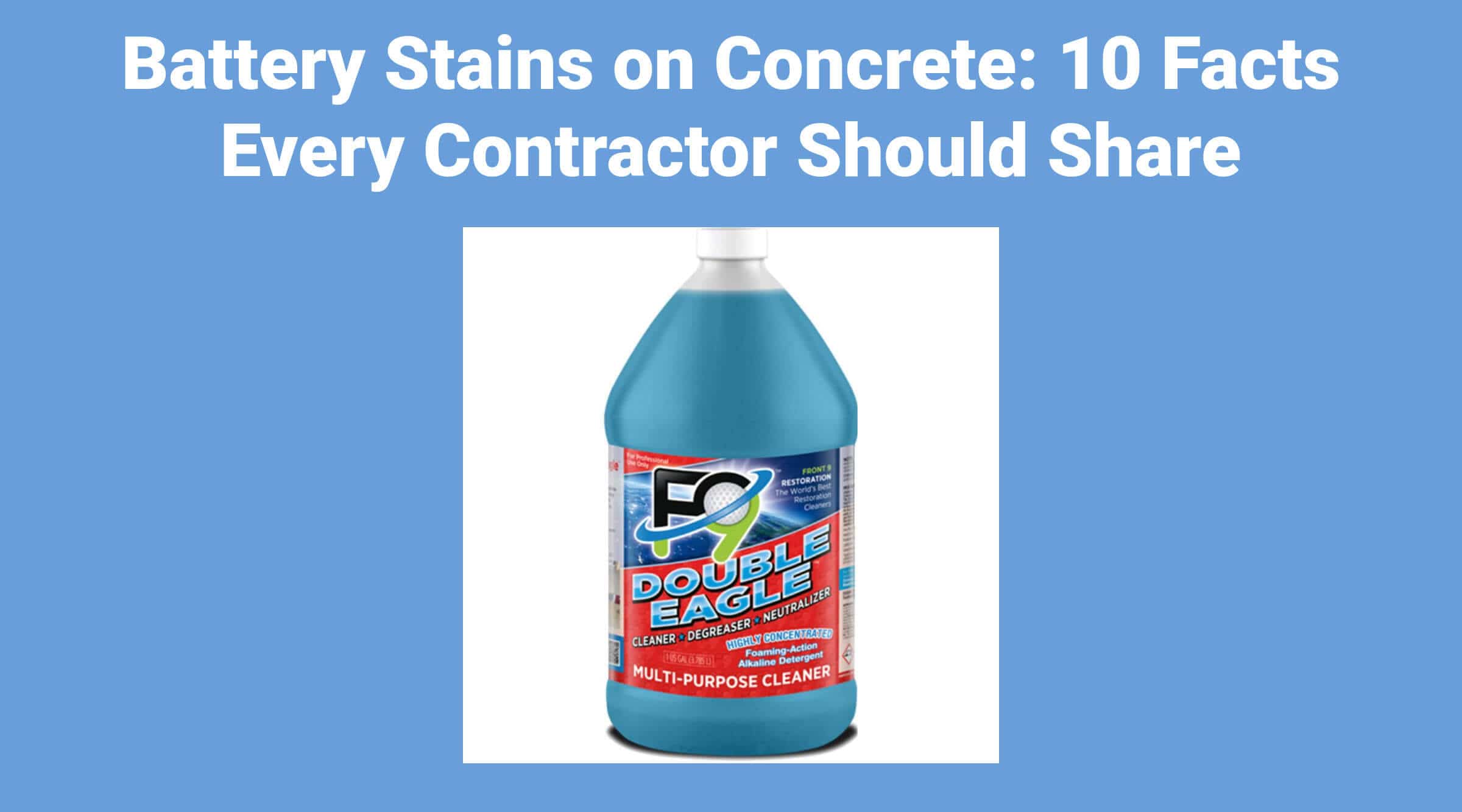
Battery acid stains must be neutralized immediately into a non-hazardous state. F9 Double Eagle Degreaser converts sulfuric acid into sodium sulfate without etching, scarring, or removing the cream from the concrete surface. For large-scale work or fleet accounts, the F9 Double Eagle 55-gallon kit drops your per-job chemical cost significantly.
Pair F9 Double Eagle with F9 GroundsKeeper when the slab has additional oil or organic staining alongside the battery damage — common in commercial parking structures and fleet yards.
Operational Notes
- PPE is non-negotiable. Chemical-resistant nitrile gloves, splash-proof eye protection, and a respirator rated for acid mist. Dry white stains demand respiratory protection before you even wet the surface.
- Containment before cleaning. Prevent runoff from reaching storm drains — the same EPA exposure you're warning the customer about applies to you during the job.
- Document the stain before treatment. Photos of active battery damage support your pricing and protect you if the customer later claims the concrete was in better condition than it was.
For a deeper look at the full F9 chemical line — BARC for rust, GroundsKeeper for general concrete, and Efflo for calcium — see the F9 hardscape cleaning collection.
Products Mentioned
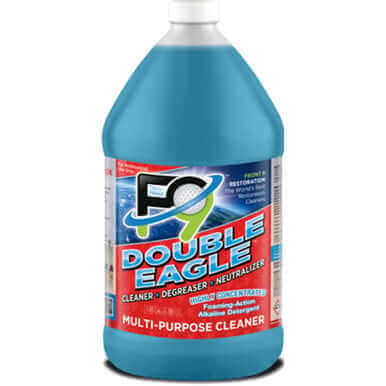 F9 Double Eagle Degreaser Gal SKU: 320-618 | 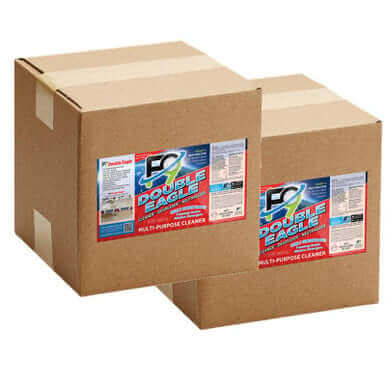 F9 Double Eagle Degreaser 55 Gal Kit SKU: 320-6182 | 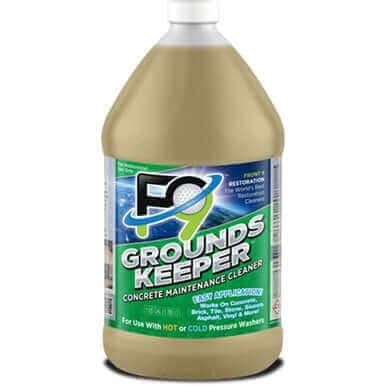 F9 GroundsKeeper Concrete Cleaner Gal SKU: 320-619 |