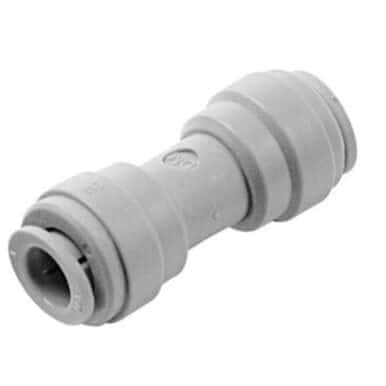
Chemical Compatibility for Acetal Pushfit connectors

The acetal pushfit connectors on a water-fed or RODI system are tougher than they look, but they fail in one predictable way that catches techs off guard. Acetal resists inorganic chemicals, oils, fats, and synthetic detergents well — which covers most of what runs through a pure-water setup. The exception is strong acids, and that exception is where systems crack.
What acetal handles
For routine pure-water work, acetal pushfit connectors are a non-issue: deionized water, the mild surfactants in most soft-wash and glass mixes, and standard detergents all pass through without degrading the fitting. That broad tolerance is why push-fit is the default on water-fed support equipment.
The one class to keep out
Strongly acidic chemicals are the failure mode. Run an aggressive hard-water-stain acid or a concentrated descaler through an acetal fitting and you do not get a leak today — you get embrittlement that splits the collet weeks later, usually mid-job. If a chemical is acidic enough to etch glass, route it around the fittings, not through them.
Build for it
Match the fitting to the line and the chemical path. A union push fitting and an inline pushfit ball valve keep pure-water plumbing serviceable, and a locking clip stops a pressurized line from creeping out of the collet. Before sending any new chemical through the system, check it against a chemical compatibility chart for acetal first — a two-minute check beats a field failure.
Products Mentioned
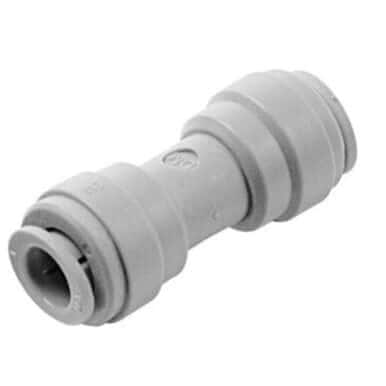 Union Push Fitting Plastic 5/16 OD Hose SKU: 150-1687 | 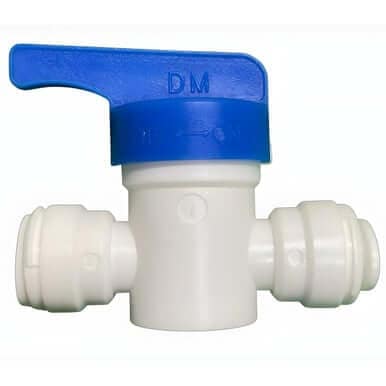 Ball Valve 5/16in (8MM) Union Pushfit SKU: 150-1107 | 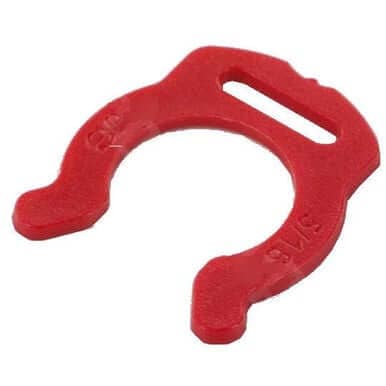 Locking Clip 5/16in Pushfit (8mm) SKU: 150-1110 |