
Choosing the Right Ladder for Window Cleaning: The 2026 Buyer’s Guide

Table of Contents
- Why Professional Ladders are Non-Negotiable in 2026
- Evaluating Ladder Types: Extension, Step, and Multi-Position
- Safety Standards and OSHA Compliance for Window Cleaners
- Specialized Access Challenges: Stairs, Slopes, and Foyers
- The J Racenstein Professional Ladder Selection
- Equip Your Crew for Peak Performance in 2026
- FAQs
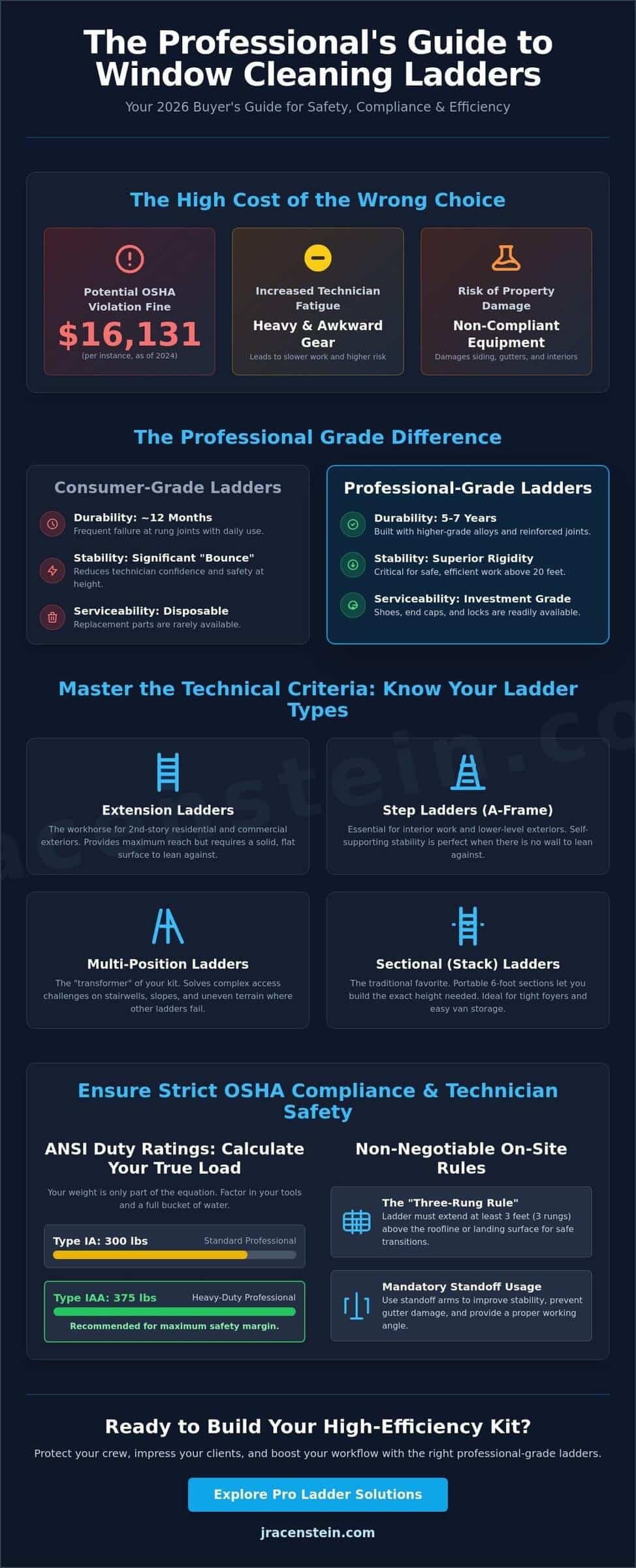
A single OSHA violation for improper ladder use can cost a professional window cleaning business up to $16,131 per instance as of 2024. Despite this, many technicians continue to struggle with heavy, non-compliant equipment that causes unnecessary fatigue and increases the risk of property damage. You understand that your gear is an investment in your safety and your speed. Choosing the right ladder for window cleaning requires more than just picking a height; it involves evaluating weight ratings, terrain leveling capabilities, and long-term durability for high-volume daily use.
This 2026 buyer's guide provides the technical criteria you need to select professional-grade ladders that ensure maximum job-site efficiency. We'll help you identify versatile 'one-ladder' solutions for residential projects and explain which accessories are mandatory for professional compliance. By the end of this resource, you'll know how to protect your crew and your business from costly fines while maintaining a fast, professional workflow. For more technical deep dives, you can also explore our archive of expert safety advice and equipment reviews on the J. Racenstein blog.
Why Professional Ladders are Non-Negotiable in 2026
In 2026, the professional window cleaning industry relies on a strategic mix of high-reach technology and traditional access. While pure water systems have seen a 15% adoption increase over the last three years, choosing the right ladder for window cleaning remains essential for tasks requiring physical agitation and close-range inspection. Squeegee work remains the gold standard for interior glass and ground-floor commercial storefronts where water management is a priority. You can't effectively scrub away 10 years of oxidation or heavy construction debris from a distance of 30 feet without the leverage provided by a solid climbing platform.
To better understand the mechanics of professional-grade access, watch this technical overview of sectional ladders:
Professional equipment builds client trust immediately. A technician arriving with a dirty, retail-grade ladder looks like a DIY enthusiast, not a specialized contractor. High-grade tools also mitigate the financial risk of workplace injuries. Investing in a professional sectional ladder pays off through long-term durability. Consumer ladders often fail at the rung joints after 12 months of daily use. Professional models, built with higher-grade alloys and reinforced connection points, typically last 5 to 7 years in a high-volume service environment.
Ladders vs. Water-Fed Poles: Finding the Balance
Water-fed poles cannot replace physical access for interior jobs or windows with deep-set frames that trap dirt. Professionals often use ladders to reach awkward rooflines where a pole's angle of incidence makes cleaning impossible. Choosing the right ladder for window cleaning allows you to transition between exterior pole work and detailed hand-finishing on stubborn spots. See our Guide to Water Fed Pole Systems for hybrid workflows.
The Professional Grade Difference
Trade-specific ladders offer superior rigidity and significantly reduced "bounce." This stability is critical for technician confidence at heights over 20 feet. Professional manufacturers provide detailed specifications on alloy strength and rung-to-rail connections that exceed standard retail requirements. Understanding the different types of ladders, such as sectional or multi-position, helps you select the right tool for specific architectural challenges. Replacement parts like shoes, end caps, and rung locks are readily available for pro models, ensuring your equipment stays in service for years rather than ending up in a landfill after a single component wears out.
Evaluating Ladder Types: Extension, Step, and Multi-Position
Choosing the right ladder for window cleaning requires a tactical approach to the architecture you're servicing. You can't rely on a single tool for every pane. Extension ladders serve as the primary workhorse for second-story residential work and commercial exteriors. These typically range from 16 to 40 feet. They provide the necessary reach for gutters and high-access glass but require a clear path for setup. For interior work and lower-level exterior panes, step ladders, or A-frames, provide the self-supporting stability needed when there's no wall to lean against.
Multi-position ladders act as the transformer of your kit. They're essential for the 15% of jobs that involve stairwells or variable height needs where traditional legs won't sit level. Sectional ladders, often called stack ladders, remain the traditional window cleaner's favorite. These 6-foot sections allow you to build the ladder to the specific height of the window. They're highly portable and fit inside a standard work van, making them the go-to for narrow foyers and tight interior spaces.
ANSI Duty Ratings: Type IA vs. Type IAA
Professional window cleaners must look beyond the height of the ladder and focus on the duty rating. A Type IA ladder is rated for a 300-pound capacity. A Type IAA ladder increases that limit to 375 pounds. While you might weigh 200 pounds, you aren't just carrying yourself. You're carrying a 5-gallon bucket, several gallons of water, heavy-duty squeegees, and potentially a specialized tool belt. Compliance with OSHA ladder safety standards is mandatory for any professional operation. Using anything below a Type IA rating is a liability risk that professional insurers don't overlook. The extra 75 pounds of capacity in a Type IAA model provides a necessary safety margin during high-torque movements.
Material Science: Aluminum vs. Fiberglass
The choice between aluminum and fiberglass dictates both safety and the physical toll on your crew. Fiberglass ladders are non-conductive, making them the only safe choice when working near power lines or electrical service drops. They're also incredibly durable and won't dent like metal. However, fiberglass is heavy. A 24-foot fiberglass extension ladder can weigh 15% to 25% more than its aluminum counterpart.
Aluminum ladders offer lightweight advantages that solo operators appreciate. They're easier to throw on a roof rack and resist UV degradation better than fiberglass, which can "bloom" and become itchy to the touch after years of sun exposure. When you're lifting a ladder 40 times a day, that weight-to-height ratio matters for long-term joint health. You can find both options in our professional ladder inventory to suit your specific route needs.
Safety Standards and OSHA Compliance for Window Cleaners
OSHA 1910.23 and 1926.1053 serve as the primary regulatory frameworks for professional ladder use. When choosing the right ladder for window cleaning, safety compliance isn't just a recommendation; it's a legal requirement that protects your business from liability and your technicians from injury. According to ladder fall statistics, falls from ladders account for more than 100 fatalities and 30,000 nonfatal injuries annually in the United States. These figures underscore the necessity of using professional-grade equipment designed for the rigors of exterior maintenance.
The "Three-Rung" rule is a critical safety standard for roof access. If a technician needs to step off the ladder onto a roofline, the side rails must extend at least 36 inches above the landing point. This extension provides the handhold necessary to maintain three points of contact during the transition. For heights where a ladder no longer provides adequate stability, or when working on ledges without a parapet, you must integrate active systems. Explore our full range of Fall Protection and Safety Equipment to find harnesses and tie-off solutions that meet OSHA Subpart D requirements.
Standoffs and Stabilizers
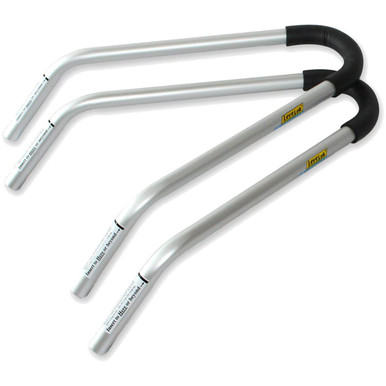
Professional standoffs are essential for protecting both the technician and the property. Unlike DIY solutions, professional stabilizers offer a width of 36 to 48 inches, which significantly increases the ladder's footprint and prevents lateral tipping. Depth is equally important; a 12-inch to 24-inch standoff provides the clearance needed to work over deep gutters or architectural cornices without resting the ladder weight on fragile aluminum or vinyl. To prevent substrate damage, high-quality standoffs utilize non-marring silicone or rubber pads. These pads grip the siding or glass firmly without leaving scuffs or cracking the material, which is a common issue with cheaper, hard-plastic alternatives.
ProTool Ladder StandOff
$199.65
Ladder StandOff – Boost Ladder Stability and Safety for Any Project The Ladder StandOff is the perfect solution to increase ladder stability and ensure safety… read more
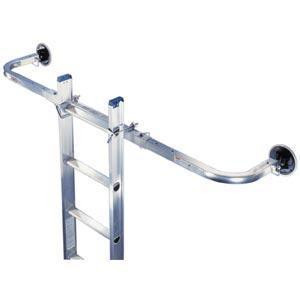
Ladder Stand Out - Stabilizer with Silicone Elbows - Pair
$68.20
Ladder Stand Out w/silicone elbows(pair) Attached to extension ladders with open rungs having an inside diameter of 15/16” or greater. Now with Creased Ends that… read more
Leg Levelers and Terrain Adaptability
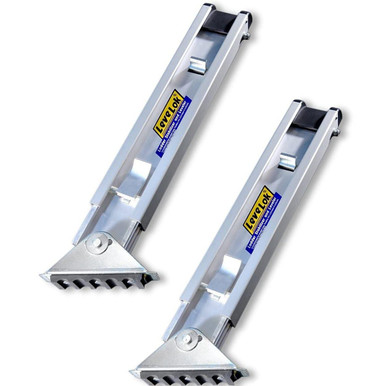
Uneven terrain is the most common cause of ladder instability in residential window cleaning. Professional crews understand that choosing the right ladder for window cleaning involves more than just reaching the glass; it involves securing the base. Levelok systems are the industry standard for a reason, offering up to 10 inches of vertical adjustment to compensate for slopes or steps. While factory-installed levelers are convenient, they often lack the heavy-duty load ratings and stroke length of aftermarket Levelok kits. Using these systems ensures the ladder remains plumb, preventing the side-loading forces that cause catastrophic failures. The OSHA 4-to-1 ratio dictates that for every four feet of ladder height, the base should be placed one foot away from the vertical support surface.
Ladder Levelers LeveLok
$210.40
Ladder Levelers LeveLokMounts easily to all ladders with three bolts, replaces existing feet with heavy duty swiveling steel feet with rubber pads, extends simply by… read more
Specialized Access Challenges: Stairs, Slopes, and Foyers
Professional window cleaning often moves beyond simple vertical access. You will encounter uneven terrain, high interior voids, and cramped hallways. Choosing the right ladder for window cleaning in these environments requires specialized equipment designed for stability on non-level surfaces. Multi-position ladders offer the flexibility to adjust each side independently, making them essential for interior residential work where standard A-frames fail. These tools allow you to maintain a level work platform even when the ground is not.
For wide spans over obstacles like bushes, desks, or machinery, ladder jacks and aluminum planks create a stable work platform. Suspending an 8-foot or 12-foot plank between two ladders allows you to cover a large glass surface without descending to move your equipment. This setup can increase your on-site efficiency by 25% compared to moving a single ladder repeatedly. Navigation in crowded NYC-style environments requires a narrow footprint. Choosing a ladder with a compact base ensures you can set up in tight foyers or between furniture without risking property damage.
The Art of the Stack Ladder
Sectional ladders, commonly called stack ladders, remain the industry standard for interior foyer work. These systems allow you to assemble the ladder piece by piece within the confined area itself. You start with a base section and add 6-foot center pieces until you reach the window height. Use a V-groove top section for corners or circular window frames; use an open top for standard flat headers. Safety relies on the friction-fit system. You must inspect every connection to ensure sections are fully seated before climbing. Their narrow profile is unmatched for navigating tight spaces where a traditional extension ladder cannot maneuver.
Stairwell Strategies
Residential staircases present a high fall risk without the correct configuration. Multi-position ladders solve this by allowing an offset A-frame setup. One side rests on a higher tread while the other sits on the landing or a lower step. For exterior landscape stairs or hillsides, integrated leg levelers are mandatory. These levelers provide up to 10 inches of vertical adjustment to compensate for the slope. Always use non-marring rubber feet on interior jobs. These feet protect delicate marble or hardwood floors from scratches while providing the necessary grip to prevent kick-outs on polished surfaces.
Equip your crew for any architectural challenge. Shop our full selection of professional ladders and access solutions today.
The J Racenstein Professional Ladder Selection
J Racenstein provides the heavy-duty equipment needed for professionals who prioritize safety and efficiency. Successfully choosing the right ladder for window cleaning requires a strategic approach to your inventory. We focus on brands that offer durability and specialized features for the exterior maintenance industry. Whether you're a solo operator or managing a large fleet, your equipment choices directly impact your bottom line and your crew's safety.
Long-Term Maintenance and Storage
Safety doesn't end at the purchase. Perform a rigorous inspection every 30 days to identify wear before it becomes a hazard. Check rungs for structural integrity, examine rails for cracks, and test locking mechanisms for smooth operation. If a ladder feels loose or shows visible stress marks, pull it from service immediately for repair or replacement.
Fiberglass ladders exposed to the sun are prone to fiber bloom. This process occurs when UV rays break down the resin, exposing glass fibers that cause painful itching and weaken the ladder's structural integrity. Applying a UV-protective wax or coating annually prevents this degradation. Browse our Window Cleaning Supplies for replacement feet and accessories to keep your equipment in top condition through 2026. Proper storage is also vital; keep ladders in a dry, shaded area when not in use to extend their lifespan by several years.
Choosing the right ladder for window cleaning is an investment in your company's reputation. By selecting professional-grade tools and following a strict maintenance schedule, you ensure your team stays productive and safe on every job site.
Equip Your Crew for Peak Performance in 2026
Maintaining safety and efficiency on the job site starts with meeting OSHA 1910.23 standards for walking-working surfaces. As specialized access challenges like high-foyer glass and uneven terrain become more common in modern architecture, choosing the right ladder for window cleaning is a critical business decision. You need equipment that offers maximum rigidity and versatility for every slope or staircase you encounter. It's about more than just height; it's about stability and long-term performance.
J Racenstein provides the expert technical support trade professionals rely on to make informed equipment choices. We stock a comprehensive inventory of professional-grade access tools and offer fast shipping to keep your operations running without delay. Our team understands the specific requirements of the exterior cleaning trade, from residential window work to complex commercial maintenance. Explore our extensive resources and product guides to find the exact fit for your next project.
Shop the Full Selection of Professional Window Cleaning Ladders at J Racenstein
Your business deserves the best tools available. Let's get you ready for a safe and highly productive year ahead.