Creating a High-Rise Window Cleaning Safety Plan
A high-rise window cleaning safety plan is the document that keeps your crew alive and your business insurable. Not a binder that collects dust — a working system that dictates how your team rigs, inspects, communicates, and responds when something goes wrong. If you're running rope access or suspended scaffold operations without one, you're gambling with lives and your license.
This isn't a generic overview. Below is how to build a plan that satisfies OSHA, your insurance carrier, and — most importantly — the people hanging off your ropes.
Why a Written Safety Plan Isn't Optional
OSHA's general duty clause (Section 5(a)(1)) requires employers to provide a workplace free of recognized hazards. For rope access and suspended platform work, that means OSHA 1926 Subpart E (Personal Protective and Life Saving Equipment) and 1910.27 (scaffolding) apply directly. Many states layer additional requirements on top — New York City's Local Law 202, for example, mandates specific rope descent system inspections and operator qualifications.
Beyond compliance, the plan is your liability shield. When an incident happens — and statistically, it will — the first thing an OSHA inspector or plaintiff's attorney requests is your written safety program. A solid plan with documented training records, inspection logs, and incident reports is the difference between a citation and a shutdown.
The practical upside matters too. Crews that work from a clear, rehearsed plan move faster because they aren't improvising rigging decisions at 30 stories. That translates directly to productivity.
Equipment Inspection Protocol
Equipment failure at height is unforgiving. Your plan needs a three-tier inspection system:
- Pre-use inspection (daily). Every rope, harness, descender, and connector gets a hands-on check before it leaves the truck. The operator who will use it inspects it. No exceptions, no delegating to the newest guy.
- Periodic inspection (monthly or per manufacturer spec). A designated competent person — not just any employee — inspects all fall protection equipment against manufacturer criteria. Document serial numbers, condition notes, and pass/fail.
- Annual or retirement inspection. Ropes, lanyards, and connectors have service-life limits set by manufacturers. Track hours of use and UV exposure. Teufelberger KMIII rope, for instance, has a maximum service life of 10 years from manufacture or 5 years from first use — whichever comes first. Your plan should log both dates for every rope in your inventory.
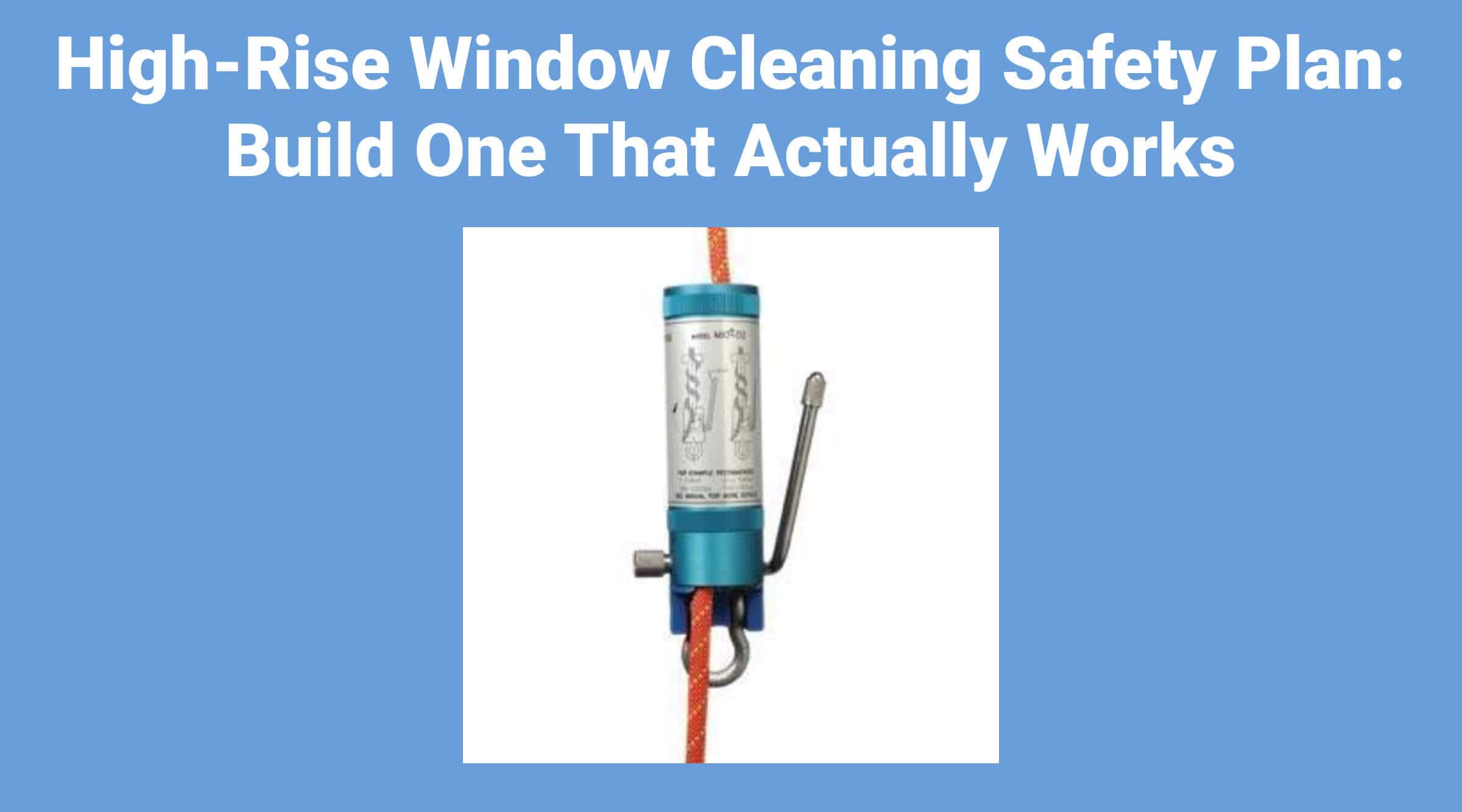
Build your checklist around what you actually deploy. If your crews run Petzl ID descenders, the checklist references Petzl's inspection points specifically — cam wear, spring tension, side-plate pivot. If you're on MIO rack-type descenders, the checklist covers brake bar wear, frame distortion, and rack alignment. Generic checklists miss brand-specific failure modes.
Rigging and Anchor Assessment
This is where most plans fall short. Equipment inspection is the easy part. Rigging assessment requires judgment — and your plan needs to codify that judgment so it's repeatable across crews.
For every job site, the plan should require a documented anchor survey before any rigging occurs. The survey answers three questions:
- What are you tying to? Parapet, davit, roof bolt, structural member?
- What's the load rating? OSHA requires 5,000 lbs per worker for personal fall arrest, or a 2:1 safety factor if designed by a qualified person.
- Is there an independent secondary anchor for the safety line? Two-rope systems are non-negotiable for rope descent work under ANSI Z359.
Your plan should include a standard anchor survey form that crews complete and photograph before rigging. This form becomes part of your job file and your defense if anything is questioned later. Use reusable roof anchors or parapet clamps rated for the load, and specify them by name in the plan.
Employee Training Requirements
Training documentation is the backbone of your plan. OSHA doesn't accept "we showed him on the job" as training. Your plan should specify:
- Initial training — covers hazard recognition, equipment operation, rigging, chemical handling, and emergency procedures. Minimum hours should be defined (IWCA recommends 40 hours for new rope access technicians).
- Task-specific training — if a crew is doing something new (new building, unfamiliar rigging configuration, chemical application), they get briefed on it before they start.
- Refresher training — annual at minimum. More frequently if you see near misses or procedural drift.
- Rescue training — OSHA requires a rescue plan for every suspended worker. That means your crew needs to actually practice rescuing an incapacitated worker from a rope — not just read about it. Quarterly rescue drills are the industry standard.
Every training session gets a sign-in sheet, a topic outline, and a record of who passed competency checks. Store these for at least five years.
Emergency Response Procedures
The weakest part of most safety plans is the emergency section. Saying "call 911" is not an emergency plan. At height, local fire departments may not have rope access capability — your crew may be the only rescue resource for the first 20–30 minutes.
Your plan should address these scenarios specifically:
- Suspended worker rescue. Who performs the rescue? What equipment is staged and where? How does the rescuer reach the victim? Your shock-absorbing lanyards and descenders need to be rigged so a second person can reach a suspended, unconscious worker within minutes — not after a 45-minute setup.
- Weather escalation. Define specific wind-speed thresholds (most companies use 25 mph sustained as the hard stop). Define who makes the call to pull off — and make it clear that it's always the person on the rope, not the foreman on the ground.
- Equipment failure mid-descent. Jammed descender, severed rope (from sharp edge contact), compromised anchor. Each scenario gets a written procedure.
- Medical emergency at height. Heart attack, heat stroke, chemical exposure. How do you lower a worker who can't assist in their own descent?
Drill every scenario at least twice a year. Document the drills with photos, participant lists, and after-action notes on what worked and what didn't.
Chemical Handling and PPE
High-rise work often involves applying cleaning chemicals at height, which adds a layer of complexity. Your plan needs a chemical-specific section:
- SDS sheets accessible on-site for every chemical in use.
- PPE requirements matched to each chemical — nitrile gloves, eye protection, respiratory protection where required.
- Spill containment procedures, especially for acids or high-pH solutions used on mineral deposit removal.
- Storage and transport protocols — chemicals don't ride up in a bucket with your lunch.
Your window cleaning chemicals selection matters here. Products with lower VOC content and neutral pH reduce both the PPE burden and the risk of damage to building substrates. Build your chemical kit around products you've tested, and specify approved products by name in the plan.
Fall Protection Gear Selection
A safety plan that says "use appropriate fall protection" is useless. Specify exactly what your crews wear and carry:
- Harness: A full-body Petzl Avao Bod or Gemtor 922 with dorsal, sternal, and side D-rings gives you attachment flexibility for rope descent, fall arrest, and work positioning.
- Descender: Petzl ID for controlled descent with anti-panic function, or MIO rack descenders where site conditions require variable braking.
- Rope grab: Petzl ASAP on the safety line — it's the industry standard anti-panic back-up device for a reason.
- Helmet: Petzl Vertex Vent or equivalent with chin strap rated for work at height (not a construction hard hat).
- Connectors: ANSI-rated carabiners — auto-locking or triple-action only. No screw-gates on primary connections.
- Rope: Teufelberger KMIII 1/2" for main lines, or KMIII 7/16" where descender compatibility allows.
Standardize gear across crews. Mixed equipment inventories create confusion during rescues and make inspection tracking harder. Pick a system, train on it, and stock it.
Safety Audits and Continuous Improvement
A plan that doesn't evolve is a plan that fails slowly. Build in these review mechanisms:
- Monthly safety audits: A supervisor or designated competent person visits job sites unannounced, watches rigging procedures, checks documentation, and interviews workers about their understanding of emergency protocols.
- Incident and near-miss tracking: Every near miss gets reported and analyzed with the same rigor as an actual incident. Near misses are leading indicators — they tell you where your next accident will come from.
- Annual plan review: Review the entire written plan against current OSHA standards, ANSI Z359 updates, IWCA best practices, and your own incident data. Update procedures, equipment lists, and training content accordingly.
- Employee feedback loops: The people on the ropes know what's working and what isn't. Structured feedback — monthly safety meetings, anonymous suggestion systems — gives you actionable intelligence that no audit can replicate.
Track KPIs: incident rate, near-miss frequency, inspection compliance percentage, training completion rate, rescue drill performance time. Numbers expose trends that anecdotes hide.
Putting It Into Practice
The best safety plan is the one your crew actually follows. That means:
- Keep it concise. A 200-page binder nobody reads is worse than a 30-page document everyone knows.
- Make it accessible. Digital copies on every crew lead's phone, laminated quick-reference cards for daily inspections, and the full plan in every vehicle.
- Lead from the top. If management cuts corners on safety to hit a schedule, the crew will mirror that behavior. The plan means nothing if leadership doesn't enforce it.
- Invest in gear that your crew trusts. Cheap equipment breeds workarounds. Quality fall protection, well-maintained cleaning tools, and proper PPE remove excuses for non-compliance.
Your safety plan is a living document. Treat it like one — update it, drill on it, hold people accountable to it. That's what separates a professional operation from one that's waiting for a tragedy to force change.
Products Mentioned
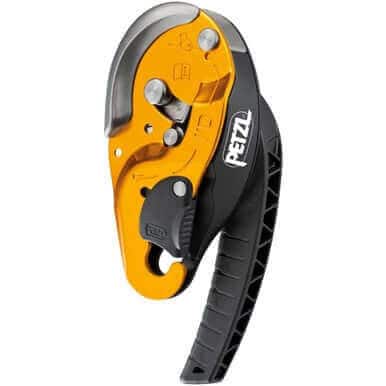 Petzl Descender ID SKU: 93-5M | 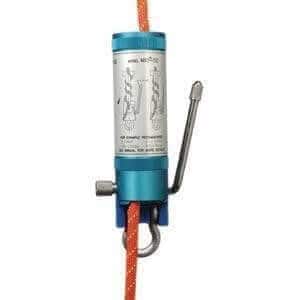 Descender MIO SKU: 93-101 | 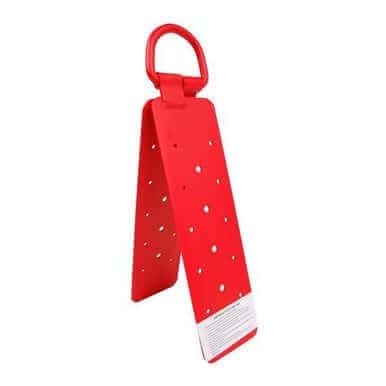 Roof Anchor Reusable SKU: 99-302 |
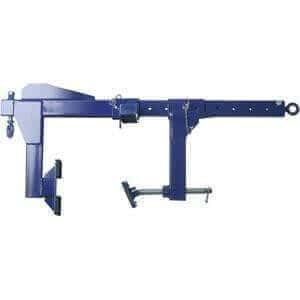 Parapet Clamp MIO SKU: 99-100 | 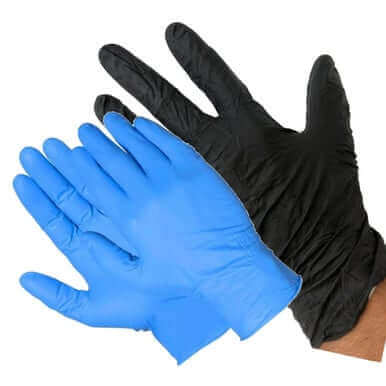 Nitrile Gloves SKU: 56-61M | 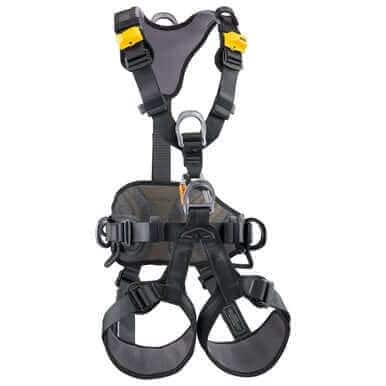 Petzl Avao Bod Harness SKU: 96-41M |
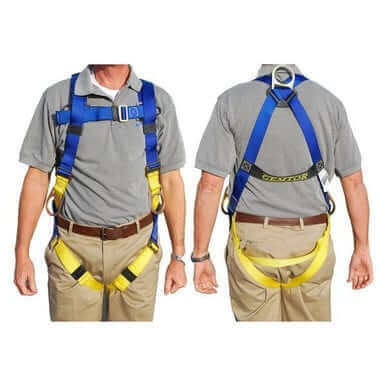 #922 Harness w/side D-rings Gemtor SKU: 96-50 | Petzl Descender ID SKU: 93-5M | 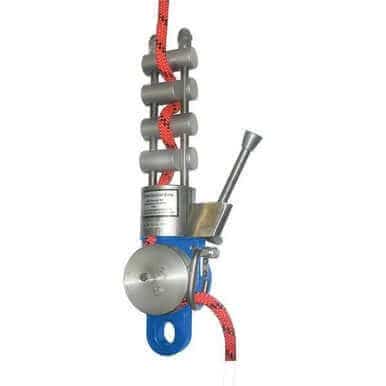 Rack Type Descender w/Aluminum Bars MIO SKU: 93-105 |
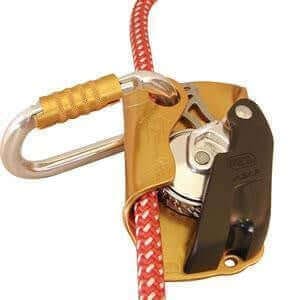 Rope Grab ASAP 7/16in-1/2in Petzl SKU: 94-52 | 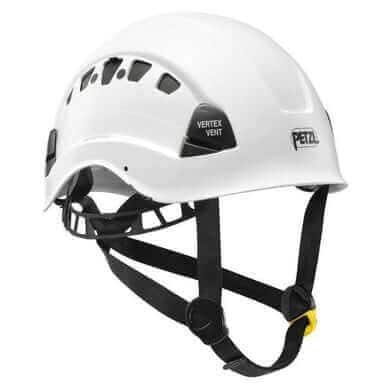 Helmet Vertex Vent White Petzl SKU: 98-714 | 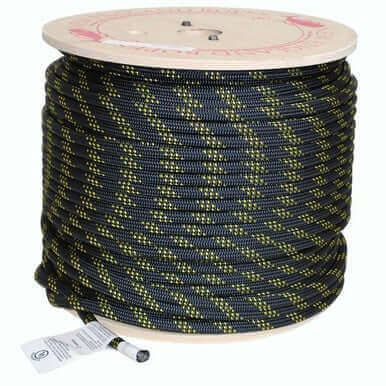 Teufelberger KMIII Rope 1/2in Solid Black SKU: 90-13M |
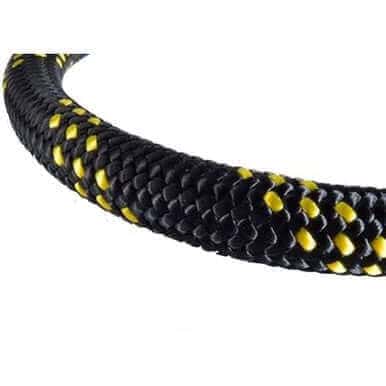 Teufelberger KMIII Rope 7/16in Max SKU: 90-1AM |