How to Remove Black Stripes on Gutters: Tiger Stripe Removal Guide

Table of Contents
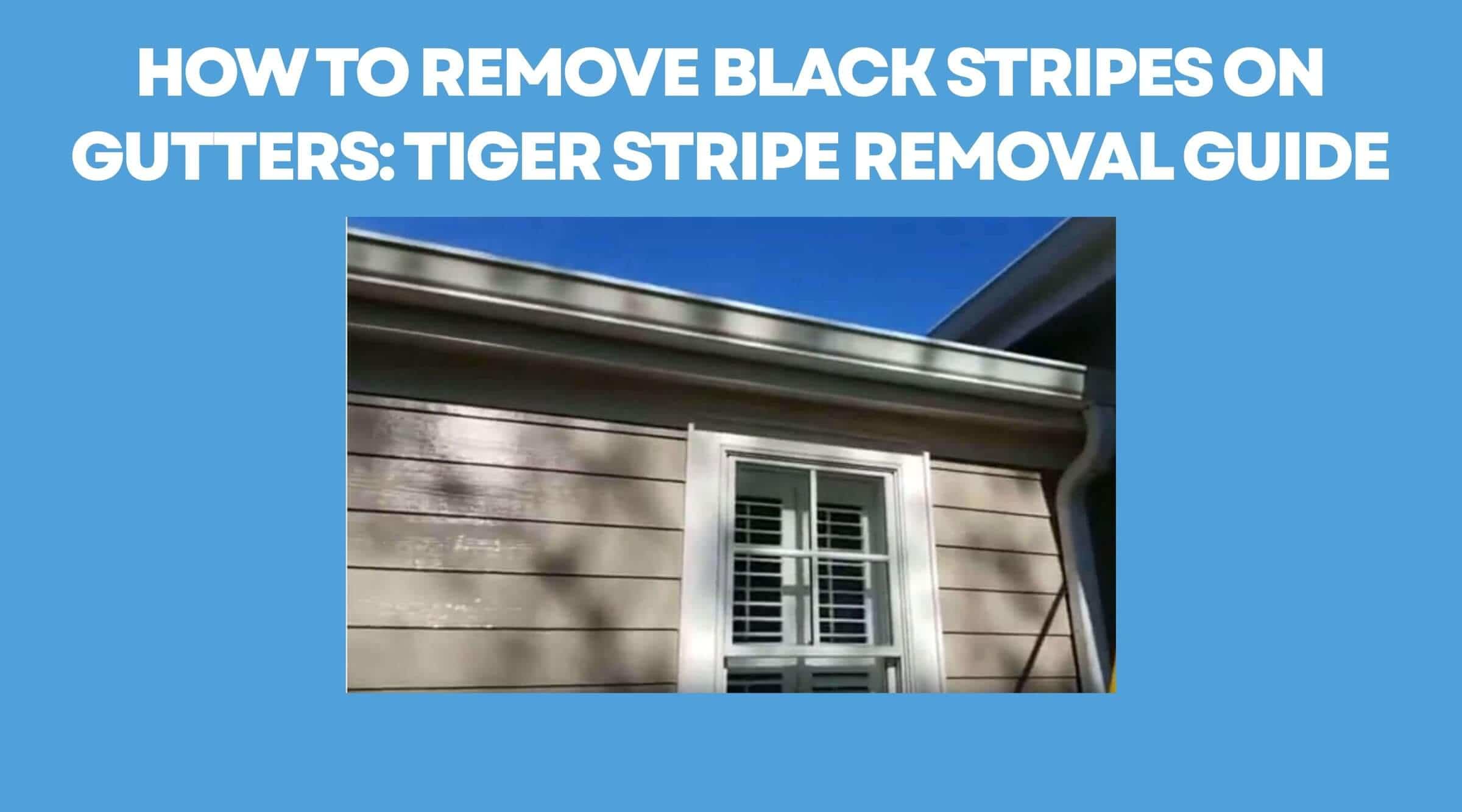
Those black stripes running down the face of aluminum gutters — the industry calls them tiger stripes — are the single most common complaint property managers raise about gutter appearance. They're also the stain most often misdiagnosed. Crews spray sodium hypochlorite expecting the streaks to bleach away, nothing happens, and the callback starts.
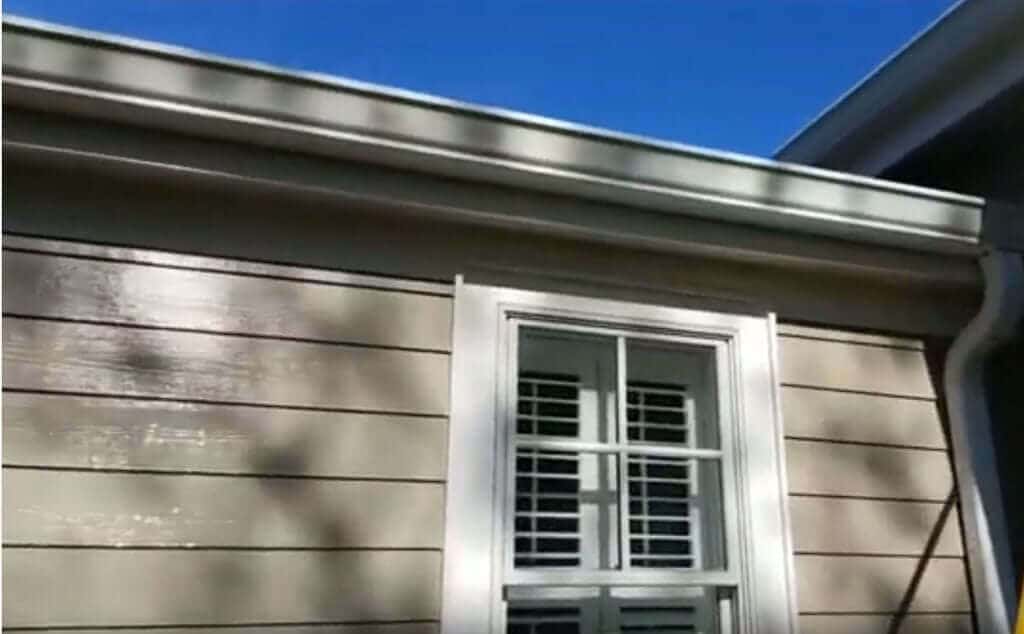
Tiger stripes are not biological. They're an electrostatic bond between petroleum residue from asphalt shingles and the anodized aluminum surface of the gutter. The runoff carries microscopic tar particles that chemically fuse to the aluminum's oxide layer every time it rains. Standard house-wash mix — SH, surfactant, rinse — cannot break that bond. Neither can pressure alone without risking paint damage.
Why Standard House-Wash Chemicals Don't Work
SH kills organic growth. Tiger stripes aren't organic growth. The tar-aluminum bond is a petroleum adhesion problem, closer to road film on a fleet truck than mold on siding. Increasing SH concentration doesn't help — it just risks stripping the factory finish off the gutter. Aggressive scrubbing with the wrong pad does the same thing.
The fix requires a dedicated oxidation-removal chemistry: a solvent package that softens the petroleum bond without attacking the anodized coating underneath. Two products dominate the professional market for this.
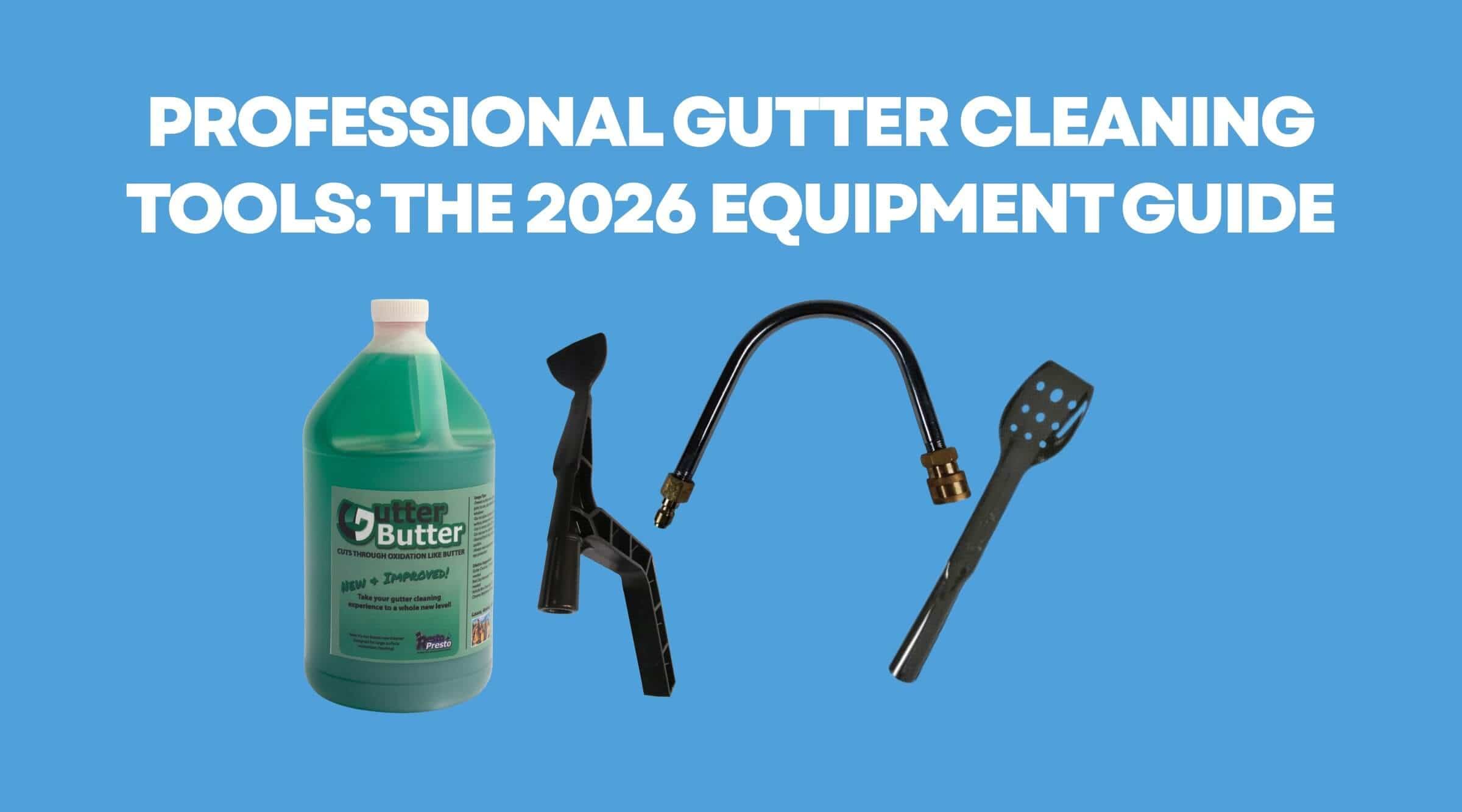
Gutter Butter: The Versatile Oxidation Remover
Gutter Butter is a biodegradable concentrate built for oxidation removal on aluminum, vinyl siding, and painted metal. Most contractors prefer it because the same jug does gutter brightening, siding oxidation, and — when added at low concentration to a house-wash mix — melts spider webs on contact.
Application Protocol
- Dilute to condition. For moderate tiger stripes, start at 10:1 (water to product). Heavy oxidation on aged gutters may need 6:1. Vinyl siding restoration starts around 24 oz per gallon.
- Pre-wet everything. Soak the gutter face, the siding above and below, windows, and plantings. Keeping adjacent surfaces wet prevents chemical contact damage.
- Apply low-pressure. Use a pump sprayer or a ViPower electric sprayer on a mist setting. You want even coverage, not dripping puddles.
- Agitate if needed. A bi-level brush on an extension pole handles most gutters from the ground. Light passes — the chemistry does the work.
- Dwell no more than five minutes. If the product dries on the surface, you've waited too long.
- Rinse thoroughly. A garden hose nozzle at moderate pressure is enough. Work top-down so residue doesn't streak clean sections.
Gutter Butter Ground Rules
- Test an inconspicuous 12-inch section first.
- Don't apply in direct sun on surfaces above 120°F, and not below 50°F ambient.
- Avoid polished (mill-finish) aluminum — the product is formulated for anodized/painted gutters.
- Wear chemical-splash goggles and nitrile gloves.
Gutter Zap: Purpose-Built for Tiger Stripes
Gutter Zap is a concentrate designed specifically for the tar-asphalt bond. Where Gutter Butter doubles as a general oxidation remover, Gutter Zap is a specialist — and on the heaviest tiger-stripe jobs, some contractors find it breaks the bond faster.
Application Protocol
- Dilute 2:1 or 3:1 (water to product) depending on stain severity.
- Spray the stained gutter face with a low-pressure sprayer.
- Agitate with a soft brush on stubborn sections.
- Rinse completely before moving to the next section.
On large residential or commercial jobs, many crews use Gutter Zap on the gutters and add Gutter Butter to their downstream house-wash mix for the siding — covering oxidation and biological growth in a single mobilization.
Tools That Make the Job Faster
Bi-level brush on a pole. The 10-inch bi-level brush conforms to the gutter profile and lets you scrub from ground level. Pair it with a telescopic extension pole and you eliminate ladder moves on most two-story homes.
Low-pressure sprayer. A 2-gallon acid-resistant pump sprayer works for spot treatments. For full-house gutter runs, the ViPower electric sprayer delivers consistent pressure without hand fatigue.
Rinse nozzle. A standard hose spray nozzle on a garden hose is all you need for the final rinse. Pressure washing the gutter face is unnecessary and risks driving water behind the fascia.
Common Mistakes
- Using SH at high concentration. It won't touch the electrostatic bond but will bleach landscaping and corrode hardware.
- Letting product dry on the surface. The active ingredients stop working once the carrier evaporates, and dried residue can etch paint.
- Skipping the pre-wet. Dry siding and dry glass absorb overspray far faster than wet surfaces do.
- Working full gutter runs at once. Apply and rinse in 8–10 foot sections. If you spray 60 feet of gutter and then walk back to rinse, the first section has been dwelling too long.
Beyond Gutters: Other Uses for Gutter Butter
- Vinyl siding oxidation. The chalky white haze on aged vinyl responds to the same chemistry — dilute lighter (24 oz/gal), apply, agitate, rinse.
- Painted metal roofs and trim. Safe on factory-coated metal when used at recommended dilution.
- Spider-web additive. A few ounces per gallon of house-wash mix dissolves webs on contact, saving detail time with a brush.
Preventing Tiger Stripes
You can't stop rain from washing petroleum off shingles. But you can slow the accumulation:
- Annual gutter brightening. A light Gutter Butter pass once a year keeps residue from building the heavy bond that requires aggressive treatment.
- Proper gutter pitch. Standing water accelerates oxidation. Verify slope on every gutter cleaning visit.
- Roof maintenance. Aging shingles shed more tar. Properties with deteriorating roofs will streak faster regardless of gutter care.
For contractors, gutter brightening is one of the easiest upsells in residential exterior cleaning. The chemistry is inexpensive, the time per house is 15–30 minutes, and the visual difference is dramatic — homeowners notice immediately.
Products Mentioned
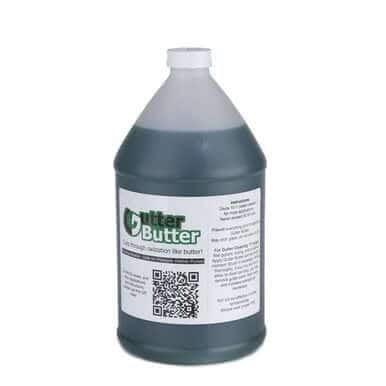 Gutter Butter Gutter Cleaning Detergent SKU: 89-1M | 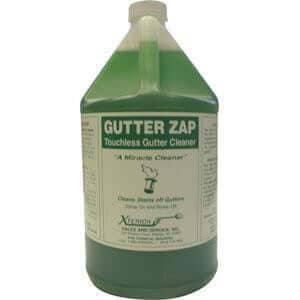 Gutter Zap Gutter Stain Remover SKU: 89-0M | 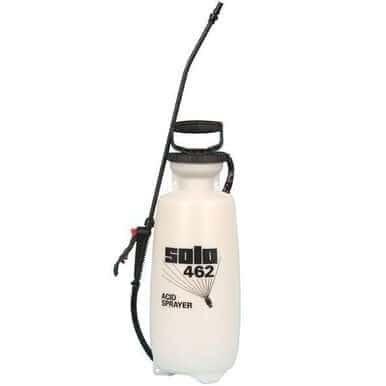 Pump Sprayer 2 Gal Acid Resistant Solo SKU: 515-045 |
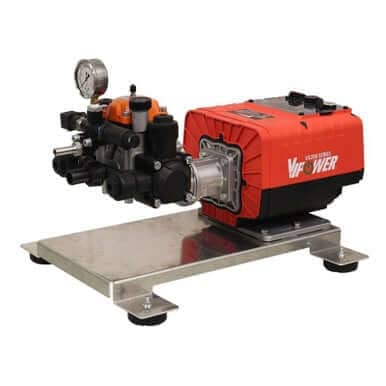 ViPower Electric Soft Wash Sprayer SKU: 150-0433M | 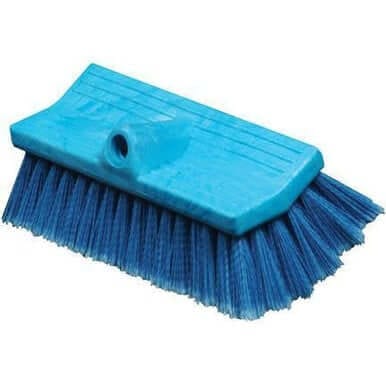 Brush BiLevel 10in Blue Soft FlowThru SKU: 66-510 | 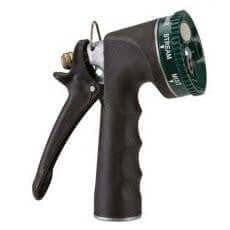 Hose Spray Nozzle SKU: 150-0763 |
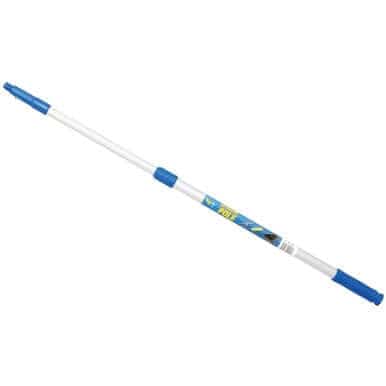 Ettore Interlock Telescopic Pole SKU: 60-16M |