How to Clean High Windows from Outside with Water Fed Poles
Table of Contents
Most window cleaning injuries happen on ladders, yet experienced crews routinely tackle four-story glass without leaving the pavement. If you want to know how to clean high windows from outside, the answer is water fed poles paired with RO/DI pure water — not taller ladders. This combination eliminates the fall hazard, cuts the time you spend repositioning equipment, and delivers a streak-free finish that squeegee work at height rarely matches.
This guide covers pole selection, filtration systems, safety protocols, and kit builds for residential and commercial high-access work.
Why Ground-Based Cleaning Replaced Ladders for High Work
Insurance premiums for ladder-dependent companies run roughly 25% higher than for crews using ground-based systems. That alone should end the debate, but production numbers seal it: a single technician with a water fed pole regularly outpaces a two-person ladder crew on multi-story residential. You eliminate setup time, repositioning, and the physical toll of climbing all day.
Once a window sill exceeds about 15 feet, the leverage required to hold consistent squeegee pressure becomes unsustainable over a full shift. Water fed poles solve this with brush agitation and pure water rinse rather than arm strength — the brush does the scrubbing, and the water chemistry handles the drying.
Consumer-Grade Poles vs. Professional Carbon Fiber
Retail telescopic poles use thin-walled aluminum or fiberglass. Past 10 feet of extension, flex makes brush control unreliable. A professional carbon fiber pole like the ProTool Apex Carbon Fiber Pole cuts weight by roughly 40% while holding its rigidity at full reach. That rigidity keeps the brush flat against the glass — without it, you lose scrubbing pressure and leave debris behind.
Assessing the Job Before You Extend
Every high-access job starts with a site survey. Double-hung versus fixed panes dictate brush angles. Ground conditions matter: soft turf or a slope makes ladder placement dangerous but has zero impact on pole work. Calculate total reach — a 20-foot second story and a 45-foot commercial facade need different pole lengths, water pressures, and brush configurations.
Extension Poles vs. Water Fed Pole Systems
Two ground-based methods dominate high-reach work. Traditional extension poles rely on squeegee technique; water fed pole (WFP) systems use purified water and specialized brushes. The right choice depends on building height, total glass area, and how many windows you clean per week.
Traditional Extension Poles and Squeegee Work
For heights up to about 20 feet, a quality extension pole with a pivoting squeegee handle is the standard tool. Aluminum poles are the cheapest entry point but get heavy and flexible at full extension. Carbon fiber or hybrid poles cut that weight by around 30%, which matters when you're working overhead for hours.
Attachments make or break this method. A swivel T-bar like the Ettore T-Bar ProGrip paired with a quick-release handle such as the Ettore Handle Contour lets you maintain the 45-degree blade angle needed to clear water at awkward heights. A secure locking cone prevents tool rotation mid-stroke — a common cause of drips and re-work.
Water Fed Pole Systems: 30 to 60+ Feet
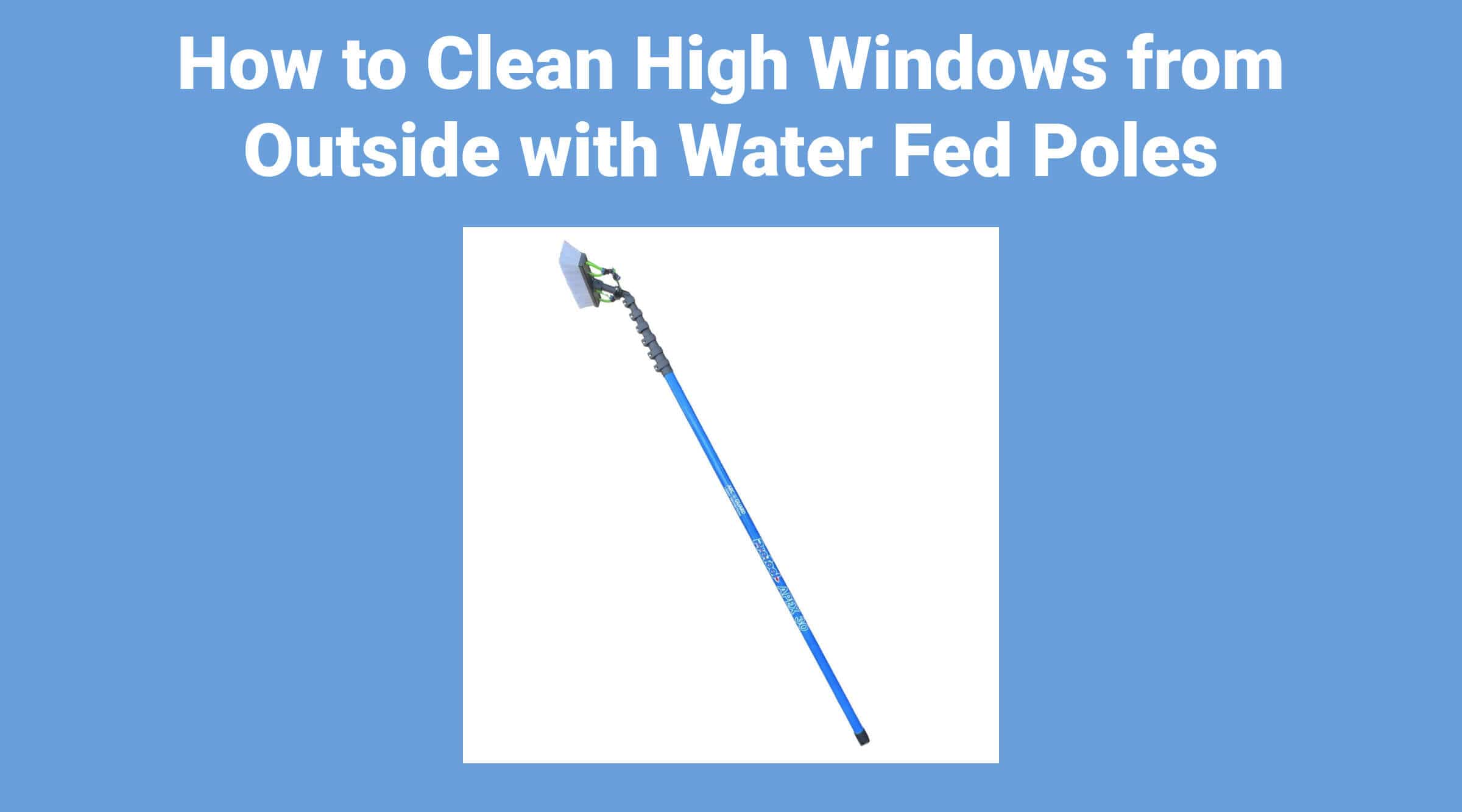
WFP systems are the professional standard for anything above two stories. Telescopic poles carry purified water through internal tubing to a brush head that scrubs and rinses simultaneously — no squeegee needed. At 40 feet, pole rigidity is everything. A pole that flexes at height loses roughly 40% of the downward pressure needed to remove stubborn debris like bird droppings or baked-on pollen.
That makes high-modulus carbon fiber the non-negotiable material choice. The Gardiner Ultimate 57ft HM Carbon Kevlar Pole and the ProTool Apex Hi-Mod Carbon Fiber Pole both deliver the stiffness required for precision brush control at maximum height.
The math favors WFP systems on volume work. A professional setup — 4-stage RO/DI cart plus a 40-foot carbon pole — starts around $2,500. That investment typically pays back within a few months because WFP systems increase production 50–75% on large residential and commercial projects. One technician handles jobs that previously needed a two-person crew and a lift.
The Pure Water Advantage
Standard tap water contains 50–350 ppm of dissolved minerals (calcium, magnesium, sodium). Those minerals stay on the glass when the water evaporates — that is where white spots come from. RO/DI filtration strips water to 0 ppm TDS, creating "aggressive" water that actively pulls dirt and organics off the glass to reach chemical equilibrium. No soap, no squeegee, no streaks.
This chemistry is why learning how to clean high windows from outside with pure water changes the economics of every route. You skip the squeegee pass entirely, which is the step that makes ladder work at height slow and dangerous.
RO/DI Filtration: What to Use When
DI-only systems are lightweight, simple, and cost-effective if your source water is under 100 ppm TDS. A ProTool DI Filter 20in RTU cartridge is a solid starting point for soft-water areas.
Multi-stage RO/DI systems are the standard for hard water or high-volume work. The RO membrane strips 95–98% of impurities before the water reaches the DI resin, which dramatically extends resin life and lowers your cost per gallon. The ProTool HiFlo Pure Water Ultra Cart SS is built for this — stainless steel frame, high-flow RO membranes, and powered delivery for all-day commercial runs.
Monitor your output with an inline TDS Inline Meter. If it reads anything above 000, check your filters. Letting TDS creep up means mineral spots on glass — and callbacks.
Maintaining Your Pure Water Equipment
RO membranes last two to three years with regular flushing and a carbon pre-filter to strip chlorine. Replace DI resin the moment your TDS meter shows output above zero. In cold climates, never store the system where it can freeze — ice expansion cracks housings and destroys membranes. Check brush jets weekly for sediment blockages; even a partial clog cuts cleaning efficiency noticeably.
Safety Protocols for High-Access Work
Ground-based cleaning is the top tier of OSHA's Hierarchy of Controls: hazard elimination. If the architecture keeps you on the ground, you have satisfied the most stringent safety audits. That is the core argument for water fed poles on any building where they can reach.
When You Must Leave the Ground
Some jobs require it. When they do, fall protection is mandatory — not optional, not situational. A complete personal fall arrest system includes a full-body harness, a shock-absorbing lanyard or self-retracting lifeline, and a certified anchor point. Inspect webbing for frays and hardware for cracks before every shift. A single compromised stitch can mean system failure during a fall.
J. Racenstein stocks fall protection equipment designed for 100% tie-off compliance, including harnesses from Petzl and Gemtor.
Wind, Power Lines, and Ergonomics
Wind: A 40-foot carbon pole acts as a lever. At wind speeds above 15 mph, the sail effect can pull you off balance or snap pole sections. Monitor weather and stop when gusts become unpredictable.
Power lines: Carbon fiber conducts electricity. Maintain a minimum 10-foot clearance from overhead lines per OSHA 1910.333. This is the single most dangerous aspect of high-reach pole work near utility infrastructure. For jobs near lines, use a fiberglass or hybrid pole with an insulated base section.
Ergonomics: Repetitive overhead motion causes rotator cuff damage and spinal compression over time. Maintain a roughly 70-degree pole angle to distribute load through your legs and core instead of your lower back. Five-minute breaks every hour during large jobs help prevent the chronic injuries that push cleaners out of the trade.
Building Your High-Access Kit
Residential Starter Setup (2-Story, 15–20 Windows/Week)
A Gardiner CLX 27ft Carbon Composite Pole covers 95% of standard two-story homes without the weight penalty of full high-mod carbon. Pair it with a DI-only tank for soft-water areas or a compact RO/DI cart like the ProTool 511 Pure Water Cart for harder water. The whole rig fits in a standard van or truck bed.
Commercial Setup (3–6 Stories, 40+ Hours/Week)
Step up to a high-modulus pole — the Gardiner SLX 39ft or the ProTool Apex Hi-Mod — for the rigidity needed at 40–60 feet. A 4-stage RO/DI system like the ProTool HiFlo Pure Water Cart MAX SS 110V reduces cost per gallon by up to 80% compared to DI-only setups. At 40+ hours a week, resin savings alone justify the investment.
Brushes and Accessories
Brush filament matters. Boar's hair brushes deliver more agitation for neglected glass with heavy organic buildup — useful for first cleans. Nylon brushes like the ProTool White Nylon Brush 14in glide easier for regular maintenance routes. Add an angle adapter such as the Gardiner Resi-Neck Angle Adaptor to navigate recessed windows and deep sills.
For hose management, a ProTool Stainless Steel Reel with 125ft hose prevents tripping hazards and protects lines from abrasion on rough surfaces.
Products Mentioned
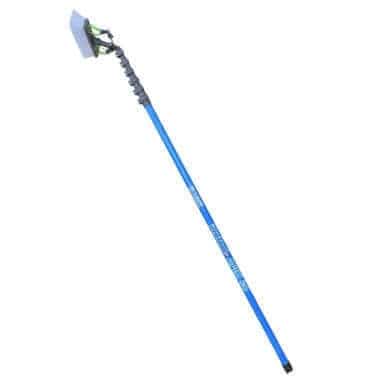 ProTool Apex Carbon Fiber Water Fed Pole SKU: 151-32M | 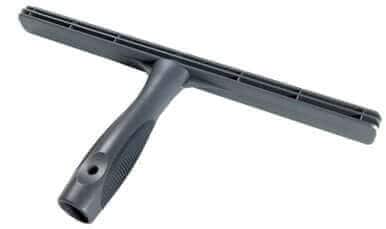 Ettore T-Bar ProGrip SKU: 10-12M | 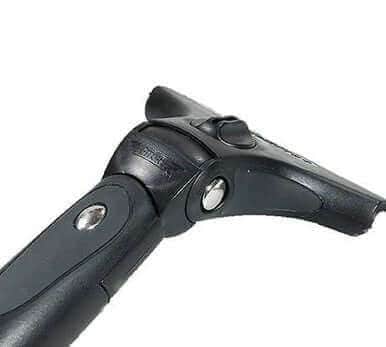 Ettore Handle Contour SKU: 01-12M |
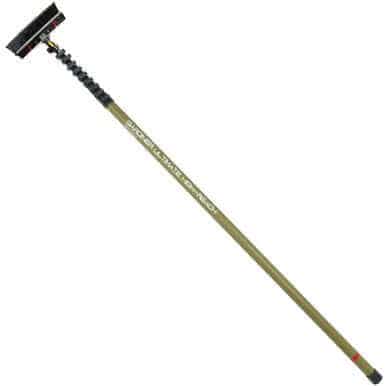 Gardiner Ultimate 57ft Tele Pole HM Carbon Kevlar SKU: 155-4467 | 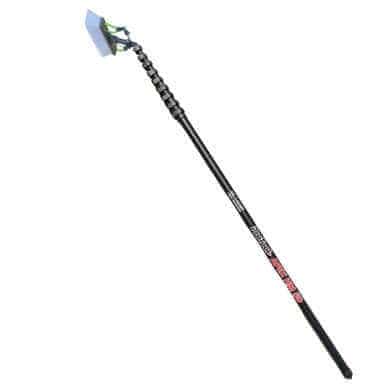 ProTool Apex Hi-Mod Carbon Fiber Pole SKU: 151-3502 | 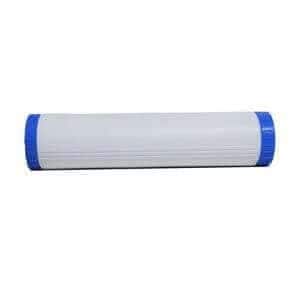 ProTool DI Filter 20in Blue/White RTU SKU: 150-012 |
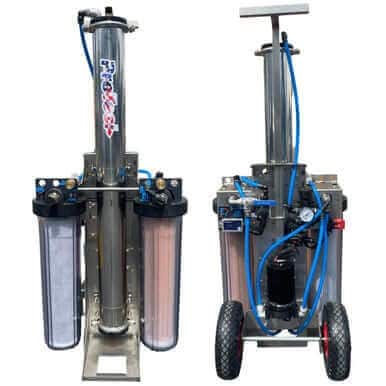 ProTool HiFlo Pure Water Ultra Cart SS 12V or 110V SKU: 150-0522 | 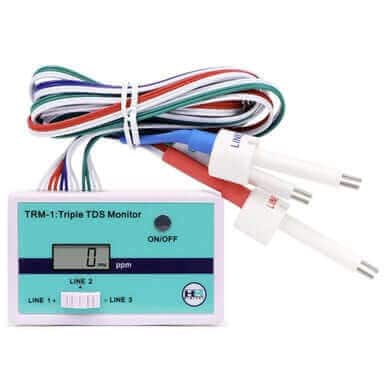 TDS Inline MeterTriple 1/4in Probes SKU: 150-017 | 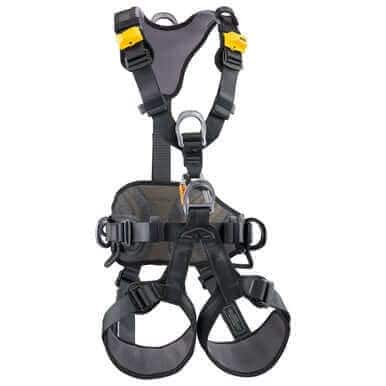 Petzl Avao Bod Harness SKU: 96-41M |
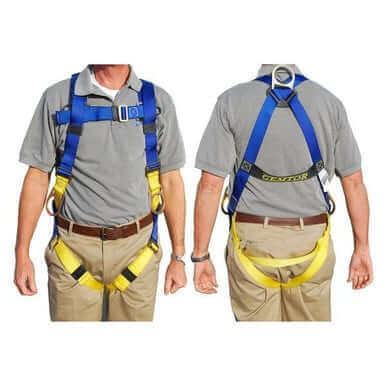 #922 Harness w/side D-rings Gemtor SKU: 96-50 | 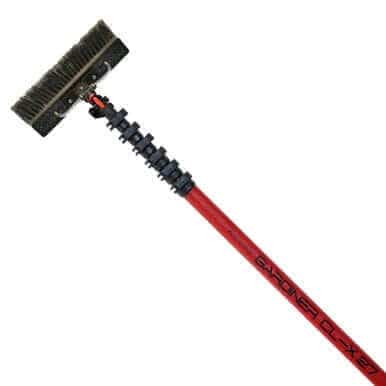 Gardiner CLX 27ft Pole Carbon Composite SKU: 155-4272 | 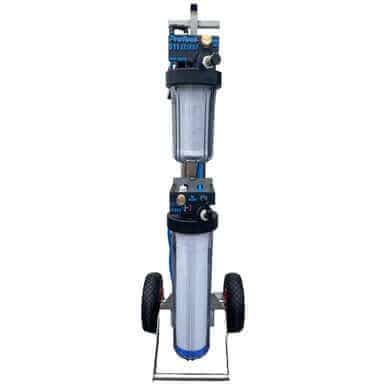 ProTool 511 Pure Water Cart SKU: 150-0515 |
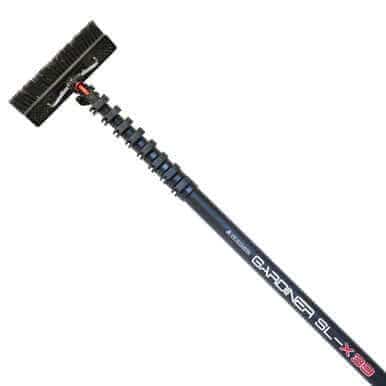 Gardiner SLX 39ft Tele Pole Carbon Complete SKU: 155-4391 | 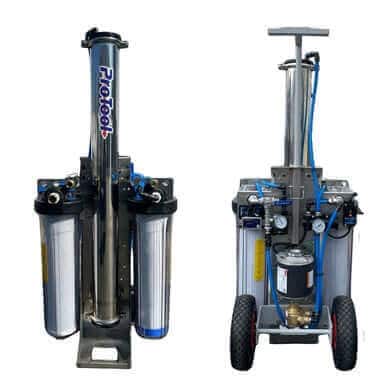 ProTool HiFlo Pure Water Cart MAX SS 110V SKU: 150-0523 | 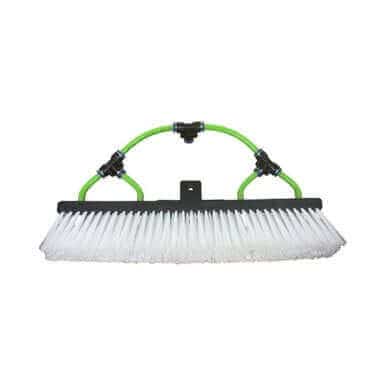 ProTool White Nylon Brush 14 in SKU: 151-20M |
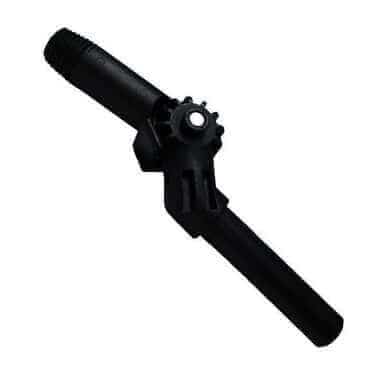 Gardiner Angle Adaptor Resi-Neck 1 Std SKU: 157-40269 | 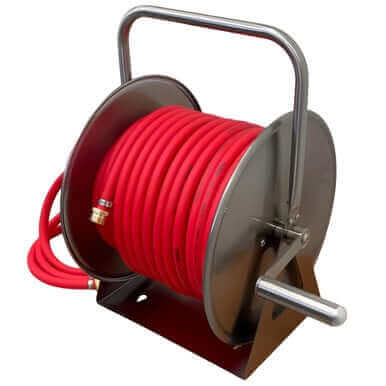 Reel Stainless Steel w/ 125ft 3/8in hose SKU: 68-011 |