ProTool Harness: Building a Fall Protection Safety Plan

Table of Contents
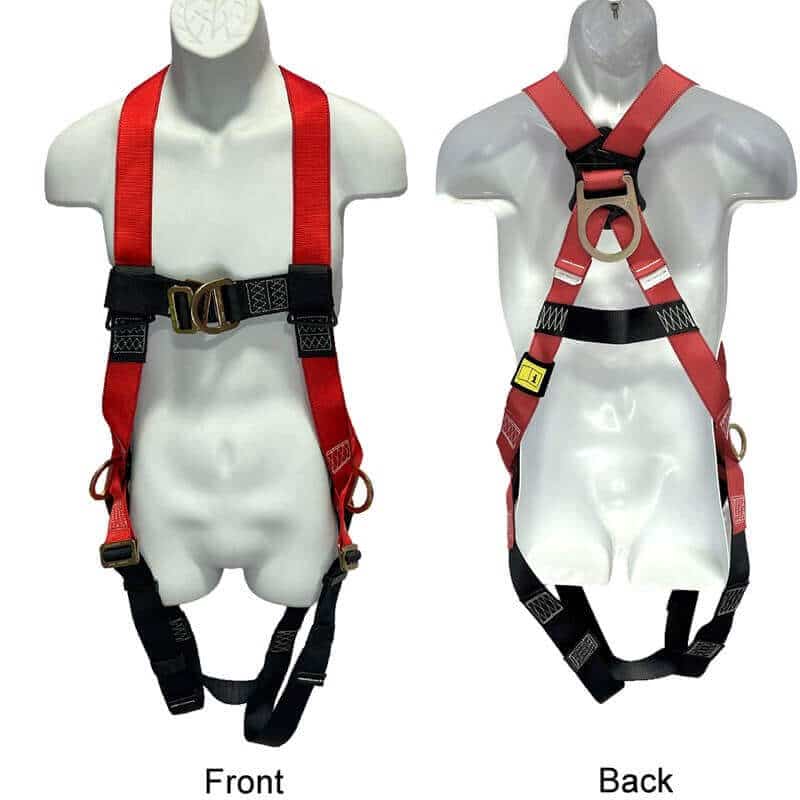
A fall protection safety plan is only as good as the harness at its center. The ProTool Full Body Harness is built for exterior cleaning professionals who need dorsal, sternal, and side D-rings in a single unit — covering fall arrest, positioning, and restraint without switching gear between tasks. Here's how it fits into a real fall protection safety plan and what OSHA actually requires.
Why D-Ring Configuration Matters for a Fall Protection Safety Plan
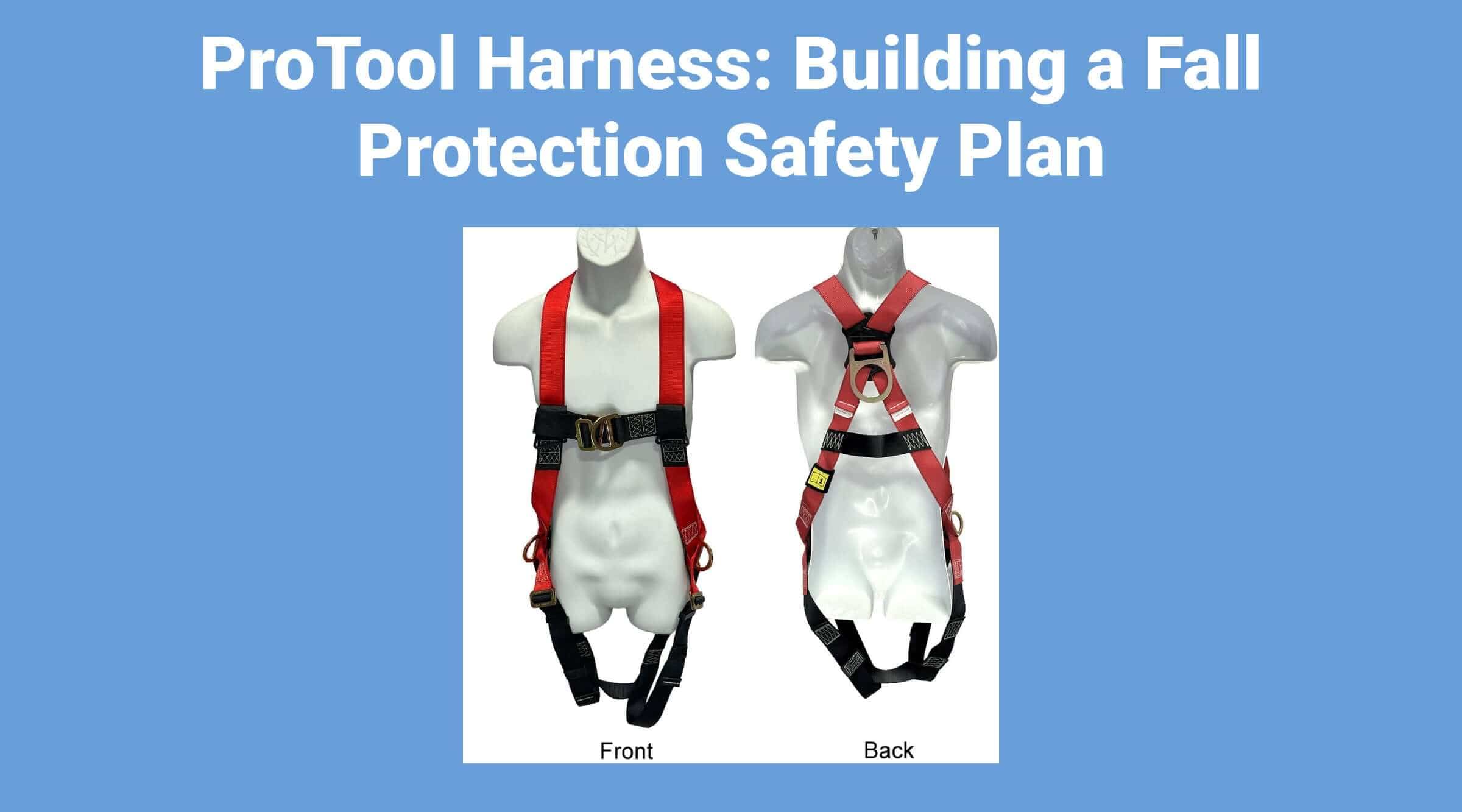
Most budget harnesses give you a single dorsal D-ring. That works for basic fall arrest — and nothing else. The ProTool harness carries four attachment points:
- Dorsal (back, shoulder level): Primary fall arrest connection. OSHA requires this placement for personal fall arrest systems under §1910.140.
- Sternal (front chest): Used for controlled descent, rope access, and ladder climbing systems. Essential for window cleaners and rope access techs who need a forward attachment.
- Side D-rings (hip level): Work positioning — lets you lean into a facade or parapet hands-free while staying connected. Roof cleaning and gutter work become significantly faster with proper positioning rings.
That matters because a fall protection safety plan has to address every scenario on the job, not just one. A crew cleaning windows at height, then transitioning to gutter work on the same building, needs arrest, descent, and positioning capability without swapping harnesses mid-job.
Fit and Weight Range
The harness adjusts to fit workers from 130 to 310 lbs. Polyester webbing construction distributes arrest forces across thighs, pelvis, waist, chest, and shoulders — the five load-bearing zones OSHA specifies. Leg straps are designed to reduce pressure points during extended wear, which matters when you're in a harness for a full shift, not 20 minutes.
A harness that doesn't fit properly is a harness that won't perform. D-rings shift out of position, webbing bunches, and in a fall event the force distribution fails. The ProTool's adjustment range covers the realistic range of crew sizes most companies deal with.
OSHA Compliance: What the Standards Actually Say
The ProTool Harness meets or exceeds ANSI/ASSP Z359.11-2021 and OSHA CFR 1910 Subpart D requirements. Here's what that means in practice:
Fall Arrest Systems
A fall arrest system stops a fall already in progress. OSHA requires these systems to:
- Limit maximum arresting force to 1,800 lbs when used with a body harness
- Bring the worker to a complete stop within a total fall distance of 6 feet
- Prevent free fall greater than 6 feet
- Prevent the worker from contacting any lower level
Components: full-body harness, shock-absorbing lanyard, connectors, and a rated anchorage point. The dorsal D-ring is the required attachment point for fall arrest.
Fall Restraint Systems
Restraint systems prevent a fall from happening at all. The tether is set short enough that the worker physically cannot reach the fall hazard — the edge of a roof, an unprotected opening, etc.
OSHA doesn't prescribe restraint system specifics the way it does for arrest systems, but the general requirement is clear: the system must prevent exposure to any fall hazard. For roof cleaning crews, restraint is often the smarter choice when the work zone allows it — there's no fall event to arrest because the worker never reaches the edge.
Inspection and Training
Every fall protection safety plan must include:
- Pre-use inspection: Check webbing for cuts, fraying, chemical damage, and UV degradation before every use. Check D-rings and buckles for deformation or corrosion.
- Regular scheduled inspection: Manufacturer's interval or at minimum annually by a competent person.
- Post-fall removal: Any harness involved in a fall arrest event must be removed from service immediately.
- Training: Every worker must understand hook-up, anchoring, tie-off techniques, inspection criteria, and storage. Document the training.
Building the System Around the Harness
A harness alone isn't a safety plan. Here's what a complete fall protection setup looks like for exterior cleaning work:
- Harness: ProTool Full Body Harness with dorsal, sternal, and side D-rings
- Lanyard: Gemtor shock-absorbing lanyard — matched to your maximum free-fall distance
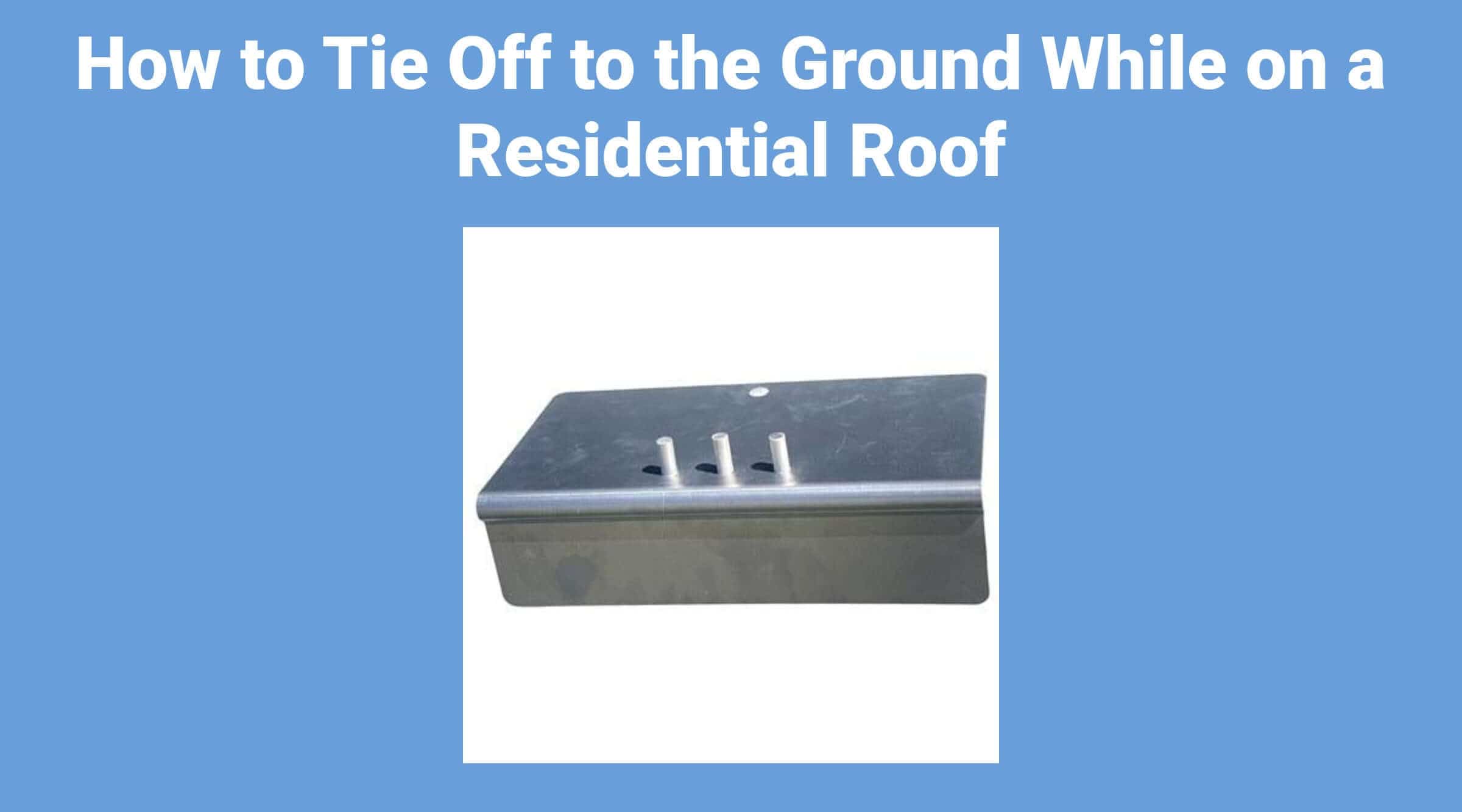
- Anchor: RidgePro roof anchor for ridge-top work, or a reusable roof anchor for sheathing applications
- Connectors: ANSI-rated twist-lock carabiners — never use non-locking hardware for fall protection
- Helmet: ProTool Class G helmet for head protection during any at-height task
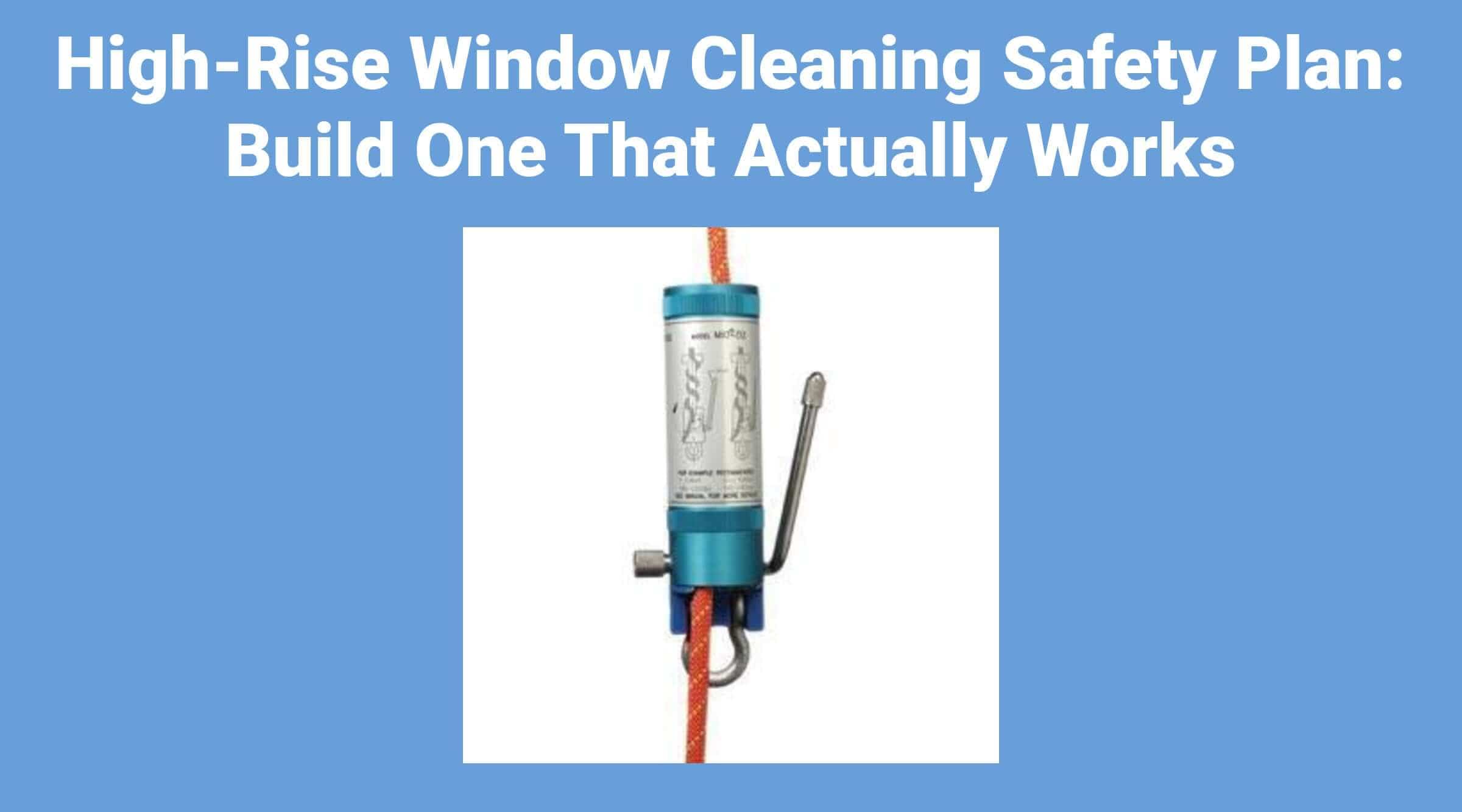
For rope access window cleaning, add a Petzl ID descender and a Petzl ASAP rope grab as your backup device. The sternal D-ring on the ProTool harness is your primary descent connection; the dorsal D-ring anchors the ASAP on the safety line.
For roof cleaning fall prevention kits, J.Racenstein offers pre-assembled roof safety kits that pair a harness with the right lanyard, anchor, and connectors for common roof scenarios.
Arrest vs. Restraint: Choosing the Right Approach
Your fall protection safety plan should specify which system applies to each task:
- Fall arrest: Reactive — catches a fall after it starts. Use when the worker must operate near or at an unprotected edge. Requires clearance calculation: the total fall distance (free fall + deceleration + harness stretch + safety margin) must be less than the distance to the next lower level.
- Fall restraint: Preventive — keeps the worker away from the edge entirely. Use when the work zone geometry allows a tether short enough to prevent edge exposure. No clearance calculation needed because there's no fall scenario.
When the job allows it, restraint is the better system. No fall event means no rescue scenario, no post-fall harness retirement, and no injury. The side D-rings on the ProTool harness double as restraint attachment points when combined with a fixed-length tether.
Common Mistakes in Fall Protection Planning
- No clearance calculation: A 6-foot lanyard doesn't mean 6 feet of total fall distance. Add deceleration device deployment (3.5 ft), harness stretch (up to 1 ft), D-ring slide, and a safety margin. Many crews don't run the numbers and end up with inadequate clearance.
- Using the wrong D-ring: Connecting a fall arrest lanyard to a side positioning D-ring won't distribute forces correctly. Dorsal D-ring for arrest, always.
- Skipping inspection: UV exposure degrades polyester webbing over time. A harness stored in a truck bed all summer may look fine and fail under load.
- No rescue plan: OSHA requires a rescue plan for every fall arrest scenario. If a worker is suspended in a harness after a fall, suspension trauma can cause serious injury within minutes. Your plan needs to cover prompt rescue — whether self-rescue, assisted rescue, or emergency services.
Products Mentioned
 ProTool Harness with Front, Back and Side 2 Side D-Rings SKU: 96-10 | ProTool Harness with Front, Back and Side 2 Side D-Rings SKU: 96-10 | 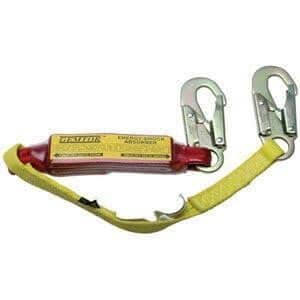 Gemtor Lanyard Shock Absorbing SKU: 97-5M |
 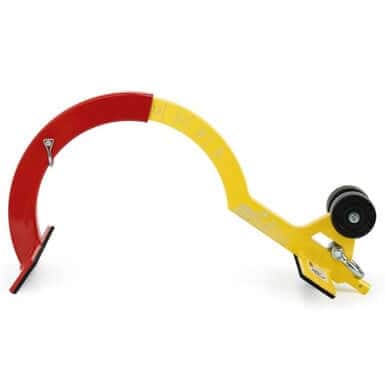 The RidgePro Roof Anchor SKU: 99-304 | 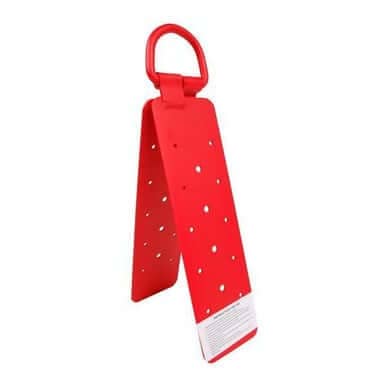 Roof Anchor Reusable SKU: 99-302 |
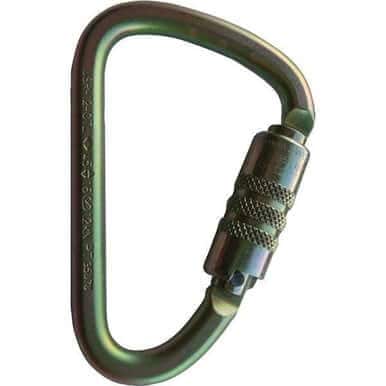 Carabiner ANSI Twist Lock Steel SKU: 98-817 | 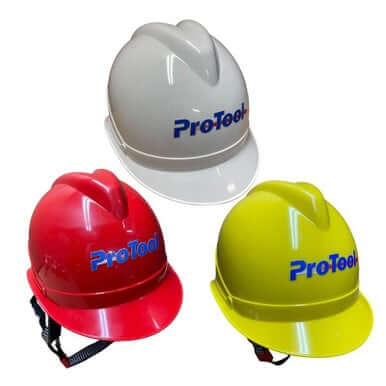 ProTool Hard Hat Helmet Class G Rated SKU: 98-7M | 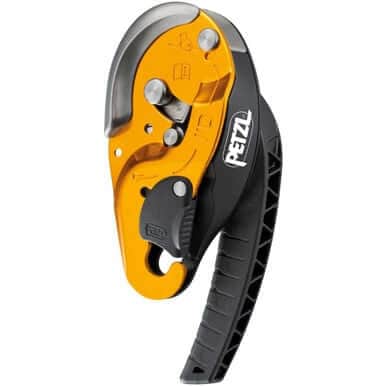 Petzl Descender ID SKU: 93-5M |
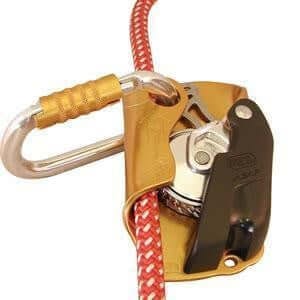 Rope Grab ASAP 7/16in-1/2in Petzl SKU: 94-52 |