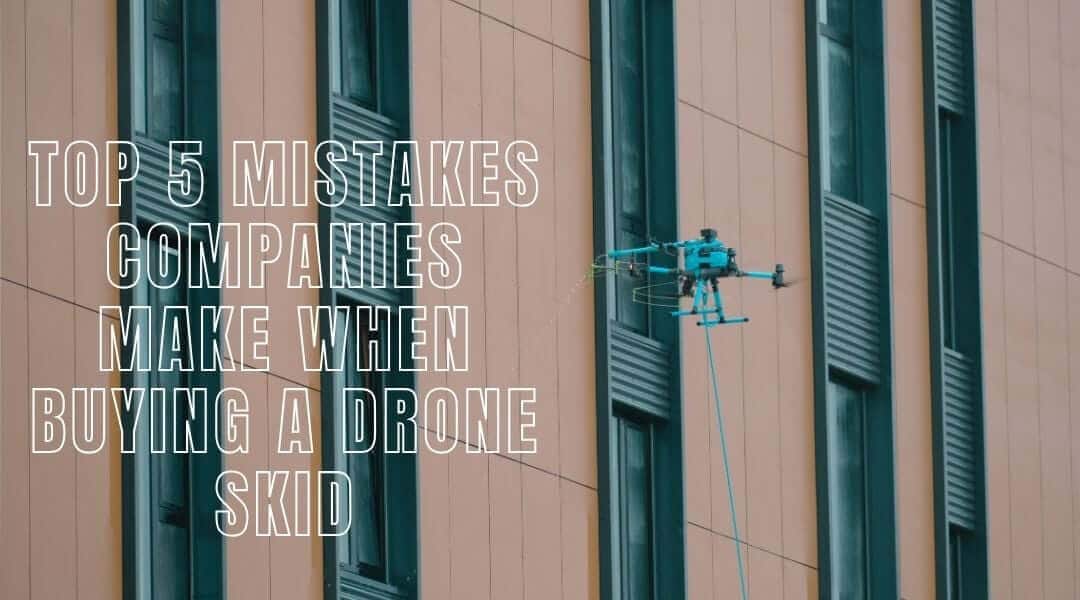
Top 5 Mistakes Companies Make When Buying a Drone Skid
Table of Contents
- 1 — Choosing a DI-Only System for Water Purification
- 2 — Not Considering Total Water Volume Requirements
- 3 — Paying for Unnecessary or Overbuilt Equipment
- 4 — Poor Layout & Configuration
- 5 — No Plan for Serviceability & Maintenance Access
- Bonus Mistake — Ignoring Future Scalability
- Final Thoughts
- See What Goes Into a Properly Designed Drone Cleaning Skid
- FAQs
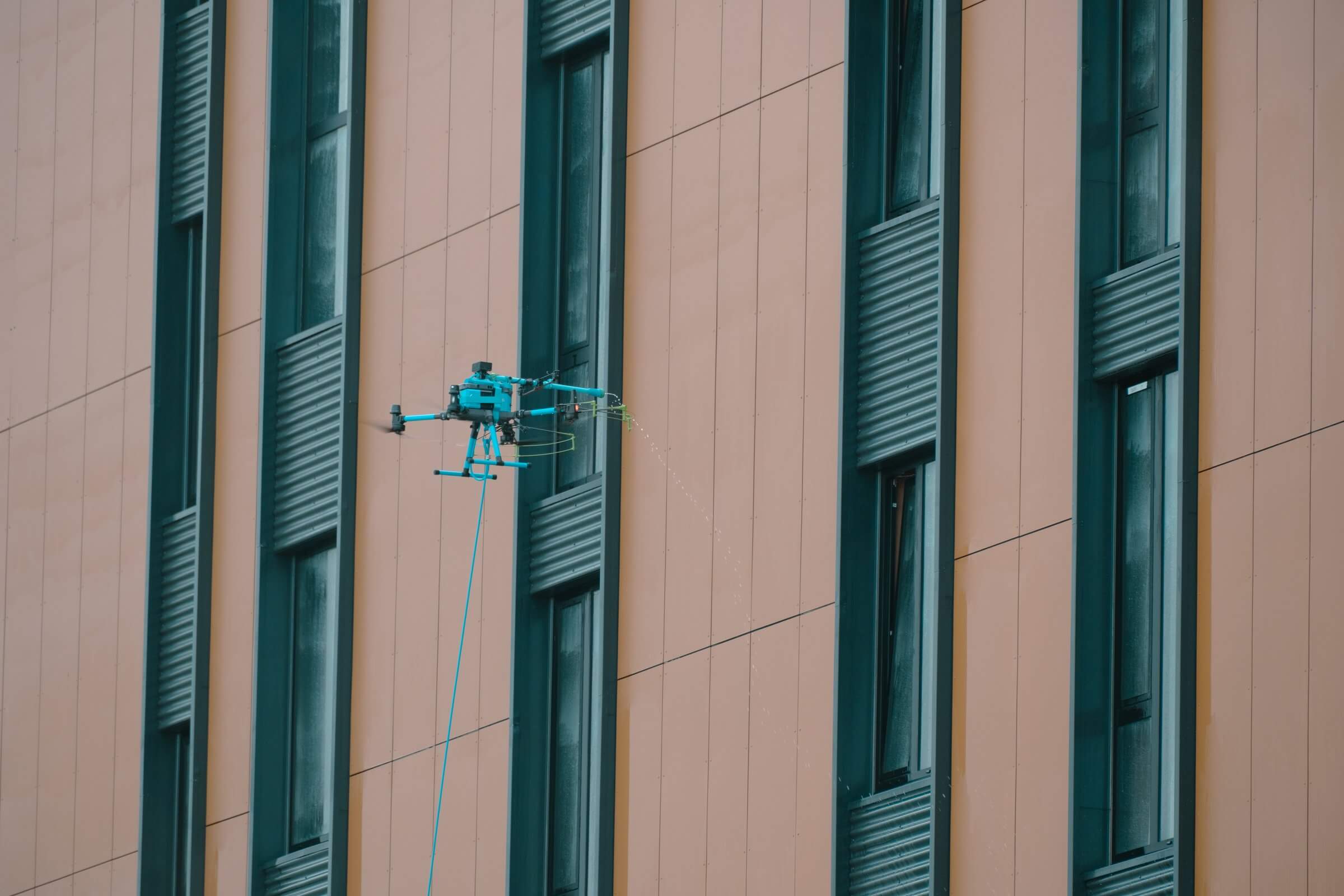
The drone cleaning industry is growing fast—faster than most equipment manufacturers can keep up. Window cleaners, solar panel contractors, facility service companies, and high-rise specialists are all turning to drones to increase production, eliminate lift rentals, reduce crew size, and open the door to large commercial contracts. The need for a high output drone skid to keep up with these large jobs is crucial.
But while drones are incredibly capable, the real bottleneck isn’t the drone—it’s the water system feeding it. If the drone doesn’t have enough water, pure enough water, or consistent flow, the job breaks down fast. And that’s where most companies make costly mistakes when buying their first drone skid.
Before investing thousands into a drone cleaning setup, avoid these Top 5 mistakes most companies make—and the bonus mistake that could force you to buy a second skid later.
1 — Choosing a DI-Only System for Water Purification
This is by far the most common—and most expensive—mistake.
Many companies see DI as the “simplest” solution. No membranes, no pumps, just resin. But drone cleaning is not traditional water fed pole cleaning. Drones blast through water at 5–8+ gallons per minute, not the 0.75–1.5 GPM a pole uses.
At drone-level consumption, DI resin is destroyed almost immediately.
Here’s what DI-only really means for drone work:
Resin burns out 10–20x faster
DI cost skyrockets—hundreds to thousands per week.
TDS becomes inconsistent, leading to spotting
No ability to handle high-TDS city water (200–600+ TDS)
TDS creep drains DI tanks instantly
DI-only may look cheaper upfront, but it is the most expensive long-term choice for drone cleaning.
A professional drone skid requires RO or RODI with high-flow membranes, not a barrel of DI resin that melts on contact with high volume.
2 — Not Considering Total Water Volume Requirements
This mistake doesn’t just cost money—it destroys productivity.
Most cleaning drones require 5–8+ GPM continuously to maintain proper spray patterns and maximize flight time. But many companies buy skids with pure water systems built for water fed pole systems, which only need 1–2 GPM. That mismatch leads to increased costs - quickly after purchase.
Here’s what happens when flow is too low:
Drone runs out of water mid-flight
Operators wait on water
Jobs take longer
Flight time is wasted
Cleaning quality drops
Production slows dramatically
Undersized membranes, low-pressure pumps, or DI tanks cannot keep up.
A true drone skid must include:
High-flow RO/XLE membranes (4.5+ GPM)
A high-output pump capable of sustaining 120-150 PSI at flow
Large hose reels designed for volume
Tank capacity that matches drone runtime
Drone cleaning only works when the water system can feed it. Companies that underestimate this end up with a drone that can fly…but can’t clean.
3 — Paying for Unnecessary or Overbuilt Equipment
Many companies make the mistake of buying “everything” because it sounds useful. But drone skids require a very specific plumbing layout designed for one purpose:
Deliver high-flow, ultra-pure water to the drone—nothing more.
Yet many skids come loaded with:
Soft wash pumps
Chemical tanks
Metering valves
Unused hose and hose reels
Extra manifolds
Unnecessary remote systems
Chemical injection lines
All of this adds:
Extra weight
Extra failure points
Extra complexity
Extra cost
And worst of all—the drone may never use these features.
A drone skid doesn’t always need surfactant injection, bleach tanks, or both a dedicated pressure washing and soft washing pump. It needs:
Reliable pure water
One High volume pump
Chemical application
Does your drone have onboard chemical application?
Large hose reels
Simple plumbing
Fast access
Easy serviceability
Everything else is potentially wasted money and a pathway to repairs.
Some components on your drone cleaning skid could be used for traditional cleaning jobs, but that shouldn’t drive your purchasing decisions. The goal of a drone skid is to maximize drone efficiency, not build a multi-purpose rig. Every dollar you invest should help your drone skid produce more pure water, clean faster, and earn back the cost of your drone—not weigh your skid down with equipment you’ll never use with the drone in flight.
Your skid may legitimately need some of these components depending on the types of jobs you plan to target. Just make sure you clearly define what you're cleaning and what equipment you truly require. Avoid overbuilding, but always keep future scalability in mind so your system can grow with your business.
4 — Poor Layout & Configuration
The way a skid is laid out matters—a lot. Drone teams have to work fast, refill fast, and troubleshoot fast. If the skid is poorly designed, every job becomes slower.
Signs of a bad skid layout:
Filters buried behind frames
RO membranes placed where you can’t access caps
Flush valves hidden behind reels
Pumps crammed into tight spaces
Oversized tanks blocking airflow
Hard-to-reach TDS sensors
No clear service path
A drone skid must be designed to optimize:
Flow paths
Filter replacement
RO flushing
Maintenance access
Quick setup/teardown
Operator workflow
Airflow around engine and pump
5 — No Plan for Serviceability & Maintenance Access
Drone cleaning skids work harder and produce more water than almost any other pure-water system. That means filters, RO membranes, pumps, and valves must be maintained regularly.
And if you can’t access them?
Your crew wastes time—or worse, skips maintenance.
The cost of poor serviceability:
RO membrane failures
Resin exhaustion
Pump overheating
Leaks hidden behind panels
Hours wasted accessing one fitting
More downtime
Higher labor cost
Lost productivity
If a filter change requires removing panels, disconnecting hoses, and crawling under frames, the skid is poorly engineered.
A drone skid must be simple, serviceable, and accessible—because uptime is everything.
Bonus Mistake — Ignoring Future Scalability
This is the mistake that forces companies to buy a brand-new skid a year later.
Most drone teams start with one drone and one operator. But as soon as they land bigger commercial jobs, they need:
Higher GPM flow
Larger tanks
Bigger RODI capacity
More hose
Skids that aren't built with scalability or upgradeable become obsolete.
Without planning for scalability, companies get stuck with:
A pure water system that can't keep up
A pump that can’t handle more GPM
Reels with limited capacity
A tank that empties too quickly
No space for expansion
A skid that only barely feeds 1 drone
If your skid can’t “grow” with your business, you end up replacing the entire system—costing tens of thousands more than necessary.
Final Thoughts
Drone cleaning is the future of commercial window cleaning, solar panel maintenance, and facility services—but only if the water system behind the drone is engineered correctly.
Avoiding these five mistakes will save you from buying the wrong skid—and save thousands in operational costs.
The right drone skid will:
Produce ultra-pure water at high flow rates
Deliver 5–8+ GPM continuously
Stay simple and serviceable
Avoid unnecessary equipment
Last years—not months
Grow with your business
Design the perfect Drone Cleaning Skid Today:
Request a FREE 15 minute design call with 3D Render
👉 Learn about Custom ProTool Skids
https://jracenstein.com/cleaning-solutions/auto-wash/product-collections/custom-skid-mounts/
👉 Shop ProTool Skids
https://jracenstein.com/cleaning-skids/
See What Goes Into a Properly Designed Drone Cleaning Skid
Avoiding these common mistakes starts with choosing equipment designed around how your crew actually operates. Water production, delivery capacity, tank sizing, component accessibility, and future expansion should all be considered before a skid is built.
ProTool designs and manufactures professional drone cleaning skids and trailers with these considerations in mind. From compact truck-mounted systems to larger enclosed trailers, configurations can be tailored to different drone platforms, cleaning applications, and operational requirements.
Explore ProTool's drone cleaning skids and trailers to see how complete systems are configured and compare options for your operation.
FAQs
Why is a DI-only system a bad choice for drone cleaning?
DI-only systems burn through resin extremely fast at drone flow rates. Drones often require 5–8+ GPM, which exhausts DI resin in minutes, spikes operating costs, and produces inconsistent TDS that leads to spotting and rework.
Why does serviceability matter so much on a drone skid?
Drone skids run hard and produce massive amounts of water. Filters, pumps, and RO membranes require routine service. If components are buried or difficult to reach, maintenance slows down, uptime drops, and the skid becomes expensive to operate.
Do I need both RO and DI for drone cleaning?
Yes. RO removes 95–99% of TDS, protecting the DI stage. DI then polishes the water to zero-TDS for spotless drone cleaning. DI-only systems are too costly and too inconsistent for high-volume drone use.
Do drone cleaning skids need larger tanks than traditional pure water systems?
Yes. Drones consume water far faster than a water fed pole—often 5–8+ GPM. This means small tanks drain instantly. A drone skid should have a large enough tank (or rapid-fill RO capacity) to avoid flight interruptions and downtime.
Why do RO membranes matter so much in drone cleaning?
Drone cleaning requires extremely high water volume. Only high-flow RO membranes can deliver the GPM needed while keeping TDS low. Low-quality or undersized membranes restrict flow, reduce purity, and destabilize drone spray performance.