Water Fed Pole Systems: Choosing the Right Setup for Your Business

Table of Contents
- Why Pure Water Works: TDS and the Spot-Free Finish
- Purification: DI-Only vs. RO/DI
- Poles: Material, Length, and What Actually Matters at Height
- Brushes and Goosenecks: Where the Cleaning Happens
- Hose and Delivery: Getting Water to the Brush
- Complete Kits vs. Building Your Own
- Technique: The Basics That Matter
- Maintenance: Protect Your Investment
- Products Mentioned
A water fed pole system lets you clean exterior glass several stories up without leaving the ground. No ladders to position, no squeegee detailing, no chemical solutions — just purified water, a brush, and a rinse that dries spot-free. For professional window cleaners and exterior cleaning contractors, it's the single biggest productivity and safety upgrade available.
But "water fed pole system" covers a wide range of equipment — from a portable DI tank and a 25-foot composite pole to a van-mounted dual-RO skid feeding a 90-foot high-modulus carbon pole. The right setup depends on your water quality, your typical building height, and how many operators you're running. This guide walks through each decision point so you buy the system that actually fits your operation.
Why Pure Water Works: TDS and the Spot-Free Finish
Tap water contains dissolved minerals — calcium, magnesium, silica — measured as Total Dissolved Solids (TDS) in parts per million (PPM). When tap water evaporates on glass, those minerals stay behind as white spots and haze. Pure water has been stripped to 0 PPM. It's chemically aggressive: it actively pulls dirt and residue off the glass, and when it evaporates, nothing remains.
That's the entire mechanism. No soap, no squeegee, no detailing. The brush agitates, the pure water rinses, and you walk away. The glass air-dries to a finish that's cleaner than most squeegee work because you're cleaning the frames and sills simultaneously — areas traditional methods often skip or rush.
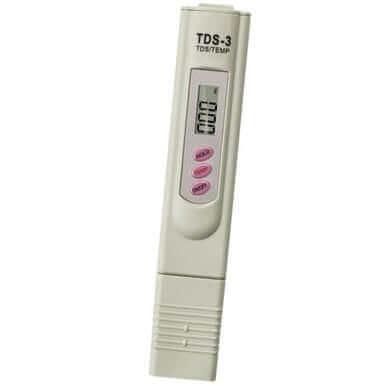
Your local TDS reading is the single most important number in your equipment decision. Test it with a handheld TDS meter before you spend a dollar on filtration.
Purification: DI-Only vs. RO/DI
Two systems, one goal: get your output water to 0 PPM. The difference is how much work (and money) it takes to get there.
DI-Only
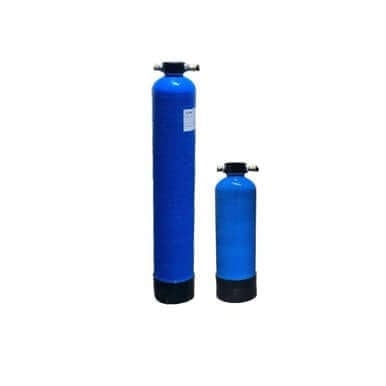
A deionization tank uses mixed-bed resin to strip minerals through ion exchange. It's simple, portable, and cheap to buy. The catch: resin is a consumable. In soft water areas (under 100–150 PPM), a DI tank is cost-effective. In hard water areas (200+ PPM), you'll burn through resin so fast that consumable costs destroy your job margins. A single DI stage works well as a polishing filter downstream of an RO membrane, or as a standalone system where your tap water is already relatively clean.
RO/DI (Reverse Osmosis + Deionization)
The professional standard for daily production. A multi-stage system runs tap water through sediment and carbon pre-filters, then forces it through a semi-permeable RO membrane that rejects 90–98% of dissolved solids. The DI stage polishes whatever the membrane missed down to 0 PPM. Because the RO membrane handles the bulk removal, your DI resin lasts dramatically longer — often 10x or more compared to DI-only in hard water.
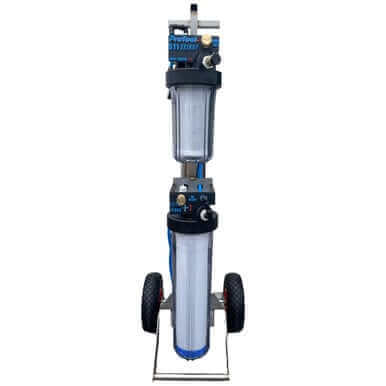
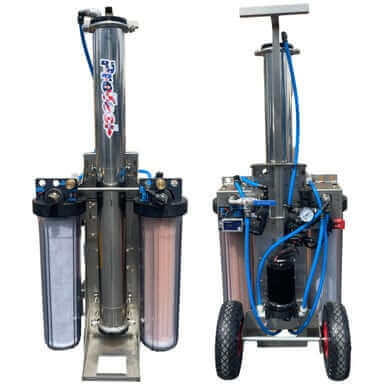
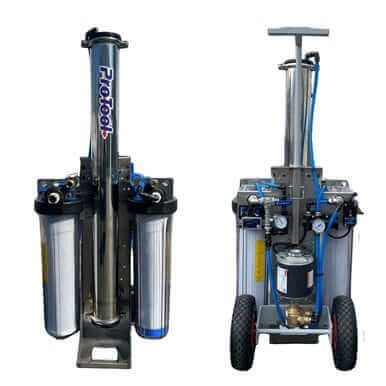
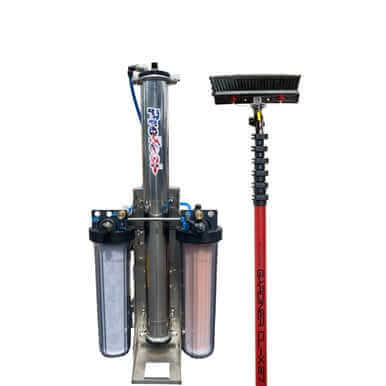
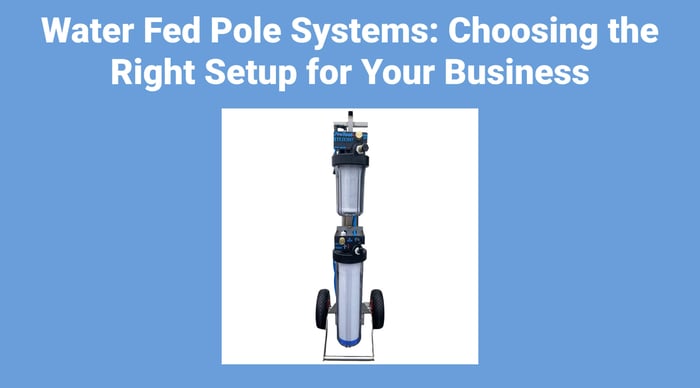
RO/DI systems range from compact single-membrane carts like the ProTool 511 Pure Water Cart to high-flow dual-membrane setups like the ProTool HiFlo Ultra Cart that can feed two operators simultaneously. The right size depends on your daily water demand and how many poles you're running.
Decision Framework
- TDS under 150 PPM: DI-only is viable. Consider the ProTool DI Tank for a lightweight, portable option.
- TDS 150–300 PPM: Single-membrane RO/DI cart. The 511 or HiFlo models cover most solo operators.
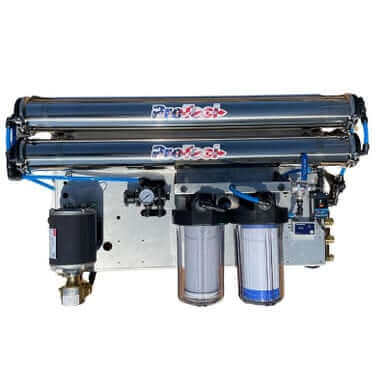
- TDS 300+ PPM: Dual-membrane RO/DI system. Look at the ProTool HiFlo MAX Cart or a wall-mounted HydroPanel for van or shop installation.
Poles: Material, Length, and What Actually Matters at Height
Below 25 feet, almost any pole works. Above 40 feet, pole selection is the difference between productive work and fighting a noodle in the wind.
Carbon Fiber vs. Composite vs. Aluminum
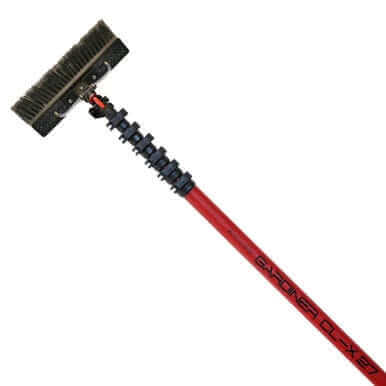
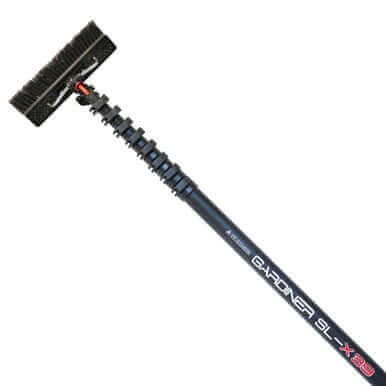
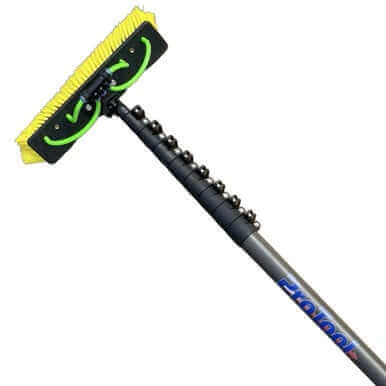
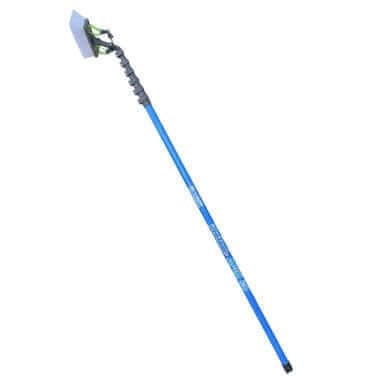
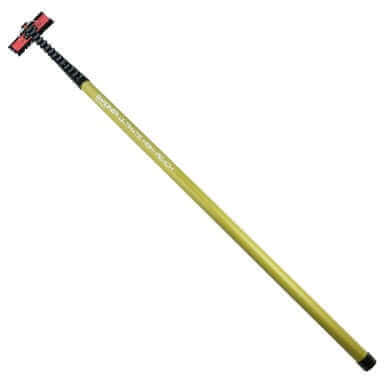
Aluminum poles are heavy and flex badly at height. They exist, but they're not serious tools for daily production. Carbon composite (fiberglass/carbon blend) poles like the Gardiner CLX series offer a good stiffness-to-cost ratio for residential work up to about 35 feet. For anything taller, high-modulus carbon fiber is the standard. Poles like the Gardiner SLX 39ft or the ProTool 50ft HM Carbon deliver the rigidity you need to maintain brush control at 40–50+ feet without destroying your shoulders over a full day.
Matching Length to Work
- Residential (2–3 stories): 25–35 feet. A Gardiner CLX 27ft or ProTool Apex 30ft handles most houses.
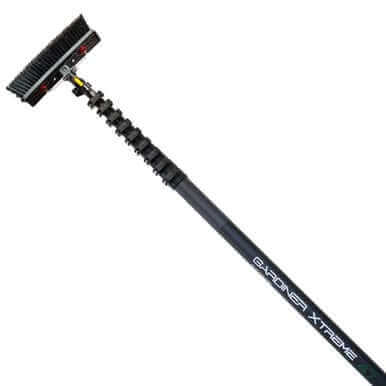
- Low-rise commercial (3–5 stories): 40–50 feet. The Gardiner X3 Xtreme 47ft or ProTool 50ft HM are the workhorses here.
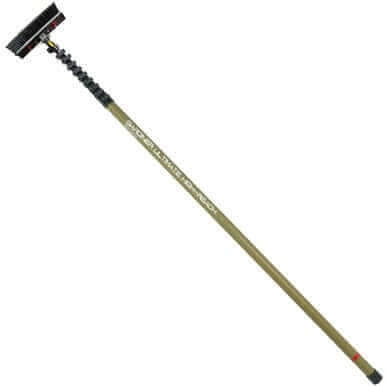
- Mid-rise commercial (5+ stories): 60–90 feet. The Gardiner Ultimate 68ft or 90ft HM Carbon Kevlar poles reach these heights, but you need real skill to work them productively.
Buy for your typical job, not your dream job. A 50-foot pole sitting on the truck because you mostly clean two-story houses is dead weight. A 30-foot pole that covers 80% of your route and a longer pole for the occasional taller building is a smarter investment for most operators.
Clamps Matter
A pole is only as good as its clamps. Sections that slip under load or creep down slowly are dangerous and slow. Both Gardiner's Smart Clamps and ProTool's lever clamps are field-proven. Test clamp tension before every job — a 30-second habit that prevents a bad day.
Brushes and Goosenecks: Where the Cleaning Happens
The brush does the actual work. Jet configuration and bristle type determine how well it cleans different glass conditions.
Bristle Types
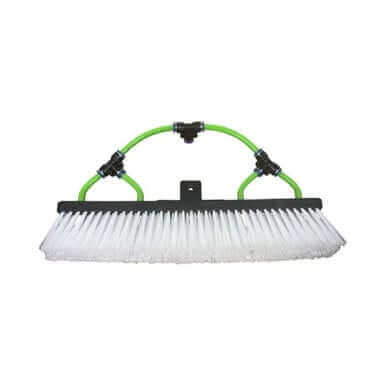
- Nylon: The all-purpose default. Stiff enough for routine maintenance cleans, gentle enough for most glass. The ProTool 14" White Nylon is a solid everyday brush.
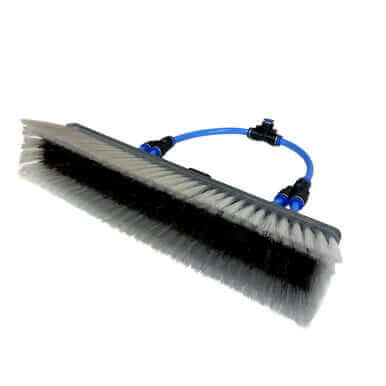
- Boar hair / hybrid: More aggressive scrubbing for first cleans or heavily soiled glass. The ProTool 12" Hybrid Brush combines boar hair and synthetic bristles for versatility.
Jets
Pencil jets concentrate water flow for scrubbing power. Fan jets spread water for rinsing coverage. Most professional brushes use pencil jets for scrubbing, and the rinse technique (lifting the brush off the glass) handles the final sheet rinse without needing fan jets on every brush.
Goosenecks
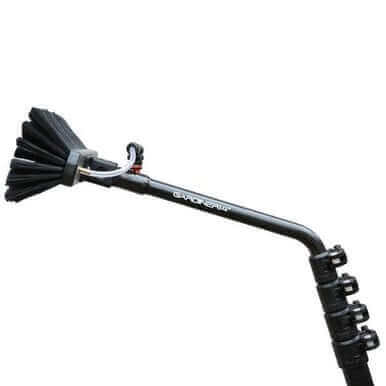
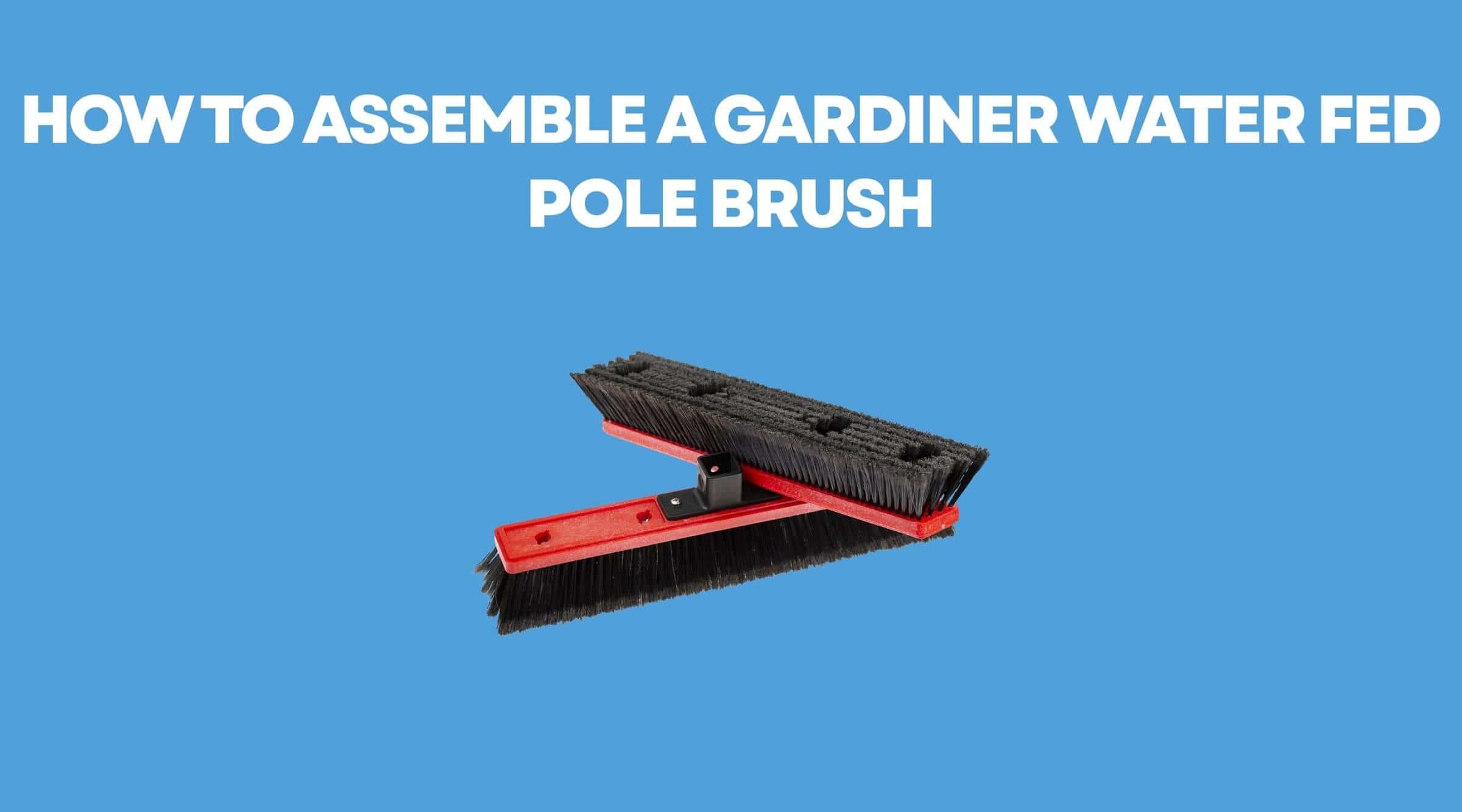
A gooseneck lets you angle the brush to reach recessed windows, deep sills, and awkward architectural details. The Gardiner 14" Carbon Gooseneck with Quick-LoQ is the quick-change standard — swap brush heads or angle adapters in seconds without tools.
Hose and Delivery: Getting Water to the Brush
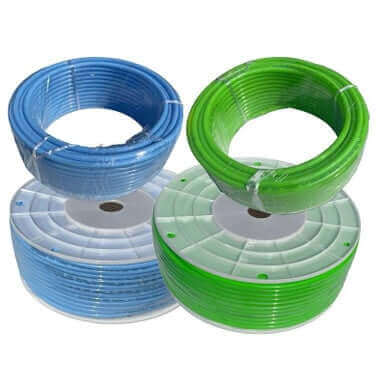
The delivery hose connects your purification system to the pole. Key specs: inside diameter (controls flow rate), weight (you're dragging it around all day), and kink resistance.
- Microbore (5/16" / 8mm): Standard for most residential work. Lightweight, low flow resistance at typical residential heights.
- High-flow (3/8"): Better for commercial work or long hose runs where you need to maintain flow rate and pressure at the brush.
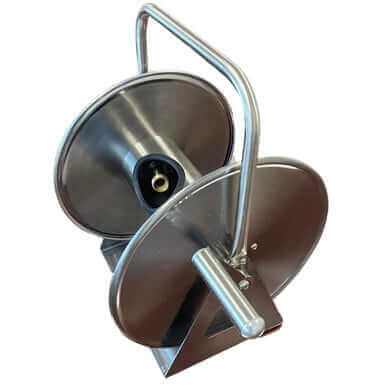
A ProTool Water Fed Hose in 5/16" covers most residential setups. For commercial work, step up to 3/8" and pair it with a proper hose reel to keep your job site organized and your hose off the ground.
Complete Kits vs. Building Your Own
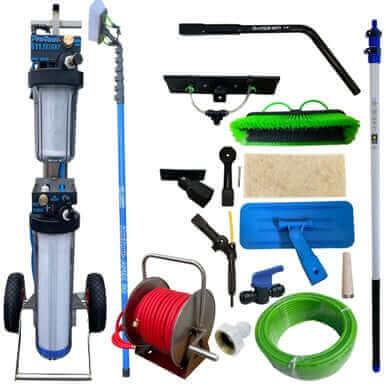
If you're starting out, a matched kit eliminates compatibility guesswork. The ProTool SS RODI Cart with Gardiner CLX 27ft Kit pairs a stainless steel cart with a proven residential pole — everything you need to start taking water fed jobs immediately. The ProTool Ultimate Residential Kit adds a carbon fiber gooseneck and additional accessories for a more complete setup.
Experienced operators building custom rigs will want to spec each component individually. Start with your purification needs, match the pole to your building heights, and select brushes for your typical glass conditions.
Technique: The Basics That Matter
WFP technique is simpler than squeegee work, but sloppy technique still produces bad results.
- Start at the top. Scrub frames, corners, and sills first — that's where the dirt lives. Work down the glass in overlapping passes.
- Scrub the entire frame. One of the biggest advantages over traditional methods is that you're cleaning the whole window unit, not just the glass. Dirty frames drain onto clean glass in the next rain.
- Rinse from top to bottom. Lift the brush a few inches off the glass and let a sheet of pure water flow from the top edge to the bottom. This carries all loosened dirt off the glass.
- Walk away. Do not touch the glass after the final rinse. No squeegee, no towel. The water is 0 PPM — it will evaporate to nothing. Touching it introduces oils and minerals from your tools.
First cleans on neglected windows often need two passes. Set that expectation with the customer upfront. By the second or third regular service, maintenance cleans go fast.
Maintenance: Protect Your Investment
A water fed system is a production asset. Neglected maintenance means spotty results, premature filter replacement, and equipment failures on the job.
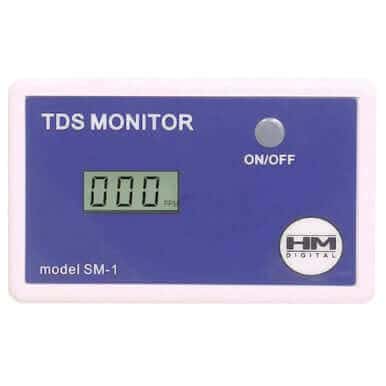
- Check TDS output daily. Use an inline TDS meter mounted on your cart for real-time monitoring. When output rises above 5–10 PPM, change your DI resin. Running exhausted resin means you're putting mineral-laden water on glass.
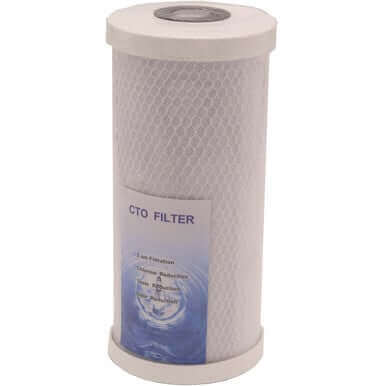
- Replace pre-filters on schedule. Sediment and carbon filters protect your RO membrane. A clogged pre-filter reduces flow and lets contaminants through to the membrane, shortening its life.
- Flush your RO membrane. Follow the manufacturer's flush schedule. Scaling and biofouling are the two membrane killers — both are preventable with regular flushing.
- Rinse brushes after every job. Grit embedded in bristles scratches glass. A 30-second rinse at the end of the day prevents callbacks.
- Inspect clamps and hose connections before each job. A slipping clamp at 40 feet is a liability. A leaking hose fitting wastes water and drops your brush pressure.