When Should I Flush the RO Filter

Table of Contents
- How and Why You Should Flush Your RO Membrane on a ProTool RODI System
- Why RO Membranes Need to Be Flushed
- How Often Should You Flush Your RO Membrane?
- Never Flush Through DI Resin
- How to Flush the RO Membrane on a ProTool RODI System
- Why Flushing Prevents TDS Creep
- RO-Only Mode on the ProTool RODI System
- What If Your Pure Water Cart Doesn’t Have an RO Waste Valve?
- What Happens If You Don’t Flush Your RO Membrane?
- Final Thoughts
- FAQs
How and Why You Should Flush Your RO Membrane on a ProTool RODI System
Keeping your ProTool RODI System operating at peak performance starts with proper RO membrane maintenance. The RO membrane does the heavy purification, and without regular flushing, it quickly becomes clogged with the dirt, minerals, and contaminants removed from your water supply. It's important to flush the RO filter.
This guide explains why flushing matters, how often you should do it, and the correct way to flush the RO membrane for maximum performance and longevity.
Why RO Membranes Need to Be Flushed
Think of a used coffee filter—brown, clogged, and coated with residue.
After every job, your RO membrane looks similar on the inside.
As tap water enters the RO housing, the membrane catches:
Dirt
Sediment
Hard-water minerals
Organic contaminants
Microscopic debris
Over time, this buildup slows water flow, strains the system, increases TDS output, and shortens membrane lifespan. If you never flush your RO, you’ll eventually experience:
Low water output
High TDS
DI resin burned up quickly
Slow startup times
Mold or bacterial growth
Early membrane failure
Flushing prevents all of this.
How Often Should You Flush Your RO Membrane?
After Every Single Job (Best Practice)
A full flush after each job clears away soft contaminants before they dry or harden on the membrane. This keeps membrane performance high day after day.
At Minimum: Once Per Day
If you’re doing multiple back-to-back jobs, flush at the end of the day. This prevents mold growth and stops dissolved solids from crystallizing on the membrane.
Before a Job (Quick Flush)
A short 1–2 minute flush clears “TDS creep,” a temporary rise in TDS that occurs when the system sits idle.
Never Flush Through DI Resin
Flushing water bypasses the membrane surface and carries a large load of contaminants.
Running this dirty flush water through your DI resin will:
Destroy your DI resin extremely fast
Spike TDS levels
Waste money
Always flush the RO with your DI valve turned OFF.
How to Flush the RO Membrane on a ProTool RODI System
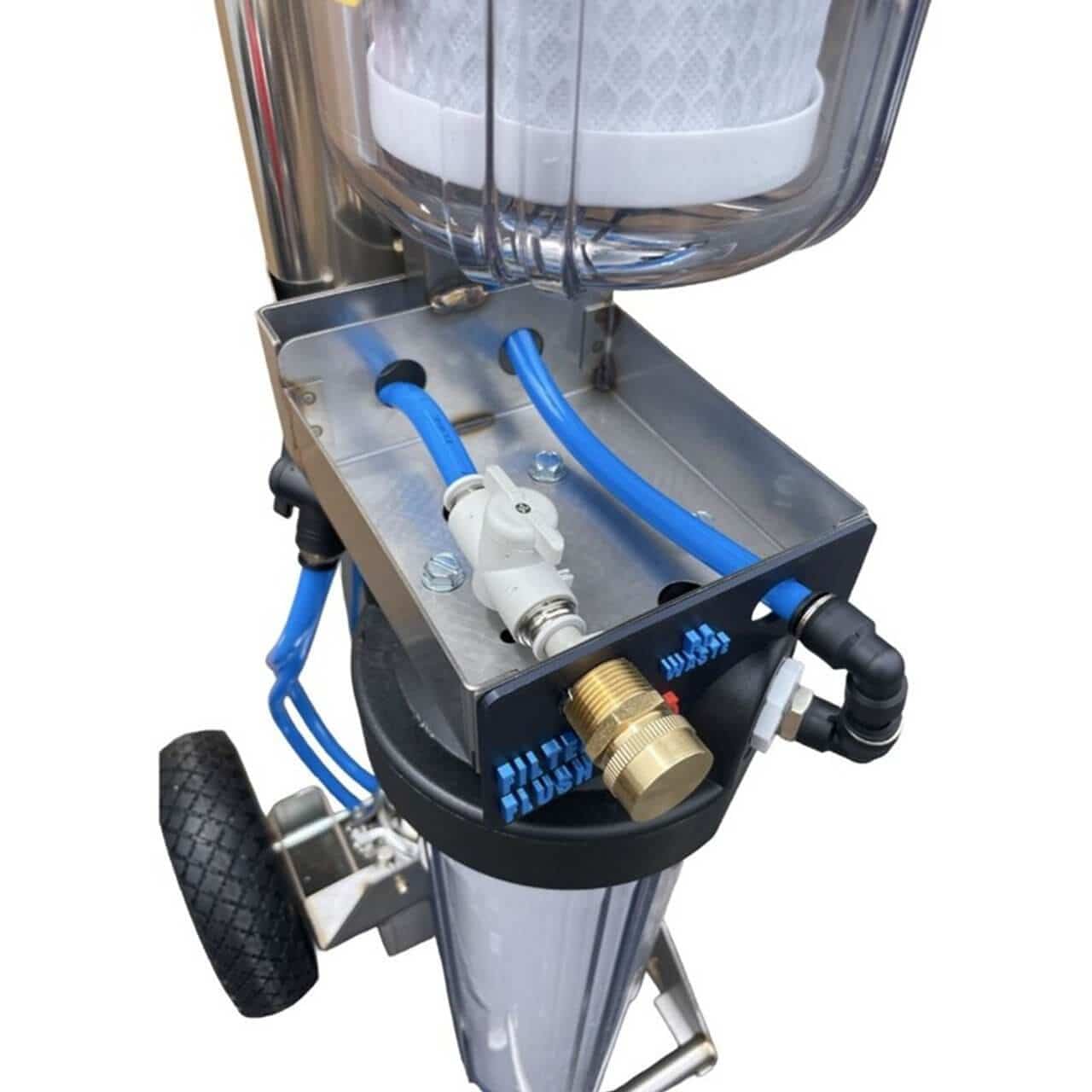
The ProTool RODI System includes a dedicated RO flush valve located directly after the RO housing. This valve allows water to flow around the membrane instead of being pushed through it.
Step-by-Step Flush Procedure (ProTool RODI System)
Turn OFF the DI valve / Three Way Valve
This ensures the flush water doesn’t enter your DI tank.On your 511 Skinny Cart, this is behind the DI filter.
On your Hi Flow Cart, this the three way valve. Point it to RO mode.
Open the RO flush valve to 100%.
This bypasses the membrane, allowing water to run down the outside and carry contaminants out of the system.Run the system for 3–5 minutes.
You’ll flush out metallics, sediment, organics, dirt, and all the debris that reduces efficiency.Close the flush valve and resume normal pure-water production.
This method keeps your RO membrane clean, healthy, and performing at maximum flow.
Why Flushing Prevents TDS Creep
“TDS creep” happens when dissolved solids slowly pass through the membrane while the system is off. When you start the system up again, the first water out of the membrane has temporarily elevated TDS.
A quick flush eliminates this high-TDS water before it reaches your DI resin.
This greatly extends DI life and lowers operating costs.
Make sure to flush the RO!
RO-Only Mode on the ProTool RODI System
One of the biggest advantages of the ProTool RODI System is the ability to run RO-only water when full RODI polishing isn’t required.
RO-only mode is perfect for:
Solar panel cleaning
Alucobond panels
Car washing
Pre-rinsing
General cleaning jobs
Any job where a small amount of TDS doesn’t matter
This feature saves DI resin and lets you match water purity to the job.
What If Your Pure Water Cart Doesn’t Have an RO Waste Valve?
A surprising number of pure water carts are built without an RO waste/flush valve, usually to make manufacturing simpler and to keep the cart “easy to use.” Unfortunately, this is a serious design flaw. Without a flush valve, all contaminants stay trapped inside the RO housing with no way out. Dirt, minerals, and hard-water scale accumulate rapidly, causing pre-mature RO membrane failure, higher TDS, slower flow, and dramatically increased DI resin usage. A system without a flush valve may look simpler, but it sacrifices long-term reliability and ends up costing operators far more in membrane replacements and maintenance. Which lead us to, what happens if you don't (or can't) flush your RO membrane.
If you don’t flush your RO membrane, contaminants build up, TDS spikes, and your DI resin burns out fast—leading to frequent $200–$300 membrane replacements and higher operating costs. When considering pure water carts, make sure the one you purchase has an RO flush option, or you may be buying a time-bomb of constant membrane replacement costs.
What Happens If You Don’t Flush Your RO Membrane?
Skipping your flushes leads to:
Mineral scaling
Clogged membranes
Reduced GPM output
Higher TDS at startup and during use
DI resin burning out rapidly
Slow system startup
Mold inside the membrane
Permanent damage requiring membrane replacement
A few minutes of daily flushing prevents hundreds of dollars in repairs and resin usage.
If you don't flush the RO membranes can fail in as little as six months—or even three weeks in heavy-use conditions. Even with occasional use, neglect can still limit membrane life to 1–2 years. That means replacing a $200–$300 membrane much sooner than you should.
Final Thoughts
Flushing your RO membrane is one of the simplest and most important steps for maintaining your and RODI system. Doing it after each job—and briefly before the next—keeps your water output strong, your TDS low, and your filters and membrane working at their best.
A well-maintained membrane lasts longer, saves money, and ensures your pure-water production is always at peak performance.
👉 Shop ProTool Pure Water Collection
https://jracenstein.com/water-fed-cleaning/pure-water-systems/
👉 Shop ProTool Pure Water Cart Collection
https://jracenstein.com/water-fed-cleaning/pure-water/pure-water-carts/
FAQs
Why do I need to flush my RO membrane?
Flushing removes contaminants, minerals, and debris that collect on the membrane surface. Without flushing, the membrane clogs, TDS rises, flow drops, and DI resin gets consumed much faster—all of which drive up operating costs.
How often should I flush my RO membrane?
Flush after every job for best performance. At minimum, flush once at the end of each day, and do a quick 1–2 minute flush before the next job to eliminate TDS creep.
What happens if I don’t flush my RO membrane?
Skipping flushes leads to rapid TDS spikes, clogged membranes, faster DI exhaustion, and costly early RO failure. A neglected membrane can die in months—or even weeks—resulting in frequent $200–$300 replacements.
Can I flush through the DI resin?
No. Flush water is loaded with contaminants and will destroy your DI resin quickly. Always flush with the DI valve turned off.
Why do some pure water carts fail faster than others?
Carts without an RO flush valve trap contaminants inside the membrane, causing premature clogging, rising TDS, and significantly higher DI and membrane replacement costs.
How do I know if my pure water cart has an RO flush option?
Look for a dedicated RO flush or RO waste valve located immediately after the RO housing. If your cart does not have one, you cannot properly flush the membrane.
Why is buying a cart without an RO flush valve a bad idea?
Without a flush valve, you’re essentially buying a ticking time bomb—your RO membrane will fail early, your DI costs will skyrocket, and you’ll end up paying hundreds more each year in replacement filters and resin.
Does flushing extend RO membrane life?
Yes—dramatically. Regular flushing keeps the membrane clean, reduces pressure strain, lowers TDS output, preserves DI resin, and can add years to the membrane’s lifespan.
Does the ProTool RODI System include a proper RO flush valve?
Yes. ProTool systems include a full RO flush bypass, allowing you to clean the membrane in minutes and avoid the expensive failure common in non-flushable carts.