
Window Cleaning and Water Fed Poles: A Professional's Guide
Table of Contents
Window cleaning and water fed poles have changed how professionals approach exterior glass — especially on multi-story residential and light commercial work. Pure water technology eliminates the ladder-and-squeegee cycle for a large portion of the jobs most crews run daily, cutting labor time and reducing liability. If you haven't built a water fed system into your operation yet, or you're running one that's overdue for an upgrade, here's what matters.
Why Water Fed Poles Work
A water fed pole delivers purified water through a brush head at the end of a telescopic carbon fiber pole. The purified water — stripped of dissolved solids by a reverse osmosis and deionization (RODI) system — does the cleaning. It dissolves dirt on the glass, and because the water itself leaves zero residue, the glass dries spot-free without squeegeeing.
That matters operationally. You stay on the ground, you skip the ladder setup and repositioning, and a single operator can clean windows that previously required two people and staging. On residential routes, water fed pole work cuts per-pane time significantly once the technique is dialed in.
Choosing the Right Pole
Pole selection comes down to reach, weight, and rigidity. Carbon fiber is the standard for professional use — it's lighter than fiberglass or aluminum at equivalent lengths and stiff enough to control a brush head three or four stories up. A pole that flexes too much at full extension wastes energy and slows you down.
The ProTool Apex Carbon Fiber Pole covers most residential and mid-rise commercial work. For crews that regularly work above 40 feet, the ProTool Apex Hi-Mod Carbon Fiber Pole uses a higher-modulus carbon layup — stiffer at full extension with less tip deflection. Gardiner poles are another strong option: the Gardiner CLX 27ft is a reliable residential workhorse, while the Gardiner SLX 30ft handles taller structures.
The Pure Water System
The pole is only half the system. Without clean water, you get spots. A professional RODI system pushes tap water through sediment filtration, carbon filtration, a reverse osmosis membrane, and finally a deionization stage. The output should read 000 on a TDS meter — anything above that and you'll leave mineral deposits on glass.
For operators running routes from a vehicle, the ProTool HiFlo Pure Water Cart is built for daily production. It pairs a stainless steel frame with high-flow RO membranes and oversized DI capacity, so you're not swapping filters mid-day. If space is tight, the ProTool 511 Cart fits in smaller vans without sacrificing output. Wall-mount systems like the ProTool HydroPanel work well for shops that fill tanks at the warehouse before heading out.
Brushes and Accessories
Brush selection depends on the surface. A soft nylon brush like the ProTool 14in White Nylon Brush handles standard residential glass without risk of scratching frames or coatings. For commercial work where glass collects more grime, the ProTool 4 Pencil-Jet Hybrid Brush adds targeted water jets that break up stubborn buildup faster.
A Gardiner Gooseneck 14in 55° Quick-LoQ lets you angle the brush under soffits and into window recesses — situations where a straight pole can't reach the top of the glass.
Workflow and Common Mistakes
The biggest mistake new water fed operators make is working too fast. Pure water needs dwell time. Scrub the glass, then rinse from top to bottom in a controlled pass. Rushing the rinse leaves dirty water trails that dry into streaks.
Second mistake: not monitoring TDS. Check your output water before every job. Resin exhaustion is gradual, and by the time you notice spots on glass, you've already left them on the last several houses. A ProTool Inline TDS Meter mounted on your cart removes the guesswork.
Third: skipping pre-scrub on neglected glass. Water fed poles clean maintenance-level dirt efficiently. If a window hasn't been touched in years and has oxidation, hard water deposits, or construction residue, you need to address that with hand detailing first. Trying to force a water fed pole through heavy contamination just wastes time and water.
When to Use Traditional Squeegee Work Instead
Water fed poles don't replace traditional work — they complement it. Interior glass still requires a squeegee. So does glass with heavy hard water staining, glass in enclosed atriums where overspray is a problem, and ground-floor storefronts where a squeegee is simply faster. The best operators run both systems and pick the right tool for the situation.
Products Mentioned
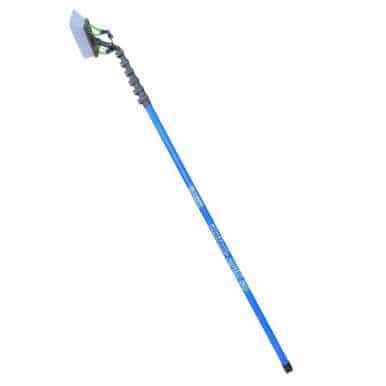 ProTool Apex Carbon Fiber Water Fed Pole SKU: 151-32M | 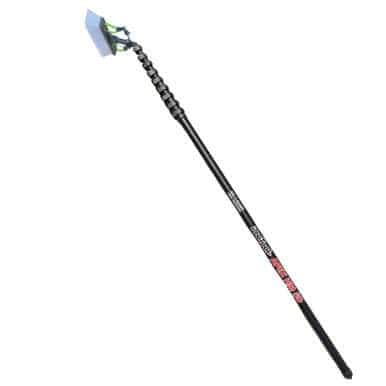 ProTool Apex Hi-Mod Carbon Fiber Pole SKU: 151-3502 | 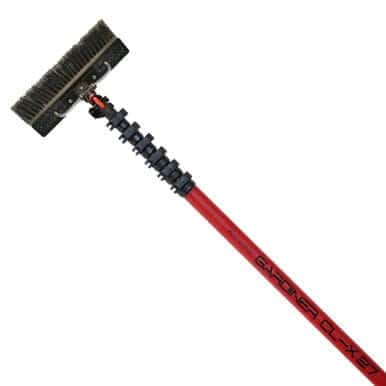 Gardiner CLX 27ft Pole Carbon Composite SKU: 155-4272 |
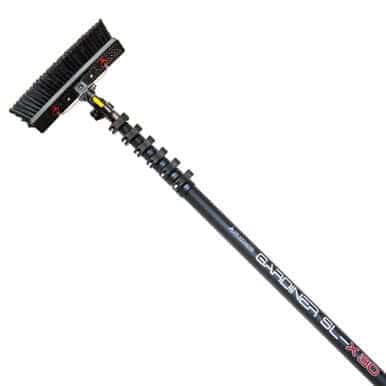 Gardiner SLX 30ft Carbon Fiber Pole SKU: 155-4301 | 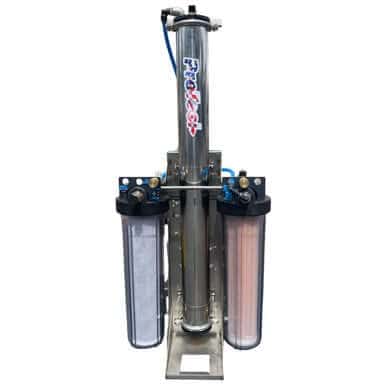 ProTool HiFlo Pure Water Cart Stainless Steel SKU: 150-0521 | 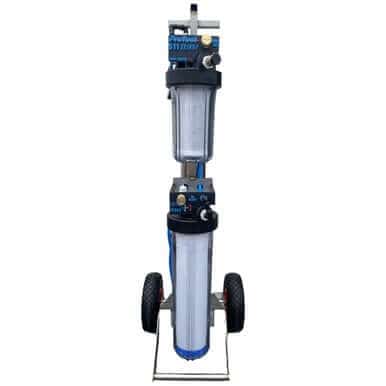 ProTool 511 Pure Water Cart SKU: 150-0515 |
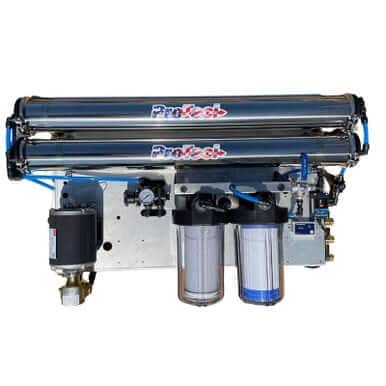 ProTool HydroPanel RODI Wall Mount SKU: 150-05346M | 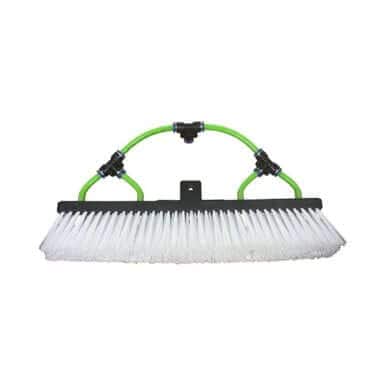 ProTool White Nylon Brush 14 in SKU: 151-20M | 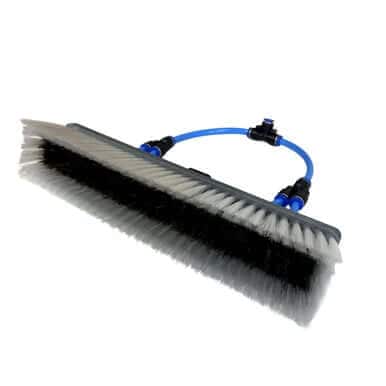 ProTool 4 Pencil-Jet Hybrid Brush 12in SKU: 151-211 |
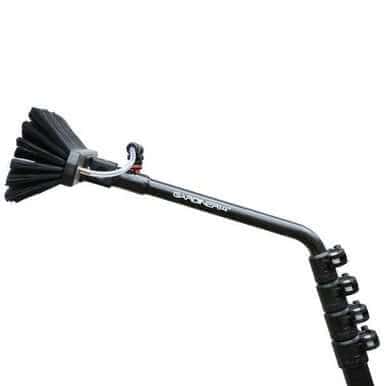 Gardiner Gooseneck Carbon 14in 55deg Quick-Loq SKU: 157-4053 | 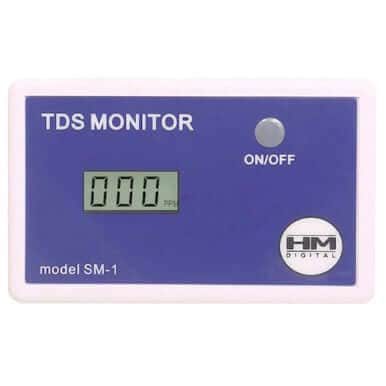 TDS Inline Meter - includes a 1/4 Tee SKU: 150-019 |