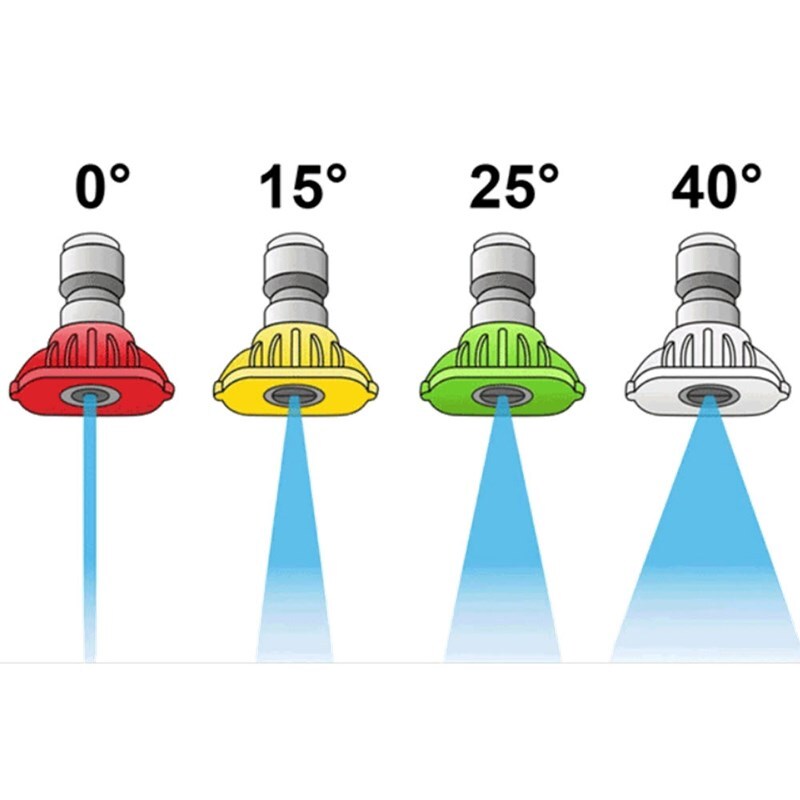
When selecting the ideal nozzle for your pressure washer, keep the following two factors in mind:
The nozzle type
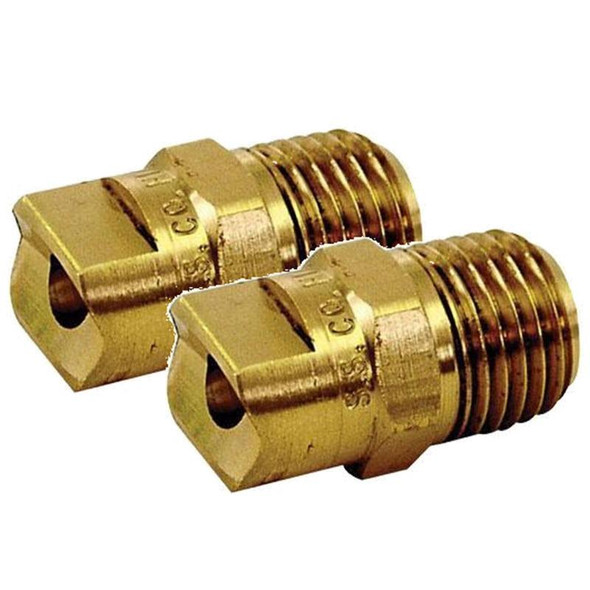
The nozzle's orifice
The efficiency of the nozzle is key; by utilizing a different kind of nozzle, you can reduce the amount of time needed to clean.
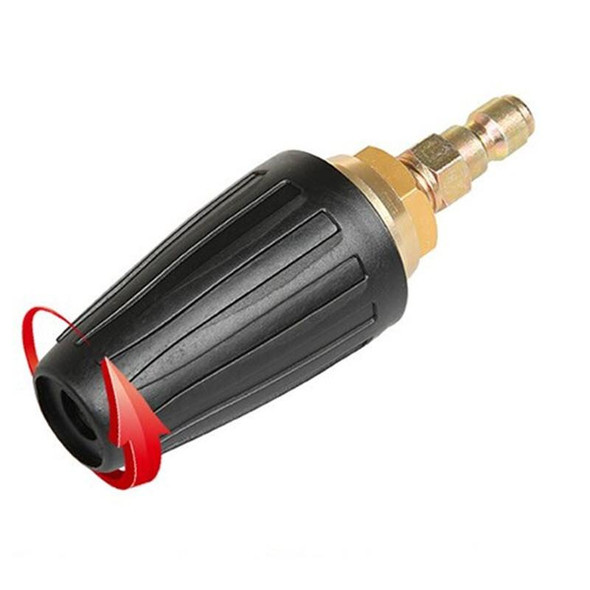
Standard nozzles come in a variety of spray angles, and rotary nozzles (also known as turbo nozzles) cover a larger area faster by spraying in a round pattern.
The nozzle's aperture is the subject of the article.
The "hole" in the nozzle that permits water to flow through it is called an orifice. A "number 2" orifice is smaller than a "number 8.5" orifice. Orifices (or holes) range in size from 2 to 60.
| Nozzle Size |
Pounds Per Square Inch (PSI) Chart |
This article will help you better understand different types of quick connects and their specific uses as per their increasing angle degrees which will cover the surface area of the material on which it is going to be used and also it will explain you how to select the nozzle size as per the pressure (PSI).

Every pressure washer must to come with a particular nozzle size.
I'll take the example of watering a yard with a garden hose to better illustrate the significance of the orifice.
Imagine that you need to water a yard that is 20 feet deep using a 10 foot hose. By pressing your thumb against the hose and squeezing the water through a narrower orifice, you may restrict the water flow and reach the far end of the yard. This will hasten the flow of water from the hose.
Imagine that the spigot is opened to allow more water to flow. Two things take place:
The water will spray farther into the yard AND the spigot will experience more back pressure.
By letting more water flow through the hose and reducing the distance the water travels into the yard, you can lessen the added pressure by doing so.
In contrast to the pressure of a pressure washer, which varies from 1,000 to over 4,000 PSI, the example we just gave deals with garden hose pressures of roughly 40 PSI.
Imagine what would happen if you restrict the flow by using a nozzle with a narrower aperture if your pressure washer has a PSI rating of 2,000 and a water flow of 2.5 gallons per minute.
A narrower orifice will result in an increase in pressure, which will lead to pump failure and might result in operator injury.
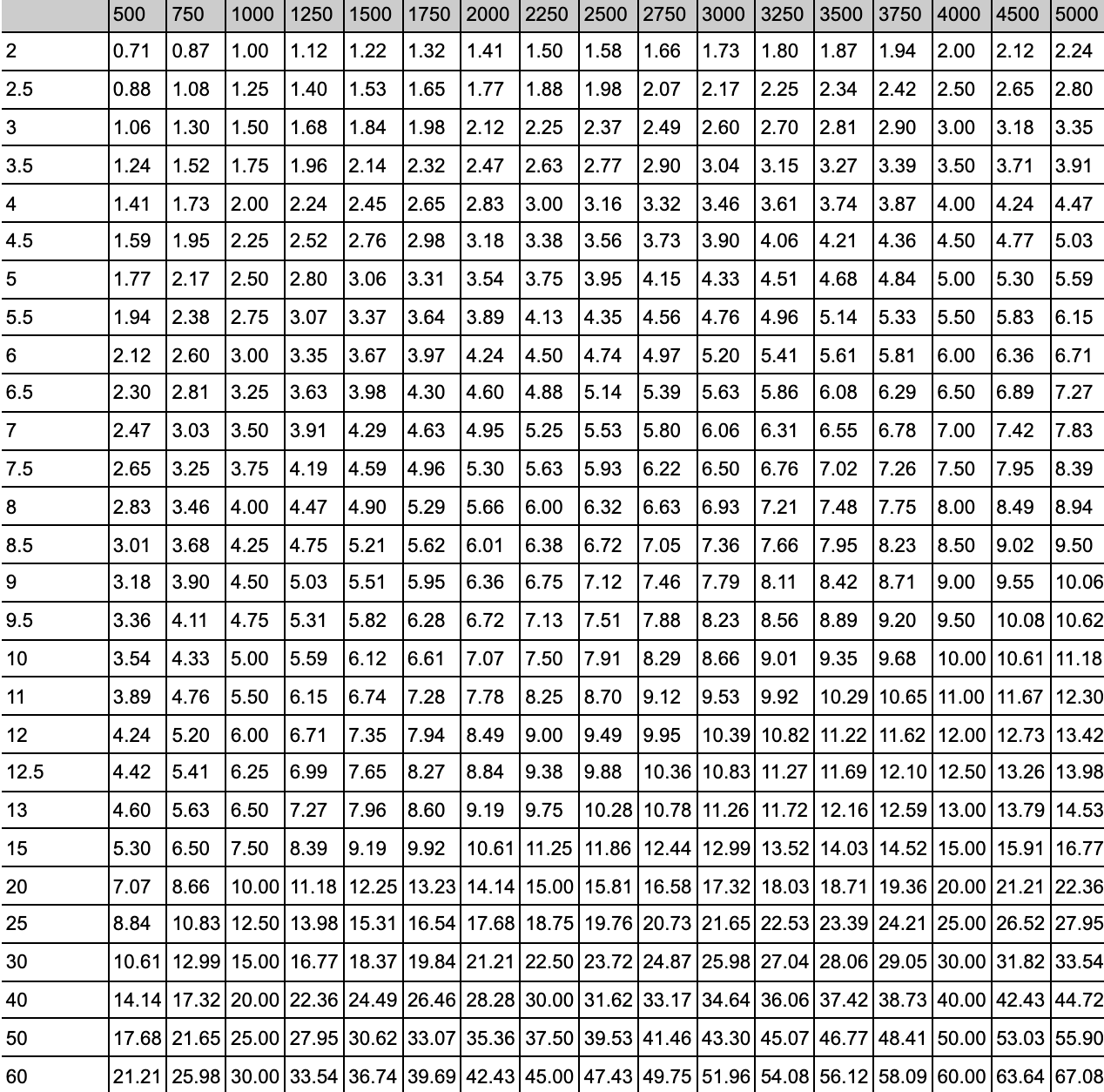
Based on the specs of your pressure washer, the table below displays the appropriate orifice.
The PSI is in the first column.
Find the GPM by descending the column.
The number in the left column of the table will indicate the orifice size.
For instance:
Your pressure washer's orifice number should be "5" if its PSI is 1,750 and its GPM is 3.31.
Call @ (201) 809-7500 JRacenstein for more details about nozzles and other expediting accessories.