Choosing a 1/2 in Soft Wash Spray Hose: 4 GPM Systems and 100–200ft Runs
A question we get constantly:
“What is the best clear 1/2 in hose to use on soft wash? I’m running a 13-gallon 4 GPM soft wash unit, I plan to upgrade the pump later, and I want about 100 to 150 feet of hose.”
Short answer: 1/2 in is the correct inside diameter for a 4 GPM soft wash spray line at that length.
Spray hose and supply hose are sized by different rules
This trips up a lot of buyers.
Supply hose the line feeding a pressure washer pump from a tank or spigot — gets sized up aggressively, 3/4 in and larger, because starving a pump on the inlet side makes it cavitate and destroys it.
Spray hose is the line downstream of the pump running out to the gun, and it is sized for something else entirely: reach at the nozzle, the volume of chemical sitting in the line, and what a person can physically drag across a roof.
When a customer says “soft wash hose,” they almost always mean the spray line. That band is narrow:
1/2 in ID — the standard soft wash spray line, and correct for 12V diaphragm systems including your 4 GPM unit
5/8 in ID — the step up for gas soft wash systems, generally loaded on a reel, where flow and pressure both climb
Note that the 3/4 in option on this page is supply and transfer duty. It is not a soft wash spray line.
Why 1/2 in is right at 4 GPM
At 4 GPM, a smooth-bore 1/2 in line gives up roughly 16 PSI per 100 ft to friction, so a 150 ft run costs about 25 PSI at the gun. A 12V diaphragm pump on a 13-gallon soft wash unit has that headroom and will still throw a usable stream.
Step down to 3/8 in at the same flow and the loss is about 66 PSI per 100 ft — four times worse. The fan pattern collapses, reach falls off, and it feels like the pump is failing when the hose is actually choking it. This is the most common self-inflicted soft wash problem we see on ground rigs. Drone work is the one exception, covered below.
Sizing the spray line for a pump upgrade
Friction loss climbs at roughly the 1.85 power of flow, so doubling GPM nearly quadruples what the line eats. Where that lands you depends on which upgrade you make:
Staying 12V, up to about 4 GPM — 1/2 in still correct. No hose change needed.
Moving to a gas soft wash system — go to 5/8 in spray line. At 8 GPM, 1/2 in sheds about 58 PSI per 100 ft, while 5/8 in sheds about 20 PSI per 100 ft, which a gas unit absorbs without complaint.
Going bigger than 5/8 in on a spray line costs you more than it returns. A 150 ft run of 3/4 in holds about 3.4 gallons of mixed chemical against 1.5 gallons in 1/2 in — chem you have to push out before you are spraying, and push out again to flush. It also carries about 29 lbs of water weight before you count the hose itself. On a roof that is the difference between working and fighting.
The drone exception: go narrower, not wider
Cleaning drones invert the rule above, and it catches people out.
A ground crew drags hose horizontally, so weight is an annoyance.
A drone lifts the hose to working height, so every pound of line is payload spent on hose instead of on altitude, stability, and time in the air. Hose weight becomes the limit on how tall a building you can service.
That makes a gas soft wash pump the right call — not for volume, but for pressure headroom. A drone working at height is fighting elevation head before it fights anything else: water costs about 0.43 PSI for every foot of lift, so 100 ft up is 43 PSI gone and 200 ft up is 87 PSI gone, before a drop of friction loss. A 12V pump does not have that to give. A gas unit like the ProTool BPX25 or P40 soft wash sprayer skid does, and you spend that surplus buying back weight in a smaller line.
Per 100 ft, water alone weighs roughly:
5/8 in — about 13 lbs
1/2 in — about 8.5 lbs
3/8 in — about 5 lbs
Dropping from 5/8 in to 1/2 in saves close to 5 lbs of water per 100 ft, and 1/2 in to 3/8 in saves nearly 4 lbs more — before counting the hose material itself, which scales the same direction.
On a drone that is real working height.
What we suggest for drone soft wash:
1/2 in spray line — the default for drone work behind a gas pump. Good balance of flow at the tip and manageable lift weight.
3/8 in spray line — for maximum reach on taller buildings, where height matters more than volume.
Drone spray heads run lower flow than a ground gun, so the friction penalty is smaller than the raw numbers suggest, and a gas pump absorbs what is left.
Not 5/8 in — the added weight works against the drone and costs you the top of the building.
Both of those sizes are options on this page. The trade is honest: 3/8 in buys altitude and costs flow at the tip, so match it to height-limited work rather than to jobs that need volume.
Clear braided PVC vs. hybrid
Clear braided hose is popular for one legitimate reason: you can watch the chemical move and see air in the line when the pump is losing prime. That is a diagnostic advantage. Everything else about it works against a soft wash rig:
Heat derating. PVC pressure ratings are published at room temperature and fall off sharply as the hose warms. A line rated 200 PSI at 70°F may be down near half that lying on a hot roof or coiled in a black truck bed in August.
UV plus sodium hypochlorite. The combination yellows and embrittles clear PVC. It stiffens first, then splits — usually right at the ferrule where it flexes most.
Handling. Clear braided takes a hard coil set, kinks under its own memory, is heavy for its ID, and fights a reel every time you wind it.
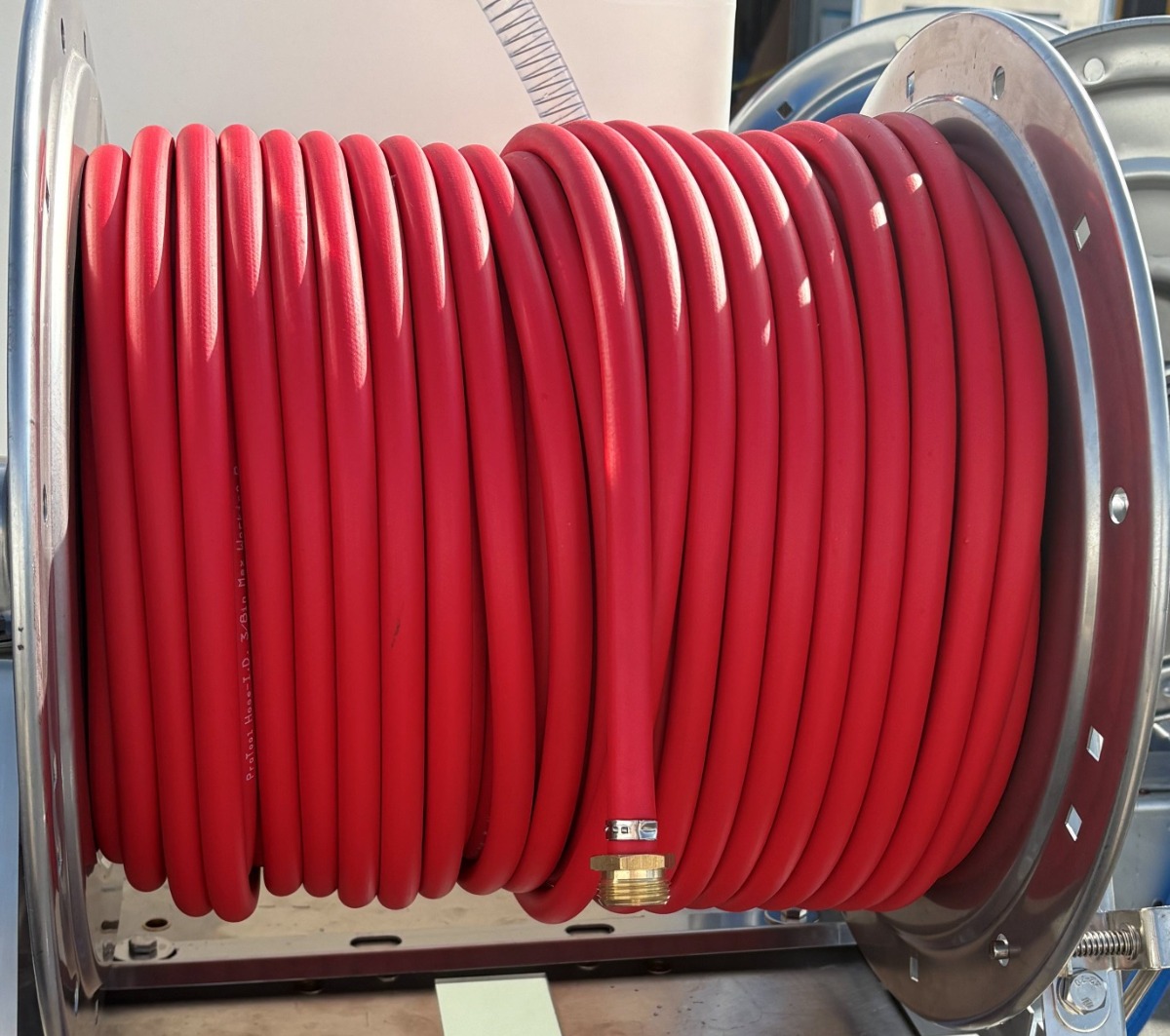
The ProTool Ultra Light Hybrid in 1/2 in solves the handling and service life problems: 300 PSI rating, stays limber on cold mornings instead of turning into a hoop, lays flat on a reel without coil set, and shrugs off the sodium hypochlorite concentrations used in soft washing. What you give up is the sight line.
Recommended configuration for a 4 GPM soft wash unit:
1/2 in ProTool Ultra Light Hybrid Hose, 100 ft, 150 ft to 200ft all lengths are selectable above
Short clear braided jumper or clear strainer bowl at the pump outlet for prime visibility
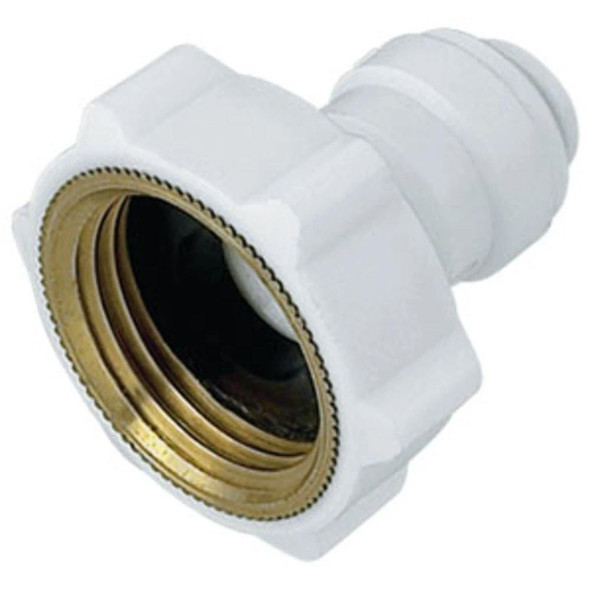
Fittings matched to your pump outlet — confirm thread type before ordering adaptors
Fresh-water flush at the end of every chemical day, hose ends included
Planning a jump to a gas soft wash system?
You may want 5/8 in spray line — see our Soft Wash Hoses and Reels, or call us at 201-809-7500 and we will size the line to the pump before you buy it twice.