

Do I need a sediment filter for my RODI window cleaning system?

Do I need a sediment filter for my RODI window cleaning system? Short answer: probably not. Four-stage filtration is a growing marketing trend on some carts, but for most contractors running municipal tap water, a sediment filter adds cost, eats cart space, and duplicates work your carbon filter already handles.
How a Standard Three-Stage RODI System Works
Water flows from the tap through a carbon filter, then a reverse osmosis membrane, then a DI cartridge. Each stage removes a different class of contaminant. The carbon kills chlorine (which destroys RO membranes), the RO strips dissolved solids, and the DI polishes what's left to 000 TDS. That sequence is purpose-built — nothing in it is redundant.
Why a Sediment Filter Is Usually Unnecessary
Tap Water Is Already Pre-Filtered
Sediment filters target particles 50 microns and larger — sand grains, rust flakes, visible debris. Municipal water treatment already filters well below 5 microns before it reaches your hose bib. The contaminants a sediment filter catches simply aren't present in treated water.
Your Carbon Filter Already Does the Job
A carbon filter rated for chlorine removal also blocks anything 50 microns and above. It does everything a sediment filter does, plus the one thing the sediment filter cannot: neutralize chlorine before it reaches the RO membrane. Doubling up on sediment removal with a dedicated cartridge gives you no additional protection on city water.
It Costs You Space, Flow, and Filter Life
Cart real estate is finite. A sediment housing occupying a slot means your carbon, RO, or DI stages have to shrink — or you add weight and plumbing complexity. Smaller carbon and DI cartridges exhaust faster, which means more frequent changeouts, more downtime between jobs, and higher annual filter cost. On a ProTool HiFlo Pure Water Cart, every housing slot is sized for maximum runtime. A redundant sediment stage undermines that.
When a Sediment Filter Actually Matters
The 1% exception is real: any water source that hasn't been through a municipal treatment plant can carry particles large enough to clog a carbon filter prematurely. In these situations, an inline sediment filter upstream of your carbon stage acts as a sacrificial pre-filter, extending the life of the more expensive cartridges downstream.
Consider adding one when you're drawing from:
- Well water — untreated, often carries sand, silt, and iron particulate.
- Rainwater collection tanks — organic debris, pollen, and sediment settle over time.
- Reclaimed / purple water — variable quality depending on source and storage.
- Stored water of unknown age — tanks left stagnant grow biofilm and shed particulate.
If you run well water regularly, a ProTool HydroCart Filter Kit Pro lets you add sediment pre-filtration without sacrificing downstream capacity. Monitor your TDS meter readings and carbon changeout intervals — if your carbon is lasting its expected cycle on your water source, a sediment filter won't buy you anything extra.
Bottom Line
On municipal water, skip the sediment filter. Keep your three-stage system tight: carbon, RO, DI. Spend the housing slot on a larger DI cartridge or a higher-flow RO membrane instead. Save the sediment stage for well water, stored water, or any source you don't trust — and treat it as a sacrificial guard for the filters that actually matter.
Products Mentioned
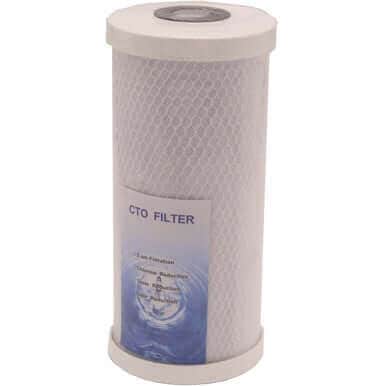 ProTool Carbon 4.5 inch x 10 inch Water Filter Cartridge SKU: 150-006 | 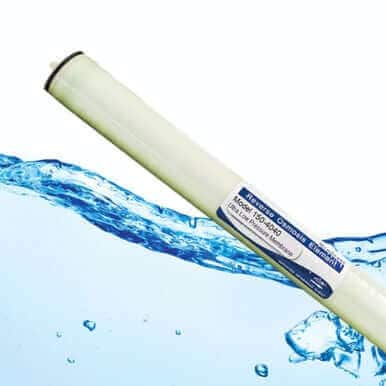 ProTool RO Membrane 4040 Ultra Low Pressure SKU: 150-4040 | 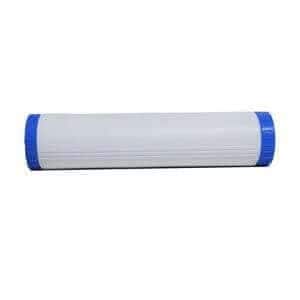 ProTool DI Filter 20in Blue/White RTU SKU: 150-012 |
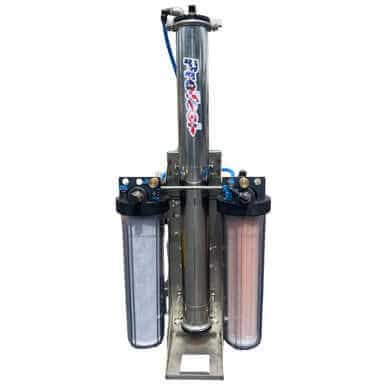 ProTool HiFlo Pure Water Cart Stainless Steel SKU: 150-0521 | 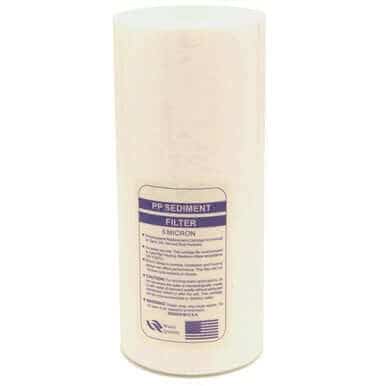 ProTool Sediment Filter 4.5in x 10in SKU: 150-005 | 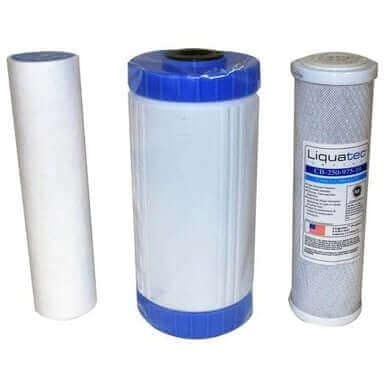 ProTool HydroCart Filter Kit Pro SKU: 150-0050 |
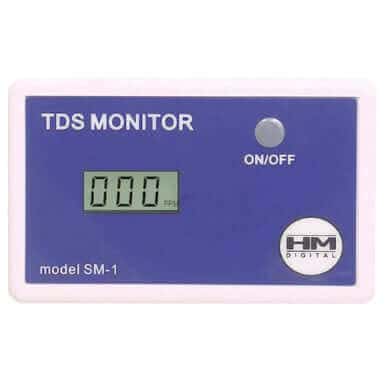 TDS Inline Meter - includes a 1/4 Tee SKU: 150-019 |