Best Squeegee Rubber for Cold Weather: What Actually Works Below 50°F

Table of Contents
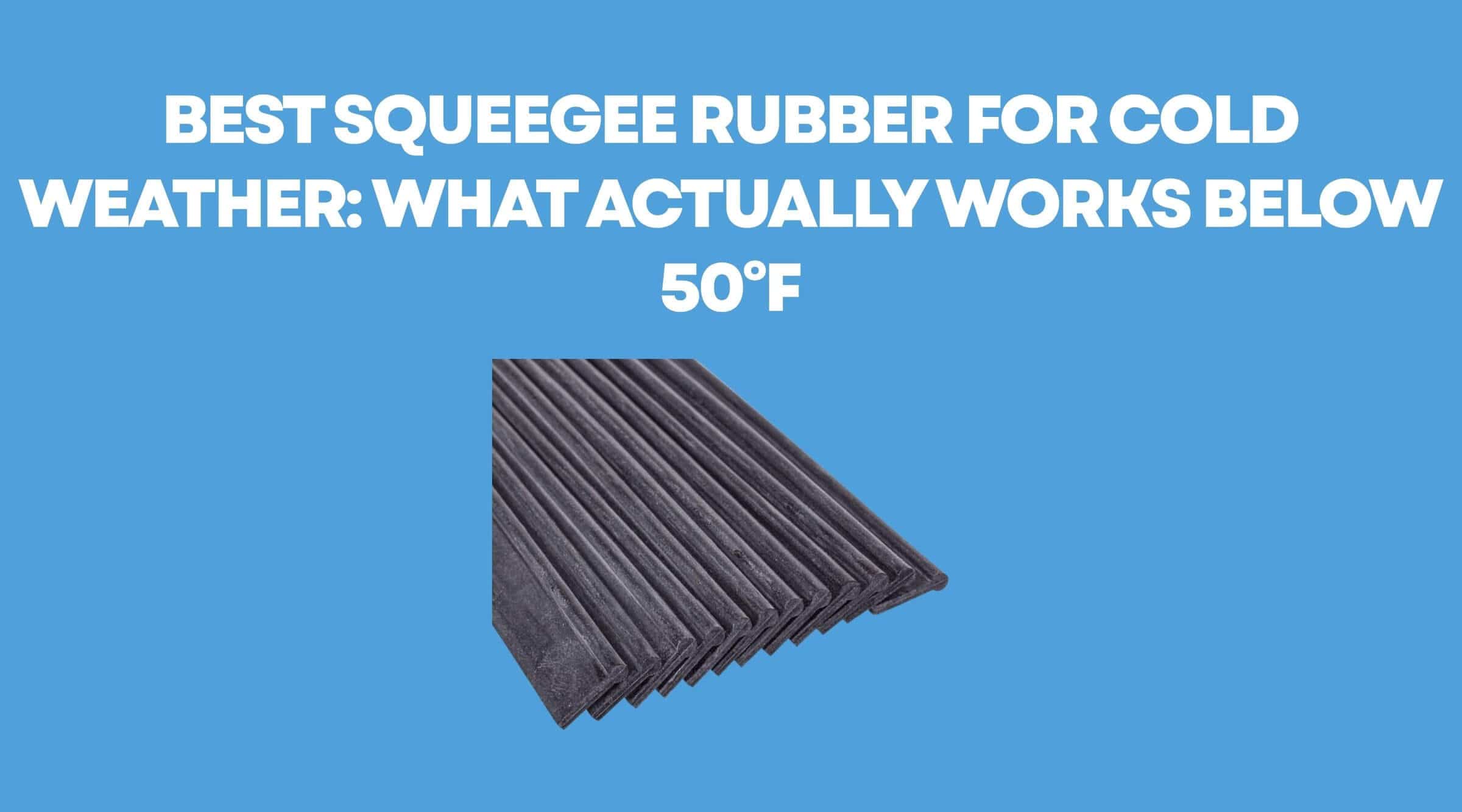
The best squeegee rubber for cold weather is a soft compound rated between Shore 45 and 50 — and if you're still running your summer rubber in January, you already know what happens. The blade stiffens, skips across the glass, and leaves lines on every pull. You re-detail every pane, your per-window time climbs, and your wrists pay the price. The fix isn't technique. It's the rubber.
This guide covers the Shore A hardness ratings that matter, the specific compounds that hold up below freezing, and the winter handling practices that keep your edges sharp twice as long.
Why Squeegee Rubber Fails in the Cold
Vulcanized squeegee rubber is a network of polymer chains cross-linked by sulfur. At room temperature those chains flex freely — the blade conforms to the glass, creates a vacuum seal, and pulls water cleanly. Below 50°F, molecular movement slows. The rubber contracts and stiffens. That stiffness breaks the seal, and water escapes through microscopic gaps the blade can no longer close.
The result is chatter: the blade skips instead of gliding, leaving parallel water lines that require hand detailing. Most pros compensate by pressing harder, which accelerates wrist fatigue and wears out brass and stainless steel channels faster than normal. A blade that's too hard for the temperature also develops micro-cracks — a single 0.1 mm fissure causes ghosting streaks you can't detail away.
The practical threshold: once your ambient temperature stays below 50°F consistently, standard hard rubber (Shore 55–60) stops performing to professional standards. You need a softer compound.
Shore Hardness: The Number That Matters
Shore A durometer is how rubber flexibility is measured. Higher numbers mean harder rubber. Here's the breakdown that matters on the truck:
- Shore 45–50 (Soft): Optimal range for 25°F to 45°F. The blade stays pliable enough to seat into the glass and pull water in a single pass — critical when water on the pane is at risk of freezing while you work.
- Shore 52–53 (Medium / All-Season): Covers 45°F to 65°F. A viable choice if temperatures swing 20 degrees during a single shift. Won't get mushy in afternoon sun, won't turn rigid when the wind picks up.
- Shore 55–60 (Hard): Summer and warm-climate rubber. Lasts 25–30% longer in hot conditions due to abrasion resistance, but becomes a liability once you hit 48–50°F.
In cold conditions, a hard rubber's effective durometer climbs roughly 15% above its rated spec. A Shore 58 blade at 30°F behaves closer to a Shore 67 — essentially a piece of rigid plastic. A soft Shore 47 blade at the same temperature still registers in the low 50s, well within the usable range.
Soft vs. Hard Rubber: The Winter Trade-Off
Hard rubber lasts longer. That's the only argument for it, and it only holds in warm weather. Below 48°F, the economics reverse. A technician using hard rubber in January might save $2 per strip but lose $45+ in billable time from re-detailing. The "break point" is real: once the blade feels like stiff plastic rather than flexible rubber, you're working against your tool.
Soft rubber wears faster — plan on it. You'll go through more strips per shift. But each strip delivers clean, single-pass results that keep your route time predictable. The trade-off is straightforward: spend more on rubber, spend less on labor.
The channel matters here. Soft rubber is more prone to "flicking" at stroke ends. Pair it with a rigid carrier — a wide-body aluminum channel like the Pulex Alumax or a brass channel — to provide the structural support the softer blade needs. A high-tension channel keeps the soft blade flat against the pane and prevents edge lift.
Best Squeegee Rubber Brands for Freezing Temperatures
Ettore Master Soft
The benchmark. Ettore Rubber Master in the soft compound sits at roughly Shore 45–50 and delivers a predictable response in sub-freezing conditions. Every strip is hand-inspected for edge integrity. It seats well in standard brass and stainless steel channels. Most veterans who've tried everything keep coming back to Ettore for winter work because the consistency is reliable pane after pane.
Unger Power and ErgoTec Soft
Unger Power Green rubber is a vulcanized, FSC-certified compound that holds its shape across a 20–60°F range. It won't warp if it sits in a cold van overnight. The ErgoTec Soft rubber is specifically designed for Unger's ErgoTec and S-Channel systems — if you're in Unger's ecosystem, stay in it for the best channel-to-rubber fit.
Moerman DuraFlex
Moerman NXT-R DuraFlex is engineered for Liquidator channels and their angled "dog-ear" tips. Soft enough to press into those corners without leaving water behind in the frames. If you run Liquidators, this is the only rubber that fits the geometry correctly.
Winter Technique and Maintenance
Adjust Your Angle and Pressure
Cold glass is harder and less "grippy" than warm glass. Increase your squeegee handle angle by 15–20 degrees from your summer position. Lighten your pressure — if you're pressing harder than you would in July, your rubber is telling you it's too hard for the temperature. Listen to the blade.
Flip and Replace on Schedule
A standard strip gives you two sharp edges. In winter, rubber loses elasticity roughly 25% faster than in mild conditions. Expect 4–6 hours of continuous use before the edge rounds off. When you see a nick or feel the pull change, flip immediately. Don't work through a compromised edge — callbacks cost more than rubber.
Solution Adjustments
Standard dish soap thickens below 35°F. Most cold-weather pros add isopropyl alcohol to lower the freezing point of the bucket. The downside: alcohol strips lubricants from the rubber and accelerates brittleness. Counter this by bumping your soap concentration 10% above your summer ratio to maintain glide. Winsol Super Slip is specifically formulated to reduce blade drag — it's worth adding to winter buckets.
For stubborn frost or salt spray, run 0000 steel wool before the squeegee. It's aggressive enough to clear mineral deposits but fine enough to avoid scratching.
Storage: Don't Kill Your Rubber Overnight
Leaving rubber in a channel at sub-freezing temperatures causes "set" — permanent flat spots where the blade retains a curve or warp. That rubber won't contour properly to the glass the next morning. Pull the rubber from the channel at the end of every winter shift. Store it flat, indoors, above 60°F. Pre-warm your working rubber in the truck cab on the way to the job — but keep it off the heater vent. Extreme heat cycles warp the compound unevenly.
Building Your Winter Kit
Prepare by mid-October, not after the first frost. A winter-ready truck should carry:
- Soft-compound rubber: 12–24 strips per technician for the quarter. Browse the full replacement rubber category to match your channel system.
- Alcohol-based solution additive or Winsol Super Slip for freeze protection and glide.
- 0000 steel wool: ProTool 0000 Steel Wool for frost and salt removal.
- Heavy-duty scrapers: A Triumph MK3 6-inch scraper handles frozen debris a squeegee can't touch.
- Insulated gloves: Glacier Fleece-Lined Gloves or Youngstown WinterPlus Gloves keep your grip reliable when it's freezing.
Buying in gross (144-piece boxes) cuts per-unit cost by up to 15–20% compared to singles. For a crew running daily residential routes through January, bulk purchasing is the move that protects your margin.
Products Mentioned
 Ettore Rubber Master Replacement SKU: 03-1M | ||
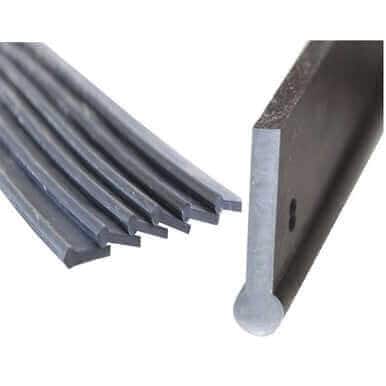
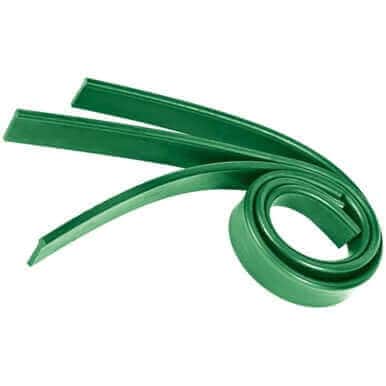 Power Rubber Green Unger SKU: 03-22M | 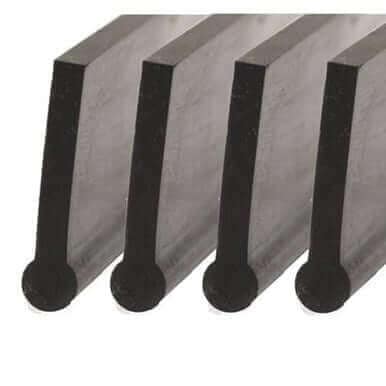 Unger ErgoTec Rubber SKU: 03-2M | 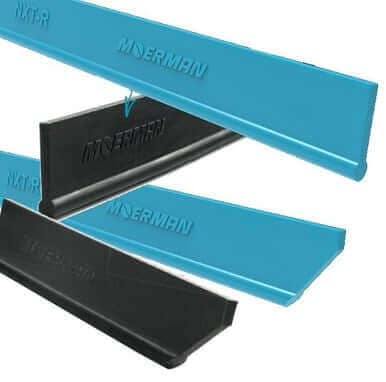 Moerman Rubber NXT Liquidator DuraFlex SKU: 03-8M |
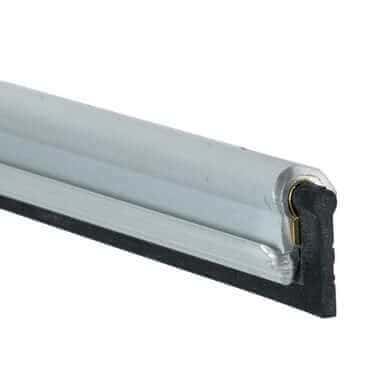 Pulex Channel Alumax SKU: 02-31M | ||
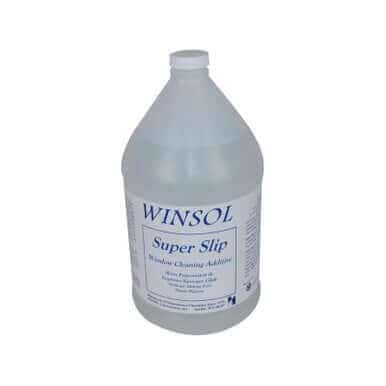 Winsol Super Slip Window Cleaning Soap SKU: 84-62M | 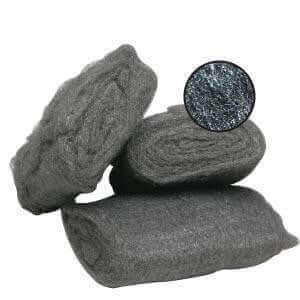 ProTool Steel Wool Bag 0000 SKU: 26-20 | 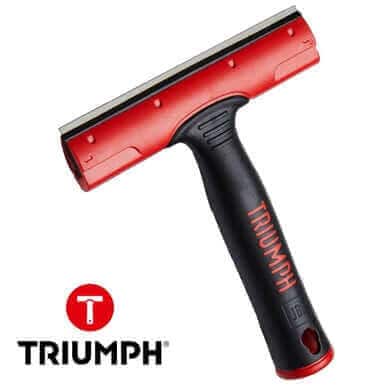 Scraper Straight Triumph MK3 6in SKU: 35-36 |
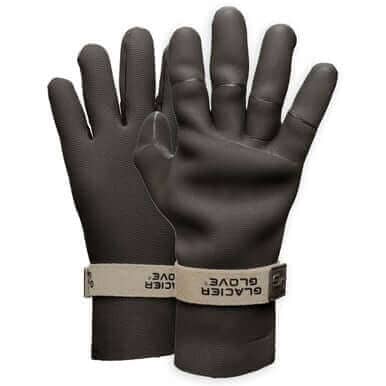 Glacier Glove Fleece-Lined SKU: 56-11M | 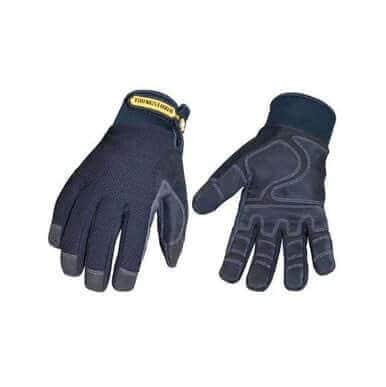 Youngstown WinterPlus Gloves SKU: 56-15M |