Hard Water Stain Remover: How to Choose and Use ProTool ClearView
Table of Contents
Most hard water stain remover failures come down to misdiagnosis. A contractor grabs whichever bottle is in the van, works it into the glass, and either wastes an hour on a deposit that needed acid or damages a surface that only needed a light abrasive. The ProTool ClearView line exists to prevent that — four formulas, each built for a specific type of mineral damage. Knowing which one to reach for is the difference between a 20-minute upsell and a callback.
Stage 1 vs. Stage 2: Diagnose Before You Touch the Glass
Standard window cleaning soap cannot break the ionic bonds holding calcium carbonate and magnesium deposits to glass. These minerals form crystalline structures — white spots, milky haze, or chalky film — deposited by irrigation overspray, concrete runoff, or coastal salt spray. Before you choose a hard water stain remover, you need to know what you're dealing with.
Stage 1: Surface Deposits
Stage 1 minerals sit on top of the silica. They haven't reacted with the glass yet. Identification is straightforward:
- Visual: White, powdery residue or distinct water spots that feel raised.
- Scraper test: Run a blade across the deposit. If the mineral moves or flakes, it's Stage 1.
Catch it here and you can restore clarity with minimal effort and zero risk to the glass. A light acid or even the pre-saturated wipes will handle most Stage 1 work.
Stage 2: Chemical Etching
Stage 2 happens when minerals chemically react with silica, physically altering the glass surface. You'll see dull ghosting or permanent haze that persists even after the surface feels smooth. A liquid hard water stain remover alone won't fix this — the silica itself is compromised, and you need abrasive action to level the surface.
Set expectations during the bid. The ProTool line can dramatically improve clarity on Stage 2 glass, but deeply pitted panels from years of neglect may need replacement. Overselling restoration on severe etching costs you credibility.
Two Chemical Mechanisms: Acid vs. Abrasive
Every product in the ClearView line uses one of two approaches:
- Acid dissolution — breaks the alkaline bonds of calcium carbonate, melting mineral buildup. Best for Stage 1 and moderate Stage 2 on large surfaces.
- Mechanical abrasion — ultra-fine particles physically level etched glass. Best for Stage 2 detail work and vertical surfaces where runoff control matters.
Both are phosphate-free and work on porcelain, tile, and stainless steel in addition to glass — useful when a bathroom or storefront job involves multiple surfaces.
ClearView 100, 200, 300, and Pro Compared
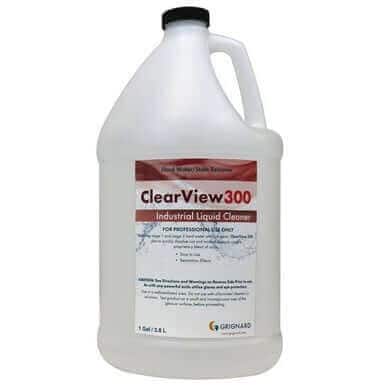
ClearView 300 — Liquid Acid for Production Work
ClearView 300 is an acid-based liquid designed for speed on large exterior glass. Apply it, give it 1–5 minutes of dwell time, and the chemistry does the labor. Available in gallon sizes, it's the most cost-effective formula for commercial volume — storefronts, curtain walls, high-rise post-construction.
The tradeoff: acid will damage aluminum frames, natural stone, and decorative metal on contact. Pre-wet every surrounding surface before application and rinse immediately if runoff occurs. This is non-negotiable. A streaked aluminum mullion costs you more than the entire chemical budget for the job.
Pro Hard Water Stain Remover — Abrasive Detail Paste
Pro Hard Water Stain Remover is a ready-to-use abrasive paste that stays where you put it. On vertical glass — shower enclosures, mirrors, automotive windshields — the thick consistency prevents runoff and keeps active ingredients in contact with the stain. Phosphate-free and low-odor, it's the safer choice for indoor residential work where rinse water management matters.
Where ClearView 300 dissolves, Pro polishes. Most restoration kits should carry both.
ClearView 100 — Pumice Paste for Severe Spots
ClearView 100 is a non-hazardous, pumice-based paste for the worst localized deposits — Stage 2 and beyond. High concentration, maximum abrasive force, minimal mess. It's also safe on chrome and stainless steel fixtures, which makes it a go-to for high-end bathroom restorations where you're working around polished hardware.
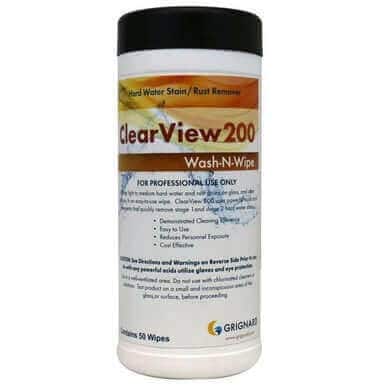
ClearView 200 — Pre-Saturated Wipes
ClearView 200 wipes are textured wipes infused with a proprietary acid solution. They handle Stage 1 and moderate Stage 2 stains on shower doors and small windows without separate applicators or buckets. Ideal as an add-on service: keep a container in the van, offer a quick shower-door touch-up, and bill it as a premium upsell. Five minutes of work, high perceived value.
Application Workflow
Step 1: Surface Prep
Scrape loose debris and heavy mineral crust with a Triumph 6in scraper before applying any chemical. Dragging loose grit under an applicator pad during agitation creates scratches that no amount of chemistry will fix.
Step 2: Match the Applicator
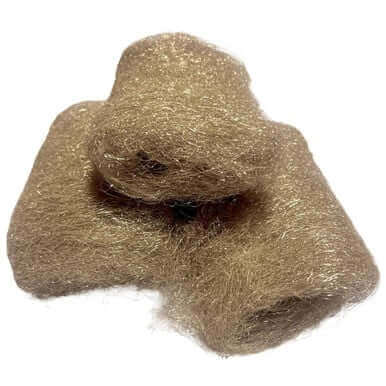
Pair liquid acids (ClearView 300) with 0000 steel wool or bronze wool. Bronze doesn't rust, so it survives multiple jobs. For lighter Stage 1 work, a white non-abrasive pad is enough. Keep your restoration applicators separate from your standard window cleaning tools — cross-contamination from abrasive residue will scratch clean glass on the next job.
Step 3: Manage Dwell Time
One to five minutes, depending on mineral density and temperature. Never let the product dry on the glass — it becomes inert and far harder to remove, often requiring a second application. In hot weather, mist the surface with water to keep the chemical active.
Step 4: Rinse and Neutralize
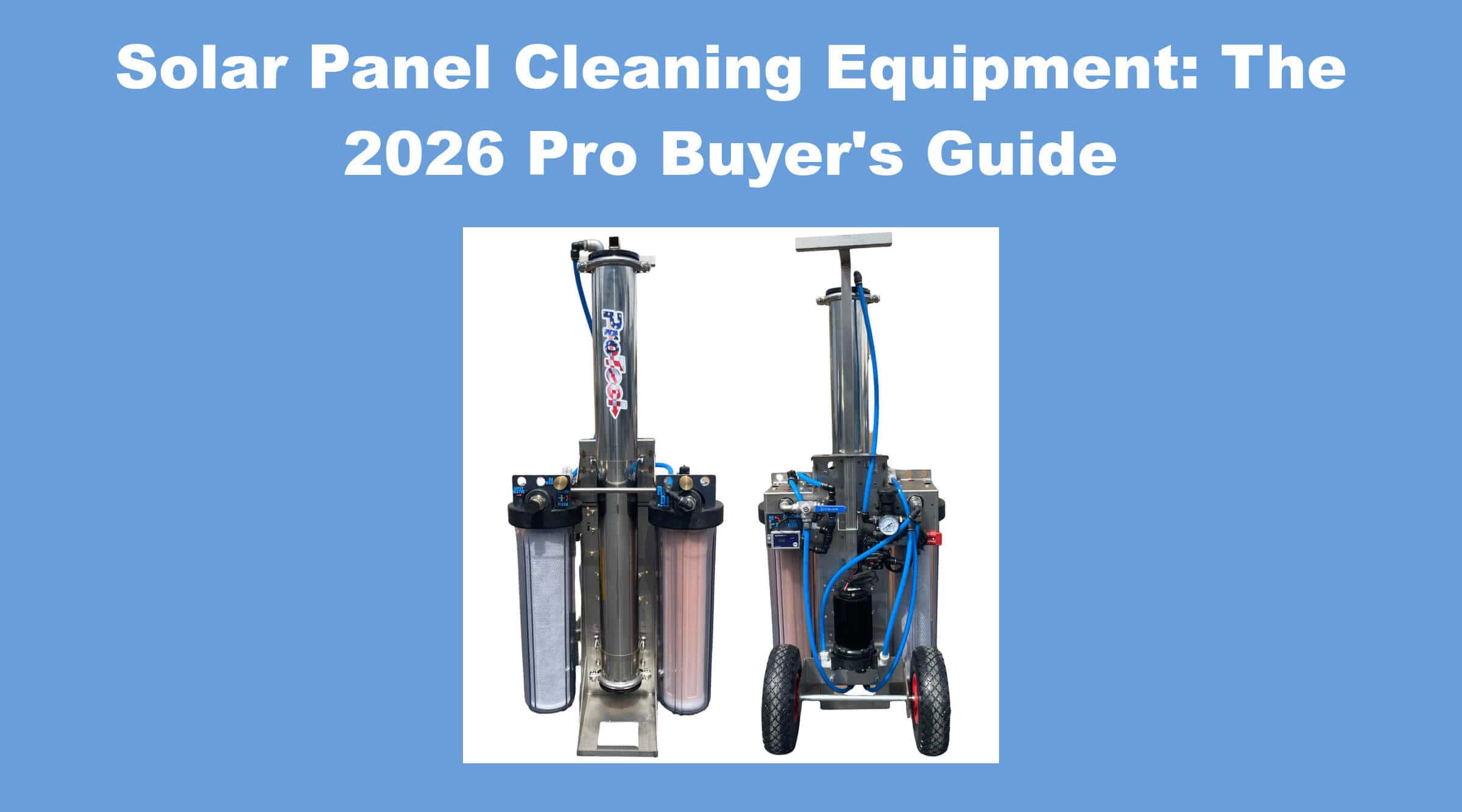
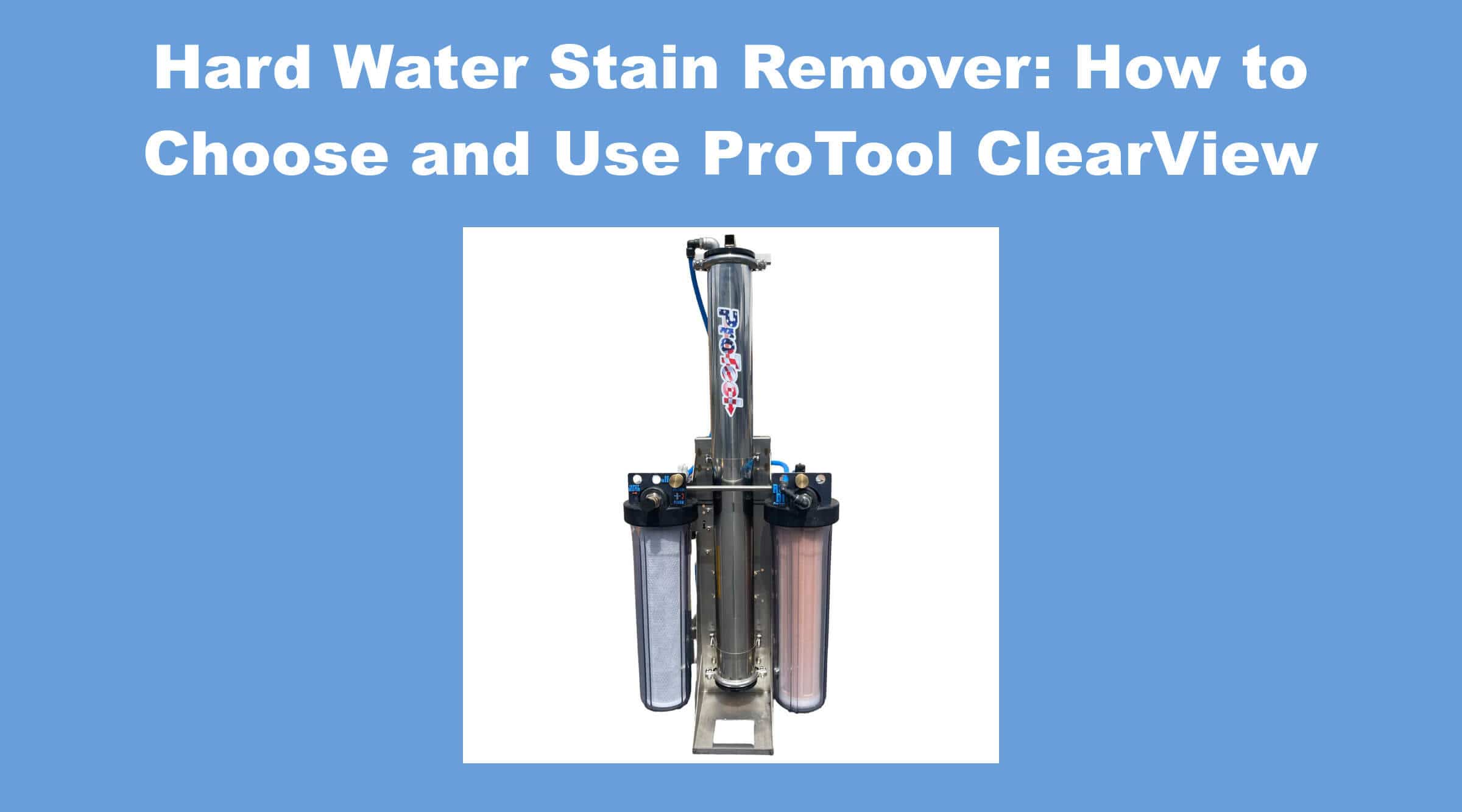
Rinse thoroughly. For a streak-free finish on restoration work, a pure water system removes all remaining chemical traces and dissolved minerals. Standard tap water leaves its own mineral residue — which is exactly the problem you just solved.
Safety Protocols
Non-negotiable PPE for any hard water stain remover application:
- Chemical-resistant gloves — neoprene/latex chem-resistant gloves at minimum.
- Eye protection — splash-proof goggles, not safety glasses, when working with acid formulas.
- Ventilation — if working in a confined space (shower enclosures, interior atrium glass), wear a respirator. Outdoor work with adequate airflow typically doesn't require one.
Pre-wet all aluminum frames, stone, and metal cladding before applying acid products. Saturating porous surfaces prevents acid absorption and permanent discoloration. This two-minute step prevents the most common damage claim on restoration jobs.
Scaling Restoration as a Service Line
Hard water removal commands significantly higher rates than maintenance cleaning because it solves a problem hardware-store products can't touch. Adding it to your service menu is straightforward: carry the ClearView line, diagnose the stage, pick the formula, and bill accordingly. Gallon-sized ClearView 300 keeps cost-per-application low on commercial contracts. The Pro paste handles residential detail work. Between the two, you can cover almost every scenario you'll encounter.
For jobs that combine restoration with ongoing maintenance, integrating hard water treatment into a water fed pole workflow cuts ladder time — apply the formula at ground level, then finish with a pure water rinse through the pole. Faster, safer, and the client sees zero mineral residue going forward.
Products Mentioned
 ProTool ClearView 300 Hard Water Stain Remover Gallon SKU: 86-515 | 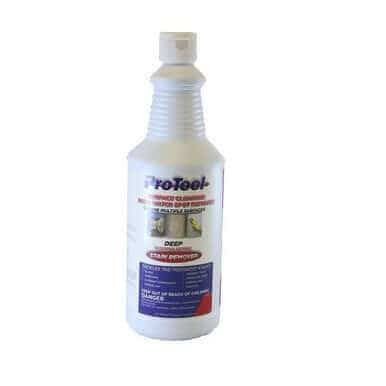 ProTool Pro Hard Water Stain Remover Qt SKU: 85-090 | 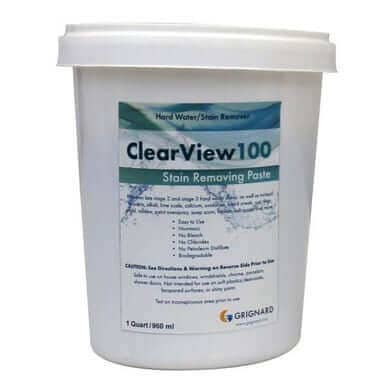 ProTool ClearView 100 HardWater Stain Remover Paste Quart SKU: 86-513 |
 ProTool ClearView 200 HardWater Stain Remover - 50 Wipes in Container SKU: 86-510 | 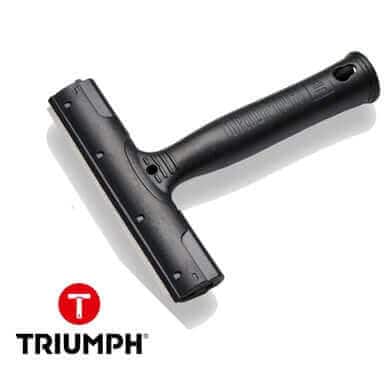 Scraper Straight Triumph MK2 6in SKU: 35-31 | 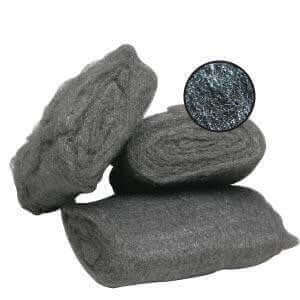 ProTool Steel Wool Bag 0000 SKU: 26-20 |
 ProTool Steel Wool Bronze Fine (3) SKU: 26-50 | 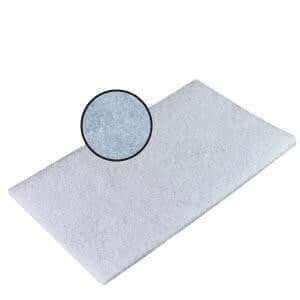 ProTool Pad Scrub White 6x9 (1) SKU: 26-10 | 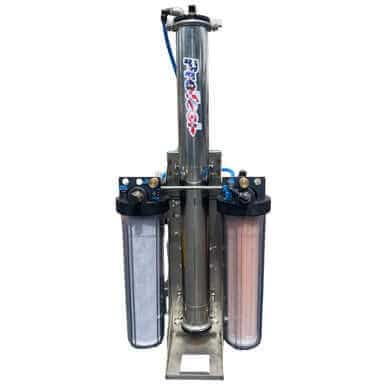 ProTool HiFlo Pure Water Cart Stainless Steel SKU: 150-0521 |
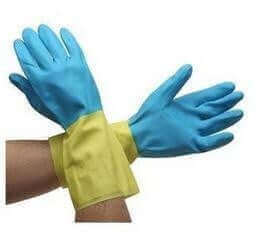 Neoprene/Latex Chem Resistant Gloves SKU: 56-23M | 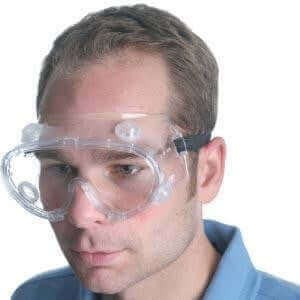 Goggles Splash Proof SKU: 58-75 | ProTool Pro Hard Water Stain Remover Qt SKU: 85-090 |