Hard Water Stain Removal on Large Scale Surfaces: A Pro Workflow

Table of Contents
Hard water stain removal on large scale surfaces fails most often before anyone touches a pad or sprayer — it fails during assessment. Mineral deposits on a 200-pane curtain wall are not the same cleaning problem as mineral deposits on an adjacent masonry panel, even when the marks look identical from the ground. The difference between a profitable job and a callback starts with identifying the substrate and the stain before choosing a chemical.
Assess the Surface Before You Choose a Product
Hard water staining is mineral residue left after water evaporates — calcium carbonate, silica, or lime scale deposited by sprinkler overspray, runoff, or condensation. It shows up as white spotting, vertical streaking, or haze concentrated where water pools or runs. But similar-looking marks can be etching, oxidation, weathering, or plain dirt. Treating etched glass with an acid-based stain remover won't fix the etch and may make it worse.
Walk the site before you open a bucket. For each elevation, record:
- Substrate: glass, coated metal, painted surface, natural stone, concrete, or mixed.
- Stain pattern: isolated spots, vertical run lines, broad haze, or concentrated bands beneath projections.
- Surface condition: intact finish, visible weathering, prior coatings, or areas that look different from adjacent sections.
- Access: ground-level, ladder, lift, or rope — because access determines how you stage chemical dwell time and rinse.
If a mark doesn't behave like a mineral deposit — if it doesn't respond to a test spot with a known hard water remover, or if the underlying surface looks altered — flag it. Do not promise removal before you've confirmed what the mark actually is.
Why Glass, Metal, and Masonry Need Separate Plans
A cleaning result on glass tells you nothing about what will happen on an adjacent coated aluminum panel. Glass is chemically consistent, but coatings, Low-E films, and existing damage change the equation. Coated metal has a factory finish that certain acids will damage. Masonry is porous and can absorb chemicals unevenly, leaving ghost marks worse than the original stain.
On a mixed-material facade, separate your work zones by substrate. A single-product, single-method approach across three different materials is how you end up replacing a panel instead of cleaning it.
Compare patterns across surfaces, but don't treat visual similarity as proof of a shared cause. Spots on glass might be calcium carbonate from sprinkler water. Discoloration on masonry in the same area might be efflorescence pushing out from within the wall — a completely different chemistry requiring a completely different product.
Matching Chemicals to the Job
For confirmed mineral deposits on glass, ProTool Restore All Restoration Cleaner is built for the task — it breaks down calcium, lime, and silica scale without the harshness of straight hydrofluoric acid products. It works well on large glass runs where you need consistent results across dozens of panes. Follow the product directions for dwell time and dilution; more product does not mean faster results.
For heavier mineral buildup or stage-two polishing after chemical treatment, pair it with a mechanical step. ProTool Cerium Oxide Polishing Powder on a variable-speed polisher handles residual haze that chemistry alone won't clear. On isolated panes with severe deposits, Diamond Magic or Mr. HardWater Cleaning Powder give you more aggressive options for spot treatment before you move to a broader application.
For masonry efflorescence or calcium staining on concrete, the chemistry is different entirely. F9 Efflorescence/Calcium Remover is purpose-built for mineral deposits on hardscape — do not use a glass restoration product on porous stone and expect clean results.
Quick Reference: Product by Substrate
| Substrate | Stain Type | Recommended Product | Notes |
|---|---|---|---|
| Glass | Mineral deposits, water spots | ProTool Restore All | Chemical first; polish residual haze with cerium oxide |
| Glass (severe) | Heavy scale, layered deposits | Diamond Magic or Mr. HardWater | Spot-treat worst panes before broad application |
| Concrete / masonry | Efflorescence, calcium | F9 Efflorescence Remover | Different chemistry — do not substitute glass products |
| Coated metal | Mineral spotting | Test required | Confirm finish compatibility before any acid contact |
Planning a Repeatable Workflow
Large-scale hard water stain removal is a logistics problem as much as a chemistry problem. A 40-story curtain wall with sprinkler damage on the lower 8 floors is not one job — it's dozens of work zones that need consistent treatment, consistent dwell time, and consistent rinse patterns.
Divide the facade into work zones
Use natural breaks — panel joints, floor lines, bay divisions — as zone boundaries. Label every zone on a simple site sketch. This does three things: it keeps the crew aligned on what's been treated, it lets you compare results zone to zone, and it gives you a defensible record if the client questions consistency.
Five-step zone workflow
- Map. Sketch the elevation. Mark substrate changes, access points, and zone labels.
- Classify. Record the stain pattern and substrate for each zone. Flag anything uncertain.
- Test. Run a test section in the first zone — full process, not just a wipe. Photograph before and after.
- Execute. Work zone by zone. Keep dwell time, dilution, and rinse method identical across comparable zones.
- Review. Compare each completed zone to the test section and to adjacent zones. If results diverge, stop and reassess before continuing.
Consistency killers
Three things break consistency on large jobs:
- Uneven dwell time. On a hot day, product dries before you rinse the far end of a section. Shrink your zones or add a crew member on rinse.
- Substrate changes mid-zone. A zone that spans glass and an aluminum mullion is two zones. Treat them separately.
- Skipping the record. If you don't note what you used and how long it sat, you can't replicate the result — or troubleshoot when a section looks different.
Equipment for Large-Scale Stain Work
The assessment drives the equipment list, not the other way around. For glass restoration across a large run, you need application tools that give you control over dwell time and coverage — not just a bucket and a rag.
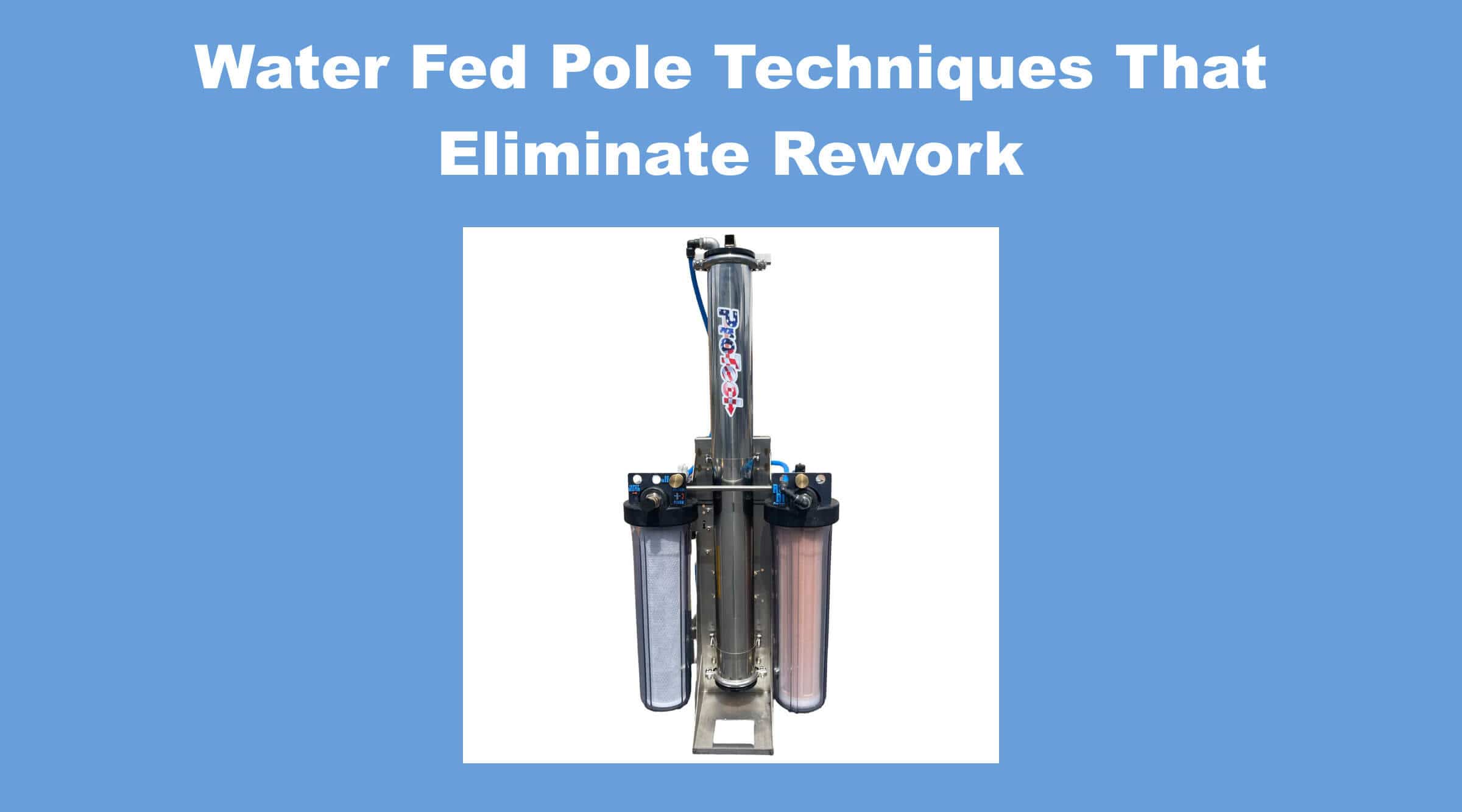
For chemical application on glass, a T-bar and sleeve gives you even coverage across each pane. For rinse and final clean, a water fed pole system with pure water ensures you don't redeposit minerals during the rinse — which defeats the entire point of the job.
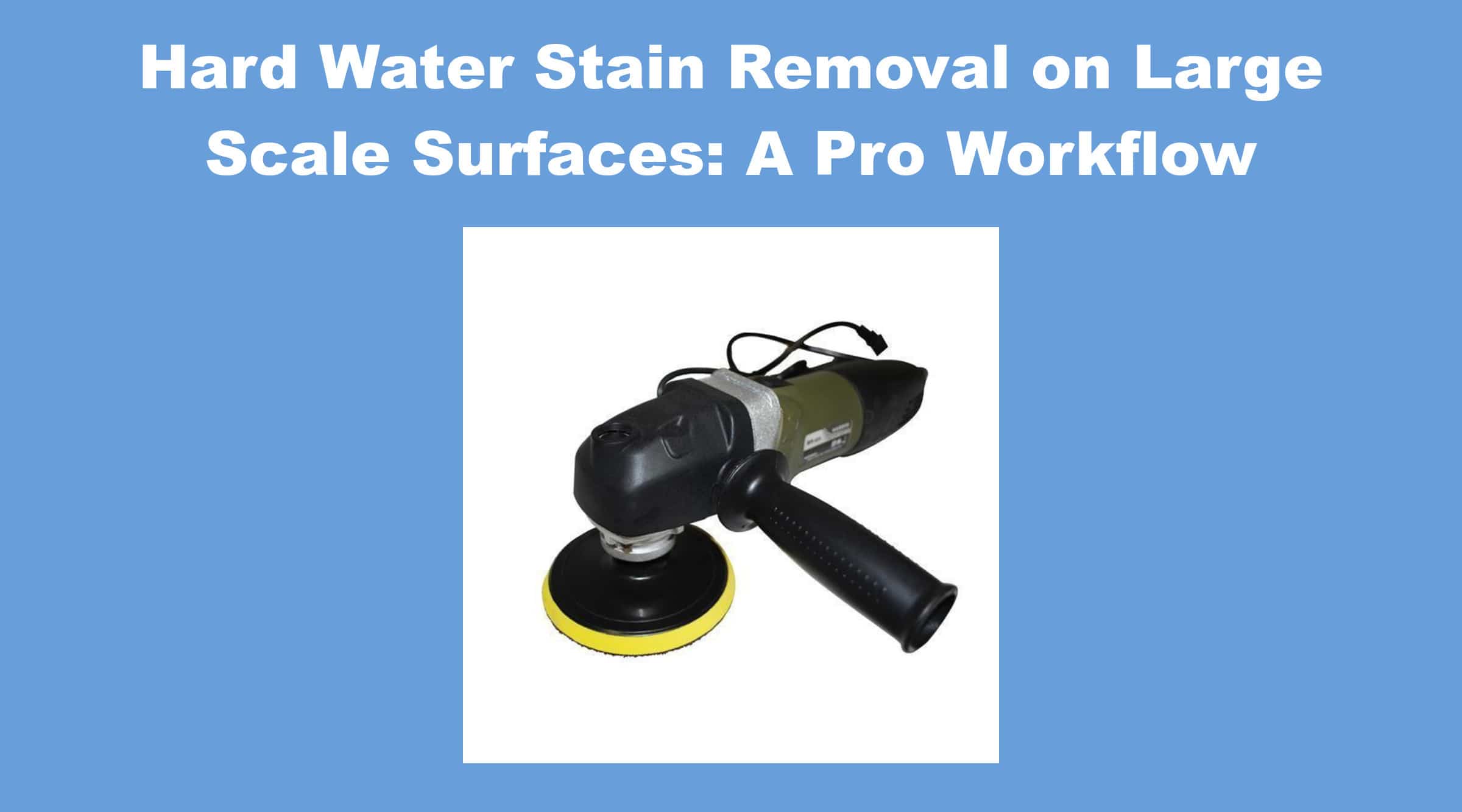
For mechanical polishing steps, a variable-speed polisher with cerium oxide handles residual haze. Pair it with the appropriate pad adapter for your drill or polisher shaft.
For exterior masonry or hardscape, a pressure washing setup with a downstream chemical injector lets you apply F9 products at the right dilution across broad areas without hand-mixing every bucket.
Build a Job Record That Pays Forward
Keep the zone map, product used, dilution ratio, dwell time, equipment, and result notes together in one document. This is not administrative overhead — it's the difference between quoting the next similar job in 10 minutes versus starting from scratch. It also protects you if a client disputes results six months later.
Over time, these records reveal patterns: which buildings get repeat sprinkler damage, which substrates respond to which products, and where you consistently need mechanical polishing after chemical treatment. That's how a hard water stain removal operation scales from one-off jobs to recurring maintenance contracts.
Products Mentioned
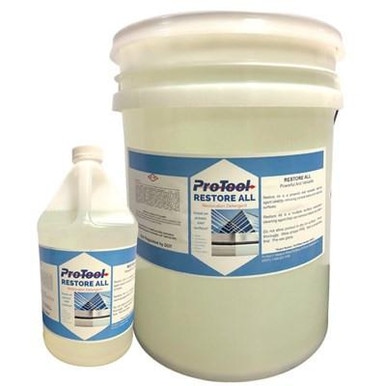 Protool Restore All Restoration Cleaner SKU: 86-63M |  ProTool Cerium Oxide Polishing Powder 3.5oz SKU: 76-119 | 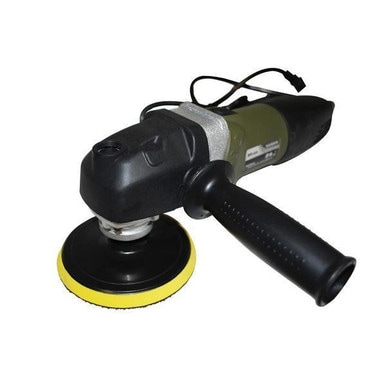 Polisher Variable Speed Top Switch SKU: 76-451 |
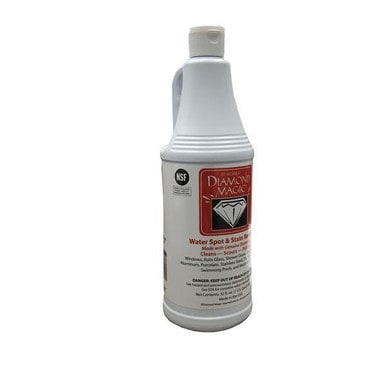 Diamond Magic Hard Water Stain Remover - Surface Restorer SKU: 85-6M | 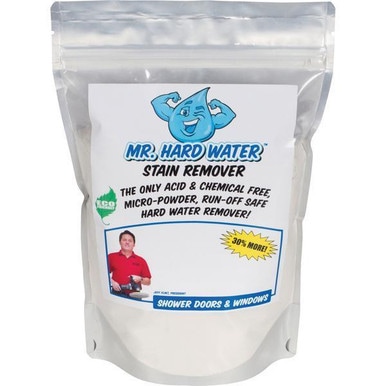 Mr.Hardwater Cleaning Powder 15oz SKU: 85-615 | 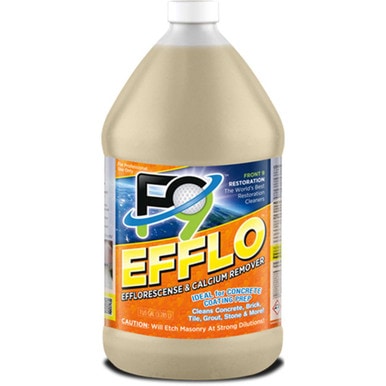 F9 Efflorescence/Calcium Remover Front9 Restoration SKU: 320-62M |