How to Clean Algae, Moss and Lichen From Roofs

Table of Contents
How to Effectively Clean Algae, Moss, and Lichen From Roofs
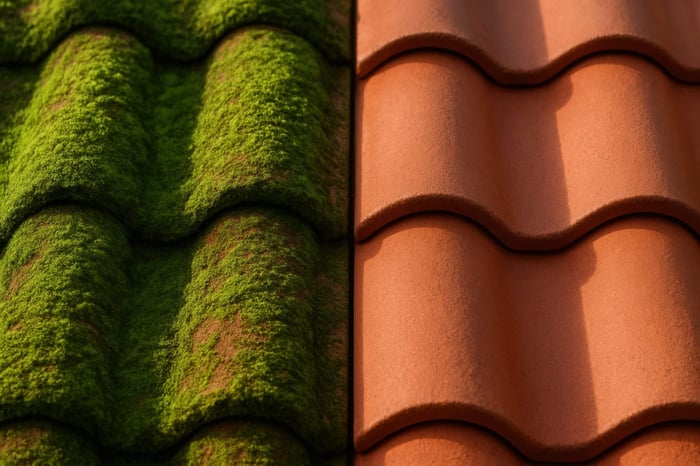
In this guide, we’ll walk you through how to clean algae, moss, lichen, and other contaminants safely and effectively from both shingle and clay roofs, along with tips to help roofs stay cleaner for longer.
Maintaining a clean roof is critical not only for curb appeal but also for the longevity of your shingles or clay tiles. One of the most common problems that shingle roofs face are black streaks caused by algae, specifically Gloeocapsa Magma. This algae feeds on the limestone aggregate in shingles and can gradually damage your roof if left untreated. While algae is the most visible offender, it is not the only culprit—moss, lichen, and dirt can also compromise your roof’s integrity.
Understanding Roof Algae and Its Risks
Algae on shingles is primarily a cosmetic concern at first but can lead to more serious damage if allowed to grow unchecked. The Asphalt Roof Manufacturing Association recommends using bleach (sodium hypochlorite) as the most effective method for removing algae.
Key Tips for Cleaning Algae
Use the correct concentration: A properly diluted sodium hypochlorite and water mix is sufficient. Hotter mixtures do not clean better and increase the risk of damaging surrounding plants.
Repeat if necessary: Extremely dirty roofs or stubborn algae may require a second treatment.
Apply safely: Always follow roof safety protocols, including fall protection and using ladders or pole systems to minimize risk.
Algae thrive in warm, humid environments and can spread across the roof quickly. Early intervention prevents long-term staining and structural damage.
How to Clean Moss From Roofs
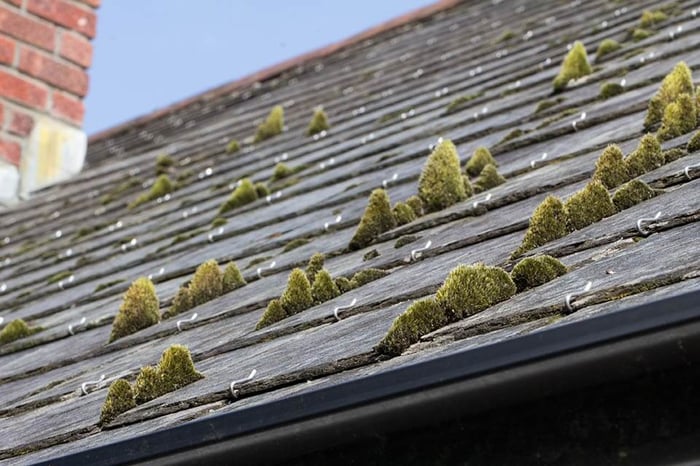
Moss grows primarily in cooler, wetter regions, favoring north-facing roofs that receive less sunlight and stay damp longer. Overhanging trees also create ideal conditions for moss growth.
Why Moss is a Problem
Moss is a non-vascular plant, meaning it spreads through spores rather than seeds. It absorbs water through its leaves rather than roots, allowing it to thrive directly on shingles. If left untreated, moss can:
Cause shingle edges to curl or lift
Retain moisture, leading to rot or leaks
Accelerate roof aging
Cleaning Moss
Brush gently: Use a soft-bristled brush to remove loose or dead moss. This can be done from a ladder, directly on the roof, or with a pole brush from the ground. Take care not to damage shingles.
Apply the right mix: A combination of sodium hypochlorite, water, and a surfactant such as Sticky works best. The surfactant ensures the solution clings to the moss.
Allow dwell time: Let the solution sit for 15–20 minutes to kill the moss. Unlike algae, moss will not rinse off immediately.
Repeat if needed: Severe infestations may require multiple treatments or manual removal with a leaf blower once the moss has dried.
Moss removal requires patience and careful application, but doing it properly extends the life of your roof significantly.
How to Remove Lichen From Roofs
Lichen is a light, mint-green organism that is a combination of algae and fungus. It can grow on shingles and other roofing materials, causing pitting and damage over time.
Why Lichen is Harmful
Lichen penetrates shingles with its root-like strands and retains moisture, which can lead to:
Bent or warped shingles
Cracked roof tiles
Accelerated wear and tear
Cleaning Lichen
Soft washing: Use a sodium hypochlorite and surfactant mix like Sticky.
Pre-brushing: Remove loose debris to expose the lichen.
Dwell time: Allow 15–20 minutes for the solution to work, as lichen takes longer to die than algae.
Multiple treatments: Severe cases may require more than one application and mechanical removal after drying.
Cleaning Dirty Clay Roof Tiles
Clay tiles are susceptible to the same algae, moss, lichen, and dirt as shingle roofs but require extra care due to their fragility and slipperiness.
Soft Washing is Best
Pressure washing clay tiles can cause damage. Instead:
Apply a sodium hypochlorite mix with a surfactant like Sticky.
Brush gently if needed to remove stubborn debris.
Use a leaf blower to remove excess dirt after treatment.
Safety First
Clay tiles are slippery and fragile; never walk on them without proper fall protection.
Use ladders, scaffolding, or pole-mounted brushes to minimize risk.
Wear slip-resistant footwear and follow local safety regulations for roof work.
Preventive Measures to Keep Roofs Cleaner Longer
1. Trim Overhanging Trees
Tree branches provide shade and drop debris that promotes moss and lichen growth. Regularly trimming branches increases sunlight exposure and reduces moisture accumulation on the roof.
2. Maintain Clean Gutters
Clogged gutters lead to water pooling, which encourages organic growth on roofs. Clean gutters not only help prevent moss and lichen but also reduce the risk of water damage to your home’s foundation and siding.
3. Regular Inspections
Frequent inspections help catch algae, moss, or lichen early. Early treatment prevents extensive buildup and reduces the need for repeated harsh chemical applications.
4. Consider Protective Roof Coatings
Some roof coatings create a hydrophobic surface, reducing water retention and organic growth. Consult a professional to determine if this is suitable for your roofing material.
Soft Washing vs. Pressure Washing
Soft washing is generally preferred for shingle and clay roofs because it:
Uses low-pressure water to avoid damaging shingles or tiles
Combines bleach-based solutions with surfactants to kill moss, algae, and lichen
Allows solutions to dwell on the surface for maximum effectiveness
Reduces the risk of dislodging granules or cracking tiles
Pressure washing may remove visible debris but can damage roofing materials and may not effectively kill organic growth.
Choosing the Right Roof Cleaning Solution
When selecting a cleaning solution, consider:
Type of growth: Algae, moss, and lichen may require slightly different approaches.
Roof material: Shingles, clay tiles, and metal roofs respond differently to bleach and surfactants.
Safety: Ensure that the solution won’t harm plants below the roof or degrade roofing materials.
Dwell time and surfactant: Use products like Sticky to help the solution cling to surfaces for effective cleaning.
Step-by-Step Roof Cleaning Process
Inspect the roof for algae, moss, lichen, and debris.
Trim overhanging branches to improve sunlight exposure.
Pre-brush loose or dead moss and lichen.
Apply the cleaning solution: sodium hypochlorite, water, and surfactant mix.
Allow dwell time of 15–20 minutes.
Rinse thoroughly with low-pressure water.
Repeat treatments for stubborn moss, lichen, or algae patches.
Clean gutters and remove debris from around the roof area.
Inspect and maintain regularly to prevent future buildup.
Following this process ensures your roof looks great, is safe from organic damage, and lasts longer.
Conclusion
Cleaning roofs goes beyond just aesthetics—it protects your home and roofing investment. Algae, moss, and lichen each present unique challenges that require specific cleaning methods. For shingle and clay roofs, soft washing with a sodium hypochlorite and surfactant mix like Sticky is the most effective and safest method.
Preventive measures like trimming trees and maintaining gutters complement professional cleaning, keeping your roof cleaner for longer and reducing costly repairs. By understanding the growth patterns of algae, moss, and lichen, and using the right cleaning techniques, you can maintain a safe, attractive, and long-lasting roof.
Shop lichen, mold and mildew cleaners at www.jracenstein.com
FAQs
What causes moss to grow on roofs?
Moss thrives on roofs in cooler, shaded, and damp areas, often on north-facing slopes or under overhanging trees. It spreads through spores and absorbs water through its leaves, allowing it to survive directly on shingles or tiles.
How do I safely remove moss from my roof?
Use a soft-bristled brush to remove loose moss, then apply a sodium hypochlorite (bleach) and surfactant mix like Sticky. Allow 15–20 minutes for dwell time to kill the moss before rinsing. Multiple treatments may be required for heavy infestations.
Can I use pressure washing to remove moss?
No. Pressure washing can damage shingles or clay tiles and may dislodge roof granules. Soft washing with a bleach-based solution is safer and more effective for killing moss and preventing regrowth.
How long does it take to kill moss on a roof?
Moss does not rinse off immediately like algae. It typically requires 15–20 minutes of dwell time, and severe moss may need multiple applications. Once dead, it can be removed manually or blown off with a leaf blower.
How can I prevent moss and lichen from returning?
Trim overhanging trees to increase sunlight and reduce moisture.
Keep gutters clean to prevent water accumulation.
Inspect your roof regularly and perform routine soft washing as needed.