
What Mix Should I Use for Soft Wash?

Table of Contents
- Understanding the Right Soft Wash Mix Ratios
- Determining Your Roof Cleaning Mix
- Let's Do Some Math
- "But I've heard to Go 50/50 with my roof mix!"
- What's the right soft washing mix for siding?
- Automating the Soft Wash Proportioning Process
- Protecting Plants and Property During Soft Washing
- Why Proper Mix Ratios Build Professional Reputation
- Final Thoughts
- FAQs
Understanding the Right Soft Wash Mix Ratios
While soft washing relies on the use of a chemical (usually sodium hypochlorite, a.k.a. bleach), a surfactant, and a gentle spray of water to kill organic growth on surfaces, you don’t want to use more bleach than necessary. This not only is a waste of your chemicals, it’s putting the plant life and surfaces at greater risk if you spray with too hot of a mix.
When it comes to your soft wash mix, not all surfaces need the same amount of sodium hypochlorite, i.e., bleach.
The Asphalt Roof Manufacturing Association (ARMA) says that "The most effective method of cleaning algae and moss from a roof is with a 50/50 (i.e., 1:1) mix of LAUNDRY strength liquid chlorine bleach and water.”
Note the key word here: “LAUNDRY” strength. This is the bleach you by off the shelf at your local grocery store, and it is only 5.25 to 6% sodium hypochlorite.
Professional-grade commercial bleach like what we sell is a little more than double the strength. That means you need to cut the ratio to around half, which would be 75/25, or 3:1. That’s 3 parts water, 1 part bleach.
Determining Your Roof Cleaning Mix
Because commercial-grade bleach is 12.5%, it’s actually a little more that twice that of laundry bleach, which is why we recommend using no more than a 3% mix. What do we mean by 3%?
Let's Do Some Math

1. STEP 01
Take the batch size you are using and divide it by 10. For example, if you are going to have a 50 gallon batch:
50/10 = 5
2. STEP 02
Multipy 5x3(%) = 15
That means 15 gallons of you 50-gallon batch is going to be 12.5% bleach.
3. STEP 03
Subtract 15 from 50.
(50 - 15 = 35)
This is how many gallons of water you will use, i.e., 35 gallons
Let’s do another quick example. Say you have a 7 gallon mix:
Step 1: 7/10 = 0.7
Step 2: 0.7 x 3 = 2.1
Step 3: 30% would be equal to 2.1 gallons bleach, 7.9 gallons water (or you can round to 2 gallons bleach, 8 gallons water).
"But I've heard to Go 50/50 with my roof mix!"
If you look around on industry Facebook pages or forums, you may find guys talking about how hot they go with their roof cleaning mix. A lot will use 50/50 (or 1:1) with their bleach to water mix.
We don't recommend doing this. Here's why:
1. It's too hot! Remember, ARMA's recommended mix is 50:50 for use with LAUNDRY bleach. That's only a 5-6% bleach mix to start with. Commercial grade is over twice that much!
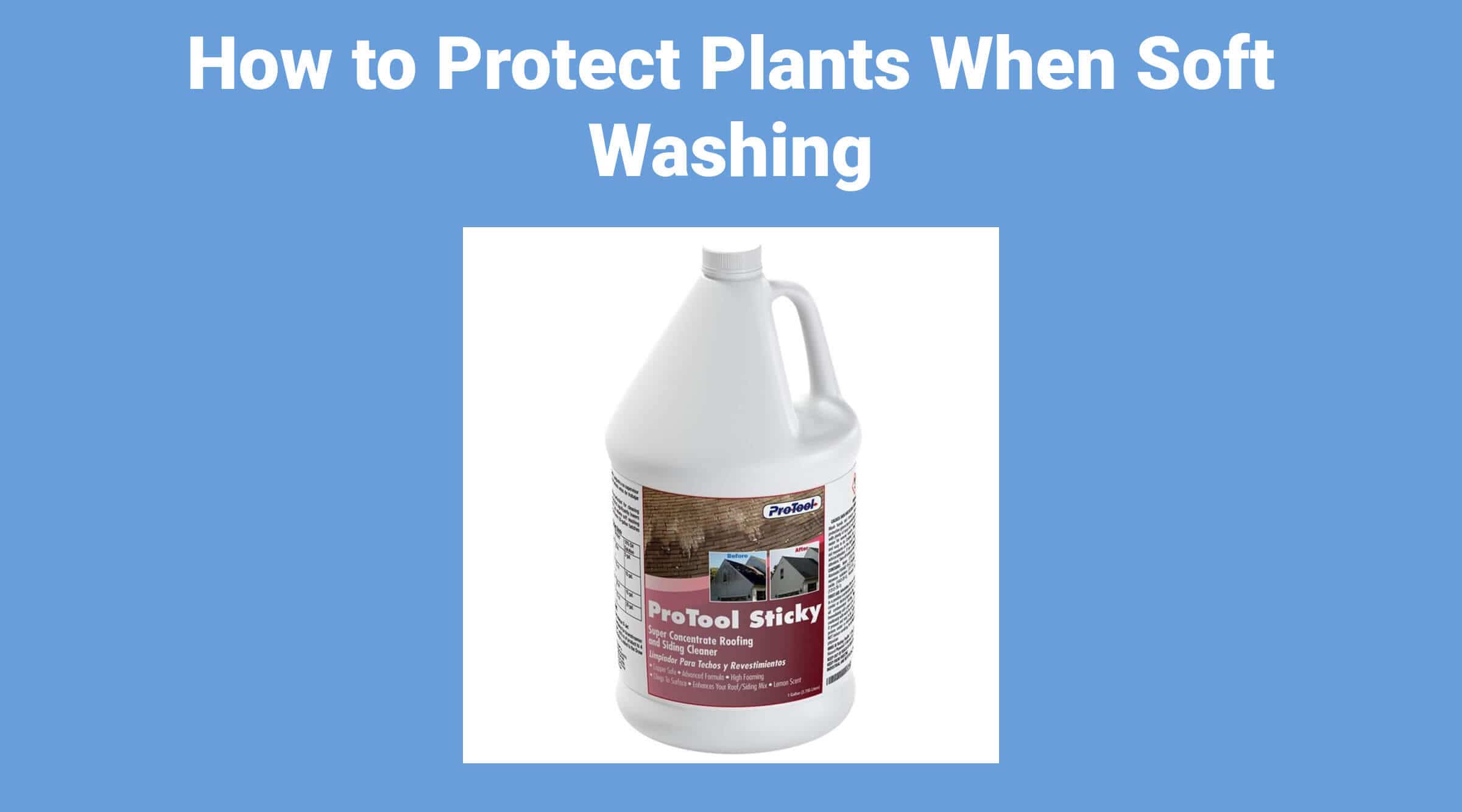
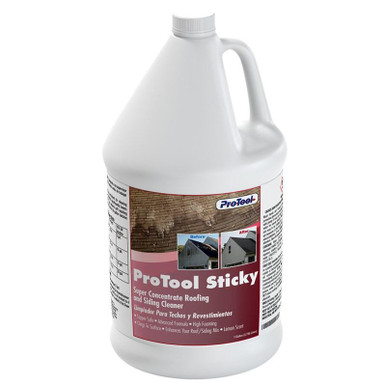
2. It typically doesn't clean better. In most cases, 3% is plenty to get a roof cleaned, especially if you're using a great surfactant like Sticky to help your solution cling to the surface and dwell longer.
ProTool Stick
$35.20
ProTool Stick - Detergent- Roof, Siding Cleaning Surfactant ProTool Stick is used with sodium hypochlorite (SH) and water to allow a better spreading of… read more

ProTool Sticky
$69.15
ProTool Sticky Super Concentrate The industry’s highest-concentration sticky surfactant — gives maximum cling, superior spreading, and extended dwell time when used with sodium hypochlorite (SH).… read more
3. You're wasting money. If you are increasing your sodium hypochlorite mix to 50/50, you're losing money. Say, for example, you're buying commercial bleach for around $3.50 per gallon. If you mix a 50-gallon batch, you're spending $35 more on bleach than you would by using 3%. Two jobs like this per day, 5 days per week = $350 extra per week spent on bleach that wasn't needed!
4. You're increasing your risk of damaging plants. If you kill plants, you are either going to have to replace them out of pocket or file an insurance claim. Either can be costly.
If you have a super dirty roof, you are better off going back and hitting it twice – or at least spot cleaning certain areas – than hitting it that hot.
What's the right soft washing mix for siding?
Houses generally do not get as dirty or have as much organic growth as roofs, and therefore do not need as strong of a mix. We generally recommend using a 1% mix on most siding.
Again, let’s do the math for a 50-gallon batch.
50/10=5
5 x 1(%) = 5
So your mix would be 5 gallons of bleach, 45 gallons of water.
Automating the Soft Wash Proportioning Process
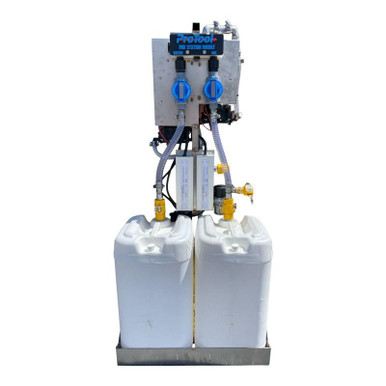
None of this takes into account adding in your surfactant. You can see why having a soft wash system like the ProTool Mix Station Mobile, ProTool Metering Systems or Skids that automatically doses for you is beneficial.
ProTool Soft Wash Metering Plates
$1,543.50
Soft Wash Metering Block System This Softwash Metering system uses a metering block and valves to blend the chemicals in the proportions desired. The plate… read more

ProTool Mix Station Mobile
$3,457.60
Soft Wash Metering Cart – Portable Precision Softwash System Take your soft washing setup to the next level with a high-performance, portable metering system built… read more
ProTool Soft Wash Skid 12V
$7,229.90
ProTool Soft Wash Skid 12V Advanced Metering Tank System for Soft Washing Introducing our Softwash Skid with ProTool Metering Valves and 80 gallon SH… read more

ProTool Dual User Pure Water and Soft Wash Skid | BPX 25
$17,111.95
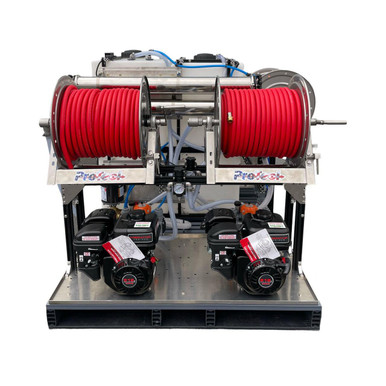
BPX 25 Dual Operator Pure Water Soft Wash Skid The ProTool BPX 25 Dual User Soft Wash Pure Water Skid is engineered for efficiency and… read more
Protecting Plants and Property During Soft Washing
One of the biggest concerns when working with sodium hypochlorite is protecting surrounding vegetation and property. Even when you’re using the recommended 1–3% mixes, overspray and runoff can still affect shrubs, grass, or flowers. Here are a few proven techniques to reduce risk:
Pre-wet landscaping: Before spraying, saturate surrounding plants with water so they absorb less chemical.
Use a neutralizer: Products designed to neutralize bleach, like sodium thiosulfate-based rinses, can be sprayed on plants immediately after the job to minimize damage.
Apply tarps with caution: Covering delicate plants with breathable tarps can help, but avoid leaving them on too long to prevent heat damage.
Rinse thoroughly: Always rinse landscaping after finishing the job—it’s a simple but effective way to ensure long-term plant health.
Protecting property also means managing runoff. Directing excess solution away from driveways, patios, or porous stone helps avoid discoloration. Always keep a clean water hose nearby for quick rinses if accidental overspray occurs.
ProTool Post Rinse
$25.30
ProTool Post Rinse – The Ultimate Solution for a Spotless, Streak-Free FinishAchieve professional-grade cleaning results with ProTool Post Rinse, the essential finishing touch for any… read more

Why Proper Mix Ratios Build Professional Reputation
Beyond protecting plants, sticking to the correct mix ratios enhances your reputation. Customers notice when their roofs and siding look great without damage to landscaping, paint, or trim. Word-of-mouth referrals often come from clients who are impressed by both the results and the care taken during the process.
By keeping bleach percentages appropriate, you’re not only saving money on chemical costs—you’re also reducing callbacks, warranty claims, and insurance risks. Over time, this efficiency adds directly to your bottom line.
Final Thoughts
At the end of the day, successful soft washing is about balance: strong enough to clean effectively, but safe enough to protect property. Whether you’re cleaning roofs at 3% or siding at 1%, following these guidelines—and using proportioning systems like the ProTool Clever or Batch Pro—ensures consistent results, lower costs, and happier customers.
FAQs
What is the best bleach ratio for roof cleaning?
For asphalt shingles, a 3% sodium hypochlorite mix is typically recommended when using 12.5% commercial-grade bleach. This strength is effective at killing algae and moss without risking damage to the roof or landscaping.
What is the best bleach ratio for siding?
Most siding only requires a 1% bleach solution, which is plenty to remove dirt, algae, and mildew. Stronger mixes are unnecessary and can discolor paint or harm surfaces.
Can I use a 50/50 bleach mix for soft washing?
We don’t recommend it. A 50/50 mix is based on laundry bleach (5–6%), not commercial bleach (12.5%). Using that ratio with professional-grade bleach makes the solution too hot, wastes money, and increases the risk of damaging plants.
How can I protect plants while soft washing?
Pre-wet landscaping, use neutralizers like sodium thiosulfate, cover sensitive plants with breathable tarps, and rinse thoroughly with water after spraying. These steps help minimize chemical stress.
Is there an easier way to measure my soft wash mix?
Yes, ProTool Metering manifolds make it easy to change your mix ratios on the fly. These are equipped on all soft wash metering plates, skids and the ProTool Mix Station Mobile.
What surfactant should I use in my soft wash mix?
A quality surfactant like ProTool Sticky helps your solution cling to surfaces longer, increases dwell time, and improves cleaning results while reducing chemical runoff.
Is soft washing safe for all types of roofing?
Soft washing is safe for asphalt shingles, tile, slate, and metal roofs when the correct mix is used. Always follow manufacturer guidelines for sensitive materials.
How often should I soft wash a roof or siding?
Typically every 2–3 years for roofs, and every 1–2 years for siding. Frequency depends on climate, shade, and how quickly organic growth returns.