Ladder Levelers for Pros: Selection, Safety, and OSHA Compliance

Table of Contents
Forty-three percent of fatal falls over the last decade involved a ladder, and the risk often starts at ground level. Digging out soil or shimming a leg with scrap wood isn't just slow — it's a liability. A ladder leveler replaces improvised setups with engineered precision, and for contractors running multiple jobs a day on varied terrain, it's non-negotiable equipment.
This guide covers how to select the right leveler for your fleet, install and maintain it correctly, and stay on the right side of OSHA 1926.1053.
Why Ladder Levelers Matter on Every Job
A ladder leveler is a mechanical extension system mounted to (or clamped onto) a ladder's side rails. It compensates for uneven terrain by extending one or both legs until the rails are plumb. Without it, achieving the standard 75.5-degree climbing angle on sloped ground is guesswork — and guesswork creates lateral force.
Even a 1-degree lean at the base translates to several inches of displacement at the top of a 28-foot extension ladder. That displacement creates sideways pull the ladder's feet aren't designed to resist. Mulch beds, hillsides, and tiered landscaping shift under load. A mechanical leveler locks the ladder into a rigid vertical position that stays secure while you move at height.
The ROI is immediate: faster setup (no hunting for shims), extended reach on difficult terrain, and elimination of the liability that comes with improvised bases. Bricks crack under concentrated pressure. Wood shims slide out during a climb. Engineered hardware doesn't.
Professional vs. Consumer-Grade Hardware
Consumer levelers from big-box retailers typically use plastic locking mechanisms or thin-walled aluminum. They fail under daily trade use. Professional systems from LeveLok and Xtenda-Leg are built with aircraft-grade aluminum and stainless steel components — materials that survive constant exposure to water, corrosive cleaning chemicals, and UV. They also carry higher duty ratings, so the mechanism won't fail when a tech is hauling a water-fed pole or pressure washing gun up the rungs.
Permanent vs. Removable Leveling Systems
Permanent Bolt-On Levelers
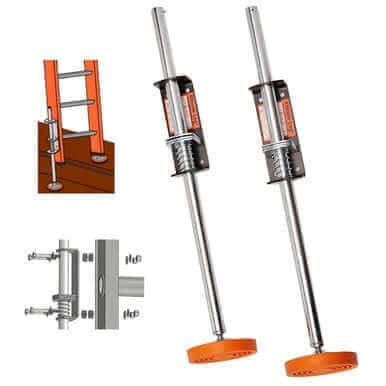
Bolt-on systems like the LeveLok Quick Connect mount permanently to the side rails. You drill into the rail, install the housing, and the leveler is always there — it can't be forgotten at the shop. Most use an automatic locking clutch: extend the leg and the internal mechanism locks it at the desired height. This "set and forget" convenience is ideal for dedicated extension ladders in high-volume window cleaning or pressure washing. The trade-off is added weight (5–10 lbs), but for a ladder that lives on the truck, the stability is worth it.
Removable and Universal Levelers
Xtenda-Leg levelers use pin-lock or clamp-on mechanisms that move from one ladder to another in minutes. One set covers three ladders — lower capital expenditure, same safety standard. Manual-adjustment styles add a setup step (set height, secure locking pin), but the flexibility matters for contractors who use different equipment on residential versus commercial jobs.
Standalone Base Stabilizers
The ProTool PiVit doesn't attach to the ladder at all. It creates a level platform on uneven ground, stairs, or roof shingles — particularly useful for solar panel cleaning where the ladder sits on a pitched surface. Many pros use it alongside rail-mounted levelers for a total stabilization solution on complex architecture.
Choosing the Right Leveler for Your Fleet
Stroke Length
The most critical spec. A standard 10-inch extension handles mild sidewalk slopes and driveway inclines. If your crew regularly works steep hillsides or deep tiered landscaping, you need 18 inches of travel. Insufficient stroke leads to techs overextending the unit or shimming the remaining gap — exactly the problem the leveler is supposed to eliminate.
Foot Design
Look for systems with interchangeable or multi-surface feet:
- Swivel feet — maximum surface contact on uneven ground
- Ice picks — winter operations and frozen turf
- Rubber pads — non-marring for interior work or composite decking
Replacement rubber feet and cleated feet are available individually, so you can swap for conditions without replacing the whole unit.
Compatibility
Installing a bolt-on system on fiberglass rails requires backing plates to prevent stress fractures; aluminum rails allow more direct mounting. Also verify the leveler's profile doesn't interfere with fly-section operation, rung locks, stabilizers/stand-offs, or harness attachment points. Your safety gear should function as a unified system, not competing components.
Staircases
Staircases present 7–8 inch drops per step — often exceeding a standard leveler's travel. The safest approach combines a rail-mounted leveler with a standalone base stabilizer like the PiVit. Always brace or secure the ladder top; even a level base won't prevent a slide if the top rails aren't anchored against a solid structure or fitted with non-slip stand-offs.
Installation, Inspection, and OSHA Compliance
OSHA 1926.1053(b)(6) requires ladders to be on stable, level surfaces unless secured to prevent displacement. A certified ladder leveler is how contractors meet that requirement on sloped terrain.
Installation
Measure for rail symmetry before drilling or clamping any permanent system — a minor offset changes the ladder's balance. Use a torque wrench to meet the manufacturer's spec; over-tightening crushes fiberglass rails and compromises load rating. Perform a ground-level load test before the first climb: extend the leveler, lock it, and apply heavy downward pressure to confirm the clutch or pin holds firm.
Pre-Shift Inspection
Every leveler should be checked before every job:
- Telescoping leg moves freely through full stroke without binding
- Locking mechanism engages fully and doesn't slip under manual downward pressure
- Mounting bolts show no loosening or rail deformation
- Rubber feet are intact and free of oil, grease, or mud
Retire hardware that shows hairline cracks, bent telescoping legs, or a lock that slips even once during testing.
Maintenance
Grit, salt, and soft-wash or pressure-wash chemicals migrate into telescoping legs and abrade internal locking components. Rinse with fresh water after every shift. Apply a dry-film lubricant to spring-loaded or ratcheting locks — avoid heavy oils or grease that attract dust. Inspect rubber pads regularly; once the tread is worn smooth or the rubber has hardened from UV exposure, grip is gone. Replacement feet and bolt kits keep units in service instead of forcing a full replacement.
Building a Complete Ladder Safety System
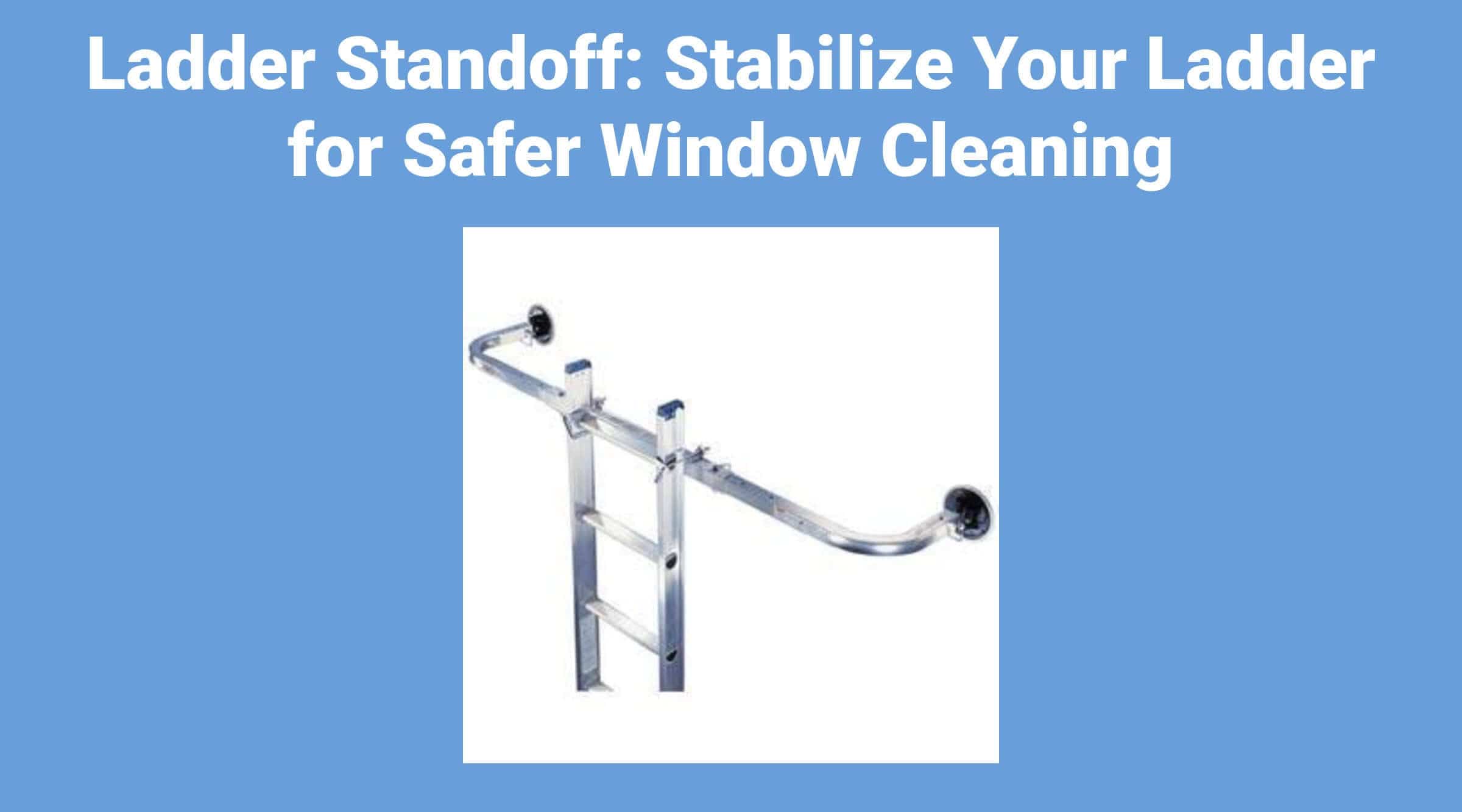
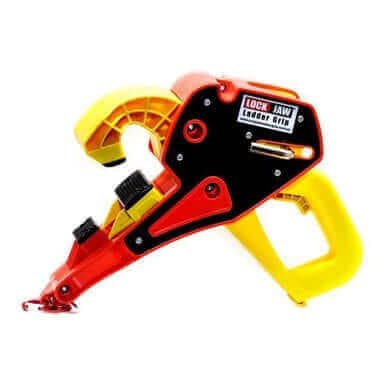
A leveler handles the base. Maximum safety means pairing it with top-of-ladder components. ProTool Ladder StandOffs and the ProTool Quick Click prevent the ladder from resting against gutters or siding while widening the top contact points. ProTool Ladder Mitts protect delicate surfaces and add grip. Lock Jaw Ladder Grips keep the rails from sliding laterally.
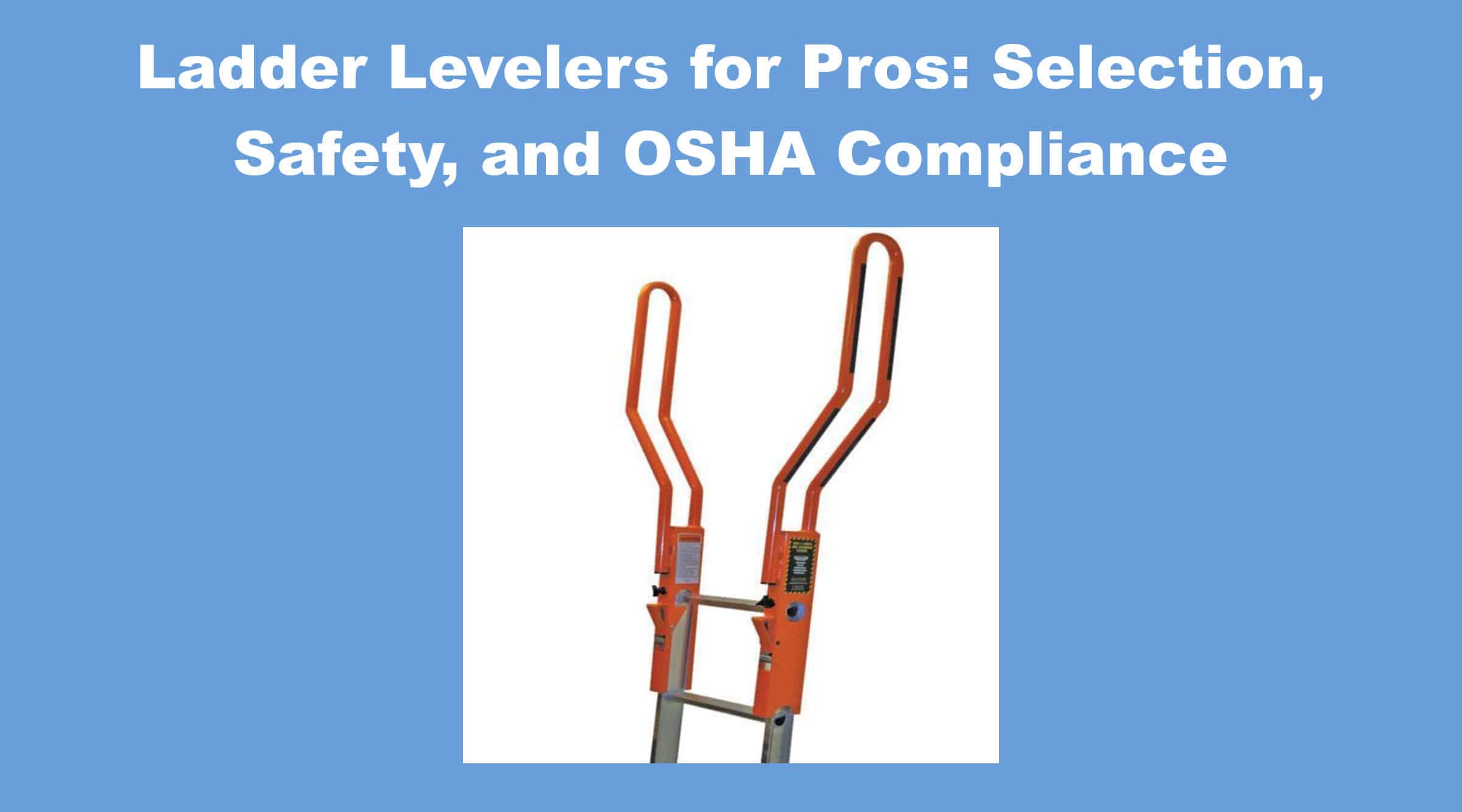
For new cleaning rigs, bundling levelers with stand-offs and fall protection equipment ensures OSHA compliance from day one. The ProTool Safe-T Ladder Extension System is another option for crews that need additional height safely.
Browse the full ladder accessory catalog to match components to your fleet.
Products Mentioned
 Ladder Leveler with Rubber Feet (Pair) Xtenda-Leg SKU: 73-41 | 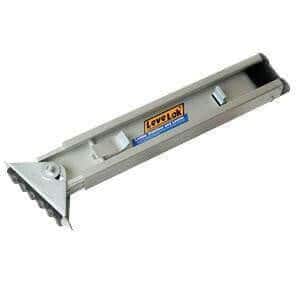 Ladder Levelers Quick Connect LeveLok SKU: 73-25 | Ladder Leveler with Rubber Feet (Pair) Xtenda-Leg SKU: 73-41 |
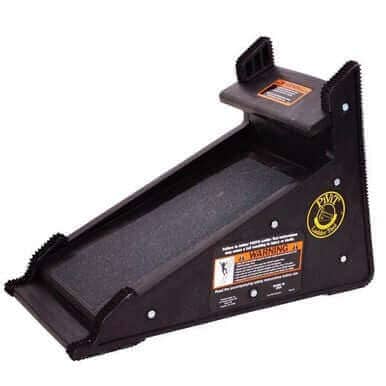 ProTool PiVit, Ladder Tool SKU: 73-95 | 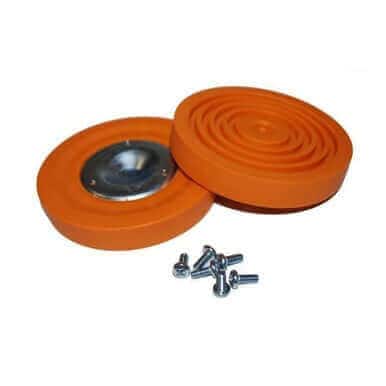 Leveler Repl Rub Feet (2) Xtenda-Leg SKU: 73-43 | 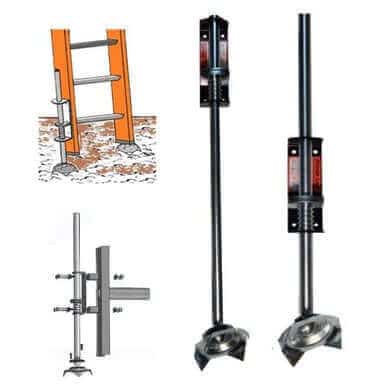 Ladder Leveler Cleated Feet (2 pack) Xtenda-Leg SKU: 73-42 |
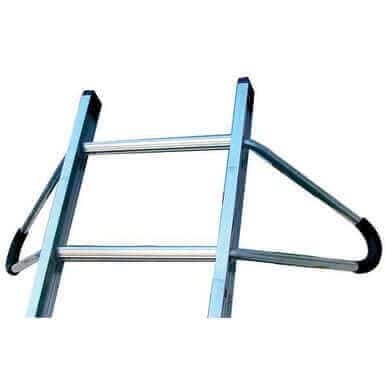 Ladder Stand Out - Stabilizer with Foam Elbows - Pair SKU: 73-20 | Leveler Repl Rub Feet (2) Xtenda-Leg SKU: 73-43 |  Bolt Kit Non-Standard for Xtenda-Leg Lev SKU: 73-47 |
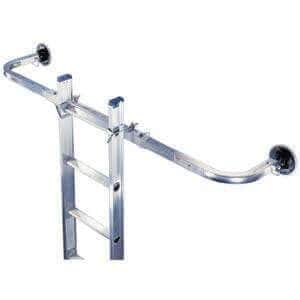 ProTool Ladder StandOff SKU: 73-101 | 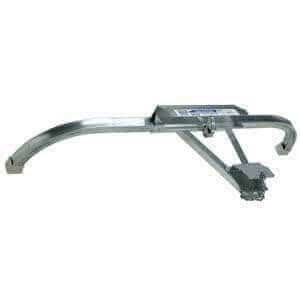 ProTool Ladder Quick Click SKU: 73-102 | 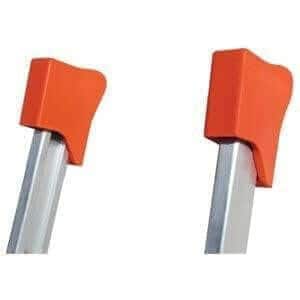 ProTool Ladder Mitts SKU: 73-81 |
 ProTool Lock Jaw Ladder Grip each SKU: 73-111 | 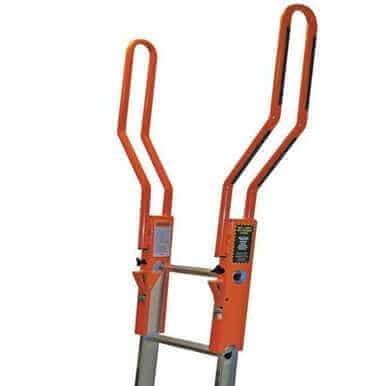 ProTool Safe-T Ladder Extension System SKU: 73-30 |