Lint-Free Window Cleaning Towels: What Pros Actually Need to Know

Table of Contents
Lint-free window cleaning towels that still leave fibers on glass are the most common equipment complaint in professional detailing — and it's almost always a purchasing or maintenance problem, not a technique problem. The wrong weave, the wrong wash protocol, or the wrong storage setup will turn a quality towel into a streak machine inside a month.
This guide covers the technical differences between microfiber, scrim, and surgical towels, how to match them to specific tasks, and the maintenance protocols that keep them performing through hundreds of wash cycles.
Why "Lint-Free" Towels Still Leave Lint
True lint is broken synthetic filament or residual organic fiber left by inferior textiles. The fix is split-fiber construction: polyester and polyamide are fused, then mechanically split to create star-shaped cross-sections with wedge-like channels. Those channels pull debris off the glass and trap it inside the towel structure instead of smearing it across the pane.
Cheap towels shed because they use staple fibers — short, disconnected strands that snap under friction. Professional-grade towels use continuous filament fibers that stay intact through hundreds of cycles. That single manufacturing difference separates a tool from a liability.
GSM: The Number That Actually Matters
GSM (Grams per Square Meter) tells you textile density, which dictates performance:
- 200–300 GSM: Short pile, tight weave. High "bite" for edge detailing and stubborn spot removal.
- 300–350 GSM: The versatile sweet spot — enough absorbency for squeegee holidays without becoming heavy during a full shift.
- 400+ GSM: Maximum water retention. Best for heavy soaking tasks, not final glass detail.
Most pros who carry one towel weight should be in the 300–350 range. If you're building a proper kit, carry two: a low-GSM towel for edge work and a mid-range for general detailing.
Static Charge: Why Maintenance Kills Performance
Microfiber carries a natural positive static charge that attracts negatively charged dust. That's mechanical cleaning without chemicals. But the charge is fragile — fabric softeners and high-heat drying coat the fibers in silicone or animal fat residue, sealing the microscopic pockets that trap dirt. Once coated, your towel smears instead of absorbing. More on this in the maintenance section below.
Microfiber, Scrim, or Surgical: Picking the Right Fabric
Each fabric type has a specific role. Carrying all three gives you the flexibility to handle any glass condition efficiently.
Microfiber Weave Types
- Fishscale: Overlapping pattern with high mechanical friction. Best for removing stubborn insect residue, tape adhesive, or bird droppings without scratching.
- Waffle: Recessed pockets that hold several times the towel's weight in water. Use it for soaking up large spills or drying frames — not for final glass detail.
- Smooth/Suede: Low pile, high density. Designed for the final buffing pass on mirrors and storefronts where every imperfection shows under direct light.
The Unger MicroWipe is the heavy-duty option — rugged structure, high absorbency, built for industrial laundering. The Ettore MicroSwipe has a more refined weave that excels at precision detailing on high-end residential glass. Both outlast generic alternatives by a wide margin.
Scrim (Irish Linen)
Scrim remains a staple for high-end commercial work. It's extremely durable, becomes more absorbent as it breaks in over dozens of wash cycles, and handles heavy detailing without leaving residue. If you do route work on luxury storefronts, keep a few in rotation.
Recycled Surgical Towels
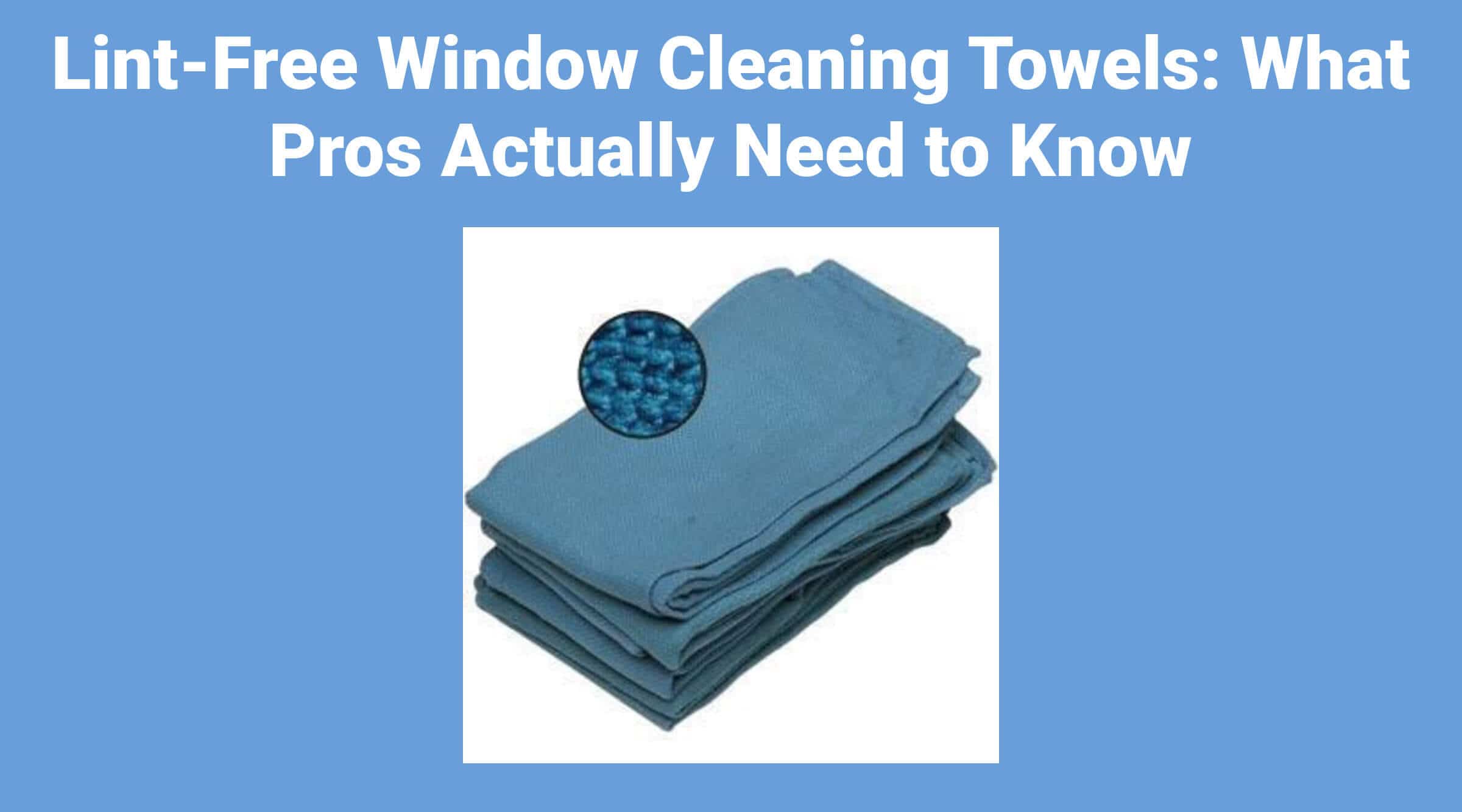
New cotton is a lint nightmare — loose short-staple fibers shed constantly. Recycled surgical towels have been through enough industrial wash cycles that the weak fibers are already stripped away. What remains is a tight, lint-free core. They're rugged enough for frame wiping, refined enough for squeegee holidays, and the cost-per-use is hard to beat. The ProTool recycled surgical towels are the go-to for crews buying in bulk.
Matching the Towel to the Task
Using one towel for everything is the fastest way to ruin your glass finish. Frames accumulate grease, atmospheric fallout, and abrasive grit. If those contaminants touch your glass towel, the fibers clog with residue that rinsing won't remove.
Task Breakdown
- Edge detailing (holidays): Thin, dry, low-GSM towel with high bite. Track the perimeter after your squeegee pass to strip the water bead before it runs.
- Final glass buff: Bone-dry smooth/suede weave. Removes ghosting or haze visible only under certain lighting angles.
- Frame and sill wiping: Retired glass towels or waffle weave. These are contamination zones — never let a frame towel touch glass.
- Screen cleaning: Dedicated high-pile microfiber. The fiber hooks pull dust from mesh without snagging. Never use your glass towels here.
Color-Coding for Crews
Assign colors to tasks — blue for glass, green for frames, red for screens. New technicians get a visual system that prevents the most expensive rookie mistake: wiping glass with a frame towel. It's a simple protocol that pays for itself on the first job.
The Two-Towel Rotation
Carry one damp towel for initial cleaning and one completely dry towel for the final buff. When the dry towel starts dragging instead of gliding, it's saturated — swap it. Rotate stock on your belt or in a bucket on a belt so a fresh surface is always available. This matters most in high-humidity conditions where evaporation slows down.
Maintenance Protocols That Actually Extend Towel Life
Your lint-free window cleaning towels will perform like cheap rags within weeks if you skip these steps.
What Destroys Performance
- Fabric softener: Coats fibers in silicone/animal fat. Seals the split-fiber pockets. Turns absorption into smearing. This is the #1 cause of towel failure.
- Bleach: Breaks down the polyamide core, causing premature thinning and linting.
- High-heat drying: Melts the microscopic fiber tips. Once fused, the towel pushes water instead of absorbing it.
What to Do Instead
- Wash in a dedicated load — never with cotton clothing or household laundry.
- Use scent-free liquid detergent only.
- Air dry or use a no-heat tumble cycle.
- Never mix glass towels with frame towels in the same wash.
Deep Clean: Restoring Clogged Fibers
Hard water mineral deposits make towels stiff and kill their grip. Add half a cup of white distilled vinegar to the final rinse cycle to dissolve calcium and magnesium buildup. Skip the boiling method — the heat damage risk outweighs the benefit.
Storage
Microfiber's positive static charge attracts any organic fiber nearby. Store glass towels in sealed bins, separated from cotton rags and surgical towels. Use color-coded bins on your truck — clean stock separated from dirty. Shake out every towel before it touches glass to clear airborne debris. This prevents the microscopic scratches that clients notice in direct sunlight.
Sourcing and Inventory for Professional Operations
Buying professional-grade lint-free window cleaning towels from a trade supplier eliminates the replacement cycle that comes with consumer-grade product. Inspect the hem and stitching before purchasing — high-density overlock stitching or ultrasonic cut edges prevent fraying. If the edges aren't finished, the towel itself becomes a lint source as it ages.
Inventory Sizing
- Solo operator: 30–50 detailing towels for daily rotation.
- 3-person crew: 150–200 units to cover laundry lag and high-volume commercial days.
Establish a retirement cycle: once a glass towel loses its mechanical bite or shows permanent staining, move it to the frame-and-sill bin. This preserves your premium stock for glass.
Building the Right Kit
Pair your towels with the right tools. The ProTool Microfiber Towels are the house-brand workhorse — thick, durable, and designed for trade use. Combine them with ProTool surgical towels for frame work and a set of Ettore MicroSwipe towels for precision residential detailing. A complete Window Cleaning Kit ensures your technicians have the right towel — and the right squeegee, sleeve, and scraper — for every phase of the job.
For crews running pure water systems, towel quality matters even more. Spot-free rinse from an RODI cart only stays spot-free if your final detail towel isn't depositing fibers back onto the glass. Match your filtration investment with towels that won't undercut it.
Products Mentioned
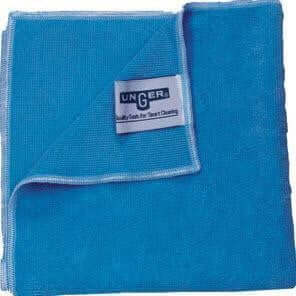 Unger Micro Wipe SKU: 273-1M | 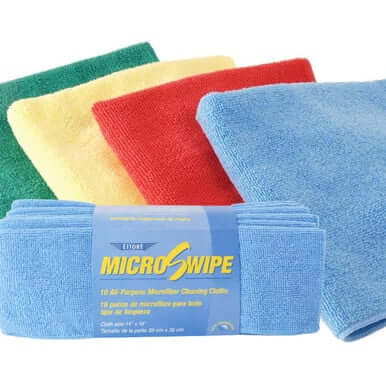 Ettore MicroSwipe Microfiber Towel 10 Pack SKU: 24-1M | 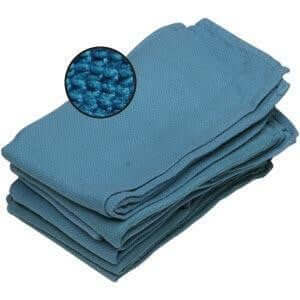 ProTool Towel Surgical New per LB SKU: 24-33 |
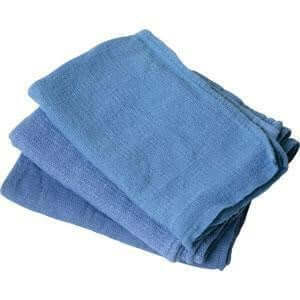 ProTool Towel Surgical Recycled per lb SKU: 24-331 | 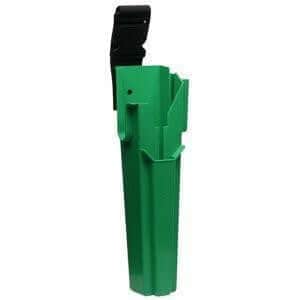 Holster Bucket on a Belt Classic Unger SKU: 48-21 | 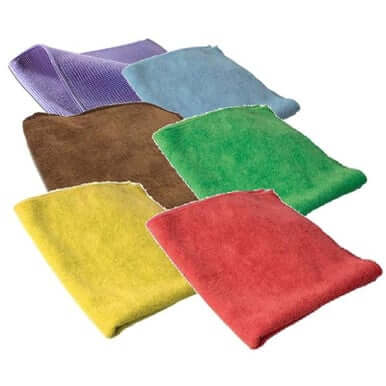 ProTool Microfiber Towel SKU: 24-5M |
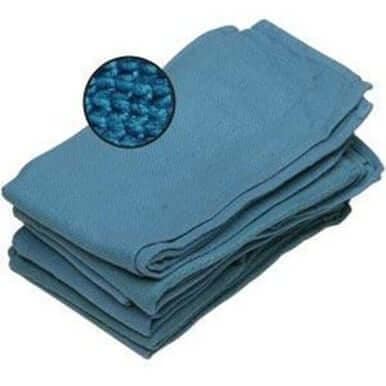 ProTool Towel Surgical Blue NEW Pre-washed 10LB SKU: 24-53 | Ettore MicroSwipe Microfiber Towel 10 Pack SKU: 24-1M | 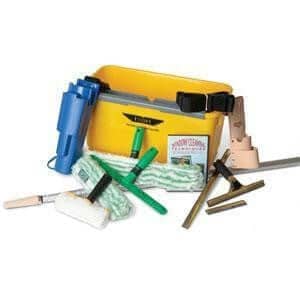 Window Cleaning Kit JRC SKU: 12-0101a |
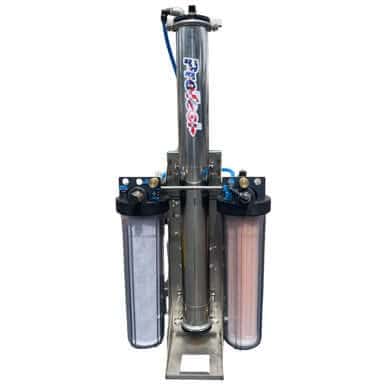 ProTool HiFlo Pure Water Cart Stainless Steel SKU: 150-0521 |