Porcelain Tile Driveway Cleaning Guide
Table of Contents
⚠ PPE Required Before Starting
Wear chemical-resistant gloves, safety goggles, and rubber-soled boots throughout. SH and alkaline degreasers cause serious skin, eye, and respiratory injury. Keep bystanders and pets clear. Protect landscaping, metals, and painted surfaces from runoff. Act quickly on fresh stains — grout is porous and staining agents penetrate deeper the longer they sit.
Step 0 — Identify Your Stain Type Before Selecting a Protocol
Caused by decomposing natural material. Green, black, or brown film on tile and in grout. SH-based treatment (Protocol A) required.
Mold, algae, mildew, moss, lichen, leaf tannins, bird droppings
Mineral or rust staining — white, gray, or orange. Require acid-based or dedicated efflorescence removers. Not covered in these protocols.
Efflorescence, rust, hard water, calcium deposits
Dark stains from vehicles or machinery. Alkaline EBC degreaser required — saponification converts oil to soap. Protocol A if mold also present, B if not.
Motor oil, grease, hydraulic fluid, tar, cooking oil
⬡ Surface Cleaner Selection, Grout Safety & Operation — Porcelain Tile Driveways
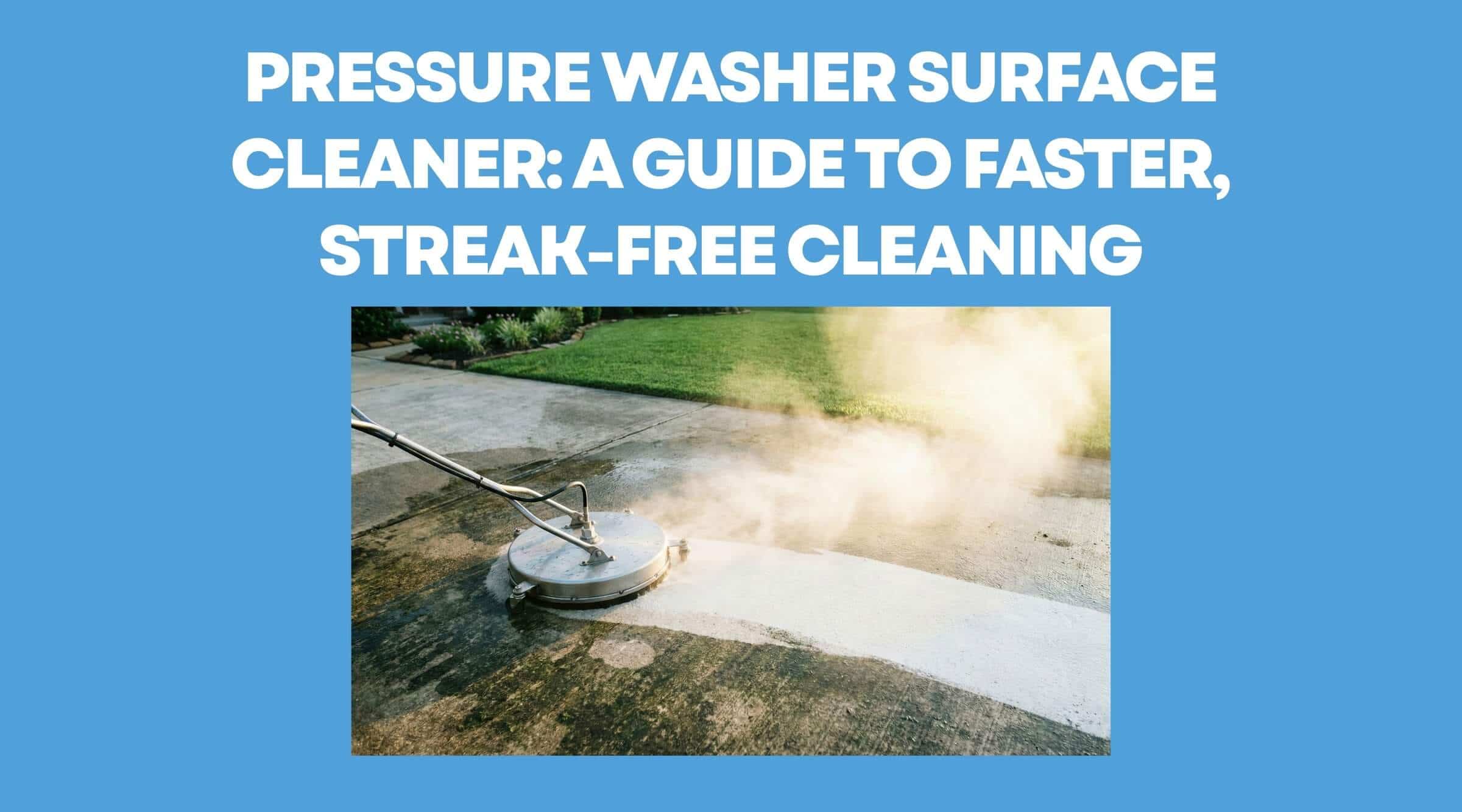
A surface cleaner is the right tool for a tile driveway — it eliminates tiger-striping, reduces operator fatigue, and can cut cleaning time by more than half compared to a wand. However, on tiled surfaces, the grout lines are the critical vulnerability. Correct tool sizing, PSI selection, and operating technique are all determined first by inspecting grout condition. Never attach equipment before completing the grout check below.
| What You See | Condition | Action |
|---|---|---|
| Solid, uniform grout — no cracks, gaps, or powdering | ✓ Good | Surface cleaner at 800–1,200 PSI. Standard procedure. |
| Minor surface powdering or slight color variation, no crumbling | ⚠ Caution | Surface cleaner at 600–800 PSI only. Do a test pass in an inconspicuous corner first. Stop immediately if grout dislodges. |
| Soft, sandy, crumbling, or missing grout sections | ✕ Compromised | No pressure washing. Hand-scrub with EBC and a stiff brush + garden hose rinse only. Re-grout before the next clean. |
| Hollow-sounding tiles, raised grout, or loose tiles | ✕ Structural | Stop — do not clean. Substrate failure. Refer to a tile contractor before any washing. |
Surface Cleaner Sizing — Match to Your Pressure Washer's GPM
The most common cause of streaking and poor spin is a surface cleaner that is too large for the machine's water flow. A correctly matched unit spins the spray bar at the right RPM, delivers consistent pressure, and produces a streak-free finish. For tile driveways, also keep PSI within grout-safe limits regardless of machine capability.
| Machine GPM | Recommended Cleaner Size | Nozzle Size (2 tips) | Notes |
|---|---|---|---|
| 4.0 GPM | 16–18 inch | Two 2.0 tips | ⭐ Best match for most residential tile driveways |
| 4.8–5.5 GPM | 18–21 inch | Two 2.5 tips | ⭐ Versatile — residential & light commercial |
| 8.0 GPM | 24–30 inch | Two 4.0 or three 2.5 tips | Cap PSI to grout-safe range for tile |
| 10.0 GPM | 28–30 inch | Three 3.0 or four 2.5 tips | Reduce PSI significantly on tile — high flow risk |
Nozzle formula: Machine GPM ÷ number of tips = tip size. Avoid tips smaller than 2.0 — they clog easily on tile and grout debris. Use 25° tips as standard; 15° only for heavily soiled concrete areas where grout condition is confirmed as excellent.
Surface cleaner only
Surface cleaner preferred
25°–40° fan tip, keep moving
Grout damage risk
- Always inspect and rate grout before attaching the surface cleaner
- Do a test pass in an inconspicuous edge area first
- Keep the deck flat and parallel to the tile at all times — never tilt
- Maintain a slow, steady walking pace — let the machine do the work
- Overlap each pass by at least 2–3 inches to prevent stripe lines
- Use a wand with a 25°–40° tip for edges, corners, and tight spots the cleaner can't reach
- After the surface cleaner pass, do a full rinse with a low-pressure tip (25° or 40°) working from high to low
- If using a hot water unit, use a hot-water-rated surface cleaner — cold water seals will fail rapidly
- Never run a surface cleaner over compromised or crumbling grout
- Don't exceed 1,200 PSI on any tile driveway regardless of grout condition
- Never stop mid-pass — the spinning nozzles will cut a ring into the grout
- Don't move too fast — rushing is the primary cause of zebra-striping and pinwheel patterns
- Don't use mismatched nozzle sizes — unequal tips create uneven spray and one-sided wear on the swivel
- Never use a zero-degree (red) tip on tile or near grout lines
- Don't skip the final rinse — loosened debris left on the surface will re-settle into grout lines
- Never use a cold-water surface cleaner on a hot-water pressure washer
| Problem | Likely Cause | Fix |
|---|---|---|
| Spray bar not spinning or spinning slowly | Clogged nozzles or wrong nozzle size for GPM | Clear clogs; verify nozzle size matches GPM formula. Replace as matched pair. |
| Zebra stripes / tiger stripes | Moving too fast; no pass overlap | Slow walking pace; overlap passes by 2–3 inches. Re-clean affected area. |
| Pinwheel / donut patterns on tile | Moving too fast OR worn / mismatched nozzles | Slow down first. If pattern persists, replace both nozzles as a matched set. |
| Grout material appearing in rinse water mid-job | PSI too high for grout condition; tool tilted | Stop immediately. Reduce PSI or switch to garden hose. Inspect grout for damage. |
| Water splashing out from under the skirt | Worn or torn brush skirt / splash guard | Replace skirt before continuing. Containment failure also risks runoff compliance issues. |
Surface Cleaner Maintenance Schedule
- Rinse housing to clear tile debris and grit
- Inspect brush skirt for tears or wear
- Check all fittings for leaks
- Inspect nozzles for clogs or damage
- Verify both nozzles are the same size
- Check hose and trigger gun condition
- Grease the swivel fitting if equipped
- Inspect spray bar for wobble or wear
- Replace nozzles as a matched pair if worn
⬡ Porcelain Tile vs. Concrete — Key Differences for Cleaning
- Porcelain tile is non-porous — unlike concrete, the tile face does not absorb oil or moisture. Staining concentrates in the grout lines, which are porous.
- EBC and 1.5% SH are both safe on standard porcelain tile. Limit SH dwell to 10 minutes on polished or light-colored tile.
- Concrete grinders or sandblasters sometimes referenced for deep concrete stains are not appropriate for porcelain tile — surface damage risk is high.
- Do not use strong acids (hydrochloric, phosphoric) on porcelain — risk of grout etching and glaze damage.
- Inorganic stains (rust, efflorescence, hard water) require dedicated products not covered in these protocols.
- After cleaning, apply a penetrating silicone grout sealer (24–48 hrs after drying) — this is the single best protection against future oil and organic staining in grout pores.
Protocol A
- Inspect grout condition across the full driveway
Before any chemical or equipment setup, physically examine grout lines across the entire surface. Rate condition using the Grout Inspection table above. This determines your PSI limit and whether a surface cleaner is safe to use at all.
Grout-first rule:Tile can look perfect while the grout is failing underneath. Always check grout, not tile appearance, to determine safe pressure. - Map oil/grease zones and organic growth zones
Walk the surface and mentally note where oily dark stains are concentrated vs. where mold/algae film is present. Oil zones get EBC pre-treatment first (Phase 1) before SH is applied to the whole surface (Phase 2).
- Apply EBC liberally to all oil and grease stain areas
Using a 12V chemical sprayer, saturate oil zones until puddling. Do not dilute at this stage for heavy stains. EBC is an alkaline concentrate that triggers saponification — breaking the oil's molecular bonds and converting fats to soap, which then assists in removing the stain.
- Allow EBC to dwell until nearly evaporated
Do not rinse early. The longer the EBC sits and works, the less physical effort and the less pressure will be needed at the wash stage — protecting grout lines.
- Agitate vigorously with a stiff push broom until suds formSuds color check:Light tan / chocolate-milk = good, proceed. Deep dark brown = heavy grease load — reapply EBC and repeat dwell + agitation before moving on.
- Repeat if needed, then lightly rinse — do not fully flush yet
For a second round, apply enough EBC to wet the surface (no puddling needed). Dwell and agitate again. After the final round, do a light rinse but leave the surface damp — SH treatment follows immediately.
- Pre-wet the entire surface with water
A light rinse cools the tile and slows evaporation, giving the SH mix longer effective contact time.
Timing:Apply in morning or late afternoon. Hot tile in direct midday sun flashes the SH mix dry too quickly, reducing mold kill effectiveness. - Mix EBS surfactant into your 1.5% SH solution
Add EBS at the manufacturer's recommended rate (typically 1–2 oz per gallon). EBS increases the solution's cling and surface contact time on smooth porcelain, significantly improving organic kill rates.
🧪Mix1.5% SH + EBS surfactant (per label rate) - Apply EBS + SH mix evenly across the entire driveway
Spray from the far end toward your exit. Achieve full wet coverage of all mold-affected areas and the general surface. EBS helps the solution cling and foam slightly rather than sheeting off tile.
- Dwell 5–10 minutes — re-wet any drying sections
Mold and algae will visibly lighten or turn brown/gray as oxidation proceeds. Re-apply if any area begins to dry before the dwell is complete.
Porcelain note:1.5% SH is safe on standard porcelain. Cap at 10 minutes on polished or lightly pigmented tile to avoid surface dulling.
- Confirm tool and PSI from your grout inspection before startingGood grout:Surface cleaner 800–1,200 PSI, sized to your GPM (see table above).
Caution grout:Surface cleaner 600–800 PSI only — test corner first.
Compromised grout:Garden hose + EBC hand rinse only. No pressure equipment. - Wash the main surface with the surface cleaner — slow, steady, overlapping passes
Work from the highest point down toward the drain or street. Maintain a consistent walking pace. Overlap each pass by 2–3 inches. Keep the deck flat and parallel — never tilt it. The containment skirt prevents overspray from hitting surrounding landscaping or walls.
- Clean edges, corners, and tight spots with a wand and 25°–40° tip
A surface cleaner cannot reach right up to walls or step edges. Switch to a wand with a fan tip for these zones, keeping the nozzle moving and maintaining a 10–14 inch working distance from the tile surface.
- Mid-job grout check, then final rinse
Briefly inspect grout lines for signs of erosion. Then do a thorough low-pressure rinse (25° or 40° tip) working from high to low — gravity carries loosened debris and chemical residue toward the drain. Rinse all landscaping that received overspray immediately.
- Allow to dry 20–30 minutes and inspect
Residual mold ghosting in grout often continues fading 24–48 hours after SH treatment as oxidation completes. Persistent oil shadow stains may need a second targeted EBC application.
⬡ Post-Clean Recommendation — Grout SealerOnce fully dry (24–48 hrs), apply a penetrating silicone or polyurethane grout sealer. Sealed grout dramatically resists future oil and organic staining, keeps subsequent cleans faster, and reduces the EBC pre-treatment load on the next visit.
Protocol B
No Mold — Oily & Dirty Surface (EBC Degreaser Wash)
- Inspect grout and confirm no organic growth is present
Rate grout condition using the inspection table above and set your PSI limit. If mold, algae, or any green/black organic film is found during inspection, switch to Protocol A. Protocol B is for oil/grease and general grime only — no SH needed.
- Apply full-strength EBC to concentrated oil stain areas until puddling
These spots need direct, undiluted treatment. Getting the saponification process started before the general wash reduces the pressure and scrubbing load on grout lines later.
- Dwell until nearly evaporated, then agitate with stiff broomDark suds = working:Dark brown foam means the alkaline EBC is actively converting oil to soap. Keep agitating until suds lighten to tan — that indicates most of the grease load has been addressed. Then you're ready to proceed.
- Repeat if needed, then proceed to Phase 2
If a second pre-treatment round is needed, apply enough EBC to wet the surface (no puddling). Dwell and agitate again. Otherwise, move directly to the general wash without fully flushing.
- Mix EBC solution for general surface application🧪General Cleaning (driveways, patios, sidewalks)32 oz EBC : 5 parts water🧪Heavy-Duty (very soiled, commercial)1 part EBC : 5 parts water
- Apply EBC mix to entire surface via X-Jet or downstream injector
Spray evenly from the far end toward your exit. Achieve full wet coverage across the whole driveway, not just stained areas.
- Allow to dwell 3–5 minutes — keep surface wet
3 minutes minimum for general soiling; 5 minutes for heavy load. Re-spray any sections that begin to dry before dwell is complete.
- Confirm tool and PSI based on grout inspectionGood grout:Surface cleaner 800–1,200 PSI — preferred tool for tile driveways.
Caution grout:Surface cleaner 600–800 PSI or 40° fan tip only.
Compromised grout:Garden hose + EBC rinse only until grout is repaired. - Wash main surface with surface cleaner — slow, flat, overlapping passes
The surface cleaner delivers the most even, streak-free finish on tile and eliminates tiger-striping from wand use. Maintain steady walking pace. Overlap passes by 2–3 inches. Keep the deck parallel to the tile — never tilt. If the bar slows or stops spinning, check nozzle sizes against your GPM (see sizing table above).
- Wand edges, corners, and borders with 25°–40° tip
A surface cleaner can't reach flush against walls or step edges. Use a wand with a fan tip for these areas, keeping it moving constantly.
- Final rinse — high to low, flush all residue
Switch to a 25° or 40° rinse tip and thoroughly flush the entire surface and grout lines. Rinse any plant or lawn areas that received overspray. A surface cleaner lifts dirt but doesn't remove it — a proper rinse is non-negotiable for a clean result.
- Dry inspection and spot retreatment if needed
Allow 20–30 minutes of drying time. Remaining oil shadows in grout lines respond well to a second application of undiluted EBC, short dwell, hand agitation, and targeted rinse.
⬡ Post-Clean Recommendation — Grout SealerOnce fully dry (24–48 hrs), apply a penetrating grout sealer. Oil-based stains are the most aggressive penetrators of grout pores — sealing makes future Protocol B jobs significantly faster by preventing deep re-staining, often reducing or eliminating the pre-treatment phase entirely.