Pressure Washer Surface Cleaner: A Guide to Faster, Streak-Free Cleaning

Table of Contents
- Key Takeaways
- How a Surface Cleaner Attachment Works to Eliminate Streaks
- Choosing a Professional-Grade Surface Cleaner: Key Specifications
- Housing Material: Stainless Steel vs. ABS Plastic
- Diameter and Size: From 16 to 30 Inches
- Essential Features: Casters, Splash Guards, and Handles
- Recommended Surface Cleaner Sizes by GPM
- Understanding Surface Cleaner Nozzle Sizing
- Choosing the Correct Spray Angle
- Why Proper Matching Matters
- Hot Water vs. Cold Water Units
- Professional Techniques for Flawless Results
- Maintenance and Troubleshooting for Longevity and ROI
- Master Your Flatwork with a Professional Surface Cleaner
- FAQs
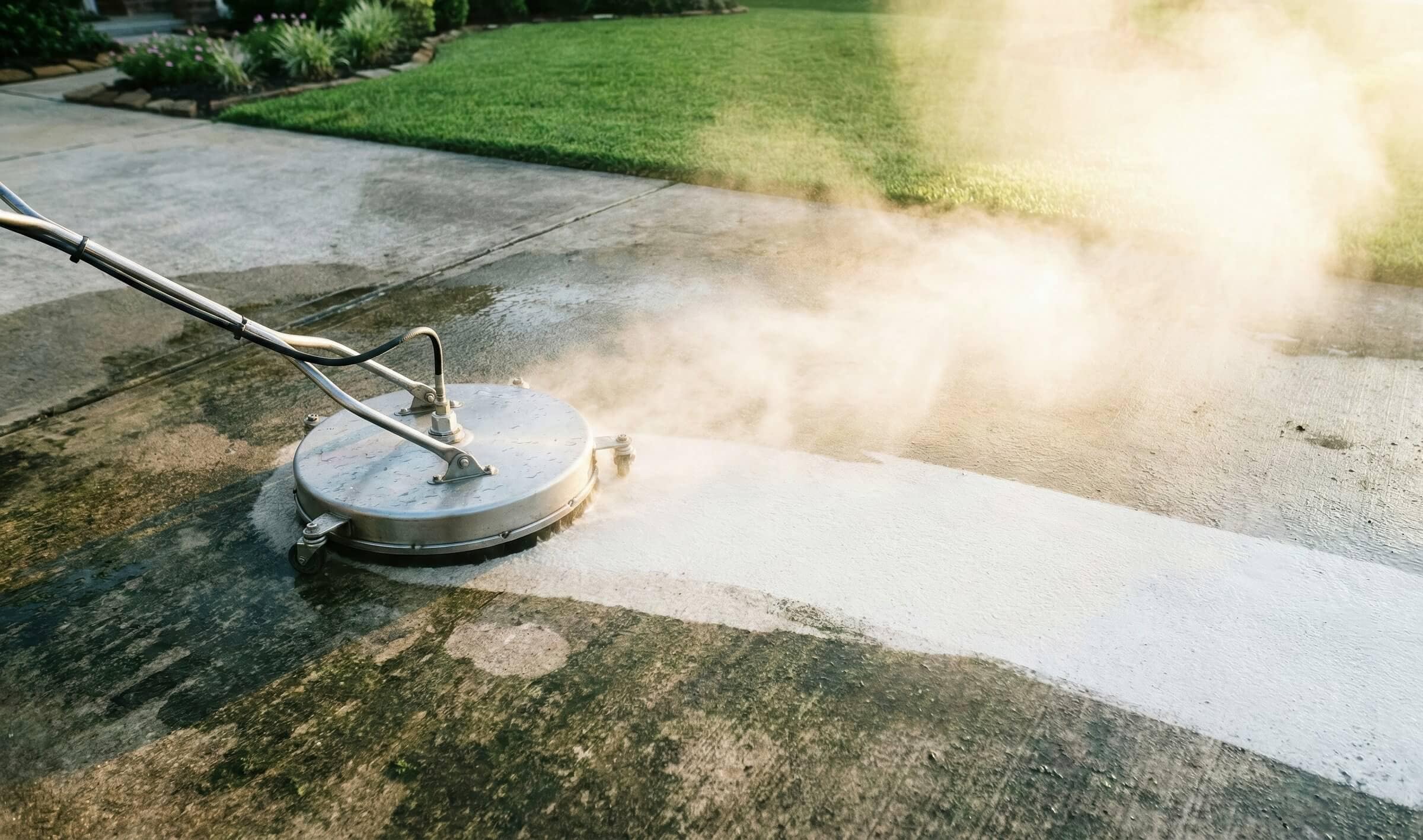
For any serious pressure washing professional, large flatwork jobs represent both a significant opportunity and a major challenge. Cleaning expansive driveways, patios, and commercial concrete with a standard wand is not just inefficient-it's a direct path to inconsistent results, frustrating 'zebra stripes,' and wasted billable hours. The right professional-grade pressure washer surface cleaner attachment is the definitive solution, transforming tedious tasks into profitable, high-speed operations that deliver a flawless, uniform finish every time.
However, not all surface cleaners are created equal. Choosing a unit that is mismatched to your machine’s GPM and PSI ratings, or investing in a flimsy, consumer-grade model, can lead to poor performance and premature failure. This comprehensive guide is built for the professional who demands durability and performance. We will walk you through the essential criteria for selecting, operating, and maintaining a surface cleaner that will dramatically increase your job site efficiency, eliminate wand marks for good, and boost your profitability.
Key Takeaways
- Learn which specifications define a professional-grade surface cleaner built for durability and maximum on-the-job performance.
- Avoid poor performance by correctly matching your pressure washer surface cleaner attachment to your machine's GPM and PSI output.
- Master professional techniques to eliminate "zebra striping" and deliver a perfectly uniform, streak-free finish on every job.
- Implement a simple maintenance routine to protect your investment, prevent costly downtime, and maximize the service life of your equipment.
How a Surface Cleaner Attachment Works to Eliminate Streaks
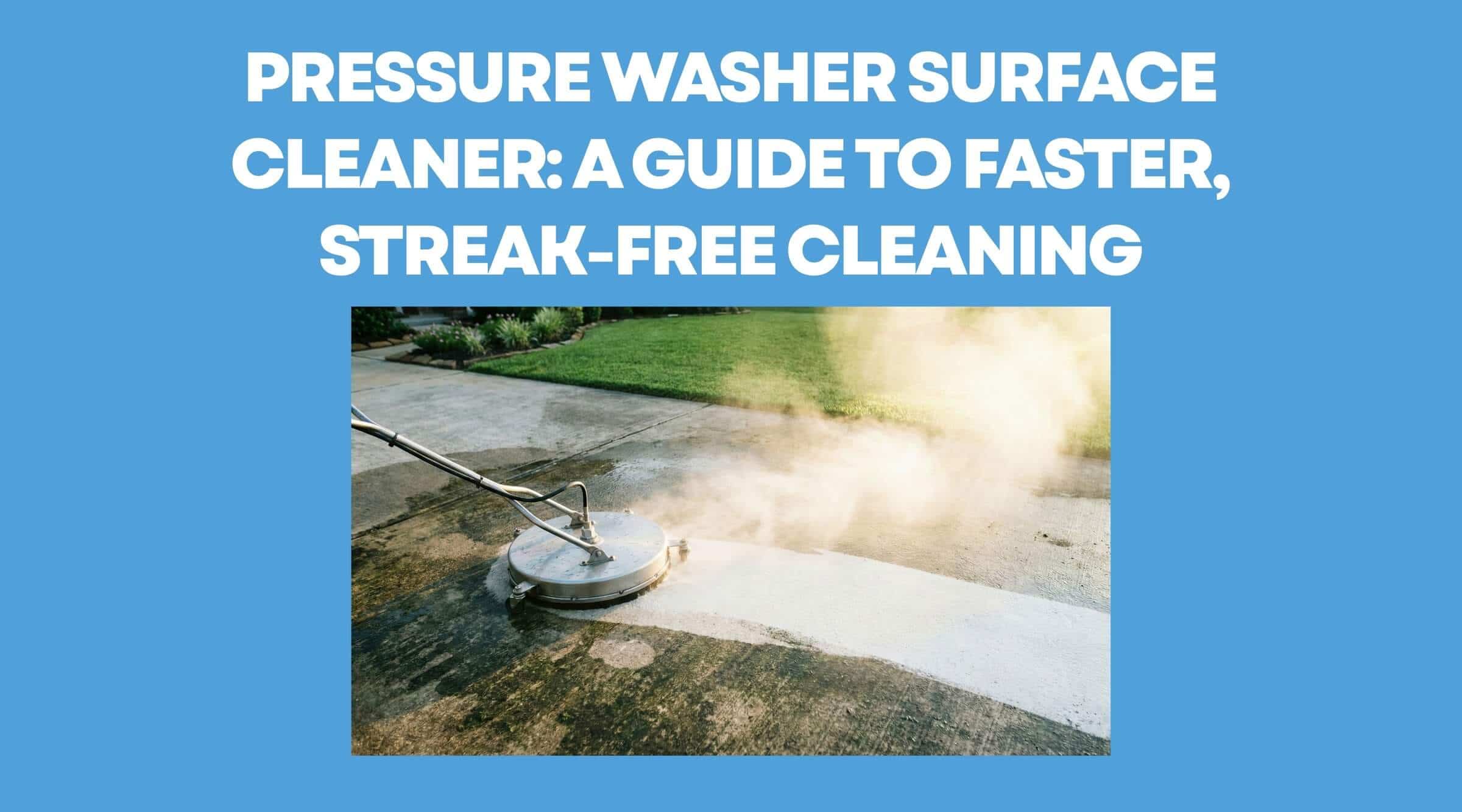
For any professional exterior cleaner, achieving a uniform, streak-free finish on large flat surfaces like driveways, patios, and parking lots is the primary goal. Using a standard pressure washer wand is often inefficient and leads to inconsistent results, commonly known as "zebra striping." A pressure washer surface cleaner attachment is the professional-grade solution, transforming your machine into a high-efficiency floor cleaner that can cut job times by over 50%.
The Core Mechanics: Spinning Bar and High-Pressure Nozzles
The effectiveness of a surface cleaner lies in its simple yet robust design. Understanding its core components-the housing, swivel, and spray bar assembly-clarifies why it delivers superior results. The fundamental principles of how pressure washers work are harnessed and focused for maximum efficiency. A high-pressure, sealed swivel directs the water flow into a spinning bar equipped with two or more precision-angled nozzles. This assembly operates at high RPMs, creating a wide and perfectly consistent cleaning path with every pass.
- Containment Housing: The deck or shroud contains the high-pressure spray, preventing overspray that can damage surrounding landscaping or walls.
- Consistent Distance: The housing ensures the nozzles maintain a fixed, optimal distance from the surface, which is critical for preventing the streaks and damage caused by an unsteady hand with a wand.
- Uniform Cleaning: The rapid rotation of the nozzles guarantees that every square inch within the cleaning path receives the same level of cleaning power.
Wand Cleaning vs. Surface Cleaner: A Professional's Comparison
For a professional, the difference between using a wand and a dedicated pressure washer surface cleaner attachment is stark. Wand cleaning is a slow, physically demanding process that relies entirely on operator consistency. Fatigue inevitably sets in, leading to variations in spray distance and speed, which directly causes striping. A surface cleaner eliminates this variable, providing a repeatable, high-quality result from start to finish. A concrete driveway that might take four hours to clean meticulously with a wand can often be completed in one hour or less, drastically improving job site profitability and reducing operator strain. The visual result is undeniable: a uniformly clean surface versus the tell-tale stripes of a wand-only job.
Choosing a Professional-Grade Surface Cleaner: Key Specifications
For professional exterior cleaners, equipment is an investment in efficiency and reputation. Consumer-grade plastic models found in big-box stores are not built for the demands of daily commercial use. Selecting a professional-grade pressure washer surface cleaner attachment requires a focus on durability, performance, and features that maximize on-the-job productivity. The right unit is a direct reflection of your machine's power (GPM and PSI) and the typical flatwork jobs you perform. Investing in a high-quality surface cleaner reduces costly downtime, prevents premature replacement, and delivers a superior return on investment.
Housing Material: Stainless Steel vs. ABS Plastic
The housing material is the first indicator of a unit's durability. Stainless steel decks offer maximum longevity and are the standard for heavy-duty commercial use. They withstand accidental drops, impacts from debris, and the general wear and tear of being transported from job to job. While ABS or high-impact composite plastic models are lighter, they are far more susceptible to cracking and damage, making them unsuitable for rigorous daily work. For professionals, a stainless steel housing is the clear choice for long-term reliability.
Diameter and Size: From 16 to 30 Inches
The diameter of the surface cleaner directly impacts your cleaning speed. While larger units cover more ground, they demand higher water flow (GPM) to spin the spray bar effectively. A general rule for professionals is to allow for at least 4 GPM for every 10 inches of diameter.
- 18-21 Inch Models: This is a versatile sweet spot for contractors handling residential driveways, patios, and light commercial work with machines in the 4-5.5 GPM range.
- 24-30 Inch Models: These are high-production units designed for large-scale commercial flatwork like parking garages and warehouses. They require high-GPM machines (8+ GPM) to operate at peak performance.
Essential Features: Casters, Splash Guards, and Handles
Beyond core construction, key features separate a basic tool from a professional one. These components are engineered to reduce operator fatigue and improve job site results.
- Casters: Non-marking casters (wheels) are a must-have. They allow the unit to glide effortlessly across surfaces, dramatically reducing operator fatigue compared to floating models. This allows for longer, more consistent work with less physical strain.
- Splash Guards: A heavy-duty brush skirt or splash guard is critical for containing water and debris. This not only keeps the operator and surrounding property clean but is also a key component of responsible operation. Containing runoff is essential for adhering to local regulations and Environmental best practices for water reclamation.
- Ergonomic Handles: Well-designed handles provide superior control and comfort during long hours of use. Features like an integrated wand holder and a comfortable grip angle make the entire pressure washer surface cleaner attachment easier to maneuver and manage.
Critical Match: Sizing Your Surface Cleaner to Your Pressure Washer
In professional pressure washing, proper equipment matching is essential for speed, cleaning quality, and equipment longevity. The most common cause of slow cleaning, streaking, or poor spray bar rotation is using a surface cleaner that does not match the pressure washer’s GPM output.
A surface cleaner must be sized correctly so the spray bar spins at the proper RPM and delivers consistent pressure through the nozzles. When the cleaner is too large for the machine, the bar rotates slowly and leaves streaks. When it’s properly matched, cleaning is faster and produces a uniform finish.
Recommended Surface Cleaner Sizes by GPM
A practical rule used by many professionals is selecting the surface cleaner size based on the machine’s water flow (GPM). The following ranges are reliable combinations used in the field:
4 GPM machines: 16–18 inch surface cleaner
4.8 GPM machines: 18–21 inch surface cleaner
5.5 GPM machines: 20–24 inch surface cleaner
8 GPM machines: 24–30 inch surface cleaner
These combinations provide enough water flow to keep the spray bar spinning properly while maintaining effective cleaning pressure at the nozzles.
Using a surface cleaner that is too large for the machine will reduce cleaning speed and often create streaking or “zebra striping.”
Understanding Surface Cleaner Nozzle Sizing
Surface cleaner nozzle sizes are typically calculated by dividing the machine’s GPM by the number of spray tips on the bar. This ensures the total flow through the nozzles matches the pressure washer’s output and maintains proper pressure at the surface.
Formula:
Machine GPM ÷ Number of nozzles = Nozzle size per tip
Examples:
4 GPM machine with two nozzles
4 ÷ 2 = two 2.0 tips4.8–5.5 GPM machine with two nozzles
Use two 2.5 tips8 GPM machine
Use two 4.0 tips or three 2.5 tips10 GPM machine
Use three 3.0 tips or four 2.5 tips
As a practical rule, most professionals avoid using nozzle sizes smaller than 2.0, since smaller orifices are more likely to clog when cleaning concrete, pavers, and other flatwork surfaces.
Choosing the Correct Spray Angle
Most surface cleaner nozzles use a 25-degree spray pattern, which provides a balanced combination of cleaning power and coverage.
However, some contractors prefer 15-degree tips when they want a more aggressive spray pattern for heavily soiled concrete or commercial flatwork.
Both options are common, but the key is maintaining consistent nozzle sizes and matching them properly to your machine’s GPM.
Why Proper Matching Matters
Correctly pairing your pressure washer and surface cleaner ensures:
Faster cleaning speeds
Even, streak-free results
Proper spray bar rotation
Reduced wear on pumps and swivels
Professionals who take the time to match their equipment properly can dramatically increase productivity while delivering consistently better results.
Hot Water vs. Cold Water Units
If you operate a hot water pressure washer, you must use a surface cleaner built for it. Hot water units feature high-temperature swivels and seals designed to withstand heat up to 212°F or more. Using a standard cold water pressure washer surface cleaner attachment with a hot water machine will rapidly destroy the seals and bearings, leading to leaks and costly failure. For jobs involving grease, oil, or automotive stains, a hot water-capable unit is essential for breaking down grime effectively.
Ready to find the perfect match for your machine? Browse our professional-grade surface cleaners and get the right tool for the job.
Professional Techniques for Flawless Results
Owning a professional-grade pressure washer surface cleaner attachment is the first step toward high-efficiency cleaning. However, the tool itself is only half the solution. Proper technique is what separates an amateur from a professional, preventing surface damage, ensuring a uniform finish, and ultimately reducing job time. Mastering these methods minimizes callbacks and elevates customer satisfaction, solidifying your reputation for quality work.
Pre-Treating and Post-Treating Surfaces
For surfaces with significant organic growth like algae, mold, or mildew, a pre-treatment is essential. Applying a professional cleaning solution, often a sodium hypochlorite mix, and allowing it to dwell kills the growth at the root and loosens stubborn grime. This chemical-assisted approach allows you to use lower pressure, protecting delicate surfaces and extending the life of your equipment. A light post-treatment can also be applied to inhibit rapid regrowth, adding long-term value for your client.
Proper Movement and Overlapping Passes
The key to avoiding streaks or "tiger stripes" is consistent, methodical movement. Let your pressure washer surface cleaner attachment do the work by maintaining a slow and steady walking pace. To guarantee a flawless, uniform clean, follow these core principles:
- Overlap each pass by at least a few inches. This eliminates the faint lines that can appear at the edge of the cleaner's path.
- Work in a consistent pattern, such as moving vertically or horizontally across the entire surface before changing direction.
- Use your wand with a standard nozzle for tight corners, edges against walls, and any areas your primary attachment cannot reach.
A Final Rinse is Non-Negotiable
A surface cleaner is incredibly effective at lifting dirt, but it doesn't make the debris disappear. After you have cleaned the entire area, a thorough rinse is mandatory for a professional finish. Switch to a low-pressure rinse nozzle (like a 25 or 40-degree tip) and systematically wash all the loosened dirt and cleaning solution away. Always work from the highest point of the surface to the lowest, using gravity to your advantage. This final step ensures no residue is left behind, presenting a perfectly clean surface to your client. Find all the professional-grade nozzles and chemicals you need to achieve these results at J Racenstein.
Maintenance and Troubleshooting for Longevity and ROI
Your professional-grade equipment is a significant investment designed for high performance and efficiency. Proper care for your pressure washer surface cleaner attachment is not just about cleaning the tool-it's about protecting your investment, maximizing your return, and eliminating costly downtime. A few minutes of routine maintenance can prevent hours of lost work on a job site. Understanding how to diagnose and resolve common issues in the field ensures you remain productive and profitable.
Routine Maintenance Checklist
Integrate these simple checks into your workflow to ensure your surface cleaner operates at peak performance:
- After Each Use: Rinse the housing to remove dirt and debris. Inspect the brush skirt for tears or excessive wear that could reduce pressure and cause overspray.
- Weekly: Check spray nozzles for clogs or blockages. A partially blocked nozzle is a primary cause of performance issues.
- Monthly: For models with a grease fitting, apply grease to the swivel to ensure the spray bar rotates smoothly and without resistance.
- Ongoing: Regularly inspect all hoses, trigger guns, and fittings for leaks, cracks, or signs of wear.
Troubleshooting Common Problems
When performance dips, the solution is often straightforward. Here are two of the most frequent issues and their fixes:
Problem: The spray bar is not spinning or is rotating very slowly.
Solution: This is almost always a nozzle issue. First, check for and clear any clogs. If the nozzles are clear, confirm they are the correct size for your pressure washer's GPM rating. Mismatched nozzles can prevent the bar from generating enough thrust to spin correctly.
Problem: The surface cleaner is leaving streaks or "pinwheel" patterns.
Solution: The most common cause is moving too quickly across the surface. Slow your walking pace to allow for a consistent, overlapping clean. If the problem persists, one or both of your nozzles may be worn or damaged, creating an uneven spray pattern. Replace them as a matched set.
A well-maintained pressure washer surface cleaner attachment is a durable, heavy-duty tool that will deliver consistent results for years. By performing these routine checks and knowing how to handle minor issues, you ensure your equipment is always ready for the next job. For high-quality replacement nozzles, swivels, and other essential parts, visit jracenstein.com to keep your gear in professional working order.
Master Your Flatwork with a Professional Surface Cleaner
Ultimately, transforming large, dirty surfaces into pristine, clean spaces efficiently comes down to two critical factors: the right equipment and the right technique. Achieving faster, streak-free results is not an accident; it's the direct outcome of correctly sizing your pressure washer surface cleaner attachment to your machine’s GPM and PSI. By pairing this with professional operating methods and consistent maintenance, you ensure maximum performance, protect your investment, and boost your job site profitability.
When you are ready to elevate your capabilities, trust the experts. J. Racenstein offers a comprehensive selection of professional-grade equipment from industry-leading brands like BE and Whisper Wash. Our team’s real-world industry experience means you get expert advice to find the perfect match for your setup. Shop our full line of professional surface cleaners and accessories. With our fast shipping, you'll have the durable tools you need to stay profitable and get the job done right.
Equip yourself for success and make every job your best one yet.
FAQs
How do I replace the nozzles on my surface cleaner?
To replace nozzles, first ensure the unit is completely disconnected from the pressure washer. Use a properly sized wrench to grip the flat sections of the old nozzle and turn it counter-clockwise to remove it from the spray bar. Before installing the new nozzle, wrap its threads with Teflon tape to create a secure, leak-free seal. Thread the new nozzle in by hand, then use the wrench to apply a final quarter-turn. Avoid over-tightening to prevent damage to the spray bar threads.
Is a surface cleaner safe to use on wooden decks or brick pavers?
A surface cleaner is highly effective and safe for durable surfaces like brick pavers. However, extreme caution is necessary for wooden decks, especially those made of softwood. The concentrated pressure from a pressure washer surface cleaner attachment can cause splintering or "furring." If use on wood is required, reduce the pressure significantly (below 1200 PSI) and use wide-angle nozzles. Always perform a test on a small, inconspicuous area to confirm compatibility before proceeding with the entire surface.
Why is my surface cleaner leaving a 'donut' or 'pinwheel' pattern on the concrete?
This common issue, known as "zebra striping," is most often caused by moving the surface cleaner too quickly. This prevents the rotating spray bar from achieving the necessary overlap for an even clean. Slowing your walking pace is the primary solution. This pattern can also indicate clogged or mismatched nozzles, which disrupt the spray pattern and pressure balance. Ensure both nozzles are clean, identical, and correctly sized for your machine’s GPM and PSI ratings.
Do I need a surface cleaner with a built-in recovery port?
A surface cleaner with a recovery port is a professional requirement for any job where water runoff must be strictly controlled. These units connect to an industrial vacuum system to reclaim water and cleaning solutions simultaneously. This feature is essential for indoor cleaning applications, environmental compliance in sensitive areas, and preventing water damage on commercial job sites. For typical residential driveway or patio cleaning, a standard model without a recovery port is sufficient.