Pressure Washing and Concrete Cleaning: A Contractor's Field Guide

Table of Contents
Pressure washing and concrete cleaning is where most exterior cleaning contractors either build a real revenue stream or burn through equipment and chemicals learning lessons the hard way. This guide covers the decisions that actually matter — machine selection, chemical strategy, surface cleaner technique, and the stain-specific approaches that separate callbacks from clean concrete.
Choosing the Right Pressure Washer
GPM matters more than PSI for concrete work. A 4 GPM machine at 4,000 PSI will outperform a 2.5 GPM machine at the same pressure every time — you're moving more water across the surface, which means faster rinse times, better chemical coverage, and fewer streaks. For residential driveways and patios, a 4.0 GPM 4,000 PSI cold water unit handles the majority of work. Crews running commercial properties or parking structures should look at an 8.0 GPM belt-drive skid — the production difference is dramatic.
Belt-drive pumps outlast direct-drive in high-hour applications. They run cooler, tolerate thermal cycling better, and the pump is serviceable independent of the engine. If you're running the machine daily, belt-drive pays for itself in the first season.
Wand and Lance Selection
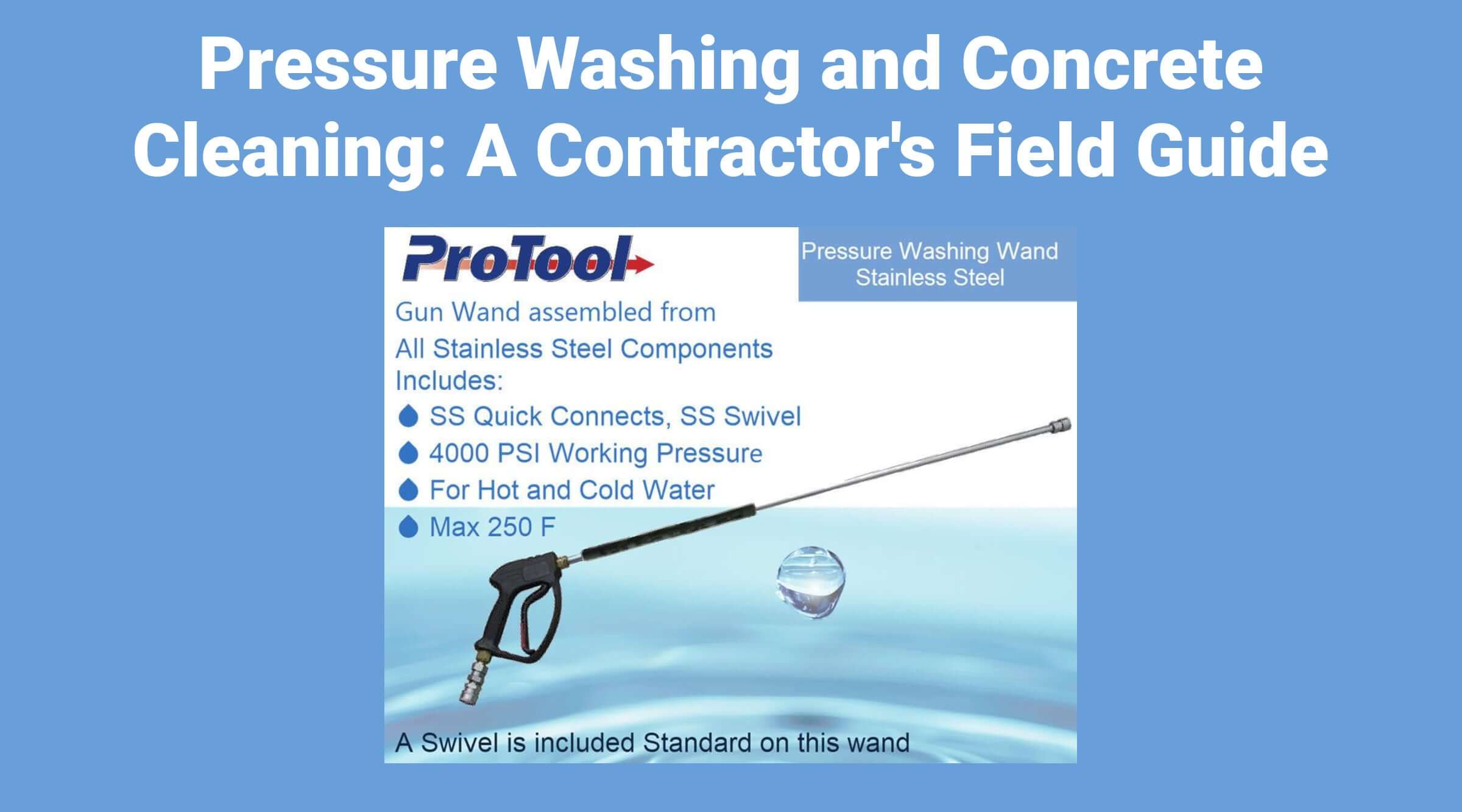
A 36-inch lance is the standard for most concrete work — long enough to keep spray distance consistent without fatiguing your wrist. The ProTool gun with 36-inch SS lance and swivel is a solid one-piece setup. For second-story rinse work or tall retaining walls, a telescoping pole wand eliminates ladder work entirely.
Dual lances earn their place when you're switching between a rinse tip and a soap tip repeatedly. Rather than swapping nozzles fifty times per job, a Suttner dual lance with side handle lets you toggle between pre-treat and rinse with a twist.
Surface Cleaners: The Production Multiplier
No tool changes concrete cleaning production more than a surface cleaner. A contractor hand-wanding a 2,000-square-foot driveway will take three to four times longer than the same contractor running an 18- or 24-inch surface cleaner — and the finish will be more uniform.
For 4 GPM machines, the ProTool 18-inch surface cleaner is the workhorse. Crews pushing 8 GPM should move up to a Whisper Wash 28-inch Big Guy — the four-nozzle design handles the higher flow without leaving tiger stripes. Keep the spinner bar tips matched to your GPM; oversized tips on an undersized machine cause streaking, and undersized tips on a high-GPM machine create excessive back-pressure.
Chemical Strategy for Concrete
Concrete cleaning is a two-step process: pre-treat, then rinse. Skipping pre-treatment means you're relying on pressure alone, which takes longer, uses more fuel, and still won't touch organic stains like mold, mildew, or algae.
For general concrete brightening and organic growth, a sodium hypochlorite pre-treat with a surfactant like ProTool Sticky extends dwell time on vertical and sloped surfaces. For oil and grease, F9 Double Eagle or EBC Degreaser applied as a pre-soak will break down petroleum stains that pressure alone won't budge.
Efflorescence — that white mineral bloom on concrete and masonry — requires an acid-side product. F9 Efflorescence & Calcium Remover is purpose-built for it. Always wet the surface before applying acid-side chemicals, and neutralize after with a post-rinse.
Tip Selection
Nozzle tips are defined by two numbers: spray angle and orifice size. A 2504 tip sprays a 25-degree fan at 4 GPM. For concrete flatwork with a wand, 15- or 25-degree tips are standard. Zero-degree tips concentrate force on a pinpoint — useful for specific stain removal, destructive on broad surfaces.
For chemical application, low-pressure soap tips are essential. A brass or stainless softwash tip downstream of your injector lets you lay down pre-treatment without atomizing your chemical into mist. Turbo nozzles — rotating zero-degree tips — are effective on heavy buildup but require a practiced, consistent distance to avoid etching lines into the concrete.
Handling Difficult Stains
Rust: F9 BARC is the go-to for irrigation rust, fertilizer stains, and battery acid discoloration on concrete. Apply, dwell, agitate if needed, rinse. Do not use chlorine-based products on rust — they set the stain permanently.
Oil and grease: Pre-soak with a dedicated degreaser, agitate with a stiff brush on heavy deposits, then hit it with the surface cleaner. Stubborn oil may need a second application and extended dwell.
Paint and coatings: These usually require a combination of chemical stripping and careful mechanical removal. Test a small area first — aggressive pressure on painted concrete can drive paint deeper into the pores rather than removing it.
Hot Water vs. Cold Water
Cold water handles 90% of residential concrete work. Hot water earns its cost on commercial kitchen pads, gas station fueling areas, and any surface with baked-on grease or gum. A hot box add-on converts a cold machine to hot water capability without replacing your entire rig — a practical upgrade path for contractors adding restaurant or industrial clients.
Water Reclaim
Some municipalities and most commercial properties require water reclaim. A Mosmatic 21-inch recovery surface cleaner vacuums wash water as you clean, eliminating runoff into storm drains. Pair it with a 24-gallon pump-out recovery vacuum for collection and disposal. Know your local regulations before the job — retrofitting reclaim mid-project is expensive and slow.
PPE and Safety
Pressure washing generates high-velocity spray, chemical mist, and debris. At minimum: safety glasses, chemical-resistant gloves, hearing protection for prolonged use, and closed-toe boots. When applying sodium hypochlorite or acid-side chemicals, add a rain suit — SH will bleach anything it contacts, including your skin. Eye protection is non-negotiable around chemicals.
Pricing Concrete Work
Most contractors price concrete cleaning by the square foot, with premiums for heavy staining, oil treatment, and reclaim requirements. A clean residential driveway with standard organic growth is a different job than a restaurant grease pad requiring hot water and reclaim — price them differently. Know your chemical cost per thousand square feet, your production rate with your specific equipment, and your minimum job charge. Underpricing concrete work is the fastest way to burn out on a service that should be highly profitable.
Products Mentioned
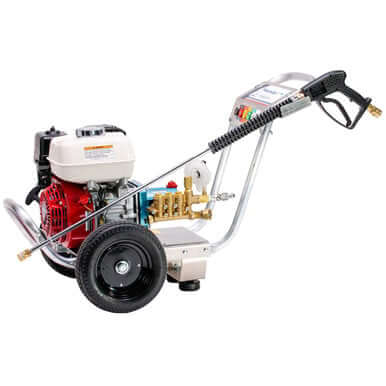 4.0g 4000psi Cold Direct Drive AR SKU: 74-1106 | 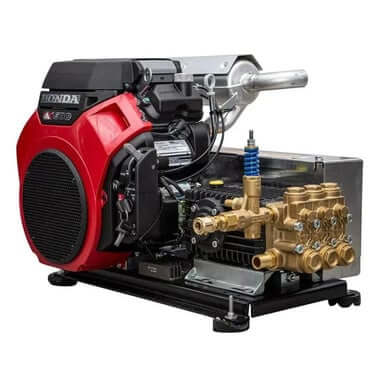 8.0g 3000psi GP Cold Belt Skid Mount SKU: 74-1119 | 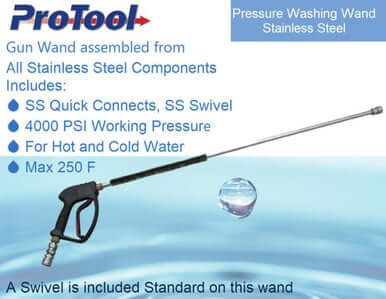 ProTool Gun with 36in SS Lance, SS Quick Connects and SS Swivel SKU: 74-5116 |
 Extension Pole Wand with Trigger 8ft to 24ft 200deg 3500psi SKU: 74-5372 | 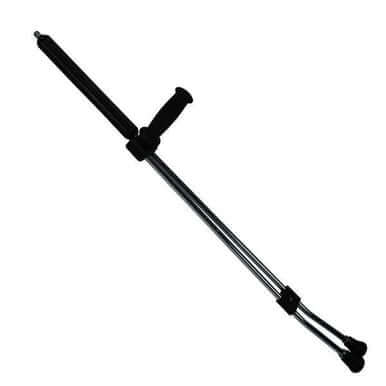 Lance Dual 38in Suttner with Side Handle 4500psi SKU: 74-5321 | 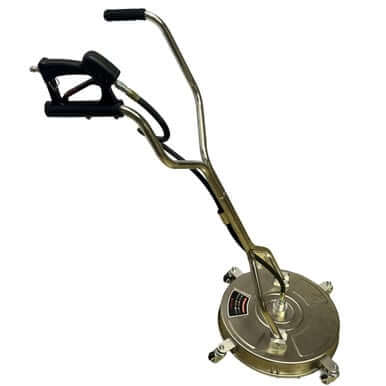 Surface Cleaner 18in Protool 4000psi SKU: 74-3795 |
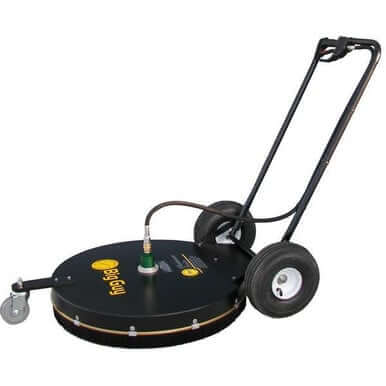 Whisper Wash 28in Big Guy 4 Nozzle w/whe SKU: 74-3812 | 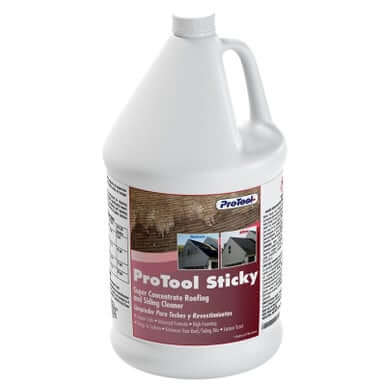 ProTool Sticky SKU: 83-07M | 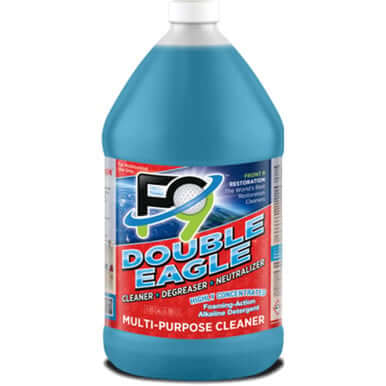 F9 Double Eagle Degreaser Gal SKU: 320-618 |
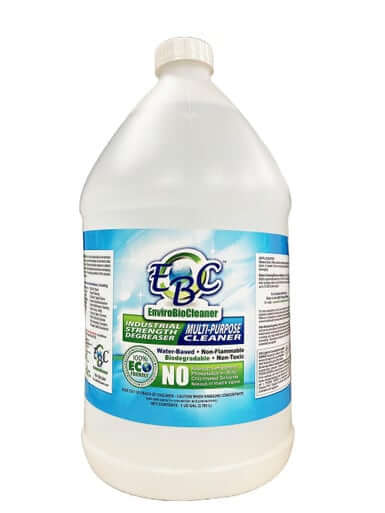 EBC Degreaser, Detergent SKU: 83-81M | 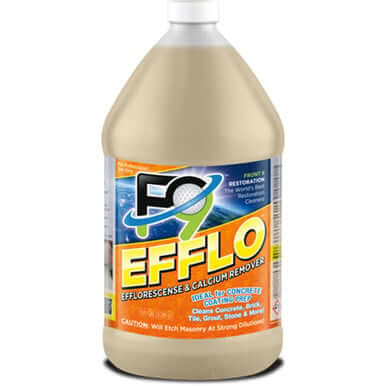 F9 Efflorescence/Calcium Remover Front9 Restoration SKU: 320-62M | 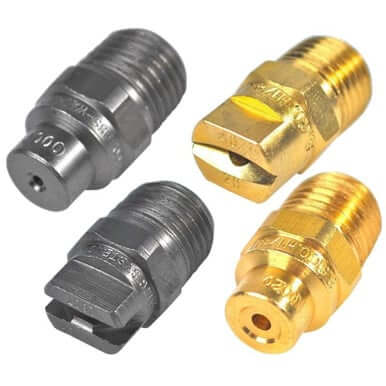 ProTool 40 Nozzle Tip SS 40 Degree 4040 1/4 npt Softwash SKU: 150-0M |
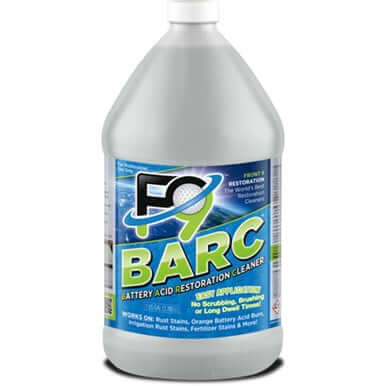 Front9 Restoration Rust Remover F9 B.A.R.C. SKU: 320-61M | 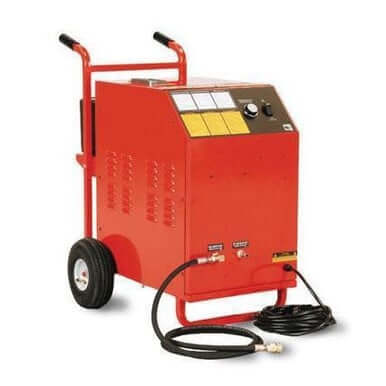 Hot Box Portable Hot Water Generator SKU: 74-1403 | 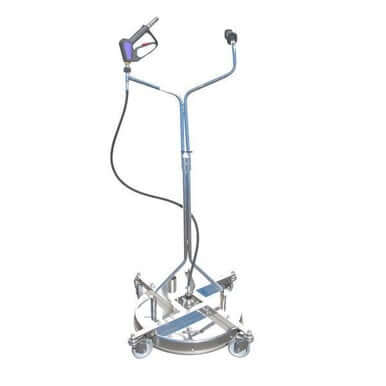 Recovery Surface Cleaner 21in Mosmatic SKU: 74-2510 |
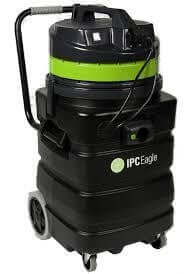 Vacuum Pump Out Recovery 24 Gal SKU: 258-109 |  Rain Suit SKU: 74-7M |