
Water Fed Poles: Revolutionizing the Industry

Table of Contents

Water Fed Poles for Window Cleaning: Revolutionizing the Industry
Introduction
In the world of professional window cleaning, efficiency, safety, and quality are critical. Customers expect spotless results, and cleaners must balance performance with safety on the job. Traditionally, window cleaning required ladders, scaffolding, squeegees, and buckets of cleaning solution. While effective, these methods were time-consuming and posed significant safety risks.
Enter water fed pole (WFP) technology—a system that has revolutionized the industry. By combining purified water with lightweight extendable poles, cleaners can now tackle multi-story buildings safely from the ground, delivering streak-free results without harsh chemicals.
In this blog, we’ll cover everything you need to know about water fed poles: how they work, their key components, benefits, usage tips, and why they’ve become the gold standard for professional window cleaning.
What Are Water Fed Poles?
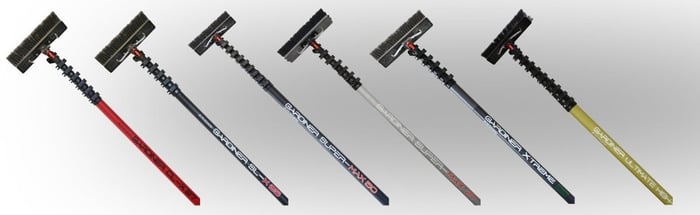
A water fed pole is a telescopic pole equipped with a brush head at the end. Instead of relying on soap and squeegees, purified water is pumped through the pole and sprayed directly onto the window while the brush scrubs away dirt and debris. The result is a naturally clean, streak-free surface, since purified water dries without leaving behind mineral deposits.
These systems can reach windows up to five to six stories high—sometimes even more—making them an ideal solution for both residential and commercial properties.
Components of a Water Fed Pole System
To understand how water fed poles deliver such outstanding results, let’s break down the system’s main components:
1. The Pole
Typically made from aluminum, fiberglass, or carbon fiber.
Lightweight yet durable, ensuring ease of use during long cleaning sessions.
Extendable sections (modular or telescopic) allow cleaners to reach anywhere from ground-level windows to upper floors of commercial buildings.
2. Brush Head
Attached at the end of the pole.
Designed with soft yet effective bristles to agitate dirt, pollen, dust, and grime without scratching the glass.
Many brushes include rinse bars or pencil jets for optimal water distribution.
3. Water Supply System
Usually consists of a hose reel connected to the pole.
Supplies purified water from a source such as a portable tank, purification cart, or van-mounted system.
4. Purification System
One of the most important parts of the setup.
Removes dissolved solids, minerals, and impurities that would otherwise leave streaks or spots.
Common methods:
Deionization (DI) Resin: Uses ion exchange resins to remove minerals. Great for areas with low to moderate TDS (Total Dissolved Solids).
Reverse Osmosis (RO): Forces water through a semipermeable membrane, removing up to 98% of contaminants. Often combined with DI for maximum purity.
5. Control Valve
A built-in mechanism that regulates the flow of water to the brush head.
Allows the operator to save water and only use what’s needed.
Benefits of Using Water Fed Poles
The rise of water fed poles in the industry isn’t just hype—they truly offer game-changing benefits:
1. Safety First
The most important advantage: no ladders or scaffolding required.
Cleaners remain safely on the ground, reducing fall risks and potential injuries.
2. Efficiency and Speed
WFP systems drastically reduce cleaning time, especially for buildings with multiple stories.
No need for squeegees, wipes, or detailing edges—the purified water dries naturally without streaks.
3. Environmentally Friendly
Eliminates the need for chemical detergents.
Reduces water waste compared to traditional bucket-and-squeegee cleaning.
A truly eco-conscious solution for both commercial and residential properties.
4. Cost-Effective
Saves time, which means more jobs can be completed in a day.
Reduces labor costs and eliminates the need for expensive scaffolding setups.
Lower ongoing costs since you don’t have to purchase as many cleaning chemicals.
5. Versatility
Not just for windows—WFPs can clean:
Solar panels (improving efficiency by keeping them dirt-free)
Building facades and signage
Conservatories and skylights
Any smooth, glass-like surface can benefit from WFP cleaning.
How to Use Water Fed Poles for Window Cleaning
Even though the system is advanced, using it is straightforward. Here’s a step-by-step guide:
Step 1: Set Up the System
Connect the pole to your water purification unit or water source.
Check that your resin, RO membrane, or filters are functioning properly to ensure low TDS water output.
Step 2: Extend the Pole
Adjust the sections to the height you need.
Always maintain proper balance and posture to avoid strain.
Step 3: Activate Water Flow
Use the control valve to start water flow through the jets.
Test flow to ensure even distribution.
Step 4: Scrub and Rinse
Use the brush to gently scrub dirt and debris from the window.
Allow purified water to rinse thoroughly, flushing away all contaminants.
Step 5: Inspect the Results
Purified water dries naturally, but always check for stubborn spots.
Adjust brushing technique if needed for heavily soiled glass.
Pro Tips for Maximizing Results
Monitor your TDS levels regularly. Anything above 10–20 ppm can leave streaks.
Replace DI resin as soon as it becomes exhausted.
Use carbon fiber poles for high-reach jobs—they’re lighter and reduce fatigue.
Avoid direct sunlight when possible. Hot glass can cause water to evaporate too quickly, leaving behind residues.
Practice good pole technique. Smooth, controlled motions ensure even coverage and reduce unnecessary strain.
Why Professionals Are Making the Switch
Water fed pole systems are no longer a luxury—they’re quickly becoming the industry standard. For commercial cleaners, they reduce liability, increase job efficiency, and improve customer satisfaction with consistently spotless results. For residential services, they offer a professional touch that sets cleaners apart from DIY efforts or outdated methods.
Property owners also appreciate that water fed pole cleaning is safe, eco-friendly, and non-invasive. There’s no risk of ladders scratching siding or damaging landscaping.
Conclusion
Water fed poles have truly revolutionized the window cleaning industry. They provide unmatched safety by eliminating ladders, improve efficiency with faster results, and promote sustainability by eliminating chemicals. With the ability to deliver crystal-clear, streak-free windows at heights once considered dangerous or difficult, water fed poles are here to stay.
Whether you’re a professional cleaner looking to scale your business, or a property owner exploring modern cleaning solutions, investing in a water fed pole system is a smart move.
👉 Explore top-quality water fed poles, purification systems, and accessories at JRacenstein.com—your trusted source for professional window cleaning equipment.
FAQs
How high can water fed poles reach
Depending on the model, water fed poles can extend from 20 feet to over 70 feet, making them ideal for safely cleaning multi-story buildings from the ground.
Why is purified water important in water fed pole cleaning?
Purified water contains no minerals or impurities, so when it dries, it leaves no streaks, spots, or residue—delivering a crystal-clear finish without the need for detergents.
Can water fed poles clean more than just windows?
Absolutely. They are versatile tools that can also clean solar panels, building facades, signage, and other smooth surfaces.
Are water fed poles environmentally friendly?
Yes. Since they use only purified water instead of chemical cleaners, they’re an eco-friendly option that reduces environmental impact.
Do water fed poles work on all types of glass?
They work on most modern glass surfaces, including residential, commercial, and solar glass. However, delicate or specialty glass should be cleaned carefully following manufacturer guidelines.