
Water-Fed Poles in Action
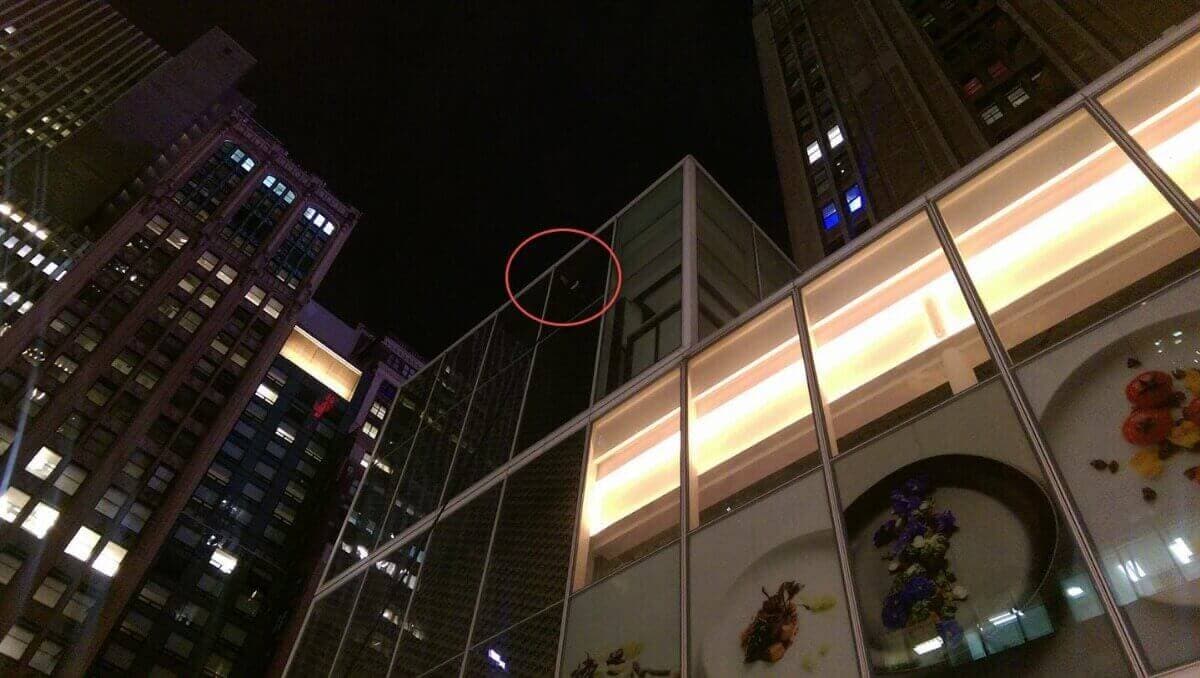
Water fed poles in action: our sales rep Doug Apt ran a water fed pole training session in NYC for Quality Building Services — a six-person crew learning high-reach pure water technique on a live building. The tool: a Gardiner SuperMax 3K extended to 63 feet, a 12-section telescopic pole built from 3K high-modulus carbon fiber.
At that height, pole selection stops being about preference and becomes structural. The SuperMax 3K holds its rigidity past 50 feet because of the high-mod carbon layup — cheaper poles flex badly above four stories, turning every stroke into a fight with deflection. That matters when you're training a crew: if the equipment fights you, no one learns technique.
Why High-Modulus Carbon Matters Above 50 Feet
Standard carbon poles work fine at residential heights — 25 to 35 feet. Past that, flex compounds with every added section. A pole that deflects 18 inches at 40 feet can swing three feet or more at 63. High-modulus carbon (the "3K" in SuperMax 3K) uses a tighter fiber weave that resists bending under its own weight, so the brush stays where you put it.
For crews doing commercial mid-rise work, that stiffness translates directly to speed. Less correction per stroke means more glass per hour. The Gardiner pole lineup covers residential through high-rise reach — the SuperMax 3K sits at the top of the range for crews who regularly work above four stories.
Matching the Pole to a Pure Water System
A 63-foot pole is only half the equation. Flow rate and water purity have to keep up. At that height you need a system that delivers consistent TDS-zero water at adequate pressure — otherwise the brush starves and you're dragging a 63-foot stick across dry glass.
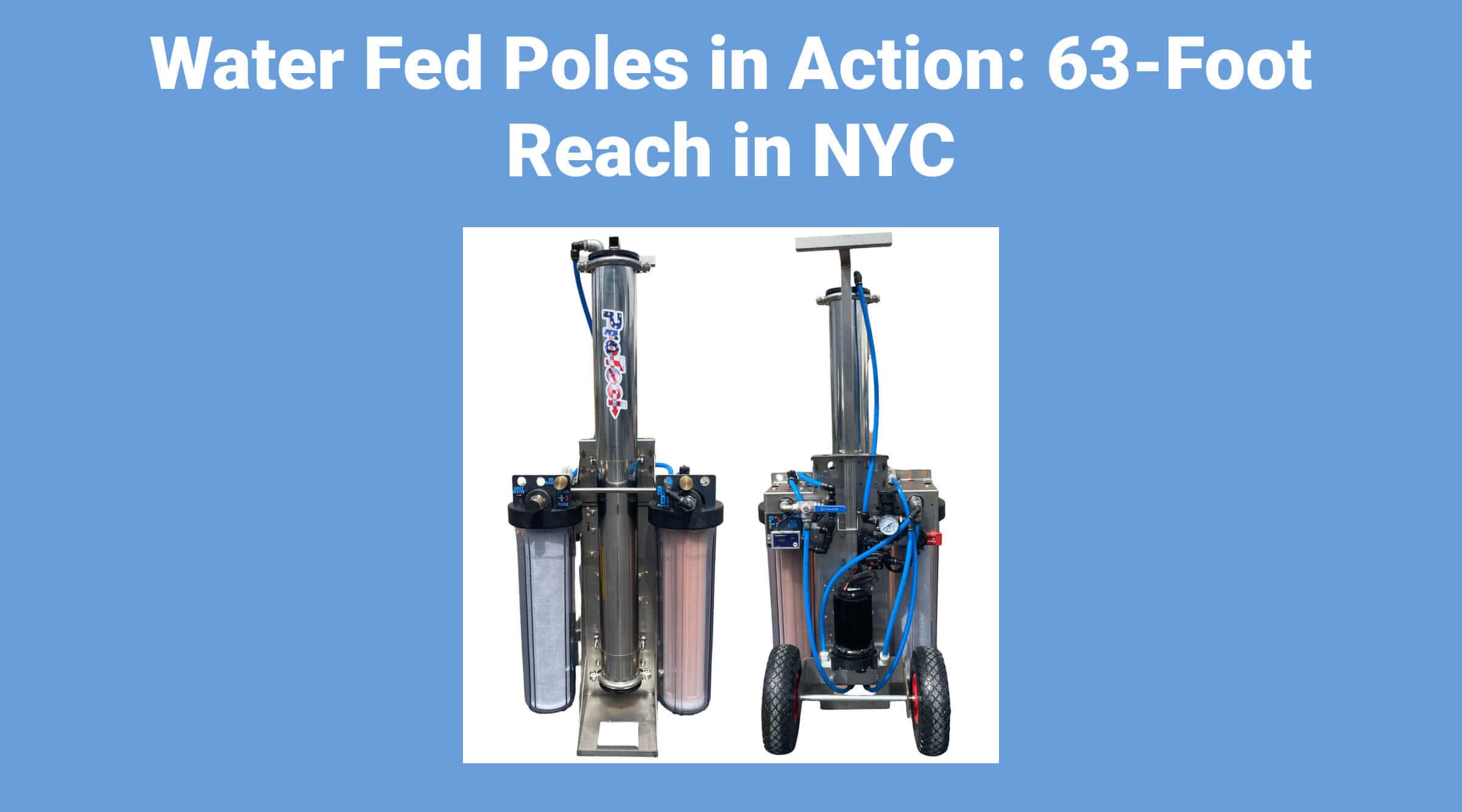
For van-based commercial work at this scale, the ProTool HiFlo Ultra Cart pairs well — dual RO membranes and a 12V or 110V pump option give the flow to feed a brush at height. Residential crews working shorter poles can start with the ProTool 511 Cart, a lighter rig sized for one operator.
Choosing a Brush for High-Reach Work
At extreme height, brush selection matters more than at 25 feet. You want a brush that scrubs effectively on the first pass — you don't get second chances six stories up. The ProTool 4-Jet Hybrid Brush delivers targeted rinse jets that clear soap film without needing heavy flow, which keeps backpressure manageable through a long hose run. For wider commercial glass, the Gardiner Ultimate brushes give aggressive scrub on first contact.
Training Crews on Water Fed Technique
The NYC session with Quality Building Services is a good model. Six people, one building, one night. Everyone gets hands-on time with the pole, learns how to extend and retract sections without damaging clamps, practices brush angle at height, and sees what happens when TDS creeps up. That last point is the one most self-taught operators miss — if your resin is spent, you're leaving spots on every pane, and you won't see them from the ground until the client calls.
If you're building a crew and need guidance on pole and system selection, browse the full water fed pole range or contact J.Racenstein directly for training support.
Products Mentioned
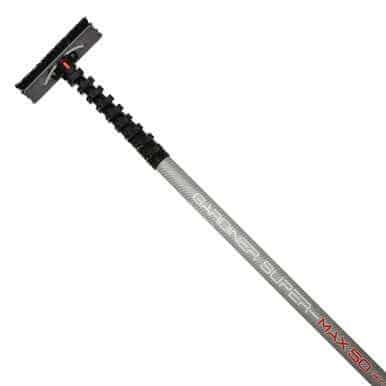 Gardiner SuperMax 3K 50ft Tele Pole HM carbon SKU: 155-4506 | 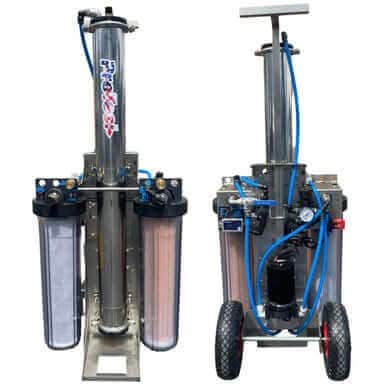 ProTool HiFlo Pure Water Ultra Cart SS 12V or 110V SKU: 150-0522 | 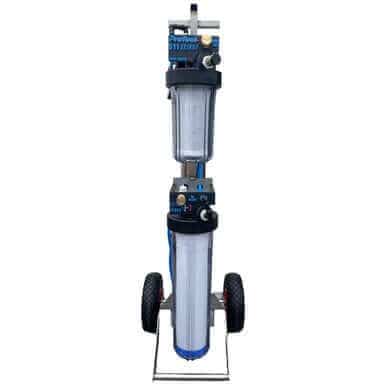 ProTool 511 Pure Water Cart SKU: 150-0515 |
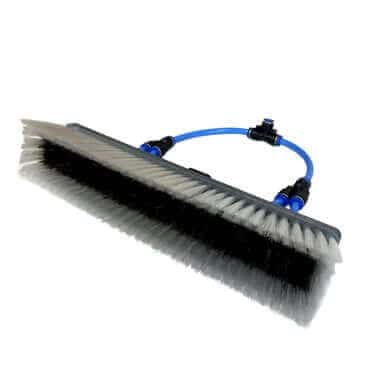 ProTool 4 Pencil-Jet Hybrid Brush 12in SKU: 151-211 |