Which Water Fed Pole Is Best for Solar Panel Cleaning?

Table of Contents
- Why Choosing the Right Water Fed PoleMatters
- Example 1: Ground-Accessible Residential Panels
- Example 2: Pitched Roof Residential Panels
- Example 3: Carport or Hard-to-Reach Panels
- Choosing the Right Solar Panel Cleaning Brush
- Estimating Pole Length for Your Solar Panel Project
- Tips for Safe and Effective Solar Panel Cleaning
- Recommended Poles for Solar Panel Cleaning
- Conclusion
- FAQs
Choosing the Right Water Fed Pole for Solar Panel Cleaning
Cleaning solar panels might seem simple at first glance, but using the wrong equipment can make the job more difficult, time-consuming, and even unsafe. Much like choosing a water-fed pole (WFP) for window cleaning, selecting the right water fed pole for solar panel cleaning depends on the size, location, and accessibility of the panels. In this guide, we’ll break down how to choose the best poles, the right length, and brushes that maximize efficiency while keeping your work safe.
Why Choosing the Right Water Fed PoleMatters
The efficiency of solar panel cleaning depends heavily on your equipment. Using a pole that is too short can force you into unsafe positions, while a pole that is too long may be cumbersome and tiring.
Key considerations include:
Number of panels – More panels may require longer poles or specialized brushes.
Location – Panels on pitched roofs, carports, or low-rise commercial buildings will influence pole length and access methods.
Weight – While lighter poles are easier for window cleaning, solar panel cleaning often requires a bit more weight to maintain good contact with the glass.
By understanding your project’s scope, you can select a pole that saves time, reduces fatigue, and keeps your crew safe.
Example 1: Ground-Accessible Residential Panels
Consider a set of 6x6 foot panel assemblies that are easily reachable from the ground.
Recommended Pole: 10-foot WFP
Reasoning: The panels are close enough that a short, lightweight pole is sufficient for complete coverage without overextending.
For ground-accessible arrays of this size, a compact pole allows you to clean efficiently while minimizing fatigue. The smaller pole also makes maneuvering around obstacles and tight spaces much easier.
Example 2: Pitched Roof Residential Panels
Residential solar panels are typically slightly larger than 3x5 feet. When calculating the pole length needed, it’s easiest to round each panel to 5 feet for estimation purposes.
Scenario: Four panels on a pitched roof.
Total Height Needed: 20 feet plus extra to account for roof pitch and working distance.
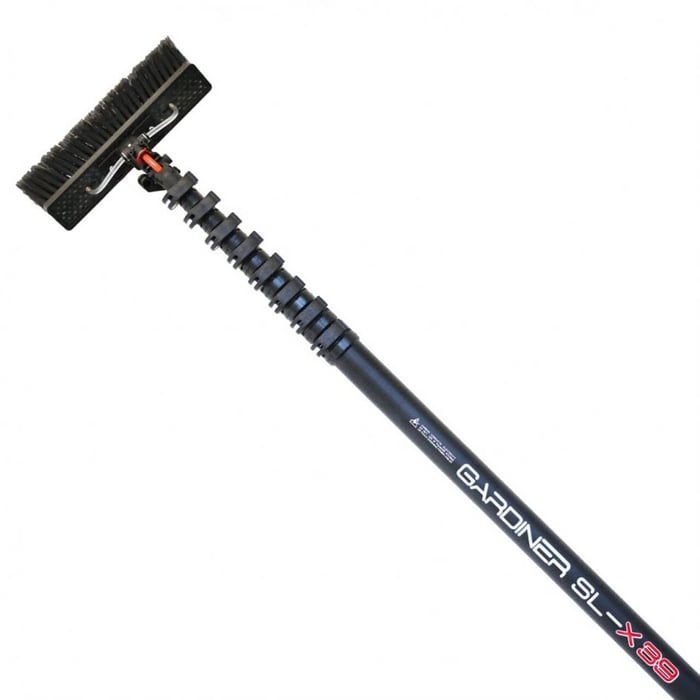
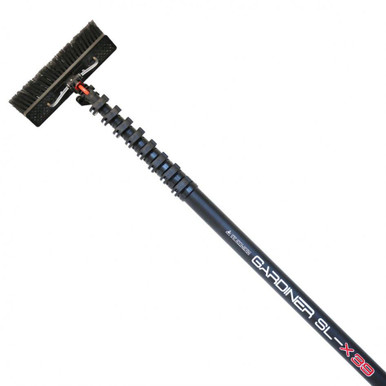
Recommended Pole: 35–40-foot WFP, such as the Gardiner 39-Ft SLX
Why the Gardiner SLX 39-Ft Is Ideal
The Gardiner SLX 39-Ft offers a perfect balance of reach, affordability, and safety. It’s ideal for:
Low to mid-rise commercial buildings
Larger residential homes
Properties with walkouts, hills, or basements
By using a pole of this length, you can maintain a safe working distance from the roof edge while effectively cleaning every panel.
Gardiner SLX 39ft Tele Pole Carbon Complete
$1,334.25
Gardiner SLX 39FT Carbon Fiber Water Fed Pole – Complete Kit The Gardiner SLX 39FT is a high-performance, full carbon fiber telescopic pole designed for… read more
Example 3: Carport or Hard-to-Reach Panels
Sometimes, solar panels are mounted on carports or other structures inaccessible from the ground. In these situations, a lift or scaffold may be necessary.
Scenario: Eight 3-foot panels mounted out of reach
Total Height: 24 feet
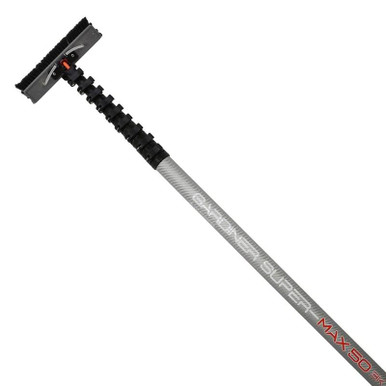
Recommended Pole: 30-foot WFP, like the Super Max 27-foot 3K
Why the Super Max 27-foot 3K Works Well
The Super Max 27-foot 3K is lightweight yet strong, weighing just 3.7 pounds. This makes it:
Easy to handle for residential and low-rise cleaners
Ideal for reaching high or obstructed panels
Durable enough for repeated use without fatigue
For jobs that require working from a lift, this pole provides the strength and control necessary to clean effectively.
Gardiner SuperMax 3K 50ft Tele Pole HM carbon
$2,586.80
Gardiner SuperMax 3K 50ft Tele Pole HM carbon Gardiner SuperMax 3K 50ft Tele Pole HM Carbon: The Ultimate Tool for Professional Window Cleaners When… read more
Choosing the Right Solar Panel Cleaning Brush
While the goal for window cleaning is to keep your WFP as light as possible, solar panel cleaning requires a different approach.
Key Brush Considerations
Weight Matters – A slightly heavier brush helps maintain contact with the glass, ensuring a streak-free clean.
Material – Nylon or soft bristles are recommended to avoid scratching the panel surface.
Brush Type – For larger projects, water-powered brushes that attach to a pressure washer can clean large solar arrays faster while maintaining consistent water flow.
Using the right brush in combination with the correct pole length ensures optimal efficiency and prevents damage to expensive solar panels.
Estimating Pole Length for Your Solar Panel Project
When estimating the right pole length, follow these steps:
Measure or Estimate Panel Dimensions – Round up slightly to allow for clearance and roof pitch.
Determine Number of Panels in a Row – Multiply panel height by the number of panels.
Add Clearance for Safety – Especially on pitched roofs or elevated arrays, add a few extra feet to maintain a safe working distance.
Choose a Pole Within Your Reach Range – A slightly longer pole is better than one that’s too short, but consider weight and maneuverability.
By following this method, you can avoid underestimating pole length, which can compromise safety and cleaning quality.
Tips for Safe and Effective Solar Panel Cleaning
1. Always Assess Accessibility
Not all solar panels are reachable from the ground. For elevated arrays, consider lifts, scaffolding, or extension poles to maintain safety while cleaning.
2. Use the Right Water Pressure
Unlike window cleaning, which may rely solely on water-fed poles, solar panels can benefit from gentle pressurized water to remove dirt and debris without damaging the glass or panel coating.
3. Maintain Good Contact
A heavier brush or water-powered option ensures consistent contact with the panel surface, reducing streaks and increasing cleaning efficiency.
4. Work With Safety in Mind
Always wear appropriate PPE such as gloves, safety glasses, and slip-resistant footwear.
Keep a safe distance from edges or obstructions.
Follow manufacturer recommendations for both poles and cleaning equipment.
5. Optimize Workflow
Plan your route to minimize repositioning and maximize efficiency. For larger commercial or residential arrays, combining poles with water-powered brushes can significantly reduce cleaning time.
Recommended Poles for Solar Panel Cleaning
Here’s a quick reference based on common scenarios:
| Scenario | Pole Recommendation | Notes |
|---|---|---|
| Ground-accessible residential panels (6x6 ft) | 10-foot WFP | Lightweight, easy to maneuver |
| Pitched roof residential panels (4x5 ft) | 35–40-foot WFP (Gardiner 39-Ft SLX) | Safe working distance, affordable |
| Carport or hard-to-reach arrays | 30-foot WFP (Super Max 27-foot 3K) | Strong, lightweight, ideal for lifts |
| Large commercial solar arrays | Water-powered brush with WFP | Faster cleaning, reduces fatigue |
Conclusion
Choosing the right water-fed pole for solar panel cleaning is critical for safety, efficiency, and results. Consider the number of panels, their size, and their accessibility to select the correct pole. Use heavier brushes when necessary to maintain contact with the glass and consider water-powered brushes for larger arrays.
By following these guidelines, you can ensure that your solar panel cleaning projects are completed safely, efficiently, and with the best possible results. The Gardiner SLX 39-Ft and Super Max 27-foot 3K poles provide excellent options for a wide range of residential and low-rise commercial projects, making your work easier, faster, and more effective. Visit www.jracenstein.com to shop solar carbon fiber poles.
FAQs
How do I choose the right water-fed pole for solar panel cleaning?
Consider the size and number of panels, their height and location, and your working distance. Shorter poles work for ground-accessible panels, while longer poles are needed for pitched roofs or hard-to-reach arrays.
What length pole do I need for residential solar panels?
For standard residential panels (around 3x5 feet), a 35–40-foot pole, like the Gardiner SLX 39 Ft, is ideal for pitched roofs or larger homes. Smaller, ground accessible panels may only need a 10-foot pole.
What type of brush should I use for solar panels?
Use a slightly heavier brush than for windows to maintain contact with the glass. For larger projects, water-powered brushes help clean big arrays faster while keeping the pole manageable.
Is it safe to clean solar panels with a water-fed pole?
Yes, as long as you maintain a safe working distance, use proper PPE, and follow the manufacturer’s guidelines for both poles and brushes.