Working with Sodium Hypochlorite

Table of Contents
- What Is Sodium Hypochlorite (Bleach)?
- Bleach and Public Health: A Critical Cleaning Tool
- Cleaning vs. Sanitizing with Bleach
- The Importance of Proper Mix Rates
- Mix Rates for 6% SH (Store-Bought Bleach)
- Mix Rates for 12.5% SH (Industrial Bleach)
- Why Add a Surfactant Like ProTool Stick?
- Benefits of ProTool Stick:
- Dwell Time Matters
- Where and How Bleach Is Used in the Cleaning Industry
- Safety Considerations When Using Sodium Hypochlorite
- Why Sodium Hypochlorite Remains Essential for Professionals
- Final Take: Bleach Is Here to Stay
- FAQs
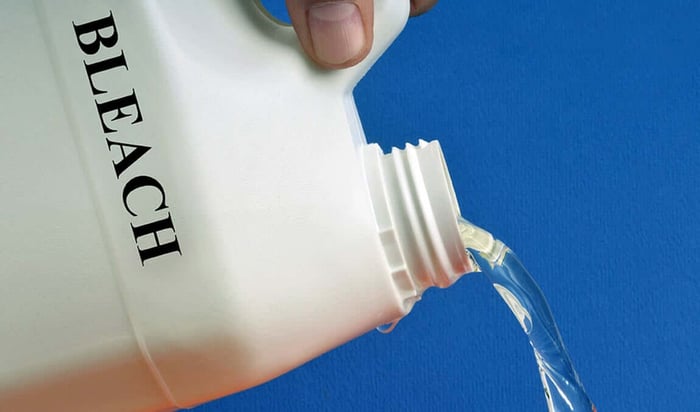
When it comes to cleaning and sanitizing, few solutions are as widely recognized—or as misunderstood—as bleach. Known in the chemical world as sodium hypochlorite (SH), bleach has been trusted for decades as a powerful cleaning and sanitizing agent. But what most people don’t realize is that bleach comes in different strengths and concentrations, each suited for specific applications.
In this article, we’ll break down the science behind bleach, the differences in strengths, proper mix rates, and the importance of surfactants like ProTool Stick. We’ll also explore why bleach remains critical for public health and commercial cleaning, especially in light of global events like the COVID-19 pandemic.
By the end, you’ll have a clear understanding of how to safely and effectively use bleach in your cleaning routines, whether you’re a homeowner, professional cleaner, or facility manager.
What Is Sodium Hypochlorite (Bleach)?
At its core, sodium hypochlorite is a chemical compound with extraordinary sanitizing power. When dissolved in water, it creates a solution that breaks down organic material, neutralizes odors, kills bacteria, and eliminates viruses.
Store-Bought Bleach (6% Strength): This is the type of bleach commonly found in grocery stores and used for simple household cleaning tasks—laundry whitening, bathroom disinfecting, or sanitizing kitchen counters.
Industrial-Strength Bleach (12.5% Strength): This is the preferred concentration for the cleaning industry and soft washing. It is more potent, cost-efficient in larger applications, and typically sold in bulk for professional exterior cleaning and disinfecting operations.
Both types contain the same active ingredient. The only difference is their strength—and consequently, the mixing ratios required for safe and effective use.
Bleach and Public Health: A Critical Cleaning Tool
The role of bleach in professional cleaning was put under the spotlight during the COVID-19 pandemic. According to the CDC and EPA, bleach is officially recognized as an effective disinfectant against COVID-19 and other viral pathogens.
This meant that professional cleaning companies, contractors, and facility services were operating as “critical infrastructure” providers—helping to protect essential spaces such as government buildings, hospitals, schools, and retail facilities.
But here’s the key: to sanitize properly with bleach, cleaning has to be performed in two steps.
Cleaning vs. Sanitizing with Bleach
Bleach is only effective when used correctly. It’s not enough to simply spray and wipe; the process requires two specific cleaning stages:
Cleaning the Surface
Spray the surface with a bleach and surfactant mix.
Allow it to dwell briefly so the solution begins breaking down dirt and organic matter.
Rinse the surface to remove debris.
Sanitizing the Surface
Apply a fresh bleach and surfactant mix.
Allow the solution to dwell for several minutes (recommended: 4 minutes).
Rinse again to leave behind a clean, sanitized surface.
This twofold process—cleaning first, then sanitizing—ensures that surfaces are not only dirt-free but also genuinely sanitized against pathogens.
The Importance of Proper Mix Rates
Mixing bleach solutions properly is critical. Too weak, and the solution won’t sanitize effectively. Too strong, and it can damage surfaces or cause safety hazards.
Thankfully, both the CDC and industry guidelines provide clear mix rates depending on which concentration of bleach you’re starting with.
Mix Rates for 6% SH (Store-Bought Bleach)
One Gallon Mix
4 oz of SH
1 oz ProTool Stick Surfactant
Fill remainder with water to make 1 gallon
Four Gallon Pump Sprayer Mix
16 oz of SH
4 oz ProTool Stick Surfactant
3.75 gallons of water
Mix Rates for 12.5% SH (Industrial Bleach)
One Gallon Mix
2 oz of SH
1 oz ProTool Stick Surfactant
Fill remainder with water to make 1 gallon
Four Gallon Pump Sprayer Mix
8 oz of SH
4 oz ProTool Stick Surfactant
3.75 gallons of water
These ratios make it easy to scale up or down depending on the size of your sprayer or tank. Simply multiply as needed.
Why Add a Surfactant Like ProTool Stick?
Bleach is powerful, but it can run off surfaces quickly without making proper contact. This is where a surfactant comes in. Surfactants act as a bonding agent, helping the bleach solution attach to vertical or porous areas so it can dwell longer and work more effectively.
ProTool Stick Surfactant was specifically designed to be bleach-compatible, making it the perfect companion for both cleaning and sanitizing jobs.
Benefits of ProTool Stick:
Helps bleach adhere to surfaces without running off.
Extends dwell time, which is critical for both organic stain removal and sanitization.
Enhances efficiency, meaning less wasted chemical.
Economical: One gallon of ProTool Stick makes 32 batches of four-gallon solutions.
When combined with bleach, ProTool Stick ensures you’re not just applying the solution—you’re actually giving it time to do its job.
Dwell Time Matters
One of the most overlooked aspects of cleaning and sanitizing with bleach is dwell time. Applying bleach and rinsing too soon reduces its effectiveness. For best results:
Allow a minimum of 4 minutes of dwell time before rinsing.
In cases of heavy organic growth (such as on siding, roofs, or exterior surfaces), extended dwell times lead to better stain removal.
During sanitizing of high-touch areas, dwell time ensures pathogens are fully neutralized.
Patience in this step pays dividends in results.
Where and How Bleach Is Used in the Cleaning Industry
Bleach is particularly dominant in the soft washing industry, where professionals clean building exteriors, sidewalks, and other large-scale surfaces. But its usefulness extends well beyond exterior surface cleaning:
Medical Facilities: Sanitizing patient areas, waiting rooms, and high-touch surfaces.
Educational Buildings: Disinfecting classrooms, cafeterias, and gyms.
Public Venues: Cleaning stadiums, theaters, and retail stores where sanitation perceptions are high.
Residential Use: Homeowners use bleach for mold removal, driveway cleaning, and basic disinfection needs.
With proper handling and the right mix, bleach is adaptable for nearly any surface-cleaning need.
Safety Considerations When Using Sodium Hypochlorite
While bleach is effective, it’s also a powerful chemical that must be handled consciously. A few important reminders:
Always wear protective equipment such as gloves and goggles.
Avoid mixing bleach with ammonia or acids—it releases dangerous fumes.
Work in ventilated areas when cleaning indoors.
Store bleach away from direct sunlight and heat to prevent degradation.
Clearly label secondary containers when diluting solutions for safety compliance.
These precautions keep bleach safe as well as effective.
Why Sodium Hypochlorite Remains Essential for Professionals
Cleaning contractors and facility management teams continue to choose bleach because:
It is cost-effective compared to alternative sanitizers.
It is widely available in both consumer and bulk industrial supply.
It has proven sanitation results recognized by organizations like the CDC and EPA.
When combined with a surfactant, it is unmatched for both cleaning and sanitizing tasks.
For professionals, bleach (particularly 12.5% SH paired with ProTool Stick) has become the standard in both external cleaning and interior sanitization when properly applied.
Final Take: Bleach Is Here to Stay
At the end of the day, sodium hypochlorite remains one of the most trusted cleaning and sanitizing agents worldwide. From combating global health challenges to cleaning homes and businesses, bleach consistently proves its worth.
For best results:
Know your bleach strength (6% vs 12.5%).
Follow proper mixing ratios.
Always use a compatible surfactant like ProTool Stick.
Respect dwell time for true sanitization.
Practice safety every step of the way.
Whether you’re sanitizing surfaces during a public health crisis, soft washing residential exteriors, or keeping commercial facilities spotless, bleach deserves its reputation as a powerful, reliable cleaning solution.
FAQs
What is sodium hypochlorite?
Sodium hypochlorite (SH) is the active ingredient in bleach. It breaks down organic material, kills bacteria, eliminates viruses, and neutralizes odors—making it one of the most effective cleaning and sanitizing chemicals available.
What is the difference between 6% bleach and 12.5% bleach?
6% bleach is standard household strength found in grocery stores, while 12.5% bleach is industrial-grade, stronger, and preferred for soft washing and professional cleaning. Both contain the same chemical—only the concentration differs.
Why should I add a surfactant like ProTool Stick to bleach?
Surfactants help bleach stick to surfaces instead of running off. ProTool Stick increases dwell time, improves cleaning results, and reduces wasted chemical—especially on vertical and porous surfaces.
How do I mix bleach properly for cleaning or sanitizing?
Mixing ratios depend on bleach strength:
6% SH: Use 4 oz per gallon with 1 oz ProTool Stick.
12.5% SH: Use 2 oz per gallon with 1 oz ProTool Stick.
For 4-gallon sprayers, multiply accordingly (16 oz for 6% / 8 oz for 12.5%).
Can bleach damage surfaces if mixed too strong?
Yes. Overly strong bleach mixes can discolor surfaces, degrade finishes, kill plants, or cause corrosion. Always follow recommended dilution ratios.
Why do professionals prefer 12.5% sodium hypochlorite?
It provides stronger cleaning power, is more cost-efficient when diluted, and scales easily for large-volume exterior work. Paired with ProTool Stick, it becomes one of the most effective cleaning and sanitizing solutions available.
What surfactant should I use with bleach?
ProTool Stick is specifically designed to be bleach-compatible, increasing dwell time and cleaning efficiency while remaining economical for large-scale use.