Downstreaming Explained: Best Practices, Uses, and Setup
Table of Contents
- What Is Downstreaming?
- Why Professionals Use Downstreaming
- Common Downstreaming Use Cases
- Where to Install the Downstream Injector
- Chemical Draw Hose: Keep It Short
- Pressure Hose Length & Size
- Secure All Hose Connections (No Air Leaks)
- Minimize Fittings, Valves, and Manifolds
- Injector & Nozzle Selection (Quick Reference)
- Quick Test for Downstreaming Issues
- Best Practices for Downstreaming
- Conclusion: When Downstreaming Makes Sense
- FAQs
Downstreaming with Pressure Washers: Best Practices, Uses, and Setup
Downstreaming is one of the most widely used and effective methods for applying chemicals with a pressure washer. When done correctly, it allows you to apply bleach, degreasers, and specialty cleaners without running harsh chemicals through the pump, protecting your equipment while delivering consistent cleaning results.
This guide explains what downstreaming is, when to use it, common use cases, and—most importantly—how to set it up correctly to avoid weak chemical draw and performance issues.
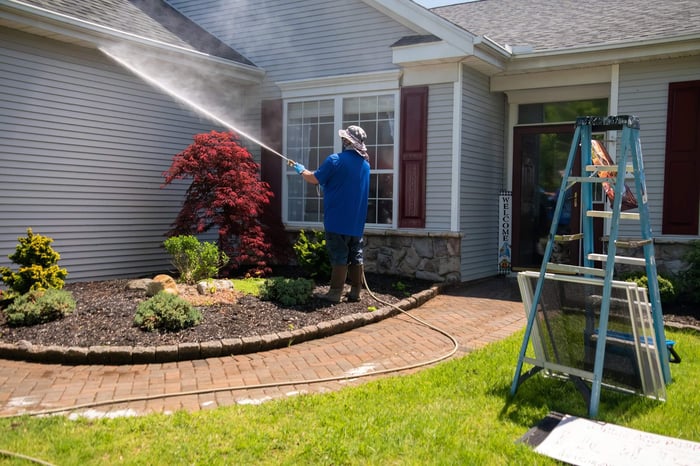
What Is Downstreaming?
A downstream injector introduces chemicals into a pressure washer system after the pump, rather than before it. A downstream injector uses the Venturi effect to draw chemical into the water stream once pressure is reduced—typically when using a low-pressure nozzle or soap tip.
Because chemicals never pass through the pump head, it is the preferred method for applying bleach and other caustic solutions.
Why Professionals Use Downstreaming
A downstream injector offers several advantages over upstream or pump-fed chemical systems:
Protects the pump from bleach and harsh chemicals
Simple, cost-effective setup
Easy to service and replace components
Works well for soft washing and surface cleaning
Ideal for low-pressure chemical application
When paired with the correct injector, nozzle, and hose layout, it is reliable and efficient.
Common Downstreaming Use Cases
a downstream injector is best suited for applications where chemical dwell time does the work—not high pressure.
1. Bleach Application for Roof & House Washing
Downstream injectors are commonly used to apply diluted bleach solutions for:
Roof cleaning
Vinyl and painted siding
Stucco and exterior walls
Because bleach never enters the pump, it is is a safer option for routine soft washing.
2. Degreasers for Oil & Grease Buildup
Downstream injectors works extremely well for applying degreasers on:
Parking lots
Gas stations
Dumpster pads
Commercial concrete
Drive-thru lanes
Low pressure allows degreasers to dwell and break down oil and grease instead of forcing contaminants deeper into the surface.
3. Building Cleaning with ProTool Building Cleaner
A downstream injector an excellent way to apply ProTool Building Cleaner for:
Removing traffic film and grime
Light oxidation removal
Adhesive residue
General building washing
It rinses clean and leaves surfaces looking brighter, making it a versatile one-pass solution for commercial exterior cleaning.
4. Oxidation Removal with ProTool Cleanse All
A downstream injector can also be used to apply ProTool Cleanse All for:
Light to moderate oxidation
Painted siding and stucco
Controlled oxidation removal
Cleanse All bonds to oxidation rather than aggressively attacking the surface, making it safer on sensitive substrates.
Downstreaming Setup Guide (Critical for Performance)
Most problems come from poor setup, not bad injectors. Follow these best practices to ensure reliable chemical draw.
Where to Install the Downstream Injector
Always install the downstream injector after the pump. You have two common options:
At the pump outlet
At the hose reel inlet
👉 Best practice:
Install the injector at whichever location is closest to the chemical tank. Shorter draw distance = stronger chemical pull.
Chemical Draw Hose: Keep It Short
The chemical draw hose is one of the most important parts of your setup.
Best practices:
Place the chemical tank as close as possible to the pump or hose reel
Use the shortest draw hose possible
Common hose sizes: 3/8 in (most common) or 1/4 in
Install the injector at the component closest to the tank
The longer the draw hose, the harder the injector has to pull—and the more likely it is to fail.
Pressure Hose Length & Size
Pressure hose selection has a major impact on performance.
Recommended setup:
200 ft of pressure hose or less
3/8 in pressure hose for best flow and reduced restriction
Long hose runs increase resistance and reduce the injector’s ability to draw chemical.
Secure All Hose Connections (No Air Leaks)
Downstream injectors are extremely sensitive to air leaks.
Critical checks:
Make sure draw hose is fully seated on hose barbs
Use proper clamps to secure connections
Inspect fittings regularly
Even a small air leak will prevent proper chemical draw.
Minimize Fittings, Valves, and Manifolds
If you are using:
Three-way valves
Injector manifolds
Quick-connect assemblies
👉 Reduce the draw line length as much as possible.
Every fitting, valve, or connection:
Adds restriction
Creates a potential air leak
Reduces draw efficiency
Rule of thumb:
Simpler = stronger draw.
Injector & Nozzle Selection (Quick Reference)
Injector Size by Machine GPM
1.8 injector: 2–3 GPM
2.1 injector: 3–5 GPM
2.3 injector: 6–8 GPM
Nozzle Requirements
Downstreaming only works with low-pressure, large-orifice nozzles.
3–5 GPM machines: Orifice size 30–40
8 GPM machines: Orifice size 50–60
If pressure stays too high, chemical will not draw.
Quick Test for Downstreaming Issues
Remove the nozzle and run the machine:
If chemical draws → nozzle is too small
If chemical still doesn’t draw → check air leaks, hose length, or injector size
Best Practices for Downstreaming
Always downstream bleach—never pump it
Keep chemical tanks close to injector location
Use short, secure draw hoses
Limit pressure hose length
Flush injectors with clean water after use
Replace injectors periodically—they are wear items
Conclusion: When Downstreaming Makes Sense
Downstreaming is a proven, reliable method for applying chemicals with a pressure washer—when set up correctly. It’s ideal for:
Roof and house washing
Degreasing commercial concrete
Building cleaning
Light oxidation removal
By following proper setup practices—short draw lines, correct injector sizing, minimal fittings, and secure connections—you can avoid common problems and get consistent, professional results.
When done right, downstreaming remains one of the most valuable techniques in professional pressure washing.
👉 Shop the downstream injectors:
https://jracenstein.com/chem-injectors-pumps/
FAQs
What is downstreaming in pressure washing?
Downstreaming is the process of applying chemicals through a pressure washer after the pump, using a downstream injector. This prevents harsh chemicals like bleach from passing through the pump and causing damage.
Why is downstreaming preferred for bleach application?
Downstreaming keeps bleach out of the pump head, protecting seals and valves while still allowing effective soft washing of roofs, siding, and exterior surfaces.
Where should a downstream injector be installed?
A downstream injector should be installed after the pump, either at the pump outlet or at the hose reel inlet—whichever is closest to the chemical tank.
Why does my downstream injector stop pulling chemical?
Common causes include excessive hose length, spraying too high, air leaks in the draw line, incorrect injector size, or using a nozzle with too small of an orifice.
How much pressure hose can I use when downstreaming?
For reliable chemical draw, keep pressure hose length to 200 feet or less and use 3/8-inch pressure hose whenever possible.
What size draw hose should I use for downstreaming?
Most setups work best with 3/8-inch draw hose, though 1/4-inch can also be used. Shorter draw hoses provide stronger and more consistent chemical pull.
Can downstreaming be used for roof washing?
Yes. Downstreaming is commonly used for roof washing with bleach solutions, especially on lower slopes and residential applications.
Can I downstream degreasers and specialty cleaners?
Yes. Downstreaming works well for degreasers, building cleaners, and oxidation removers—as long as the chemical is compatible with downstream application.
Why does nozzle size matter for downstreaming?
Downstream injectors require low pressure to function. If the nozzle orifice is too small, pressure stays too high and the injector cannot draw chemical.
How do I test if my downstream injector is working?
Remove the nozzle and run the machine. If chemical draws without the nozzle installed, the injector is working and the nozzle size is the issue.
Is downstreaming good for high-reach work?
Downstreaming becomes less reliable at height due to increased back pressure. For elevated work beyond 15–20 feet, alternative chemical delivery methods may be needed.
How often should downstream injectors be replaced?
Downstream injectors are wear items and should be replaced when chemical draw weakens or becomes inconsistent, even after checking setup issues.
What is the biggest mistake people make when downstreaming?
Using long draw hoses, loose fittings, or too many valves and connections. Each added restriction increases the chance of air leaks and weak chemical draw.