Best Chemical for Drone Cleaning: Complete Guide for 2026
Table of Contents
Drone cleaning has changed how exterior cleaning is performed—but it also introduces new challenges that don’t exist with traditional ground-based or water-fed pole methods. Because drones apply chemicals faster, harder, and over a wider area, choosing the right chemistry is critical. Let's review the Best Chemical for Drone Cleaning.
The wrong chemical can cause overspray damage, surface staining, or unintended harm to nearby materials. The right chemical delivers fast results, clean rinsing, and consistent outcomes—without risk.
This guide breaks down which chemicals are best for drone cleaning, when to use each one, and why safety and surface compatibility matter more than ever.
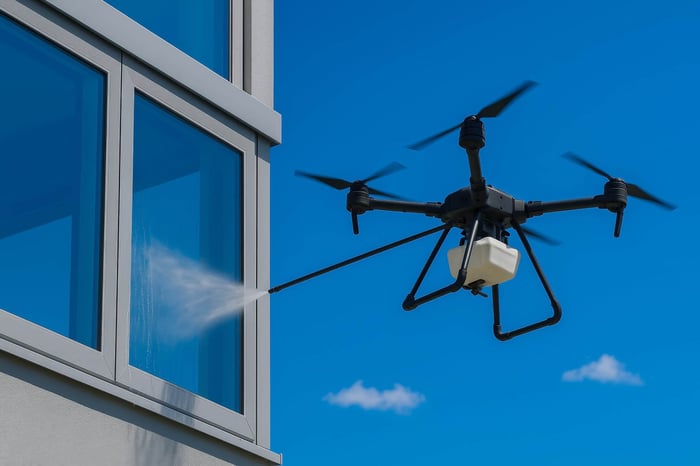
Key Concerns When Using Chemicals With Drones
Before choosing any chemical for drone cleaning, it’s important to understand the unique risks involved:
High-volume application: Drones spray a lot of solution quickly
Increased drift: Wind can carry chemicals farther than expected
Limited precision: You can’t spot-treat the same way you can by hand
Mixed surfaces: Overspray may contact glass, metal, paint, stone, or landscaping
Because of this, drone cleaning chemicals must be:
Surface-safe
Predictable
Easy-rinsing
Effective without excessive dwell or agitation
Aggressive or poorly rinsing chemicals dramatically increase the risk of damage when used from the air.
Best Chemicals for Drone Cleaning Applications
General Cleaning: ProTool Red Building Cleaner
For most drone cleaning jobs, a single, versatile cleaner is the safest and most efficient approach. That’s where ProTool Red Building Cleaner shines.
Best for:
General exterior cleaning
Glass, metal panels, painted surfaces, and façades
Removing grease, grime, traffic film, light oxidation, and adhesive residue
Why it works for drones:
Degreases effectively without harsh attack
Cleans multiple contaminants in one pass
Rinses extremely well
Leaves surfaces looking brighter and “popped” after rinse
This makes it the shotgun approach chemical for drone cleaning—one product that cleans everything at once without needing multiple chemical swaps.
👉 Product:
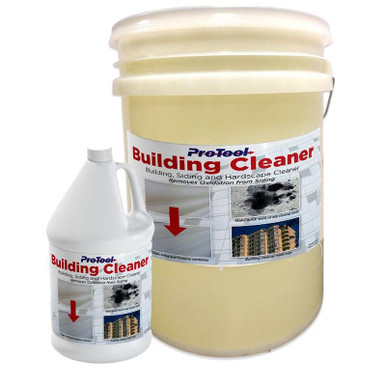
ProTool Red Building Cleaner
$138.90
Building Cleaner is great for all your building surface cleaning. It can be used with various spraying systems to coat the surface with a ...… read more
Oxidation Removal: ProTool Cleanse All
When oxidation is present, standard cleaners often aren’t enough—but overly aggressive restoration chemicals can be risky when applied via drone.
ProTool Cleanse All is ideal for oxidation removal in drone cleaning because it bonds to the stain instead of attacking the surface.
Best for:
Light to moderate oxidation
Painted siding, stucco, and coated surfaces
Safe, controlled cleaning from the air
Why it’s drone-safe:
Does not aggressively etch or burn surfaces
Works through chemical bonding rather than brute force
Predictable dwell and rinse behavior
Lower risk of overspray damage
This makes Cleanse All the preferred oxidation solution/chemical for drone cleaning when precision is limited and safety is paramount.
👉 Product:
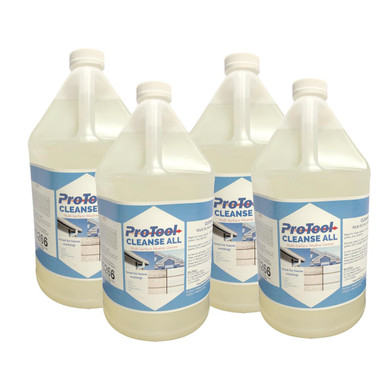
ProTool Cleanse All 4 Gallon Case
$116.45
Cleanse All - House, Building, siding and Gutter Cleaner - 4 Gallon Case Cleanse All a specialized cleaner designed to remove oxidation and soil buildup...… read more
Organic Growth: Bleach + ProTool Sticky (Use With Caution)
For surfaces with organic growth—such as algae, mold, or mildew—bleach remains one of the most effective tools available. However, bleach use with drones must be handled carefully.
Best for:
Organic staining
Algae and mildew on siding or masonry
Situations where other cleaners won’t break growth down
Critical considerations:
Bleach sprays aggressively from drones
Wind can carry solution to unintended areas
Overuse can harm finishes, metals, or landscaping
To improve control and effectiveness, bleach should be paired with ProTool Sticky surfactant.
Why ProTool Sticky matters:
Helps bleach cling to surfaces instead of running off
Extends dwell time without over-application
Improves efficiency, reducing total chemical usage
👉 Product:
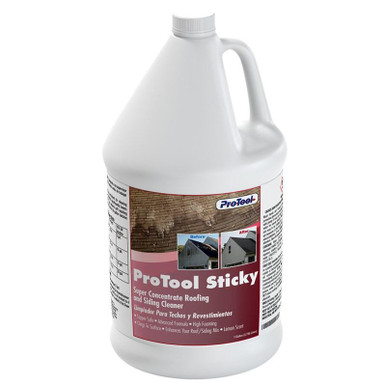
ProTool Sticky
$69.15
ProTool Sticky Super Concentrate The industry’s highest-concentration sticky surfactant — gives maximum cling, superior spreading, and extended dwell time when used with sodium hypochlorite (SH)....… read more
⚠️ Always use bleach cautiously when drone cleaning, follow proper dilution guidelines, and account for wind and surrounding surfaces.
Why Chemical Choice Matters More With Drones
Unlike traditional cleaning methods, drones leave little room for correction. You can’t easily reapply, spot scrub, or instantly stop overspray once a drone is airborne and spraying.
That’s why the best drone cleaning chemicals:
Work quickly without over-aggression
Rinse clean with minimal residue
Are safe across multiple surface types
Perform consistently even when applied broadly
Using the wrong chemical for drone cleaning isn’t just inefficient—it can be expensive and dangerous.
Final Thoughts: Smarter Chemistry for Smarter Drone Cleaning
Drone cleaning demands a different mindset when it comes to chemicals. Faster application, greater reach, and environmental variables mean surface-safe, predictable chemistry is essential.
Quick selection guide:
General cleaning: ProTool Red Building Cleaner
Oxidation: ProTool Cleanse All
Organic growth: Bleach + ProTool Sticky (with caution)
Choosing the right chemical for drone cleaning protects surfaces, reduces liability, and ensures professional results—every time the drone leaves the ground.
FAQs
Why does chemical choice matter more with drone cleaning?
Drones apply chemicals faster, harder, and over a wider area than traditional methods. Wind and overspray can carry solutions onto unintended surfaces, making surface-safe, predictable chemistry critical.
What is the safest chemical for general drone cleaning?
ProTool Building Cleaner is the safest and most versatile option for general drone cleaning. It degreases, removes grime, adhesive, rinses clean, and works across multiple surfaces without aggressive attack.
Which chemical should I use for oxidation when drone cleaning?
For oxidation, a safer oxidation remover that bonds to stains—rather than aggressively attacking the surface—is ideal. This provides controlled cleaning with reduced risk when applied from the air.
Can bleach be used for drone cleaning?
Yes, but with caution. Bleach is effective for organic growth like algae and mildew, but it sprays aggressively from drones and can cause unintended damage if misused.
Why use a surfactant with bleach during drone cleaning?
A surfactant helps bleach cling to surfaces, extending dwell time and reducing runoff. This improves cleaning efficiency and limits chemical waste and overspray.
Is bleach safe on all exterior surfaces?
No. Bleach can damage certain finishes, metals, and landscaping. Always verify surface compatibility and use proper dilution when applying bleach via drone.
Can one chemical clean everything during drone cleaning?
ProTool Building Cleaner can handle most general cleaning tasks, but oxidation and organic growth require specialized products. Choosing the right chemical for the contamination is safer and more effective.
What happens if the wrong chemical is used with a drone?
Using the wrong chemical can lead to surface damage, streaking, discoloration, or costly property claims due to overspray or wind drift.
Should drone cleaning chemicals rinse easily?
Yes. Fast-rinsing chemistry is critical for drone cleaning to prevent residue, streaking, or rework—especially on glass and coated surfaces.
What’s the biggest mistake operators make with drone cleaning chemicals?
Using overly aggressive chemicals meant for hand application. Drone cleaning requires chemistry designed to perform safely with wide, high-volume spray patterns.