
How to Clean Awnings

Knowing how to clean awnings is one of the fastest add-on services a pressure washing or window cleaning contractor can offer. Most residential and commercial awnings go years without maintenance, which means heavy soiling, mold, mildew, and oxidation — and a client willing to pay for restoration work. The equipment overlap with your existing rig is almost total. The margin is excellent.
Awning Types and What They Demand
Before you quote a job, identify the material. The chemical and pressure choices diverge sharply by type:
- Fabric (canvas, acrylic, polyester): No pressure. These tear, delaminate, or lose water repellency under anything above a garden-hose rinse. Chemical dwell time does the work.
- Vinyl: Tolerates light pressure (under 500 PSI with a wide fan tip) but still relies on chemistry for mold and embedded grime. Vinyl yellows and cracks if you hit it with hot water or aggressive solvents.
- Metal (aluminum, steel): Handles moderate pressure. The real issue is oxidation — chalky residue that transfers to everything it touches. Wrong chemical choice etches the finish permanently.
Chemical Selection by Material
This is where most contractors get it wrong. Using a generic house-wash mix on a Sunbrella fabric awning will strip the factory DWR coating and leave the client with a fabric that soaks up the next rainstorm. Match the chemistry to the substrate:
Fabric Awnings
Use a dedicated fabric awning cleaner — something formulated to lift mold and mildew without stripping the water-repellent finish. Winsol Awning Clean & Protect is the standard for pros because it cleans and re-deposits a light protectant in one step. For heavy mold or bird-dropping stains, pre-treat spots with Winsol Awning Fabric Spot Remover before the full wash.
After cleaning, a protectant pass extends the interval before the next service call. Winsol Awning Armor works on both fabric and vinyl and adds UV resistance.
Vinyl Awnings
Vinyl accumulates a greasy film mixed with airborne particulate. A mild alkaline cleaner handles most jobs. Winsol Awning Clean & Protect Vinyl is purpose-built for this — it cuts the film without softening the vinyl or leaving haze. For deep-set mildew, Winsol Deep Clean is the escalation step.
Metal Awnings
Oxidized aluminum needs a cleaner that dissolves the oxide layer without etching the base metal. Winsol Aluma Wash is designed for exactly this — it brightens aluminum and removes chalky residue. For general building grime on painted metal, a downstream-injected house wash mix works; just avoid acidic cleaners on bare aluminum.
Equipment and Workflow
Most awning jobs need three things you already own: a pump sprayer or soft wash rig for chemical application, a garden hose or low-pressure rinse, and a brush for agitation on stubborn areas.
Application
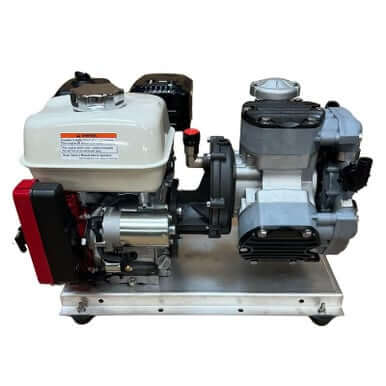
Apply chemical from bottom to top to prevent streaking from rundown on dry fabric. A 2-gallon pump sprayer works for small residential awnings. For commercial storefronts with 20+ linear feet of awning, apply through your soft wash system — a ProTool Soft Wash Sprayer Skid lets you batch-mix and apply consistently across the whole run.
Agitation
Let the chemical dwell 5–10 minutes (longer for heavy mold), then agitate with a soft-bristle brush. A 10-inch green soft flow-thru brush on an extension pole reaches second-story awnings without a ladder. Never use a stiff brush on fabric — you will abrade the fibers and destroy the weave.
Rinse
Rinse top to bottom with low pressure. On fabric, a garden hose with a fan nozzle is sufficient. On vinyl and metal, you can step up to a pressure washer with a 40-degree tip at 500 PSI max, held at least 12 inches from the surface. Rinse thoroughly — chemical residue left on fabric accelerates UV degradation.
Common Mistakes
- Pressure washing fabric awnings. This is the number-one callback generator. Even 800 PSI damages canvas weave. If a client insists on pressure washing their Sunbrella, walk away — you will own the replacement cost.
- Skipping the protectant step. Cleaning without protecting is doing half the job. The protectant pass is also your upsell — it costs you five minutes and doubles the perceived value.
- Using bleach (SH) on colored fabric. Sodium hypochlorite fades dyed fabrics. It works on white canvas and vinyl, but on anything with color, use an oxygen-based cleaner or a dedicated fabric formula.
- Ignoring the frame. Aluminum frames oxidize independently of the fabric. Clean the frame with an appropriate metal cleaner while you have the chemical out — it takes two minutes and the client notices.
Pricing and Upsell Strategy
Awning cleaning prices by linear foot, typically $3–$8/ft for residential and $5–$12/ft for commercial, depending on height access and soil level. The protectant application adds 30–50% to the ticket. Frame cleaning and oxidation removal on metal awnings is a separate line item.
Bundle awning cleaning with window cleaning or house washing — the setup time is already spent, and the incremental labor is minimal. A storefront contract that includes quarterly awning maintenance locks in recurring revenue with almost no additional equipment cost.
Safety Considerations
Chemical overspray on landscaping is the most common damage claim on awning jobs. Pre-wet plants, cover sensitive beds, and rinse immediately after. Wear chemical-resistant gloves — neoprene/latex chem-resistant gloves handle the alkaline cleaners used on awnings. Eye protection is mandatory when spraying overhead.
Products Mentioned
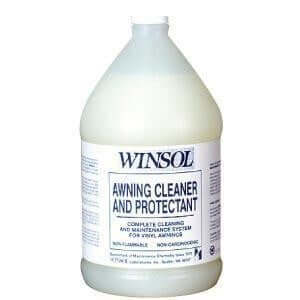 Winsol Awning Clean & Protect Vinyl SKU: 88-61M | 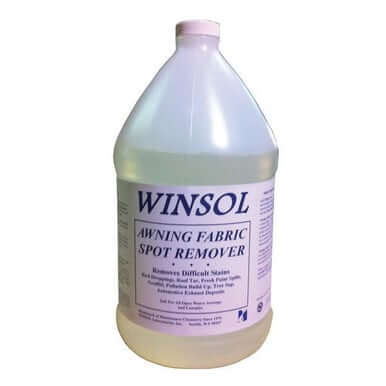 Winsol Awning Fabric Spot Remover Gal SKU: 88-647 | 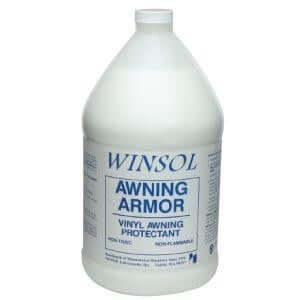 Winsol Awning Armor Vinyl SKU: 88-63M |
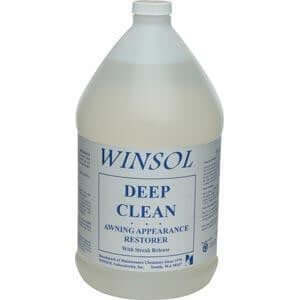 Deep Clean Gal Winsol SKU: 88-641 | 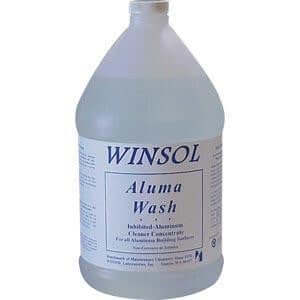 Winsol Aluma Wash SKU: 89-61M | 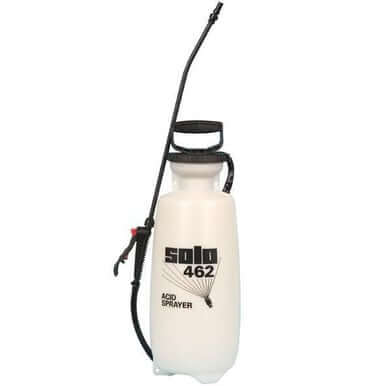 Pump Sprayer 2 Gal Acid Resistant Solo SKU: 515-045 |
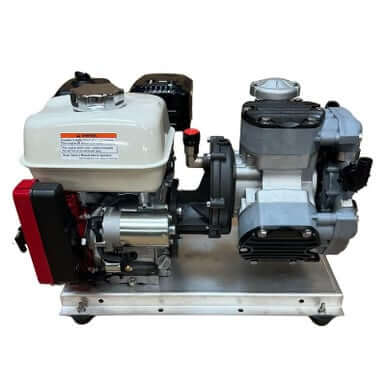 BPX25 - P40 Soft Wash Sprayer Skid SKU: 150-0432M | 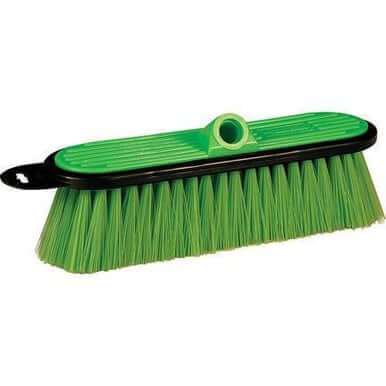 Brush 10in Green Very Soft for FlowThru SKU: 66-505 | 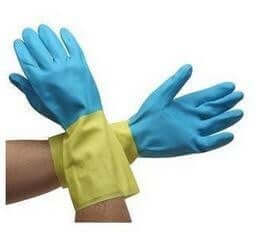 Neoprene/Latex Chem Resistant Gloves SKU: 56-23M |