
How to Launch a Window Cleaning Business
Most window cleaning businesses fail in the first two years — not because the work is hard, but because the operator never treated it like a real business. Knowing how to launch a window cleaning business means more than buying a squeegee and printing cards. It means building a system: pricing that actually covers your costs, equipment that scales with your route, and a workflow that lets one person handle 15–20 residential stops a day without burning out.
Pick Your Lane Before You Buy Anything
The single biggest decision you make at launch is residential vs. commercial — or a hybrid route. Each model has fundamentally different equipment needs, pricing structures, and sales cycles.
Residential route work is the fastest path to cash flow. Low barrier to entry, repeat customers every 4–8 weeks, and you can operate solo with a vehicle, a bucket kit, and a set of poles. The ceiling is your own time: a solo operator tops out around $800–$1,200/day in most markets once the route is mature.
Commercial storefront work trades per-job revenue for volume and predictability. Monthly contracts, tight margins, but steady income that smooths out seasonal dips. You need reliability more than fancy equipment — show up on schedule, every time, and you keep the account.
Mid-rise and high-rise commercial work pays significantly more per job but demands water fed pole systems, fall protection gear, insurance riders, and often crew labor. This is where you scale revenue, but it is not a day-one play for most operators.
Start where the money is fastest. For most new operators, that means residential route cleaning with a plan to add commercial accounts once your schedule and cash flow stabilize.
Equipment: What You Actually Need at Launch
New operators either underbuy (cheap tools that slow them down) or overbuy (a $5,000 water fed cart before they have a single account). The right starter kit is surprisingly lean.
The Core Traditional Kit
A professional window cleaning kit gets you working immediately. At minimum you need:
- Squeegee channels and handles — an Ettore Master Classic handle or the Pulex TechnoLite handle are industry standards. Get channels in 12", 18", and 22" to cover most residential and storefront panes.
- T-bars and sleeves — a Pulex Aluminum T-Bar with a Pulex Microfiber Sleeve or an Ettore Pro+ Microfiber Sleeve handles 90% of residential glass.
- Squeegee rubber — Black Diamond rubber is a house favorite for all-season performance. Buy in bulk; rubber is a consumable you will replace constantly.
- A scraper — a Triumph MK3 6" scraper for construction debris and paint spots.
- Bucket — the Pulex Rectangular Bucket fits a T-bar flat, holds enough solution, and stacks in a vehicle.
- Extension pole — a two-section Ettore Interlock pole reaches second-story residential without a ladder.
Total investment for a professional-grade traditional kit: roughly $250–$400. That is not the place to cut corners — cheap squeegees leave streaks, which means callbacks that eat your margin.
When to Add a Water Fed Pole System
A water fed pole (WFP) system is not a day-one purchase for most operators, but it is the single biggest productivity upgrade you will make. A WFP lets you clean second- and third-story glass from the ground without ladders, cutting job time by 30–50% on multi-story residential work.
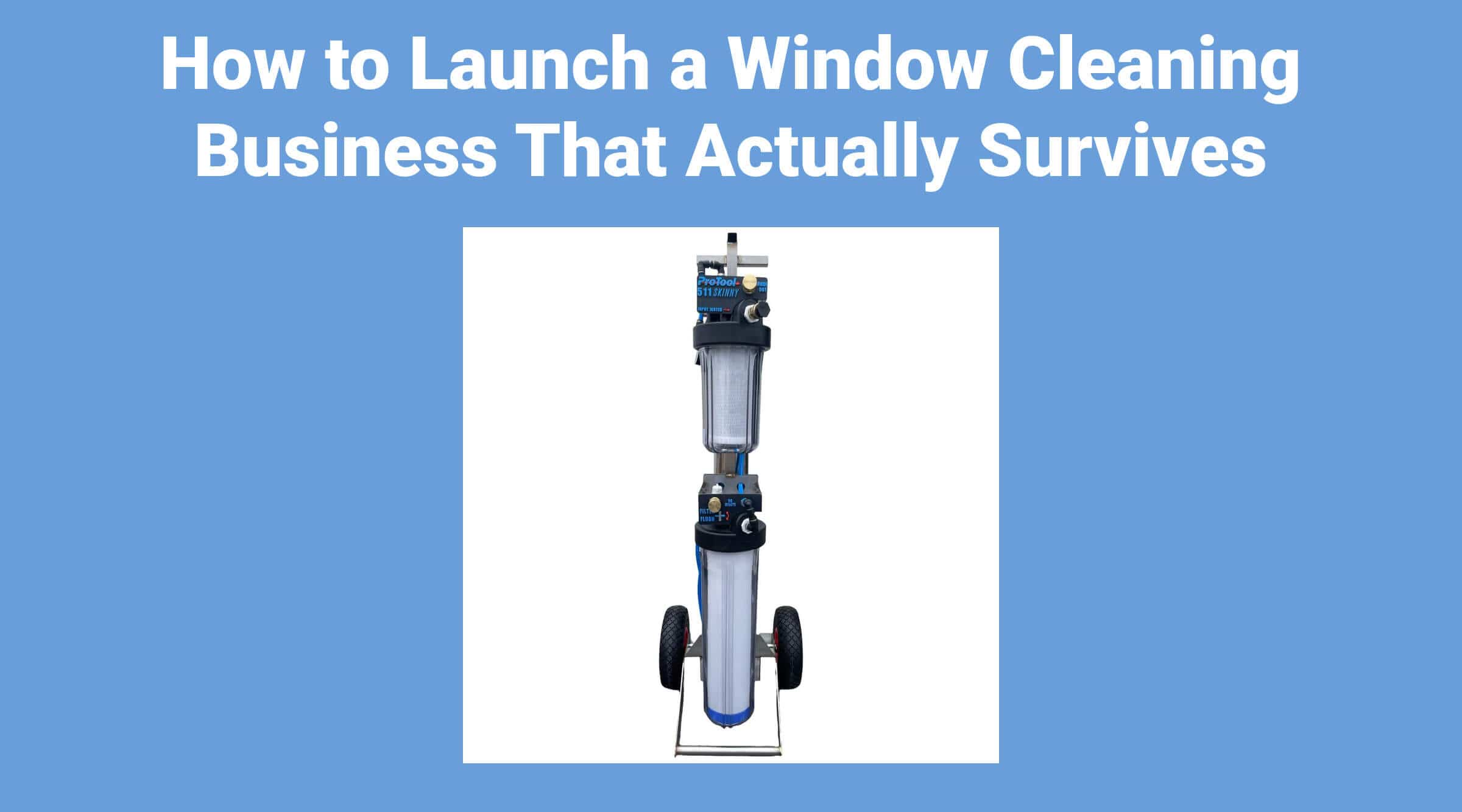
The ProTool 511 Pure Water Cart is the entry point most owner-operators choose — compact enough for a truck bed, sufficient flow for one operator. Pair it with a ProTool Apex Carbon Fiber Pole in the 25–30 ft range and you can handle the majority of residential and low-commercial work without ever setting up a ladder.
The rule of thumb: add WFP once your route is generating consistent revenue and you are losing time (and money) on ladder setups. For most operators, that is 3–6 months in.
Pricing: The Mistake That Kills New Businesses
Underpricing is the most common failure mode for new window cleaning businesses. Operators look at what the cheapest competitor charges and match it, without calculating their actual cost per hour.
Your price has to cover:
- Drive time between stops (the hidden cost most new operators ignore)
- Consumables — rubber, solution, towels
- Vehicle cost, fuel, insurance
- Equipment depreciation
- Your own labor at a rate that is actually worth showing up for
A common residential benchmark: $5–$8 per pane for standard interior/exterior, with minimums of $150–$200 per stop. If you cannot hit $75–$100/hour gross on residential route work, your pricing is too low or your route density is too thin.
Quote the job, not the hour. Customers do not care how long it takes — they care what the result costs. As you get faster with better equipment and technique, your effective hourly rate climbs without raising prices.
Legal and Insurance: Non-Negotiable
General liability insurance ($1M–$2M policy) is the cost of doing business. Most commercial accounts will not even talk to you without a certificate of insurance. For residential work, one broken pane or a water-damaged hardwood floor without coverage could end your business overnight.
Beyond insurance:
- Register your business entity (LLC is the standard structure for liability protection)
- Check local licensing requirements — they vary widely by municipality
- If you plan to work above certain heights, some jurisdictions require additional safety certifications
- Workers' compensation is mandatory in most states once you hire your first employee
Get the paperwork right before you clean the first pane. Retrofitting legal compliance after you are already operating is harder and more expensive.
Building a Route That Pays
A window cleaning business is a route business. Your profitability depends more on route density — how many stops you can hit per day with minimal drive time — than on any single job's price.
Target neighborhoods, not individual houses. When you land one customer on a street, door-knock or leave a flyer at every neighboring property. A tight residential cluster of 6–8 stops within a half-mile radius is worth more than 6 scattered jobs across town.
Recurring service agreements are the engine. A customer who books quarterly cleanings is worth 10x more than a one-time deep clean. Structure your pricing to incentivize repeat service — slight discounts for customers on a regular schedule, and always book the next appointment before you leave the property.
Adding Services That Multiply Revenue
Once your window route is established, adjacent services let you increase revenue per stop without adding drive time.
Pressure washing is the highest-value add for most window cleaners. Driveways, sidewalks, and house washing are natural upsells to the same residential customer base. A pressure washer setup and a ProTool 18" surface cleaner let you quote flatwork alongside every window bid.
Gutter cleaning — interior debris removal and exterior oxidation cleaning with a product like ProTool Gutter Bomb — adds $75–$200 per stop with minimal extra equipment.
Screen cleaning and hard water stain removal are pure margin additions. ProTool ClearView 300 handles mineral deposits on shower doors and exterior glass — a service most residential customers do not even know they can request.
Safety Is Your Business Reputation
A single ladder accident can end your business through injury, liability, or both. Safety is not a compliance checkbox — it is an operational advantage.
Water fed poles eliminate ladder work for most residential glass, which is the single best safety decision you can make. When ladders are unavoidable, use proper stabilizers like the ProTool Ladder StandOff and LeveLok Quick Connect Levelers.
For any work above ground floor:
- Inspect equipment before every use
- Maintain three points of contact on ladders
- Use tool bungee lanyards to prevent dropped equipment
- Never work alone on high-access jobs until you have the training and gear to do it safely
The How to Clean Windows Like a Pro book covers technique, safety, and business operations in detail — worth the read before your first commercial bid.
The Real Competitive Advantage
Equipment quality, pricing, and marketing all matter. But the operators who build sustainable window cleaning businesses share one trait: they treat every customer interaction as a system, not a transaction. Show up on time, communicate clearly, deliver streak-free glass, book the next appointment, and follow up. That cycle, repeated hundreds of times, is the business.
J.Racenstein carries the full range of professional window cleaning tools — from starter kits to water fed systems to pressure washing equipment — built for operators who take the trade seriously.
Products Mentioned
 Window Cleaning Kit JRC SKU: 12-0101a | 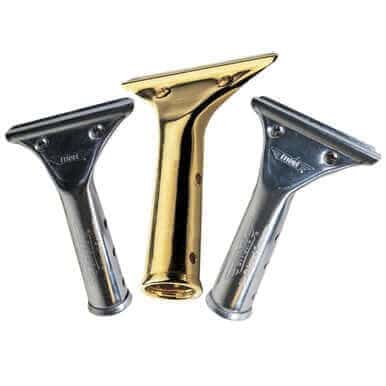 Ettore Handle Master Classic SKU: 01-11M | 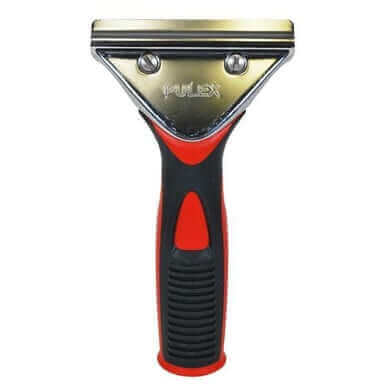 Pulex Technolite Stainless Steel Squeegee Handle SKU: 01-308 |
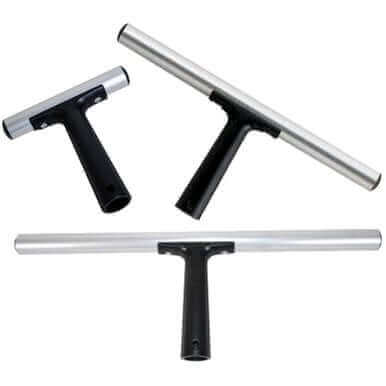 Pulex T-Bar Aluminum SKU: 10-31M | 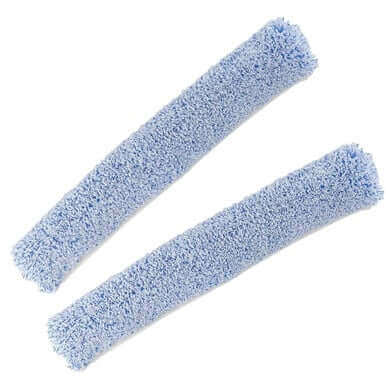 Pulex Sleeve Microfiber SKU: 11-32M | 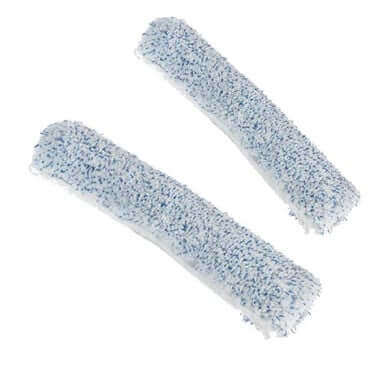 Ettore Sleeve Pro+ Microfiber SKU: 11-12M |
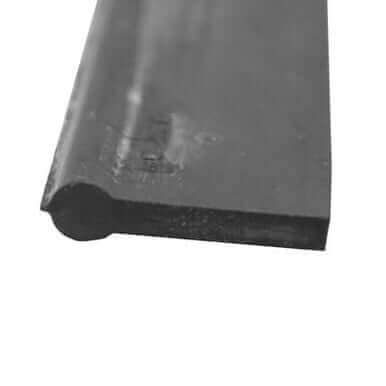 Black Diamond Rubber SKU: 03-9M | 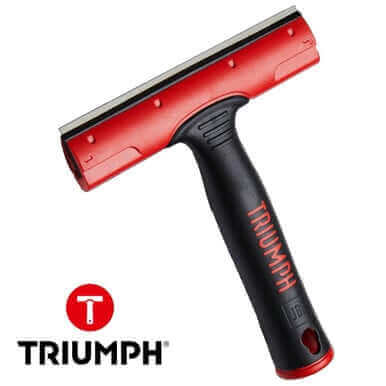 Scraper Straight Triumph MK3 6in SKU: 35-36 | 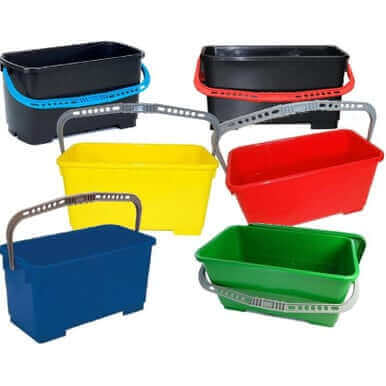 Pulex Bucket Rectangular SKU: 20-3M |
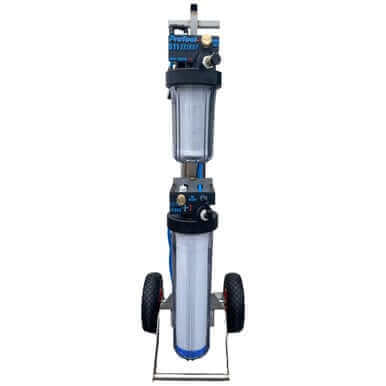 ProTool 511 Pure Water Cart SKU: 150-0515 | 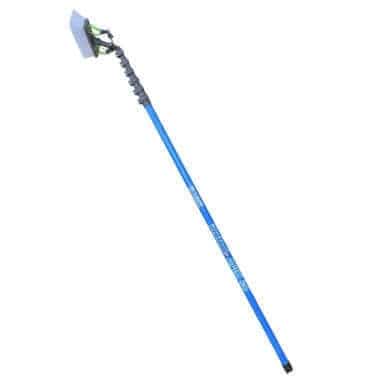 ProTool Apex Carbon Fiber Water Fed Pole SKU: 151-32M | 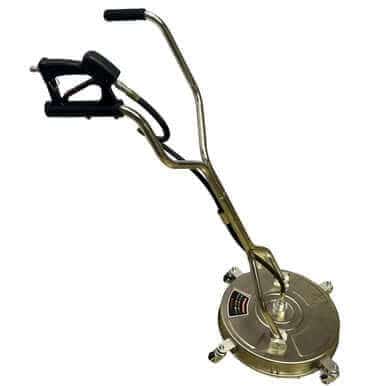 Surface Cleaner 18in Protool 4000psi SKU: 74-3795 |
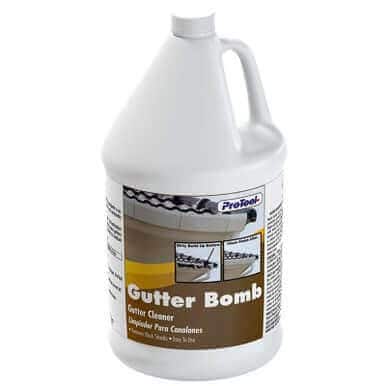 ProTool Gutter Bomb - Gutter Cleaner - Oxidation Remover SKU: 89-82M | 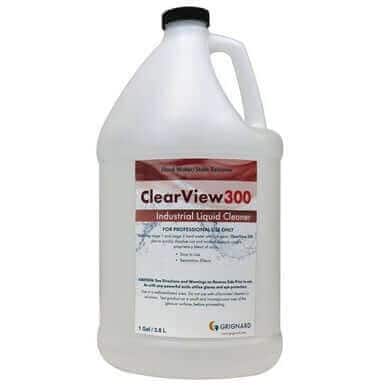 ProTool ClearView 300 Hard Water Stain Remover Gallon SKU: 86-515 | 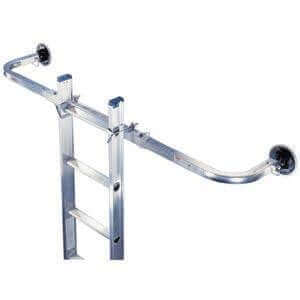 ProTool Ladder StandOff SKU: 73-101 |
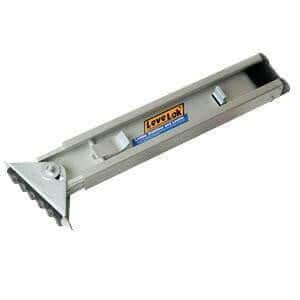 Ladder Levelers Quick Connect LeveLok SKU: 73-25 |  Tool Bungee Lanyard SKU: 55-21 |  ProTool How to Clean Windows Like a Pro S Book SKU: 80-103 |