
Ladder or Water Fed Pole: That's NOT the Question

Power line safety kills more window cleaners than falls do — and most of those deaths were completely avoidable. When you're sizing up a job with overhead lines, the question isn't whether to use a ladder or a water fed pole. The question is whether any tool you own can reach that glass without putting you inside the kill zone.
Electricity Doesn't Need Contact to Kill You
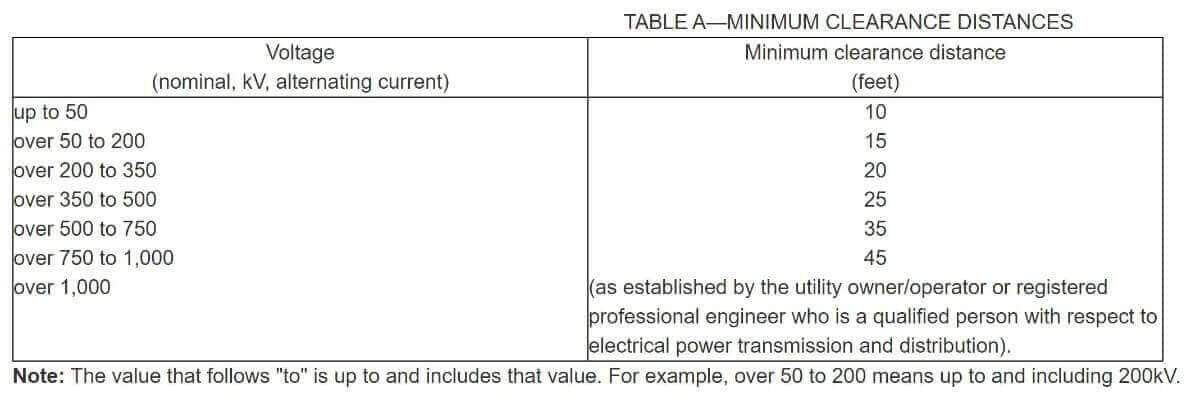
Current can arc — jump through air — before you ever touch a line. The higher the voltage, the farther it reaches. Standard residential service runs 120/240V, but the lines feeding a neighborhood can carry 7,200V or more. Distribution lines along commercial streets commonly run 13,000–35,000V. At those voltages, arcing distances are measured in feet, not inches.
Wet tools increase the risk dramatically. A water stream from a water fed system or a wet aluminum extension pole creates a conductive path that extends your reach — and extends the danger.
OSHA Minimums and Real-World Margins
OSHA's minimum clearance for unqualified workers (that's us) is 10 feet from lines up to 50kV. That's a minimum — the distance at which they believe the risk becomes unacceptable, not the distance at which it becomes safe. We recommend 15 feet. The extra margin accounts for pole flex, ladder bounce, a gust of wind, or the moment your foot slips and a 30-foot pole swings somewhere you didn't intend.
A few things professionals miss:
- Pole length counts. A 27-foot Gardiner CLX pole extended overhead puts the tip far closer to overhead lines than you'd guess from ground level.
- Carbon fiber conducts. Carbon poles are not insulated. Neither is wet fiberglass.
- Ladders shift. An aluminum extension ladder leaned near a service drop can contact a line if it slides, falls, or is repositioned carelessly.
- Secondary lines look harmless. Cable and phone lines share poles with high-voltage conductors. If a high-voltage line has sagged or fallen onto a lower cable, touching that cable is the same as touching the primary.
When to Walk Away
If you cannot maintain 15 feet of clearance between every part of your body, your tool, and the nearest conductor — including the water stream — skip the window. As Doug Apt always says: "It's safer to walk away and live to clean another day."
No residential pane pays enough to justify the risk. Document the hazard, explain it to the customer, and move on. Most homeowners understand immediately once you point at the lines and explain what happens at 13,000 volts.
Safer Approaches When Clearance Allows
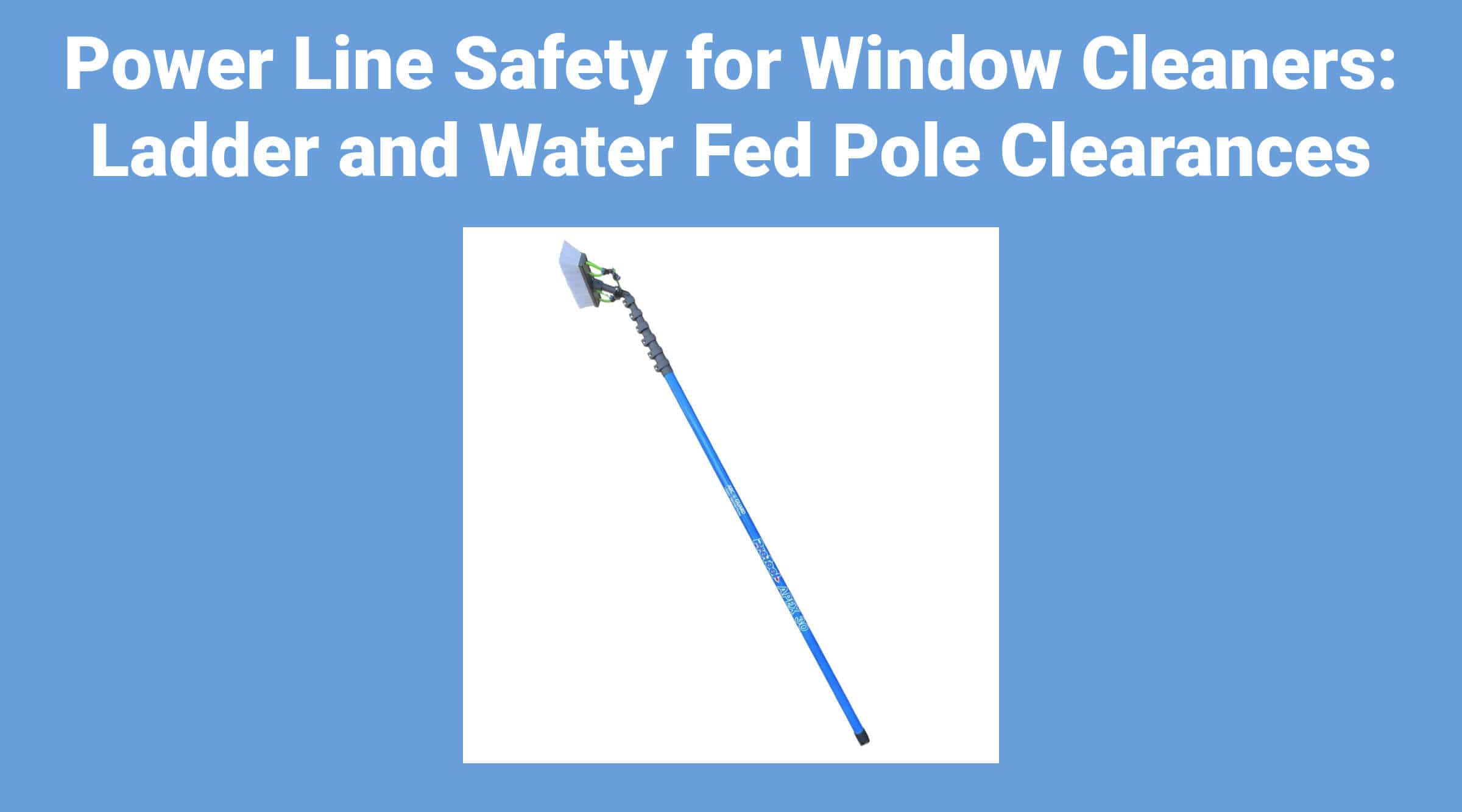
When the geometry works and you have clearance to spare, water fed poles are generally the safer choice near overhead wiring — you stay on the ground, you control the pole angle, and you're farther from the lines than you'd be on a ladder at the same window. A ProTool Apex Carbon Fiber Pole gives you reach without leaving the ground, but you still need to consciously track the tip position relative to every line on the property.
A few operational rules worth posting in every van:
- Survey lines before extending any pole or raising any ladder.
- Never carry a ladder or pole horizontally under overhead lines.
- If a line is within 15 feet of your work position, find another approach angle or decline the pane.
- Wear rubber-soled boots and insulated gloves as a last-layer habit — not as primary protection.
Your Equipment Doesn't Make It Safe — Distance Does
The ladder-versus-pole debate misses the point entirely. Neither tool is safe near power lines. Only distance is safe. Build the habit of scanning for overhead lines on every walkthrough, and build the willingness to say no when the math doesn't work. The money you leave on the table is money you'll be alive to earn back tomorrow.
Products Mentioned
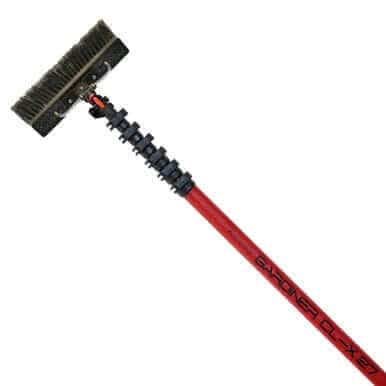 Gardiner CLX 27ft Pole Carbon Composite SKU: 155-4272 | 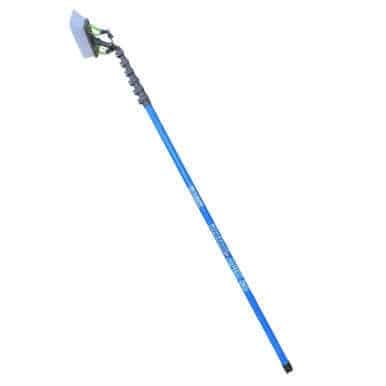 ProTool Apex Carbon Fiber Water Fed Pole SKU: 151-32M |