
The History of Window Cleaning
The history of window cleaning is surprisingly thin on the ground. When Doug Apt was preparing his PWNA National Convention presentation and asked if we had anything written on it, the answer was no. A deep internet search didn't turn up much either. So here's an attempt to change that — a working tour of how our trade came to exist and the tools that shaped it.
Glass Came First
Glass was discovered — probably in Egypt or Mesopotamia — so long ago that nobody can pin down the date. The Bible mentions it in Job 28:17: "Gold and glass cannot equal it." Scholars place that text between the 7th and 4th centuries B.C., which tells you glass was already valuable enough to compare with gold.
For most of history, though, glass remained a luxury. The turning point came in 1861, when chemist Ernest Solvay developed a cost-effective method for mass production. Glass shifted from rare commodity to practical building material. Windows proliferated. And wherever there are windows, somebody has to clean them.

The Birth of an Industry
The first windows were cleaned by servants and housewives — a bucket, a ladder, and a rag. That changed fast once buildings started growing.
In 1885, the 10-story Chicago Home Insurance Building went up, widely regarded as the first modern skyscraper. The Bessemer process for mass-producing steel beams made it possible. Higher buildings meant higher windows, and higher windows meant you couldn't hand the job to a maid with a rag. Professional window cleaning was born out of structural necessity.
By 1887, a Frenchman named Marius Moussy organized a cleaning trade group in Berlin. His former employees fanned out to other cities, founding their own operations. The "glass and building cleaning industry" — as it was called until 1953 — was underway.
Early Tools and the Squeegee's Origins
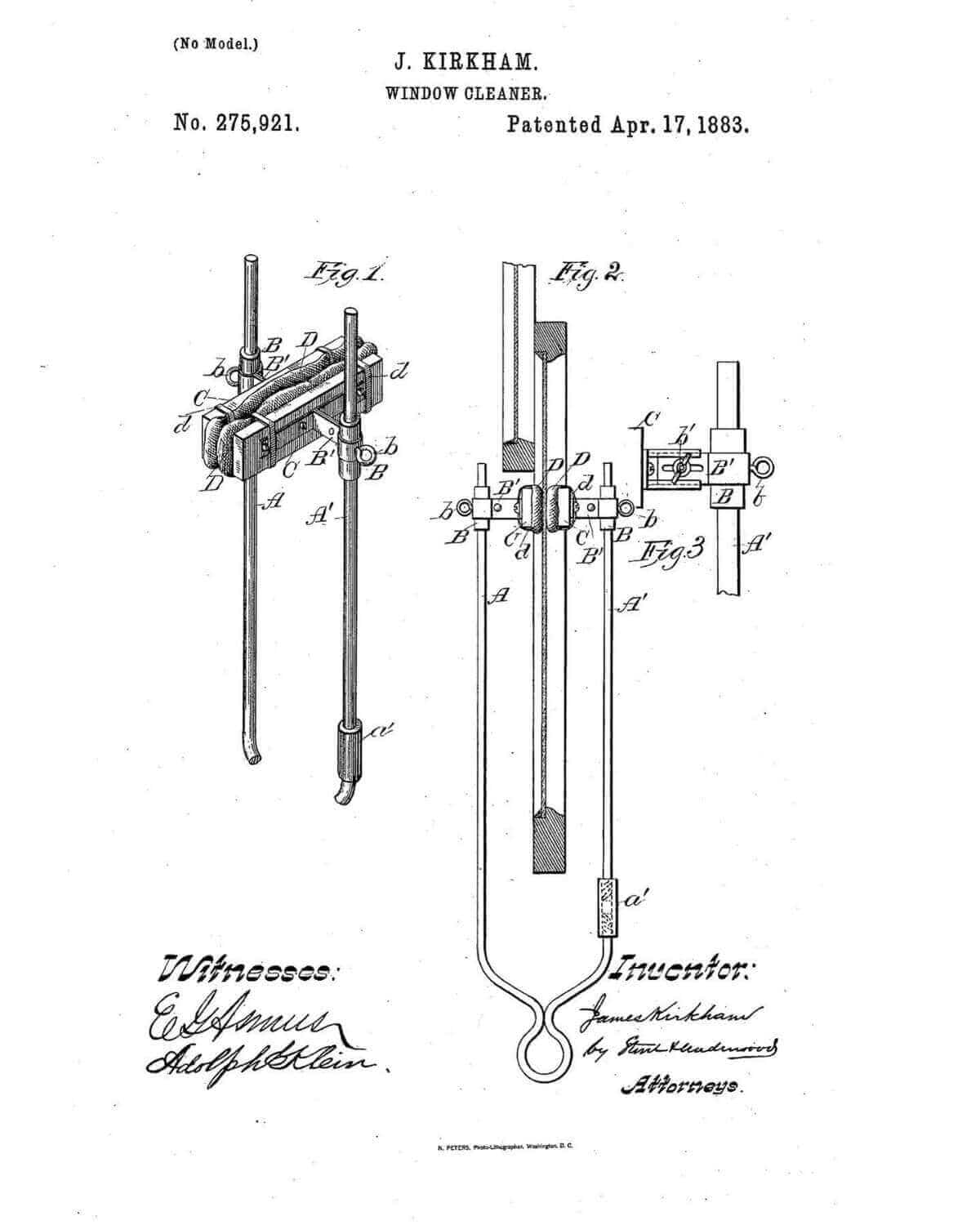
As the industry grew, so did invention. The U.S. Patent Office holds several early examples, including the 1883 J. Kirkman "Window Gleamer" — two arms holding a sleeve "designed to receive a cleansing pad," made from "any elastic material" (Kirkman preferred wire).
The squeegee concept goes back further than most pros realize. Medieval fishermen used wooden swabs called "squilgees" to scrape fish guts off boat decks. Melville mentions the squilgee in Moby Dick. By 1918, an American Navy jargon book referred to it as a "squeegee" and noted it was "used in civil life to clean windows."
P.R. Cumming applied for a squeegee patent in 1899. The 1927 A.C. Jensen Window Cleaning Squeegee was later referenced in patents by Unger, Pulex, and Sörbo.
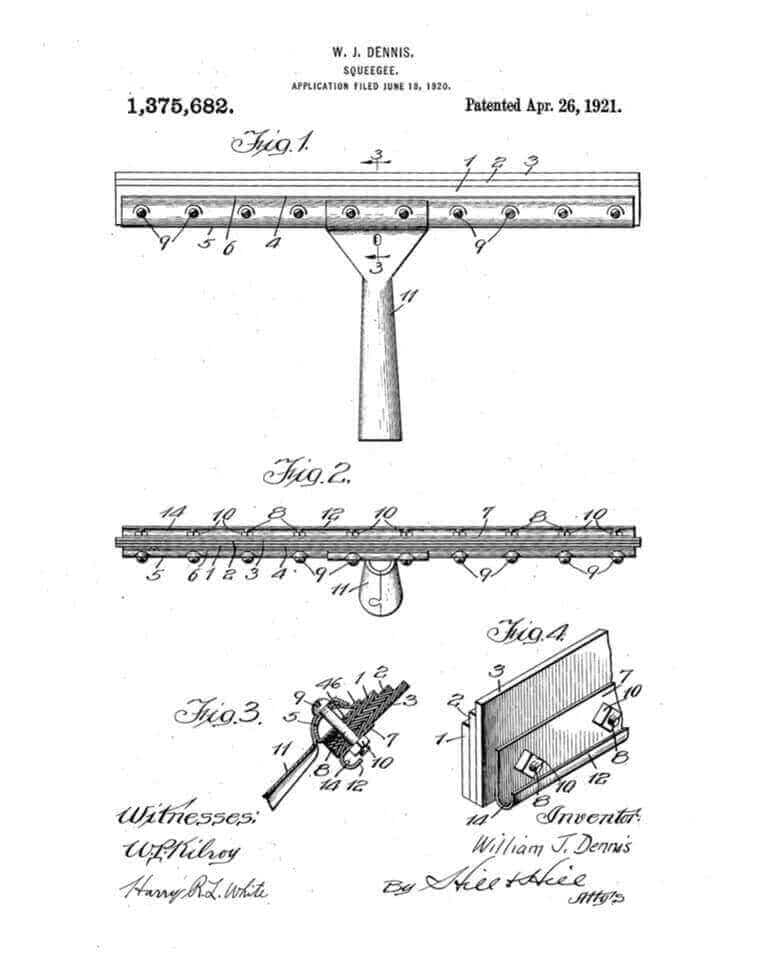
An example of a squeegee patent from 1921. Photo courtesy of Noa Pedersen, Window Cleaning History.
The Chicago Squeegee
The dominant tool of the early trade was the Chicago Squeegee — a steel beast that was heavy, bulky, and used two thick red rubber blades held in place by 12 separate screws. Changing the rubber was a job in itself.
Collector Kevin Dixon once gave a 100-year-old Chicago Squeegee stamped with the J. Racenstein Company name back to JRC. It now sits on the desk of Company President Steve Blyth.
J. Racenstein Enters the Trade
In 1909, window cleaning was just becoming an organized trade — and Joseph Racenstein started supplying it. He kept his stock under his bed in a Manhattan apartment, selling products to the window cleaners of New York. Joe understood that helping cleaners succeed meant growing together.
He soon outgrew the apartment and moved to the Cable Building on Broadway, where he invited window cleaners from across the city to buy supplies and learn techniques. That combination of product, service, and education has defined J. Racenstein ever since.
Ettore Steccone and the Modern Squeegee
In 1921, Ettore Steccone immigrated from Italy to California and became a window cleaner. He loved the work but hated the tools. In his garage, he began engineering a better squeegee — lighter, faster, built around a single rubber blade instead of two.
His design used brass instead of steel, cutting the weight dramatically. After testing rubber compounds, he settled on a blade that outperformed everything else on the market. In 1936, he patented it as the "New Deal." That T-type squeegee design is still the foundation of every professional squeegee used today.
Getting it to market was another fight. Several supply companies turned him down. Ettore traveled to New York to see the biggest supplier in the business — George Racenstein, Joe's son. George wasn't convinced. The New Deal was too small, too light.
Ettore proposed a bet: "the finest hat in New York" that George would call within 30 days asking to carry the squeegee. George took the bet. Ettore's strategy was simple — he gave squeegees away to working window cleaners, on one condition: they had to call George Racenstein and ask him to stock them. The phone rang. The hat still sits in the foyer at Ettore.
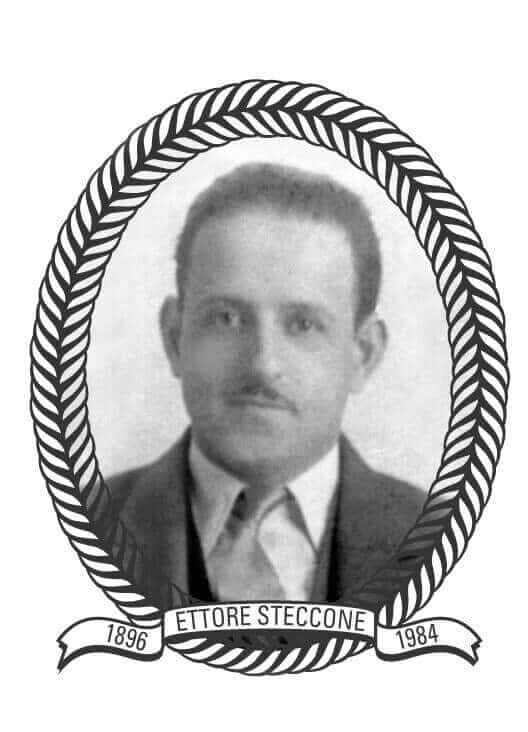
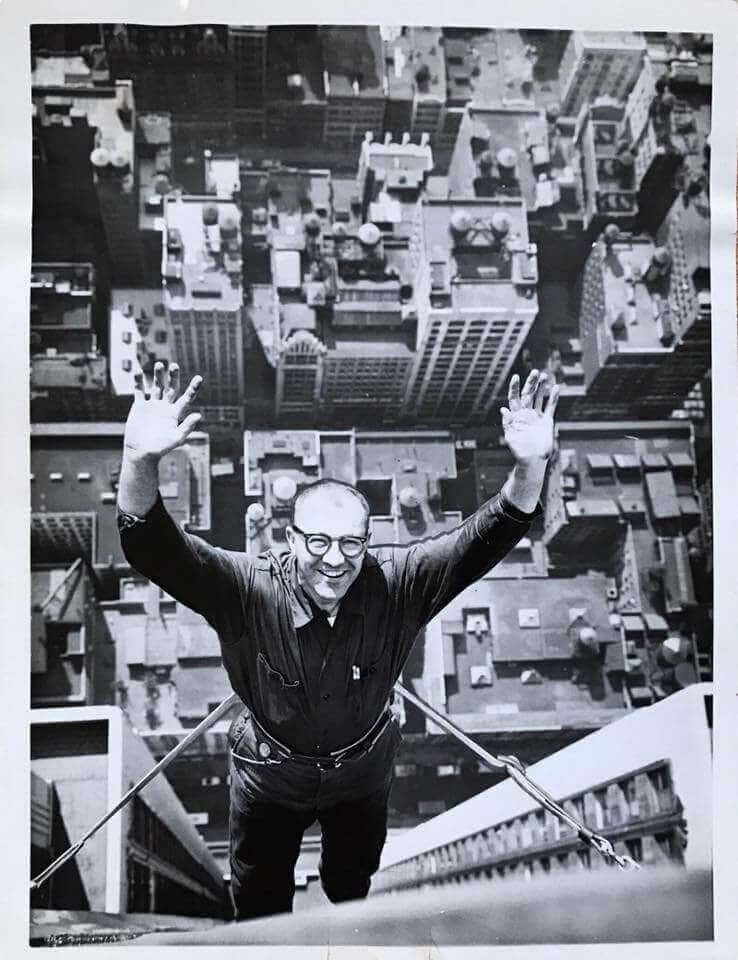
Photo courtesy of Noa Pedersen, Window Cleaning History.
High-Rise Window Cleaning Evolves
Before the 1950s, skyscraper windows opened. Cleaners strapped on leather harnesses, hooked themselves to the window frames, and worked from tiny ledges. If one hook failed, a second hook and the ledge kept them alive. It was dangerous, skilled work.
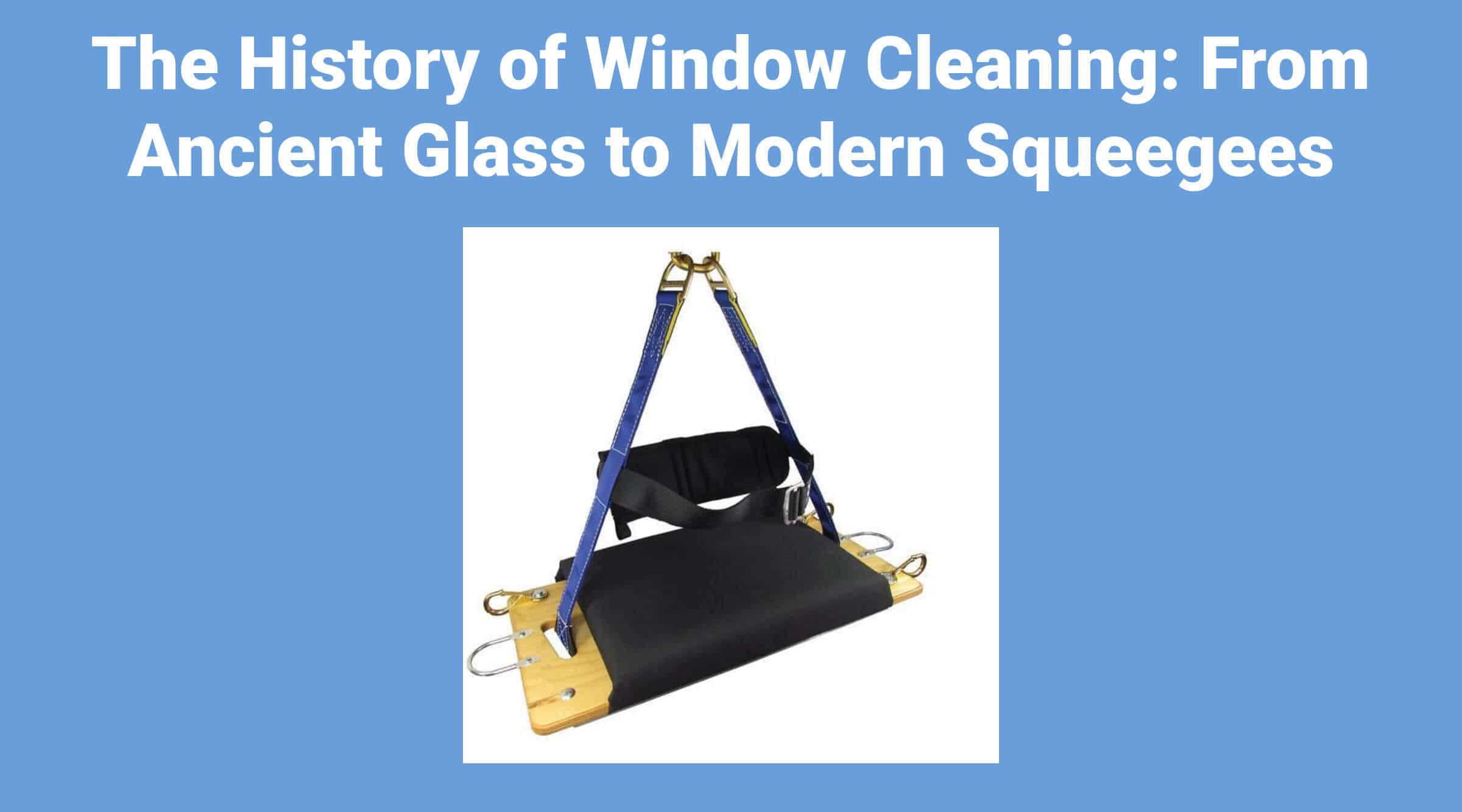
The 1950s brought glass curtain-wall construction. Windows became fixed elements of the building envelope — no more opening them from inside. The entire exterior had to be accessed from outside. That forced the development of mobile platforms, bosun chairs, and fall protection equipment that would eventually become the rope access systems professionals use today.
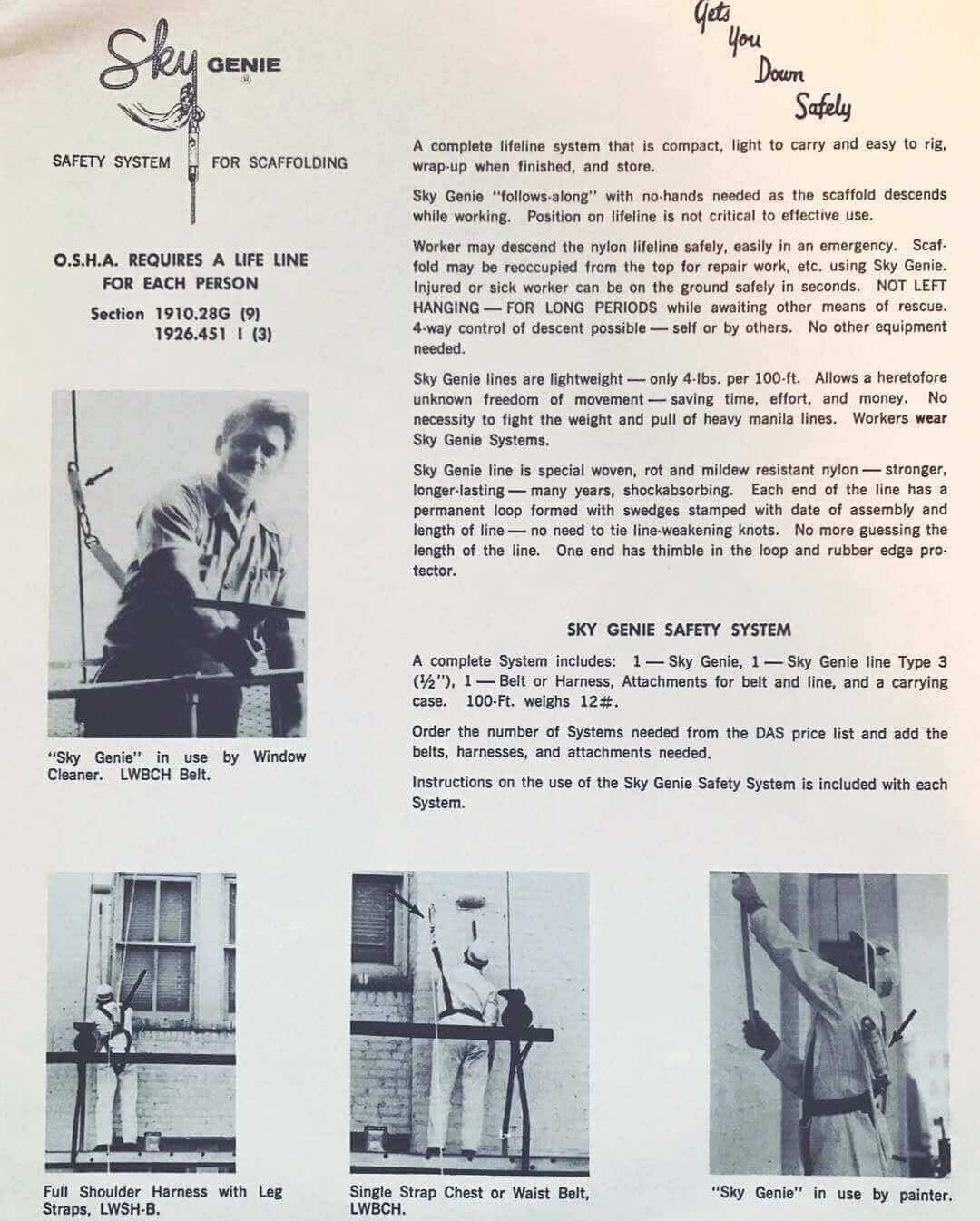
Photo courtesy of Noa Pedersen, Window Cleaning History.
The Rise of Water Fed Poles
In 1955, Irv Tucker introduced a car and home-washing kit to the consumer market — a 3- to 6-foot pole, a single rubber hose with an optional soap dispenser, and horse hair brushes. It was basic, but it gave cleaners the ability to work from the ground. By the 1960s, the Tucker pole system had moved into commercial window cleaning.
By the 1970s, about a third of all Tucker Poles sold internationally. But areas with poor water quality or hard water resisted adoption — the water left spots, defeating the purpose.
The breakthrough came in 1997 when U.K. window cleaner Craig Mawlam (who had met Irv Tucker at an IWCA convention in 1993) launched a pole that integrated a telescopic design with a water purification system. Pure water changed everything. No spots. No detergent residue. Faster dry times.
Today, water fed poles are the standard for residential and mid-rise commercial work. Manufacturers like Gardiner and ProTool continue pushing carbon fiber poles lighter, stiffer, and longer — some reaching past 90 feet.

Photo courtesy of Noa Pedersen, Window Cleaning History.
The Trade Keeps Moving
J. Racenstein has been supplying professional window cleaners since 1909 — essentially since the commercial trade began. The tools have changed. The buildings have changed. The mission hasn't.
Joseph Racenstein's original formula — stock the best products, provide real service, and educate cleaners so they can build better businesses — still drives everything we do. From squeegee rubber to pure water systems, from rope access gear to pressure washing equipment, the catalog has grown because the trade has grown.
Staying in business for over a century requires more than selling squeegees and soap. It requires building the industry alongside the people who work in it. That's what got us here, and it's what keeps us going.
Products Mentioned
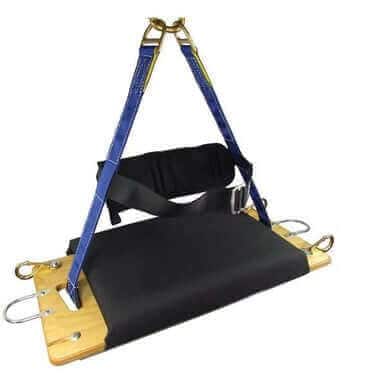 Sky Genie Descent Control Bosun's Chair SKU: 92-21M |