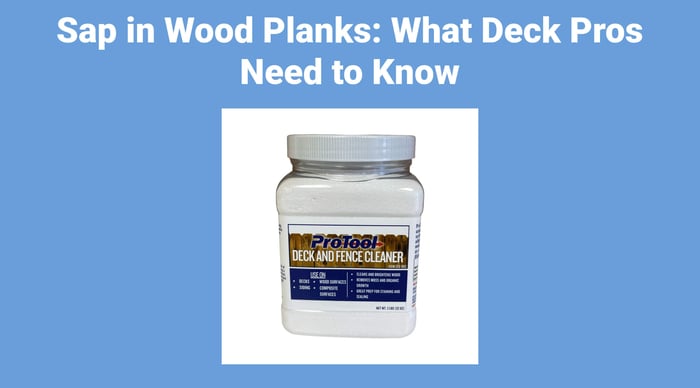
What you need to Know about Sap in the wood planks, Wizard of Wood

Sap in wood planks is one of those issues that catches contractors mid-job if they haven't learned to spot it early. Pine and conifer decking — pressure-treated or not — carries resin channels that bleed sap under heat, sun exposure, or when freshly milled boards cure in place. That sap changes how your stain absorbs, how your cleaner reacts, and whether the finished deck looks professional or blotchy.
Why Sap Matters on a Deck Restoration Job
Sap is hydrophobic. It repels water-based stains and cleaners, creating uneven absorption and visible blotching. If you strip and brighten a deck without addressing sap pockets first, you'll lay stain over resin that hasn't bonded — and the callback comes six months later when those spots peel.
Sap also reacts differently to sodium hydroxide strippers and oxalic acid brighteners. Heavy sap deposits can neutralize your stripper locally, leaving behind old finish in the exact spots where adhesion matters most.
How to Identify Sap Before You Start
Run your hand across the boards before you mix anything. Sap-heavy boards feel tacky or glossy in warm weather. Look for amber-colored beads along knots and grain lines. If the deck is freshly built with green-treated pine, expect sap to continue bleeding for 6–12 months — which is why most pros recommend waiting before staining new construction decks.
Dealing with Sap on the Job
For surface sap, a solvent wipe with mineral spirits before cleaning removes the bulk of it. For deep sap pockets around knots, scraping with a putty knife followed by a solvent application is the standard approach. Do this before your stripper or cleaner goes down — not after.
On restoration jobs, ProTool Deck and Fence Cleaner handles the general cleaning pass. Follow it with ProTool Wood Brightener and Neutralizer to bring the pH back down and open the grain for stain. Neither product is designed to dissolve sap — that's the solvent's job, done as a separate step.
Staining Over Former Sap Areas
Once you've cleaned sap residue, test stain absorption in that spot before committing to the full deck. Apply a small amount of your chosen wood stain and check penetration after 15 minutes. If it beads or sits on top, the resin isn't fully gone — re-treat with solvent and let it dry completely before another pass.
For pine decks that will be stained, the Deck Restoration Plus stain line offers penetrating formulas that handle the uneven porosity of sap-prone softwoods better than film-forming products.
Equipment for Deck Restoration Work
Applying strippers and stains on large decks is faster with a dedicated sprayer system. The ViPower Electric Soft Wash Sprayer gives you controlled application for chemicals without the overspray problems of a pressure washer downstream injector. For rinsing, a pressure washer at low PSI with a wide fan tip protects the wood grain while removing stripped material.
Watch: Wizard of Wood on Sap in Wood Planks
The Wizard of Wood breaks down exactly what sap in pine and conifer planks means for your deck work — how to read it, prep around it, and avoid the mistakes that lead to finish failure. Watch the full video here.
Products Mentioned
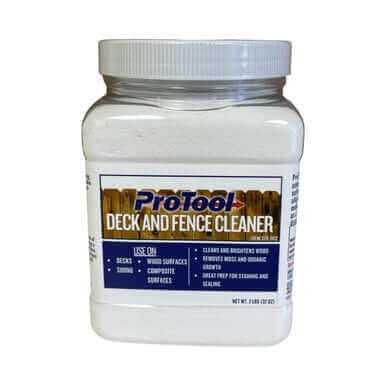 Protool Deck and Fence Cleaner SKU: 320-002 | 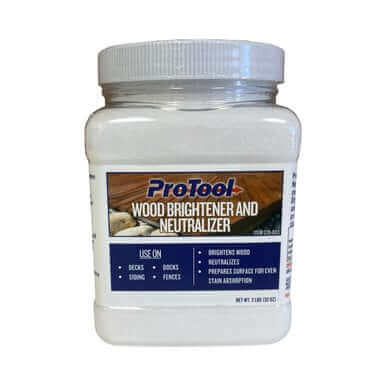 Protool Wood Brightener and Neutralizer SKU: 320-003 | 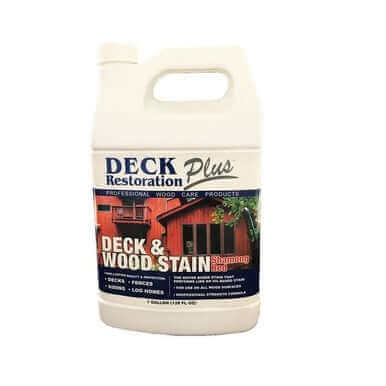 Deck & Wood Stain Shamong Red DRP SKU: 320-74M |
 ViPower Electric Soft Wash Sprayer SKU: 150-0433M |