
Critical Infrastructure Guidelines for Covid-19
Critical infrastructure cleaning guidelines changed the way exterior contractors operate during public health emergencies. Federal, state, and local governments classified certain work as essential — and professional cleaning services landed squarely in that category. If you run a pressure washing, soft washing, or exterior cleaning operation, understanding where you fit in these guidelines determines whether you keep working or sit idle.
Which Sectors Qualify as Critical Infrastructure
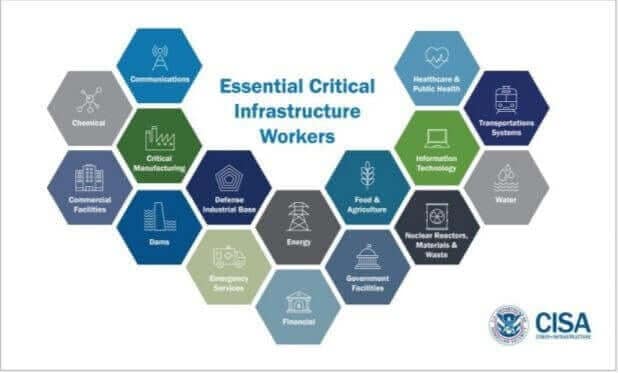
The federal guidelines identify these sectors as essential critical infrastructure:
- Healthcare and Public Health
- Law Enforcement, Public Safety, and First Responders
- Food and Agriculture
- Energy
- Water and Wastewater
- Transportation and Logistics
- Public Works
- Communications and Information Technology
Every one of these sectors operates out of physical facilities that require exterior and interior surface cleaning. That's where contractors come in.
Why Exterior Cleaning Contractors Qualify as Essential
The guidelines specifically classify workers who "provide services that are necessary to maintaining the safety, sanitation, and essential operation of residences" as essential. That language covers cleaning companies directly.
Cleaning with Sodium Hypochlorite (SH) sanitizes surfaces effectively. Most exterior contractors already own the equipment to apply it — soft wash skids, delivery hoses, proportioners, and PPE. The gap between "pressure washing contractor" and "sanitation service provider" is smaller than most people realize.
Most facilities and property managers aren't equipped to clean an entire building exterior in one pass. A crew with a metering system, proper SH dilution ratios, and a downstream injector can cover a fire station, grocery storefront, or medical office in a fraction of the time it would take in-house maintenance staff.
Facilities That Need Cleaning Most
Healthcare
Physician offices, dental practices, hospitals, laboratories, blood banks, clinics, home care agencies, and medical equipment manufacturing or warehouse facilities. These see the highest pathogen exposure and benefit most from regular exterior sanitation of entry points, loading docks, and high-traffic surfaces.
Law Enforcement and First Responders
Police stations, fire departments, corrections facilities, EMS stations, and 911 call centers. Several contractors have cleaned these facilities at no charge as a community service — and turned that goodwill into ongoing commercial accounts.
Food and Agriculture
Grocery stores, pharmacies, food manufacturing and packaging plants, distribution warehouses, farm storage facilities, and company cafeterias. Exterior docks, entryways, and customer-facing facades all accumulate contamination quickly.
Energy and Water
Electric production plants, petroleum storage and refineries, natural gas facilities, and water filtration plants. These facilities typically run 24/7 and rarely shut down long enough for deep cleaning — making a fast, efficient exterior wash crew valuable.
Transportation and Public Works
Public transit facilities, automotive repair shops, and manufacturing distribution centers. High foot traffic and vehicle exhaust leave surfaces that need regular attention.
Residential Cleaning Under the Guidelines
The guidelines don't stop at commercial facilities. Residential sanitation is explicitly covered: workers like "plumbers, electricians, exterminators, and other service providers who provide services that are necessary to maintaining the safety, sanitation, and essential operation of residences" are classified as essential.
Performing a sanitation wash on a residential property qualifies you as a critical service provider — and once you're on the property, completing additional exterior cleaning (windows, gutters, siding) is a natural add-on.
How to Add Sanitation Services to Your Operation
If you already run a soft wash or pressure washing rig, adding sanitation is mostly a matter of chemistry and documentation, not new equipment.
- Cleaning agent: Sodium Hypochlorite 12.5% diluted to appropriate concentrations. Clean first, then sanitize — that sequence matters.
- Application: A soft wash sprayer with proper metering plates gives you consistent dilution ratios across the entire job.
- PPE: Nitrile gloves, eye protection, and chemical-resistant clothing. You should already have this.
- Surfactant: ProTool Sticky extends dwell time on vertical surfaces so the SH can work before it runs off.
- Neutralizer: ProTool Post Rinse to neutralize residual SH after the sanitation pass, protecting landscaping and surfaces.
Incorporating sanitation into your service menu isn't just a pandemic play. Facilities managers at hospitals, food plants, and municipal buildings need ongoing exterior sanitation year-round. The contractors who built those relationships during the emergency kept them afterward.
Products Mentioned
 Sodium Hypochlorite (SH) 12.5 per gallon (NJ Warehouse only) SKU: 83-00 | 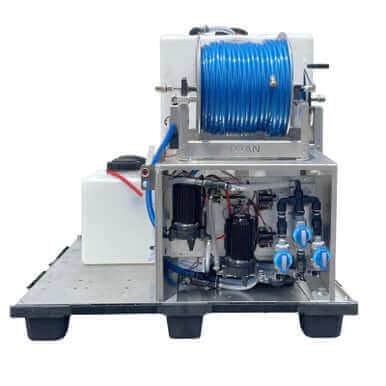 ProTool Soft Wash Skid 12V SKU: 150-047M | 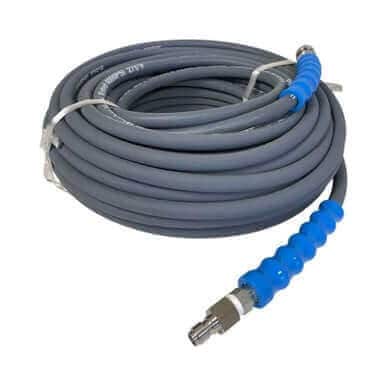 ProTool Pressure Washing Hose 4000psi 1 Wire SKU: 74-36M |
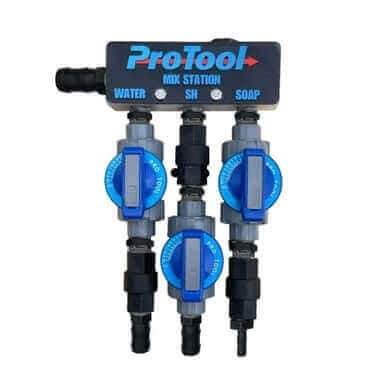 Soft Wash Metering Block SKU: 150-0454M | Sodium Hypochlorite (SH) 12.5 per gallon (NJ Warehouse only) SKU: 83-00 | 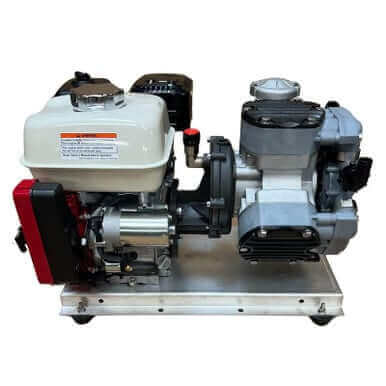 BPX25 - P40 Soft Wash Sprayer Skid SKU: 150-0432M |
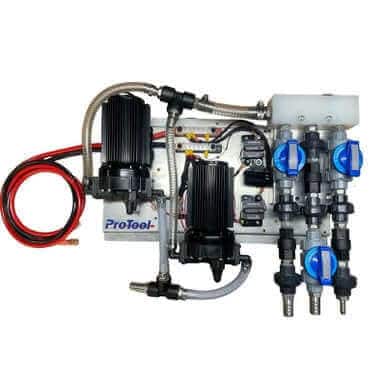 ProTool Soft Wash Metering Plates SKU: 150-045M |  ProTool Sticky SKU: 83-07M |  ProTool Post Rinse SKU: 83-03M |