Efflorescence Remover: Choosing and Using the Right Formula
Table of Contents
Efflorescence — that chalky white bloom on brick, concrete, and pavers — costs exterior cleaning contractors more callbacks than almost any other stain type. The mineral salts migrate to the surface as moisture evaporates, and once a client notices them, they expect them gone yesterday. The wrong product or technique can etch natural stone, discolor colored concrete, or leave the deposit exactly where it started. This guide covers how to choose the right efflorescence remover, apply it correctly, and avoid the mistakes that turn a routine job into a warranty headache.
What Efflorescence Actually Is (and Why It Keeps Coming Back)
Efflorescence is water-soluble calcium, sodium, or potassium salts that get carried to a masonry surface by moisture moving through the substrate. When the water evaporates, the salts crystallize into that familiar white haze. It shows up on new construction within weeks of pour or lay, and it recurs on older hardscapes wherever moisture is migrating — failed flashing, poor drainage, sprinkler overspray.
There are two types pros need to distinguish:
- Primary efflorescence — appears during initial curing. Usually a one-time event. The salts were in the mix and work their way out as the concrete or mortar dries. A single cleaning often resolves it permanently.
- Secondary efflorescence — recurs because an external moisture source keeps dissolving and transporting salts. Until the moisture path is addressed, no chemical will stop it from coming back. Manage client expectations here: you can clean it, but if they don't fix the drainage, they'll see you again in six months.
Knowing which type you're dealing with determines whether you quote a one-time clean or recommend ongoing maintenance — and whether you suggest a sealer after treatment.
How Efflorescence Removers Work
Most efflorescence removers are acid-based. The acid dissolves the mineral salts so they can be rinsed away. The differences between products come down to acid type, concentration, and what else is in the formula.
Buffered vs. Unbuffered Acids
Traditional muriatic acid (hydrochloric acid) works, but it's harsh: it can burn surrounding vegetation, etch polished surfaces, and produce dangerous fumes. Professional-grade efflorescence removers like F9 EFFLO use buffered acid technology. A buffered acid is formulated to be effective on mineral salts while dramatically reducing the risk of surface damage, fume production, and vegetation burn. The trade-off is cost per gallon — but when you factor in reduced liability, fewer rinse cycles, and no plant replacement, the math favors the buffered product on almost every job.
Low-pH vs. Near-Neutral Cleaners
Some lighter efflorescence can be handled with near-neutral or mildly acidic cleaners. EBC Restorer is a good example — it's a low-pH, acid-free formula that handles mild efflorescence, light rust, and tire marks on decorative concrete without the risk profile of a true acid. If the bloom wipes off with a dry brush, EBC Restorer or a similar mild product is usually enough. If it doesn't, step up to a dedicated acid-based remover.
Choosing the Right Product for the Surface
Not every efflorescence remover is safe on every substrate. Here's how to match product to surface:
Brick, Block, and Poured Concrete
These are the most forgiving substrates. A buffered acid remover like F9 EFFLO at manufacturer-recommended dilution handles heavy deposits. For maintenance-level cleaning on concrete that's already been treated once, F9 GroundsKeeper is a lighter-duty option that won't over-strip the surface.
Natural Stone (Limestone, Travertine, Bluestone)
Acid-sensitive. Even buffered acids need a test patch on an inconspicuous area. On polished limestone or honed travertine, start with a non-acid approach: dry brushing, then a near-neutral cleaner. If acid is unavoidable, dilute heavily, pre-wet the surface thoroughly, and minimize dwell time. StonePro Crystal Clean is useful as a pre-rinse or maintenance cleaner on these substrates — it's pH-neutral and won't interact with the stone.
Pavers and Interlocking Concrete
Pavers tolerate acid-based removers well, but watch the joint sand. Aggressive acid application can destabilize polymeric sand. Pre-wet joints, apply remover to the paver face, and rinse before the product migrates into the joints. If you're sealing after cleaning, the paver sealing category has joint-stabilizing sealers that replace what the cleaning process disturbed.
Colored or Stamped Concrete
Integral color and stamped concrete are more sensitive to aggressive acids, which can lighten or mottle the color. Test in an inconspicuous spot. EBC Restorer is often the safer first choice here; step up to F9 EFFLO at a weaker dilution only if needed.
Application Workflow
- Dry brush first. A stiff bristle brush removes loose surface deposits before any chemical touches the substrate. This alone can handle 30–40% of the visible bloom on primary efflorescence.
- Pre-wet the surface. Saturating the substrate prevents the acid from being absorbed too quickly, which concentrates it in the pores and increases etching risk. This step is non-negotiable on natural stone.
- Apply the remover. Use a chemical-resistant pump sprayer — standard sprayers with metal internals will corrode. Apply evenly to the affected area. Follow the manufacturer's dilution ratio; stronger is not better.
- Allow dwell time. Typically 3–5 minutes for buffered acids, less for unbuffered. You'll see the product fizzing as it reacts with the salts. When the fizzing stops, the acid is spent.
- Agitate if needed. On heavy deposits, light scrubbing with a stiff brush during dwell time improves results. On textured pavers, a surface cleaner at moderate pressure after the chemical dwell combines agitation and rinse in one pass.
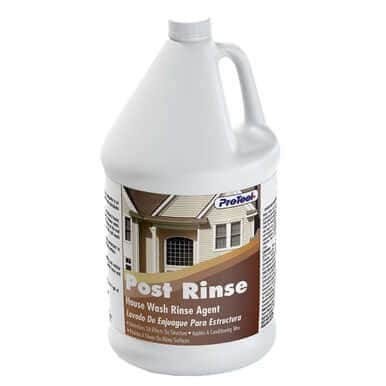
- Rinse thoroughly. High-volume, moderate-pressure rinse. Residual acid left on the surface will continue to react and can cause discoloration. Rinse until the surface pH normalizes. On sensitive jobs, follow up with ProTool Post Rinse to neutralize any remaining acid.
- Evaluate and repeat. Heavy secondary efflorescence may need a second application. Let the surface dry completely before judging results — wet masonry always looks clean.
Common Mistakes
- Skipping the pre-wet. The single most common cause of acid etching on hardscape cleaning jobs. The dry substrate pulls the acid deep into the pores where it does damage you can't see until the surface dries.
- Using muriatic acid on everything. Muriatic works, but it's a sledgehammer. On colored concrete, natural stone, or anything near landscaping, it creates more problems than it solves. Buffered products exist for a reason.
- Treating secondary efflorescence without addressing the moisture source. You can clean it perfectly, but it'll return in weeks. Document the moisture issue, communicate it to the client in writing, and recommend they address it before you seal.
- Sealing over active efflorescence. A sealer traps moisture and salts underneath, causing the sealer to peel, haze, or blister. The surface must be completely clean and dry — ideally verified with a moisture meter — before sealing.
- Wrong sprayer. Acid eats standard brass and steel fittings. Use a sprayer with Viton seals and poly or stainless internals. The Solo acid-resistant sprayer is built for this.
When to Seal After Cleaning
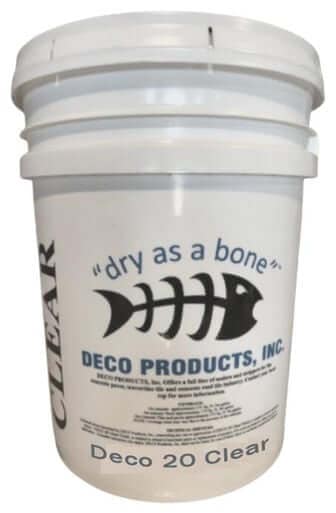
Sealing is the logical upsell after an efflorescence removal job — it reduces moisture migration and prevents recurrence. But timing matters. The surface must be fully dry (48–72 hours minimum in good conditions), and the efflorescence must be fully resolved. Applying a penetrating sealer like Deco 20 or a joint-stabilizing sealer from the paver sealing lineup locks out the moisture pathway that caused the problem.
On natural stone, use an impregnating sealer like StonePro Safeguard H2O — it's breathable, won't change the stone's appearance, and still blocks moisture intrusion.
Recommended Products at a Glance
| Scenario | Product | Why |
|---|---|---|
| Heavy efflorescence on brick/concrete | F9 EFFLO | Buffered acid, muriatic alternative, safe on most masonry |
| Maintenance-level concrete cleaning | F9 GroundsKeeper | Low-pH maintenance cleaner, won't over-strip |
| Light efflorescence, colored/stamped concrete | EBC Restorer | Acid-free, safe on decorative surfaces |
| Post-treatment neutralization | ProTool Post Rinse | Neutralizes residual acid, streak-free finish |
| Sealer — concrete and pavers | Deco 20 Matte Sealer | Penetrating, matte finish, moisture barrier |
| Sealer — natural stone | StonePro Safeguard H2O | Breathable impregnator, won't alter appearance |
| Acid-resistant sprayer | Solo 2-Gal Acid-Resistant Sprayer | Viton seals, HDPE tank, built for acid chemistry |
Pricing the Job
Efflorescence removal is a specialty service — price it like one. Most contractors charge per square foot, with rates varying by deposit severity, surface type, and access. A few guidelines:
- Light primary efflorescence on open flatwork: competitive with standard hardscape cleaning rates, since chemical cost is low and one pass usually resolves it.
- Heavy secondary efflorescence or acid-sensitive surfaces: 2–3× your standard rate. The chemical cost is higher, the labor is slower, and the liability is real.
- Bundle the sealer application. Cleaning without sealing on a secondary efflorescence job almost guarantees a callback. Quote both together and explain why.
Products Mentioned
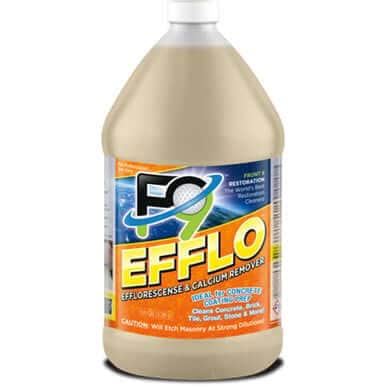 F9 Efflorescence/Calcium Remover Front9 Restoration SKU: 320-62M | 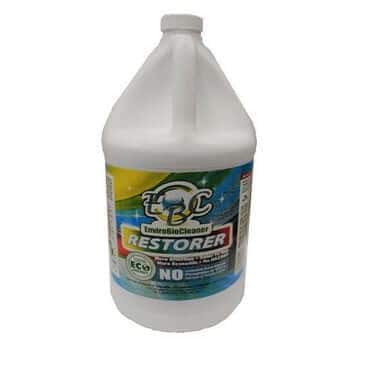 EBC Restorer SKU: 83-82M | 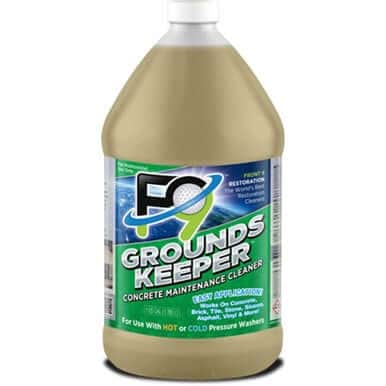 F9 GroundsKeeper Concrete Cleaner Gal SKU: 320-619 |
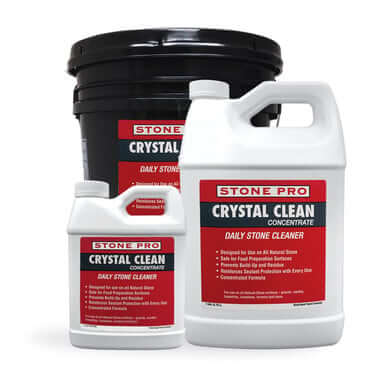 StonePro Crystal Clean SKU: 81-11M | 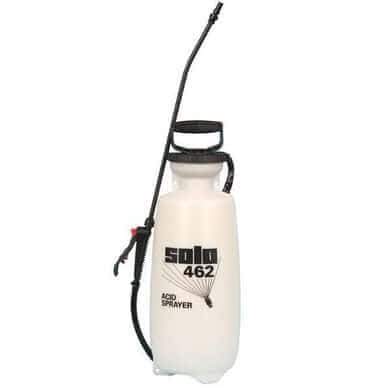 Pump Sprayer 2 Gal Acid Resistant Solo SKU: 515-045 | 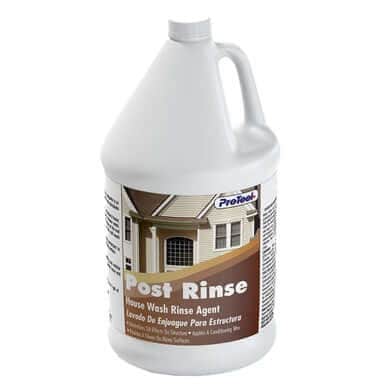 ProTool Post Rinse SKU: 83-03M |
 Deco 20 Clear Concrete Sealer Matte Finish SKU: 320-716 | 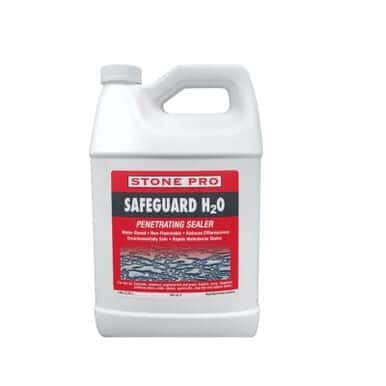 StonePro Safeguard H2O Sealer SKU: 81-1DM | Pump Sprayer 2 Gal Acid Resistant Solo SKU: 515-045 |