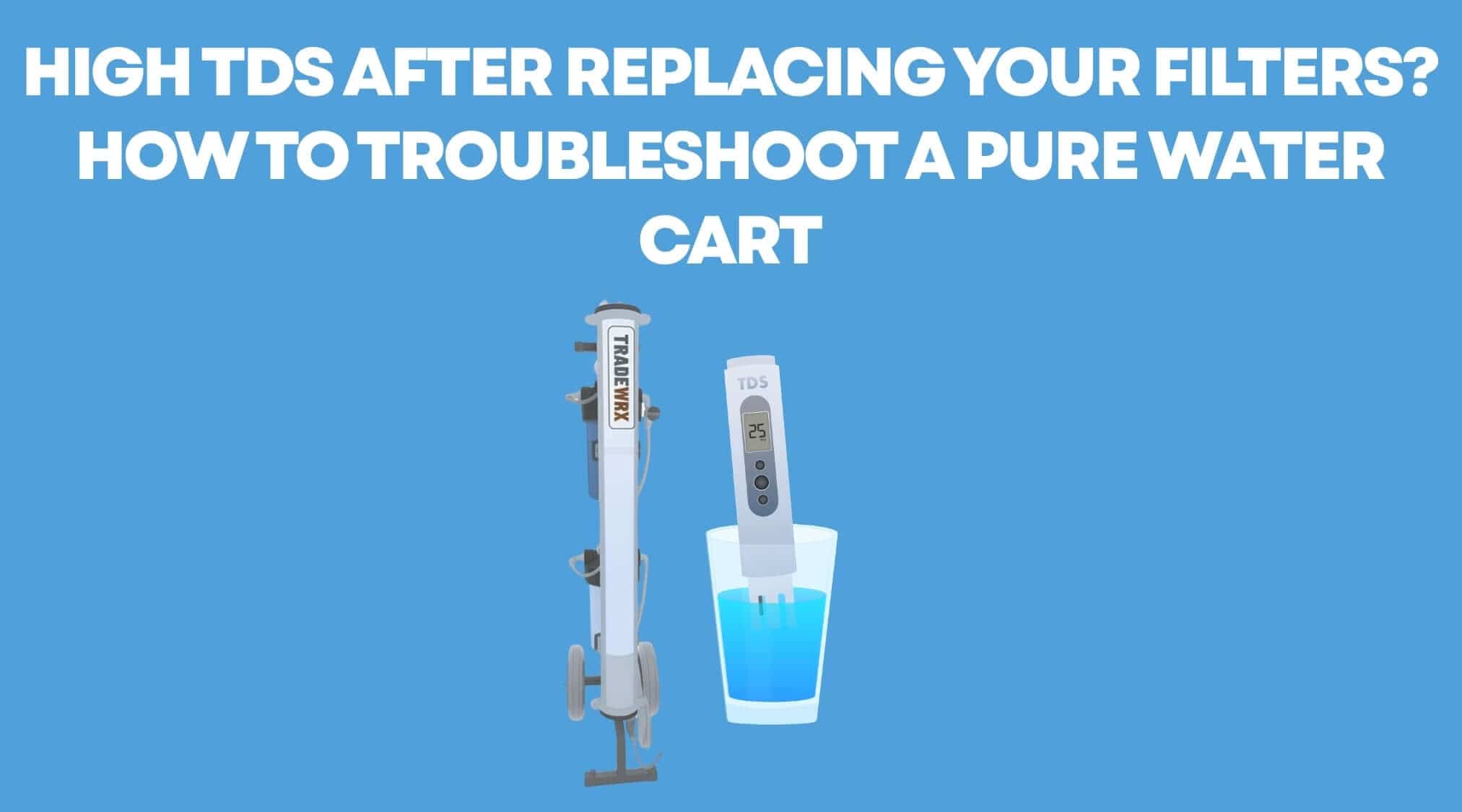
High TDS After Replacing Your Filters? How to Troubleshoot a Pure Water Cart

Table of Contents
- What If You Already Replaced the Carbon and DI Filters?
- Step 1: Check the TDS of Your Tap Water
- Step 2: Check the Water Coming Out of the RO Hose
- Step 3: Calculate Your RO Membrane's Performance
- What If the RO Membrane Is Bad?
- How Often Should an RO Membrane Be Replaced?
- Carbon vs. RO vs. DI: Which Filter Is the Problem?
- A Simple Troubleshooting Example
- Don't Guess—Test
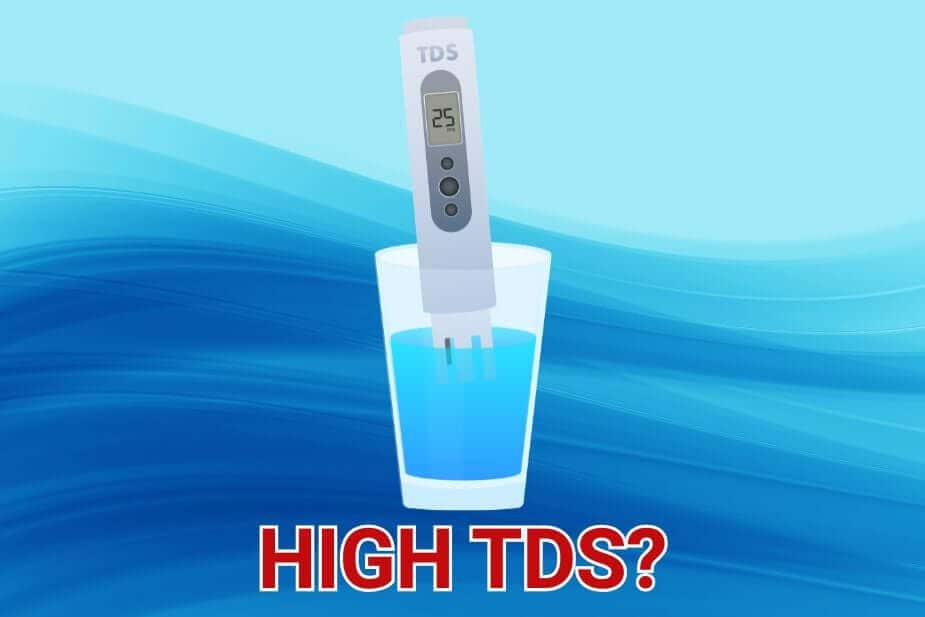
If your pure water cart is producing a higher-than-expected TDS (Total Dissolved Solids) reading, your first instinct may be to start replacing filters. But before replacing multiple components, it’s important to identify which stage of the filtration system is causing the problem to figure out how to troubleshoot a pure water cart.
A typical pure water cart uses three important filtration stages: Carbon, RO (Reverse Osmosis), and DI (Deionization). Each has a different job, and knowing how to troubleshoot them can save time, money, and unnecessary filter replacements.
What If You Already Replaced the Carbon and DI Filters?
Consider this common troubleshooting scenario:
You notice a high TDS reading from your pure water cart, so you replace both the carbon filter and DI filter. After running the system again, however, the output water is still showing a high reading.
At this point, don't immediately replace another DI filter. The next component to investigate is the RO membrane.
The best way to determine whether the RO membrane is doing its job is to compare the TDS of the incoming water with the TDS after the RO stage.
Step 1: Check the TDS of Your Tap Water
TDS Handheld Meter TDS-2
$12.10
TDS Handheld TDS MeterThe TDS Handheld TDS Meter is a pen-style instrument designed for accurate water quality testing. Featuring a digital processor, this meter ensures… read more
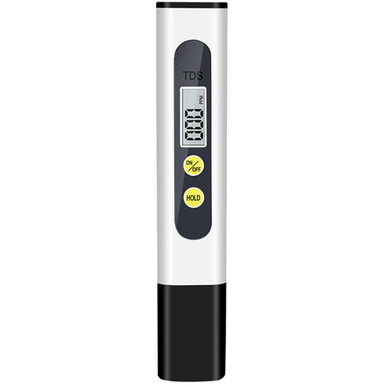
Start by taking a TDS reading directly from the building or tap water supplying the pure water cart.
This gives you your incoming TDS and establishes a baseline.
For example, if your tap water measures:
Tap Water TDS: 400 ppm
You'll use that number to determine how effectively the RO membrane is removing dissolved solids.
Step 2: Check the Water Coming Out of the RO Hose
Next, take a TDS reading from the water coming out of the hose after it has passed through the RO membrane but before the DI stage, when possible.
A properly functioning RO membrane should remove approximately 90% of the TDS from the incoming water.
In other words, the RO output should be approximately 10% or less of the incoming tap-water TDS.
Using our example:
Tap Water: 400 ppm
Expected RO Output: Approximately 40 ppm or less
That's about a 90% reduction in TDS.
Quick Tip: You're looking for approximately 90% TDS rejection—not an RO output reading that is 90% of the tap-water reading.
Step 3: Calculate Your RO Membrane's Performance
You can calculate the RO membrane's rejection rate with this simple formula:
RO Rejection % = [(Tap TDS − RO TDS) ÷ Tap TDS] × 100
For example, if your tap water measures 400 ppm and the RO output measures 35 ppm:
[(400 − 35) ÷ 400] × 100 = 91.25%
In this example, the RO membrane is performing as expected.
But suppose your tap water is 400 ppm and the RO output is 150 ppm:
[(400 − 150) ÷ 400] × 100 = 62.5%
That's well below the approximately 90% rejection you're looking for and is a strong indication that the RO membrane needs to be replaced.
What If the RO Membrane Is Bad?
If testing confirms that the RO membrane is no longer effectively reducing TDS, replace the RO membrane.
You should also replace the DI filter/resin if water from the failing RO membrane has already been run through it.
Why?
The RO membrane is responsible for removing the majority of dissolved solids before the water reaches the DI stage. When the RO membrane isn't working properly, the DI media has to handle a much heavier contaminant load than it normally would.
That can exhaust a new DI filter much faster than expected.
So, even if you recently replaced the DI filter, running high-TDS water from a faulty RO membrane through it may mean the DI media should be replaced again after the RO issue is corrected.
How Often Should an RO Membrane Be Replaced?
As a general guideline, RO membranes should be replaced approximately every 3–5 years.
Actual membrane life can vary depending on several factors, including:
- Incoming water quality
- How frequently the pure water cart is used
- Proper carbon-filter maintenance
- Storage and maintenance practices
- The amount of dissolved solids the system processes
Rather than relying solely on the age of the membrane, periodically checking its TDS rejection rate is a great way to monitor its condition.
Carbon vs. RO vs. DI: Which Filter Is the Problem?
Think of the three filtration stages as a team.
Carbon Filter: Helps remove chlorine and other contaminants before they reach the RO membrane. This is especially important because chlorine can damage an RO membrane over time.
RO Membrane: Does the heavy lifting by removing the majority of dissolved solids from the incoming water. A healthy membrane should provide roughly 90% TDS rejection.
DI Filter: Provides the final polishing stage, removing the remaining dissolved ions to produce extremely low-TDS water.
When troubleshooting high output TDS, testing the water at different stages helps you identify the actual problem instead of simply replacing filters until the reading improves.
A Simple Troubleshooting Example
Let's say you've already replaced the carbon and DI filters, but your final water output is still reading high.
Your troubleshooting process would look like this:
- Measure the building/tap-water TDS.
- Measure the TDS after the RO membrane.
- Compare the two readings.
- Look for approximately 90% TDS rejection from the RO membrane.
- If the RO membrane isn't achieving that reduction, replace the RO membrane.
- If the faulty RO membrane has already been feeding water through the DI stage, replace the DI media as well.
- Run the system and verify that the final output TDS is back within the desired range.
Don't Guess—Test
A high TDS reading doesn't automatically mean the DI filter is bad. And replacing a carbon and DI filter won't solve the problem if the RO membrane is no longer performing properly.
By taking just two key measurements—the incoming tap-water TDS and the RO-output TDS—you can quickly determine whether the RO membrane is doing its job.
Regular testing also helps you catch a declining RO membrane before it prematurely exhausts your DI media, keeping your pure water cart operating efficiently and helping you get the most life out of every filtration stage.