How to Clean Solar Panels from the Ground with Water Fed Poles
Table of Contents
Most solar professionals have figured out what roofers learned the hard way: the safest vantage point is the one where you can't fall off anything. Learning how to clean solar panels from the ground eliminates the single largest liability on a solar maintenance route — the ladder and the roof walk — while actually increasing throughput. A light dust film cuts energy production by up to 25%, which means professional cleaning isn't optional for any commercial or residential array owner who cares about ROI.
This guide covers the equipment, water chemistry, and repeatable workflow that separate a profitable ground-based solar cleaning operation from a guy with a garden hose and good intentions.
Why Ground-Based Cleaning Replaced Roof Access
Field data from 2025 shows ground-based cleaning runs roughly 30% faster than roof-walking methods. No ladder haul, no anchor setup, no repositioning every three panels. A single technician services more sites per day, and the client's array stays intact — walking on panels causes micro-cracks invisible to the eye but measurable in degraded output and voided manufacturer warranties.
The insurance math is just as compelling. A no-climb approach can knock 15% off workers' comp premiums. For a small operation running two or three crews, that savings alone can fund a water fed pole upgrade inside a year.
The ROI of Regular Cleaning
Soiling losses hit 25% in high-particulate environments — coastal salt spray, agricultural dust, urban smog. On a standard 10kW residential system, that translates to hundreds of dollars in wasted energy annually. Quarterly cleaning in those zones isn't aggressive; it's the minimum frequency to hold peak production.
Safety and Liability
OSHA scrutiny on ladder safety and fall protection keeps tightening for small businesses. Ground-based cleaning with a water fed pole virtually eliminates catastrophic fall risk, which protects the business owner from the liability that a single roof-based accident can create.
Pure Water: The Only Cleaning Agent That Matters
Tap water is the fastest way to lose a solar maintenance contract. Municipal water carries dissolved calcium and magnesium that bond to glass after evaporation, creating white scaling that blocks sunlight and drops production 15–25% within a single season.
Pure water — processed to zero Total Dissolved Solids — is chemically aggressive in a useful way. Stripped of minerals, it actively attracts and suspends dirt, bird droppings, and pollen without soap. Verify output with a TDS meter before every job. Anything above 10 ppm leaves spots. Zero ppm means no squeegeeing, no callbacks.
RO/DI Systems
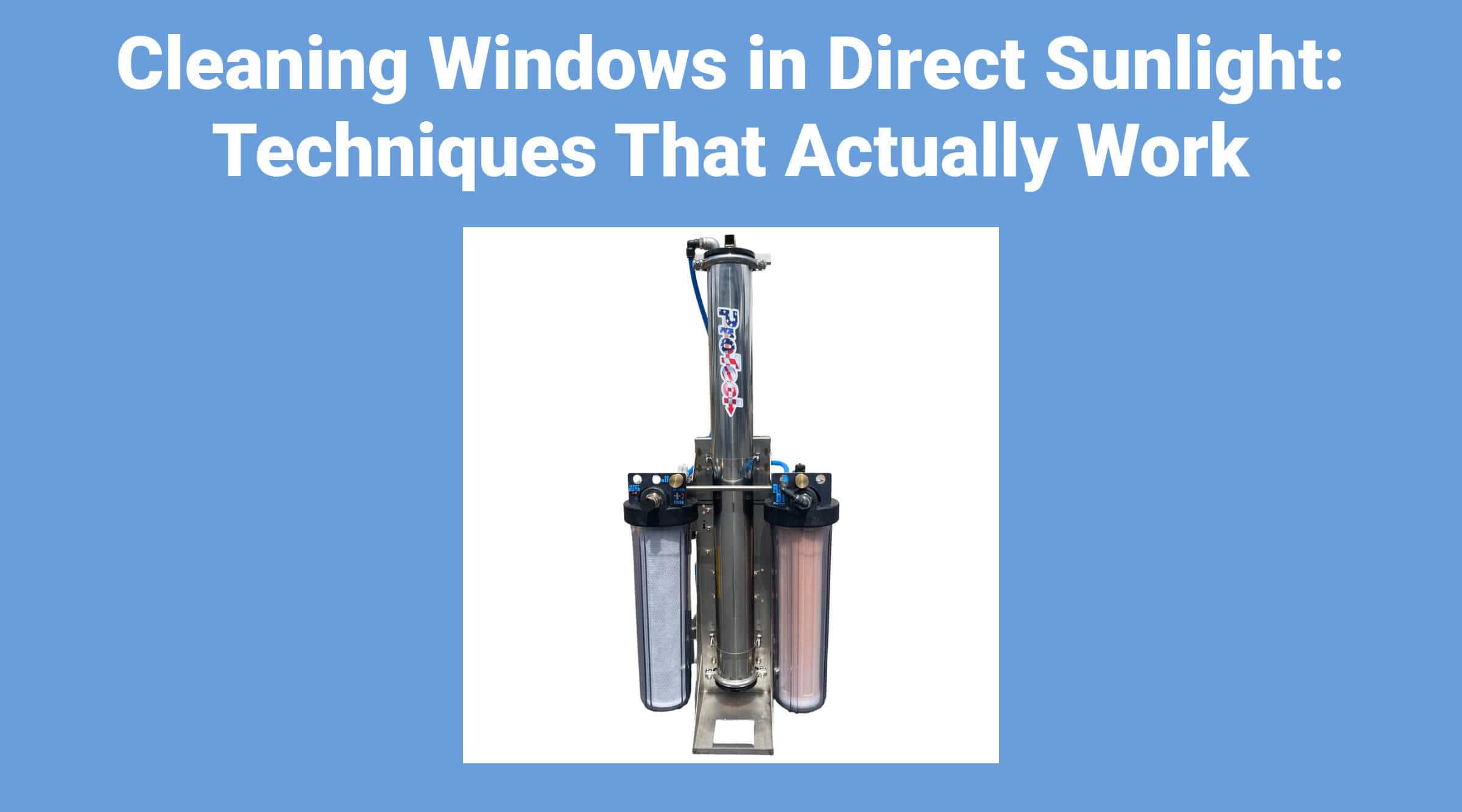
Reverse Osmosis membranes handle the heavy lifting, stripping roughly 95% of impurities through high-pressure filtration. Deionization resin polishes the remaining dissolved solids to zero. For small residential jobs, a portable ProTool DI tank is often sufficient. Larger commercial routes need a multi-stage RO/DI system — something like a ProTool HiFlo Pure Water Cart — to handle higher volumes economically and protect expensive DI resin from premature exhaustion.
Why Soap Hurts More Than It Helps
Soap leaves a microscopic sticky film that accelerates re-soiling — panels cleaned with detergent get dirty roughly 30% faster than those cleaned with pure water alone. Modern panels also use sensitive Anti-Reflective Coatings (ARC) that harsh chemicals can etch, permanently reducing light absorption. Pure water is the only cleaning agent that protects the panel and produces zero chemical runoff.
Choosing the Right Equipment
Standard window cleaning poles lack the stiffness for solar work. At full extension on a two-story array, a soft pole bows under its own weight and you lose brush contact where it matters most — the center of the panel. The goal is rigidity at reach.
Water Fed Poles
For reach beyond 30 feet, high-modulus carbon fiber is the professional standard. It delivers roughly 25% more stiffness than standard carbon fiber, preventing the pole whip that makes controlling a brush head at full extension miserable. The Gardiner X3 Xtreme and ProTool Apex Hi-Mod lines are built for this work. Hybrid carbon-fiberglass poles are cost-effective but best reserved for heights under 20 feet.
The gooseneck is the most critical adjustment point. A 10–12 inch adjustable gooseneck lets the brush sit flat on the glass even when you're standing 15 feet back from the eave. For high-volume solar routes, internal tubing is the way to go — it prevents the hose from catching on panel frames or mounting bolts, eliminating delays and equipment damage during long shifts.
Solar Brushes and Rinse Bars
Standard window cleaning brushes will scratch anti-reflective coatings. Dual-trim solar brushes — longer outer bristles to glide over the frame, shorter inner bristles for scrubbing — are purpose-built for the job. Boar hair excels on heavy organic soil; nylon handles general maintenance. A ProTool 24in Solar Brush covers ground fast on residential arrays.
Rinse bars increase cleaning speed by about 30%. They deliver constant water flow across the full brush width, flushing debris instantly instead of relying on two or four small pencil jets. Fan jets give wider coverage for the final rinse; pencil jets provide the concentrated stream needed to dislodge baked-on bird droppings.
The Professional Ground-Level Workflow
Before water touches glass, perform a visual pre-inspection. Identify micro-cracks, hotspots, or loose wiring. Adding water to a damaged cell can cause an electrical short or cascade failure across a panel string. Once the system checks out, sweep away loose dust and heavy debris with a dry brush. This dry-brush step prevents mud-smearing and saves roughly 20% of your pure water supply by cutting agitation time.
Setup
Test source water TDS with a handheld meter. If the reading exceeds 50 ppm, verify your RO/DI system output is at or near 0 ppm before starting. Lay hoses in a wide arc to prevent tripping and allow free pole movement. Scan the area for overhead power lines — maintain a minimum 10-foot clearance from electrical hazards when using carbon fiber poles.
Agitation and Rinsing
Move the brush head in vertical strokes, overlapping each pass by 50% to prevent streaks. For stubborn bird strikes or lichen, switch to a specialized solar scrub pad that provides friction without scratching tempered glass. Watch the water sheet off the panel — if it breaks or beads unevenly, the surface isn't clean. A continuous, unbroken film of water sheeting off the glass confirms a residue-free finish.
Post-Cleaning Verification
View the array from at least two angles to catch ghosting or missed spots that only show in certain light. For data-driven confirmation, check the system inverter — a proper cleaning typically produces a 5–15% bump in energy production immediately. Flush your RO membranes with tap water after teardown and store poles in a protective rack to prevent carbon fiber fatigue during transport.
Equipment Maintenance and Route Efficiency
RO membranes need replacement every 24–36 months. DI resin should be swapped once your inline TDS meter reads above 10 ppm. Running spent resin leaves mineral deposits that actually reduce panel output over time — the opposite of what you were hired to do.
Wipe down each carbon fiber section with a microfiber cloth after every job. Grit trapped between sections acts like sandpaper, wearing material thin and causing sections to jam. If you notice friction, apply a PTFE-based dry lubricant to the collars. Coil hoses loosely to prevent kinks and store everything climate-controlled to block algae growth inside lines and protect RO membranes from freezing.
Crew Optimization
A two-person crew increases productivity roughly 45% over solo operators. One technician manages the pole; the second handles hose management and system monitoring. Schedule jobs before 10 AM or after 4 PM — cleaning during peak sun risks thermal shock to the glass and causes water to flash-dry, leaving streaks. Price residential visits at a $150 minimum. For larger arrays, quote $7–$12 per panel or $15–$25 per kilowatt depending on soil level and access difficulty.
Troubleshooting
Spotting on glass usually means TDS has crept up or rinsing was inadequate — check your meter immediately. Low flow at the brush head typically traces back to source pressure below 40 PSI; a booster pump solves that on sites with weak municipal supply. Pole whip above 35 feet means you need a high-modulus carbon upgrade. Managing weight at full extension requires a staggered stance and using core muscles rather than arms to guide the brush across the glass.
Products Mentioned
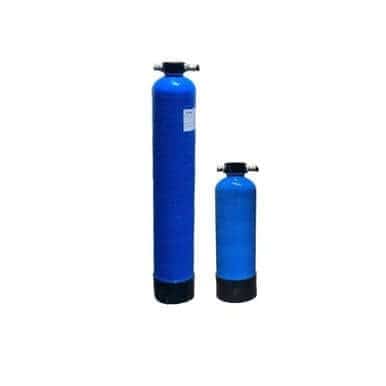 ProTool DI Tank with Virgin Resin SKU: 150-011M | 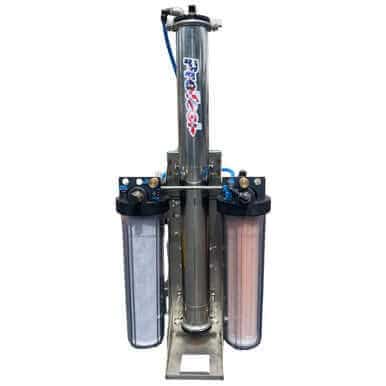 ProTool HiFlo Pure Water Cart Stainless Steel SKU: 150-0521 | 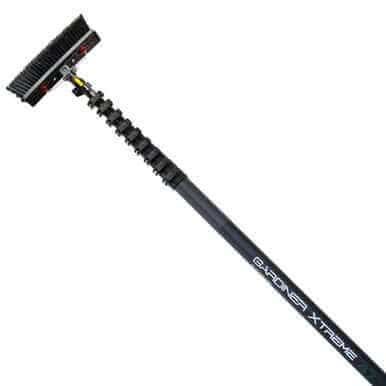 Gardiner X3 Xtreme 47ft High Modulus Carbon Pole SKU: 155-547 |
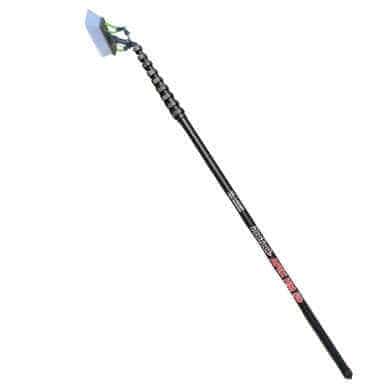 ProTool Apex Hi-Mod Carbon Fiber Pole SKU: 151-3502 | 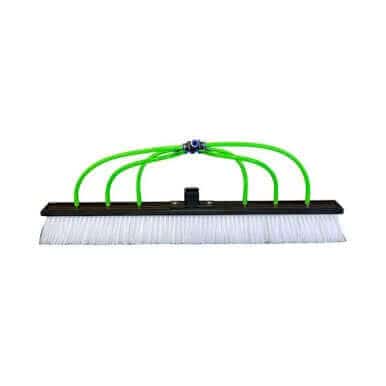 24in Solar Brush White Bristle SKU: 159-300M | 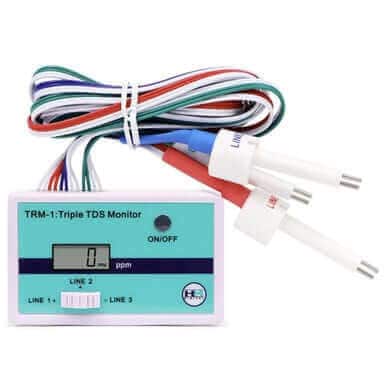 TDS Inline MeterTriple 1/4in Probes SKU: 150-017 |
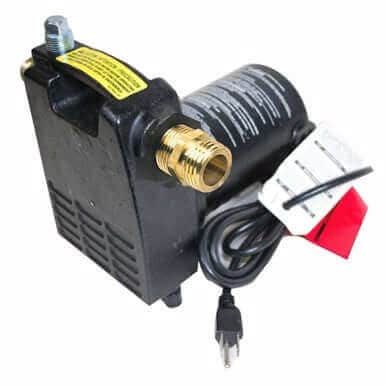 Pump 110v Boost Water Pressure add 40psi SKU: 150-0602 |