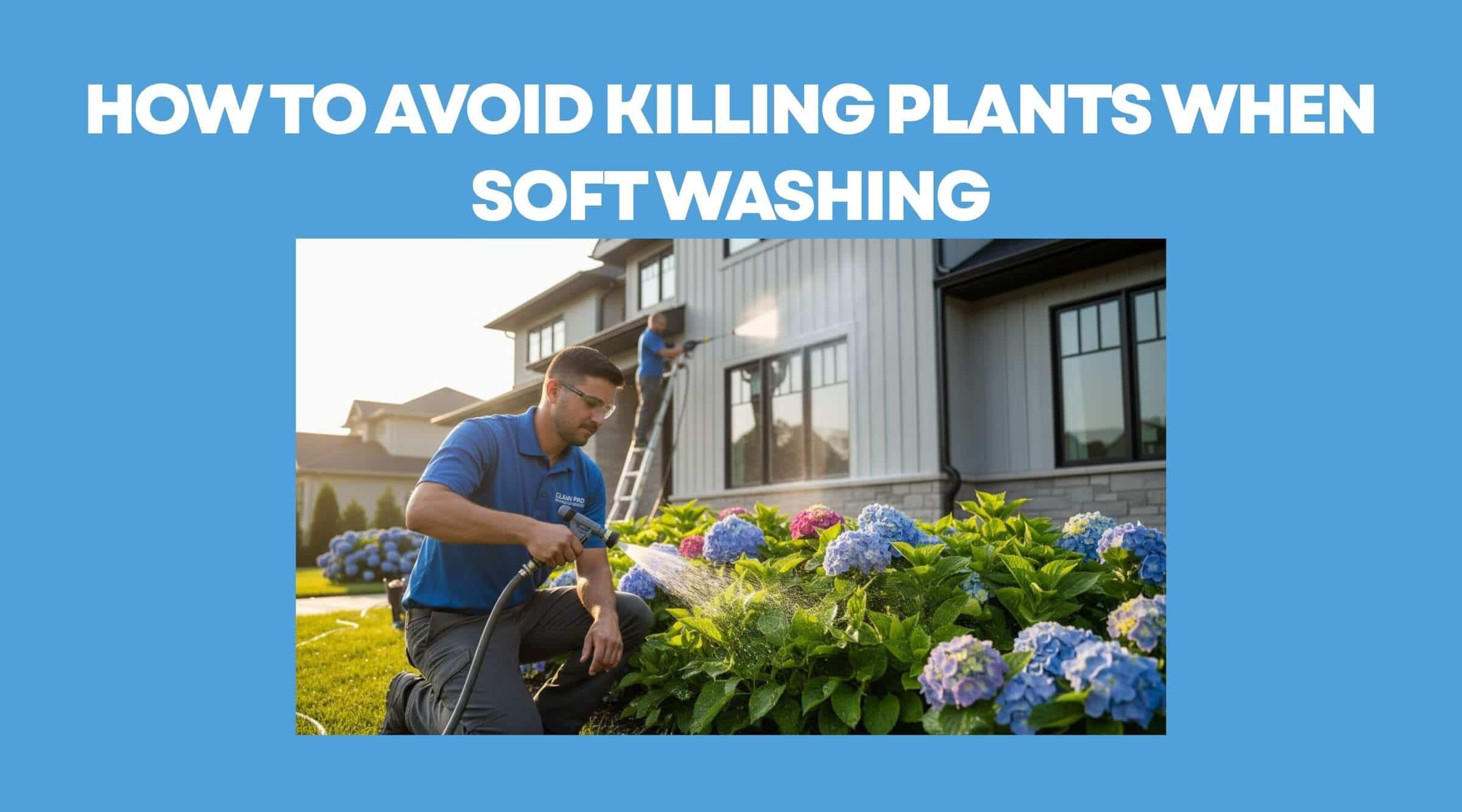
How to Avoid Killing Plants When Soft Washing
Table of Contents
- Key Takeaways
- The Science of Soft Wash Damage: Why Plants Die
- The Role of Surfactants in Landscape Risk
- The Triple-R Protocol: Rinse, Rinse, and Rinse Again
- Beyond Tarps: Professional Plant Protection Equipment
- Chemical Neutralization: Your Best Insurance Policy
- Mastering Your Mix: Control Prevents Damage
- Building a Plant-Safe Soft Washing System
- The Bottom Line
- Better Chemical Control Starts with the Right Equipment
- FAQs
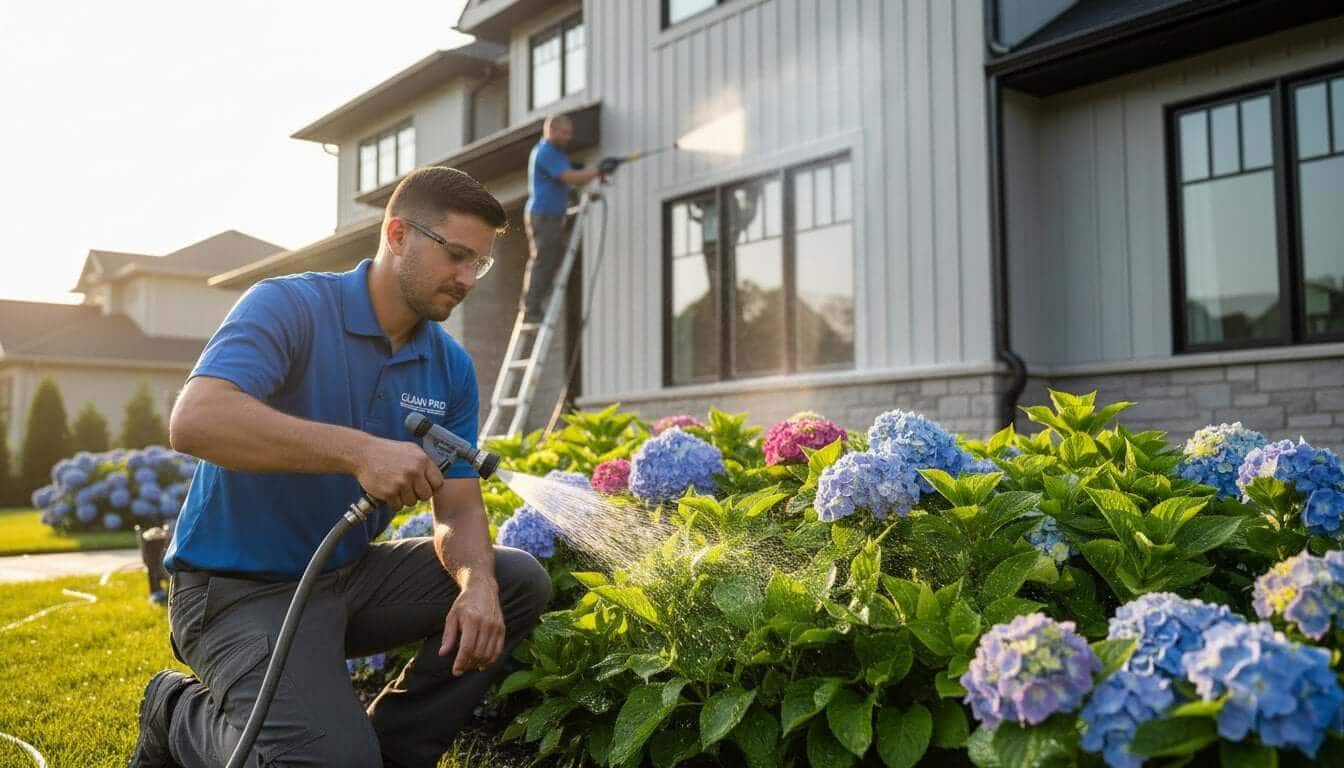
A single dead Japanese Maple can cost a contractor over $1,500 in replacement fees—and leave you with a one-star review that lingers for years. While sodium hypochlorite (SH) is the industry standard for removing organic growth, it remains one of the biggest liabilities on any job site. Mastering how to avoid killing plants when soft washing isn’t optional—it’s the difference between scaling your business safely or dealing with constant damage claims.
Beyond the financial cost, plant damage can harm your reputation in ways that are difficult to recover from. Homeowners invest heavily in their landscaping, often valuing it just as much as the structure itself. A clean exterior means very little if it comes at the expense of prized plants, shrubs, or trees. That’s why understanding how to avoid killing plants when soft washing is a core skill for any serious contractor.
This guide breaks down the professional systems, chemistry, and equipment needed to protect landscaping while delivering high-quality results—and ultimately shows you how to avoid killing plants when soft washing on every job.
Key Takeaways
- Sodium hypochlorite (SH) is highly effective—but also highly reactive with plant life
- The “Triple-R Protocol” (Rinse before, during, and after) is essential
- Proper neutralization—not just rinsing—is critical to preventing damage
- Professional-grade rinse agents and neutralizers significantly reduce plant mortality
The Science of Soft Wash Damage: Why Plants Die
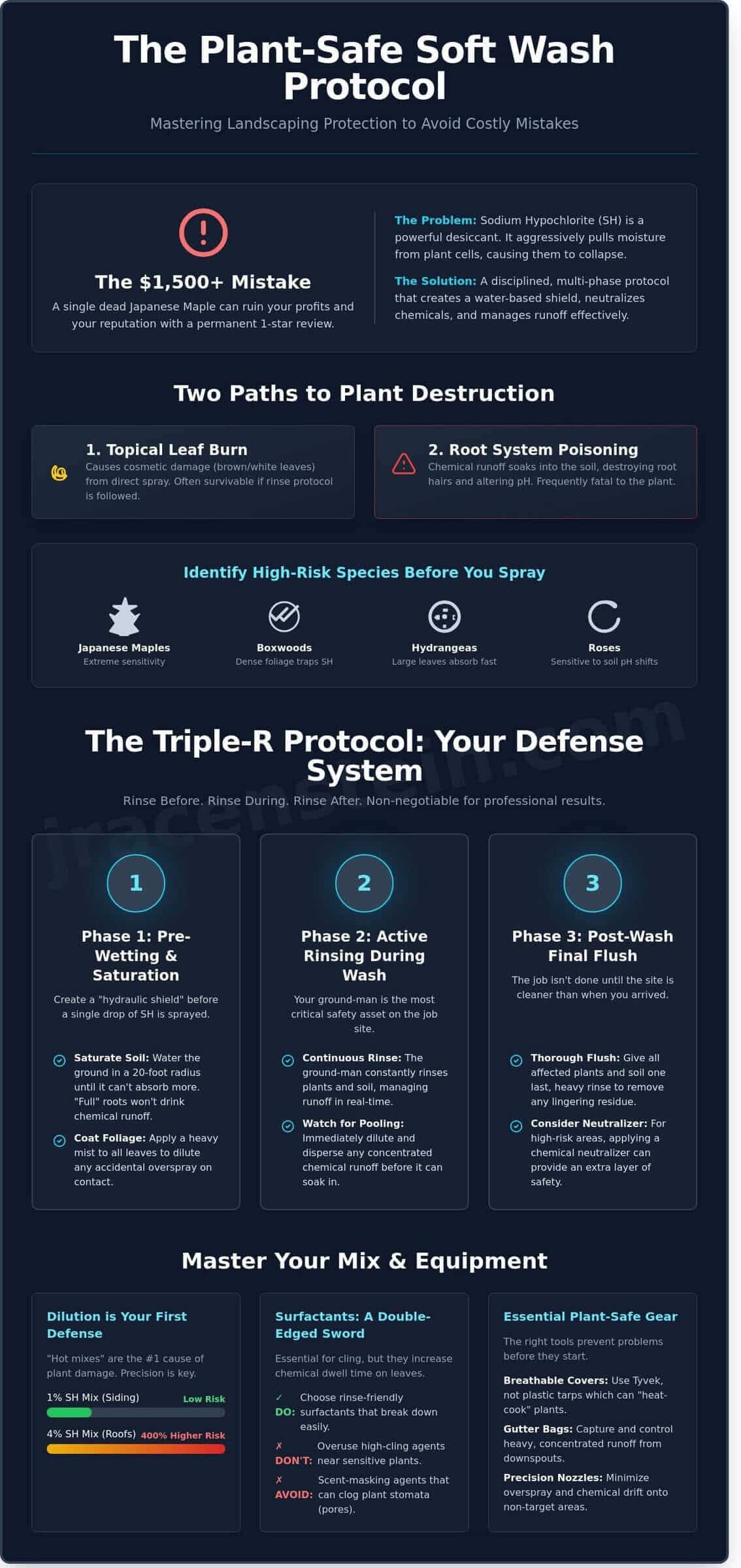
Soft washing relies on SH to eliminate mold and algae, but it acts as a powerful desiccant, pulling moisture from plant cells and causing rapid damage. At a cellular level, SH disrupts plant tissue by breaking down proteins and damaging cell membranes. This leads to dehydration, discoloration, and ultimately plant death if exposure is significant.
Understanding this process is critical if you want to truly learn how to avoid killing plants when soft washing, because prevention starts with knowing exactly how damage occurs.
Damage occurs in two stages:
Leaf burn from direct contact
This is the most immediate and visible form of damage. Leaves may show spotting, browning, or curling within hours of exposure.
Root system poisoning from chemical runoff entering the soil
This is more dangerous because it’s less obvious. Runoff can alter soil chemistry, damage root systems, and lead to delayed plant death days or even weeks after the job is complete.
Certain plants are especially vulnerable:
- Japanese Maples
- Boxwoods
- Hydrangeas
- Roses
Even small amounts of runoff can disrupt soil pH and destroy root structures. Plants with shallow root systems or delicate leaves are particularly at risk, which is why professionals prioritize how to avoid killing plants when soft washing from the start.
The Role of Surfactants in Landscape Risk
Surfactants improve dwell time and cleaning performance—but they also increase risk to plants by helping chemicals stick to leaves. This “sticking power” is great for removing algae and mildew, but it also means the solution doesn’t rinse off as easily.
Additionally, some surfactants can create a film on plant surfaces, prolonging exposure even after rinsing. This makes it even more important to follow best practices if your goal is how to avoid killing plants when soft washing.
That’s why professionals must balance performance with rinse-ability and follow strict rinsing protocols. The goal is always maximum cleaning efficiency with minimum environmental impact.
The Triple-R Protocol: Rinse, Rinse, and Rinse Again
Professional soft washing isn’t just about applying chemicals—it’s about controlling where they go and how long they stay active. The Triple-R Protocol is the foundation of how to avoid killing plants when soft washing.
Phase 1: Pre-Wetting and Saturation
Before any chemical is applied, saturate all nearby soil and vegetation. This step is often rushed or skipped by inexperienced contractors—but it’s one of the most important.
Dry soil acts like a sponge and will absorb SH runoff directly into the root zone. Pre-wetting ensures the roots are already hydrated and less likely to take in harmful chemicals. It also creates a dilution buffer, reducing the concentration of any runoff that reaches the soil.
Phase 2: Active Mitigation During the Wash
A dedicated ground-man should continuously rinse plants and manage runoff during application. This isn’t optional on professional crews—it’s a standard role.
This creates a water barrier that dilutes any chemical contact before it can cause damage. Continuous rinsing also prevents buildup, which is often what leads to burns and long-term issues.
Phase 3: Final Rinse and Neutralization (Critical Step Most Contractors Miss)
Here’s where most contractors make a costly mistake:
Water alone does not fully neutralize SH or remove detergent residue.
Residual chemicals can remain on leaves, soil, glass, and surfaces—continuing to cause damage even after the job is “done.” This is why callbacks and complaints often happen days later, especially when contractors don’t fully understand how to avoid killing plants when soft washing.
This is why professionals use a dedicated rinse agent and neutralizer like ProTool Post Rinse.
ProTool Post Rinse serves as the final protective step in your soft wash process by:
- Neutralizing leftover chemical and detergent residue
- Preventing water spots and streaking on windows, siding, and trim
- Breaking down hard water minerals that can damage surfaces
- Helping surfaces dry faster with a clean, polished finish
Its pH-balanced, biodegradable formula makes it safe for use around plants, pets, and delicate materials—making it ideal as both a surface rinse and post-cleaning neutralizer.
Instead of relying on water alone, adding ProTool Post Rinse through your injector system ensures:
- Less chemical residue left in soil and on foliage
- Reduced risk of delayed plant burn
- A visibly higher-quality finish for the customer
This is especially important around:
- Downspouts and drip lines (where runoff concentrates)
- Decorative landscaping and high-value plants
- Glass, painted surfaces, and metal fixtures
Using a proper rinse agent is one of the most effective ways to master how to avoid killing plants when soft washing while also improving the final appearance of the job.
ProTool Post Rinse
$25.30
ProTool Post Rinse – The Ultimate Solution for a Spotless, Streak-Free FinishAchieve professional-grade cleaning results with ProTool Post Rinse, the essential finishing touch for any… read more

Beyond Tarps: Professional Plant Protection Equipment
Plastic tarps can actually harm plants by trapping heat and moisture, essentially creating a greenhouse effect that can stress or kill vegetation.
Professional alternatives like Tyvek or breathable landscape fabric allow airflow while still protecting from overspray. These materials shield plants without suffocating them, making them a safer choice for longer jobs.
Other critical tools include:
- Gutter bag systems to capture chemical runoff
- Dedicated rinse lines for continuous watering
- Neutralizer application systems for post-wash protection
Using the right equipment is another key part of how to avoid killing plants when soft washing consistently across different job types.
Chemical Neutralization: Your Best Insurance Policy
Chemical neutralization is the step that separates amateurs from professionals. It’s not just an added precaution—it’s a necessity for long-term protection.
Using a dedicated neutralizer like ProTool Post Rinse after cleaning helps:
- Break down residual SH into safer compounds
- Restore surface balance after cleaning
- Prevent long-term damage to plants and materials
Even small amounts of leftover chemical can cause delayed damage—neutralization ensures the job is truly complete and reinforces your process for how to avoid killing plants when soft washing.
Mastering Your Mix: Control Prevents Damage
Improper chemical strength is one of the biggest causes of plant damage. More isn’t better—stronger mixes increase risk exponentially without improving results.
Recommended ranges:
- Siding: 0.5%–1.5% SH
- Roofs: 3%–4% SH (max)
Precision application and controlled droplet size help prevent drift and overspray. Using the right nozzles and maintaining proper pressure ensures your solution goes exactly where it’s needed—and nowhere else.
Dialing in your mix is a foundational part of how to avoid killing plants when soft washing at a professional level.
Building a Plant-Safe Soft Washing System
A professional system includes:
- Low-pressure pumps (50–100 PSI)
- High-flow rinse capability (7–10 GPM)
- Gutter bags for runoff control
- A dedicated neutralizer/rinse tank
Adding a rinse agent like ProTool Post Rinse into your system ensures every job ends with proper neutralization—not just rinsing. This systemized approach is essential if you want to scale while maintaining how to avoid killing plants when soft washing across every project.
The Bottom Line
Soft washing shouldn’t put your customer’s landscaping at risk.
By combining:
- Proper dilution ratios
- The Triple-R Protocol
- Controlled application
- And a professional neutralizer like ProTool Post Rinse
…you can eliminate plant damage, reduce liability, and deliver a higher-quality finished result.
The difference between a good contractor and a great one isn’t just how well they clean—it’s how well they protect everything around the job—and how well they understand how to avoid killing plants when soft washing every single time.
Better Chemical Control Starts with the Right Equipment
Protecting landscaping during soft washing isn't just about the chemicals you use. It's also about controlling how those chemicals are mixed, applied, and rinsed away.
ProTool designs professional soft washing systems with integrated chemical metering, dedicated application equipment, and organized plumbing to help contractors manage their cleaning process more consistently. Properly configured systems make it easier to adjust chemical concentrations for different surfaces and incorporate clean-water rinsing into the workflow.
Explore ProTool's soft washing skids and trailers to see how chemical management and equipment design come together in a complete professional cleaning system.
FAQs
Is it possible to soft wash a roof without killing the grass below?
Yes, you can safely clean a roof without damaging the turf by following a strict hydration protocol. Professionals use a three-step process: pre-wetting the grass, constant rinsing during the application, and a final flush. This ensures the Sodium Hypochlorite (SH) is diluted to a safe 1% or lower concentration before it reaches the root system. For more technical details, see our J. Racenstein guide on professional-grade sprayer settings.
Does sodium hypochlorite (SH) stay in the soil forever?
Sodium Hypochlorite doesn't remain in the soil indefinitely because it rapidly decomposes into salt, water, and oxygen. On a typical 75 degree day with direct sunlight, SH loses half its strength in less than 24 hours. While the salt remains, it only poses a risk if you don't use enough water to move it past the root zone. Understanding this chemical breakdown is key to learning how to avoid killing plants when soft washing.
How long should I rinse plants after soft washing is complete?
You should rinse all surrounding vegetation for a minimum of 10 minutes once the cleaning application is finished. This final rinse ensures that any mist or overspray that settled on the leaves is completely removed. Use a high-volume, low-pressure rinse tip to saturate the soil at the base of the house. This practice is a fundamental part of the professional protocol for how to avoid killing plants when soft washing.
Can I use a pressure washer to rinse plants, or is the pressure too high?
Don't use high pressure to rinse plants as anything over 100 PSI can strip the protective waxy cuticle from the leaves. Use a dedicated rinse tool or a wide-degree nozzle that provides high water volume at low velocity. This approach protects the plant's structural integrity while effectively flushing the chemical away. High-volume rinsing is more effective than high-pressure spraying for chemical removal.
Are "green" or "eco-friendly" soft wash chemicals actually safer for plants?
Eco-friendly chemicals are often safer but they're not foolproof and still require proper handling. Many of these solutions use oxygen-based bleaches or surfactants that are biodegradable within 28 days according to OECD standards. However, at high concentrations, they can still cause leaf burn or soil pH imbalances. Always review the Safety Data Sheet (SDS) for any product you use on a job site.