What Is Soft Washing? A Guide to Low-Pressure Cleaning
Table of Contents
- Soft Washing vs. Pressure Washing: The Core Difference
- The Science of Soft Washing: How the Chemicals Work
- Key Applications: Where Professionals Use Soft Washing
- Essential Equipment for a Professional Soft Wash System
- Safety First: Professional Soft Washing Protocols
- Elevate Your Business with Professional Soft Washing
-
- FAQs
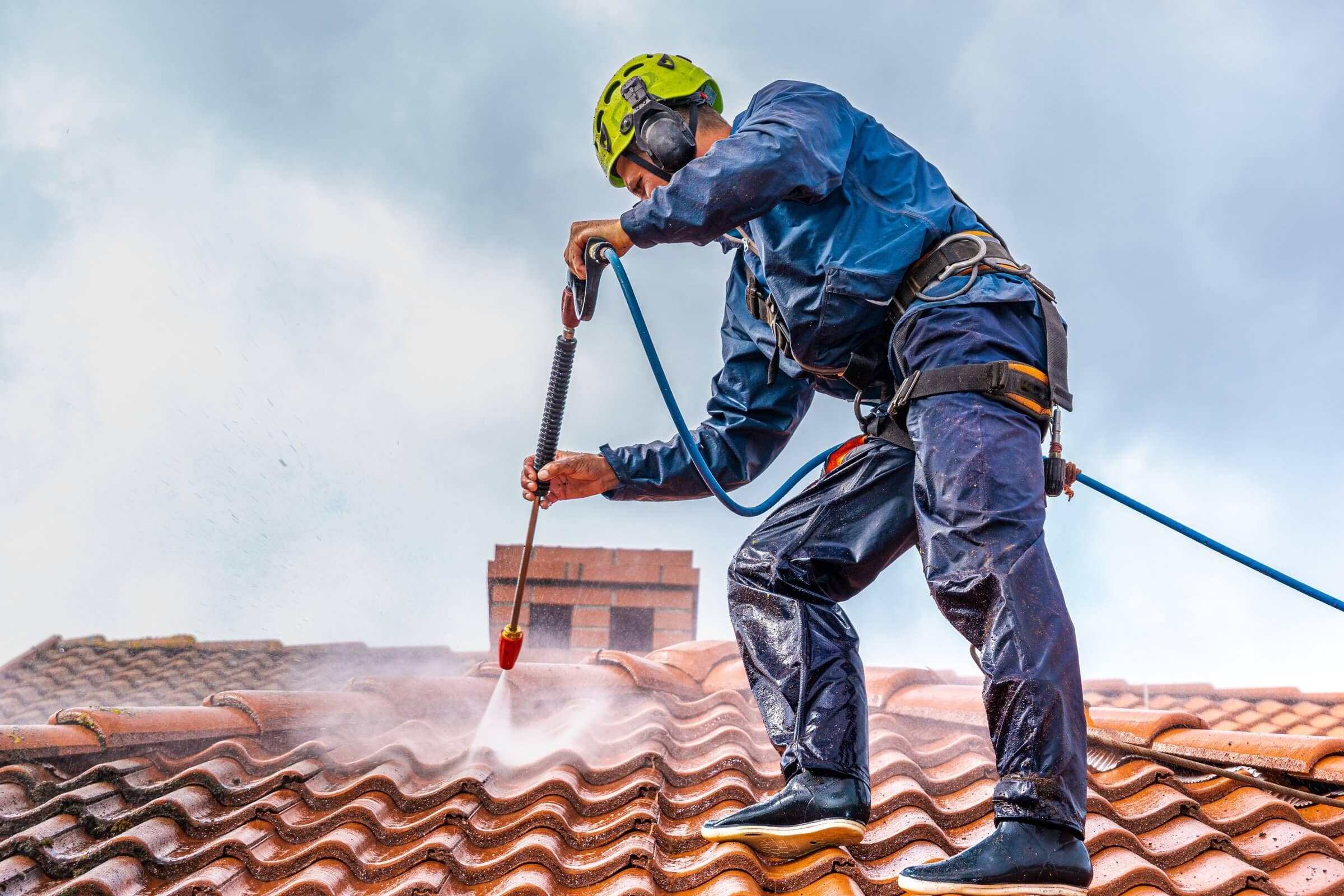
For any exterior cleaning professional, the risk of causing damage with high pressure is a constant concern. Blasting away dirt is one thing, but stripping paint, etching wood, or damaging delicate roof shingles is a costly mistake that undermines your credibility. When faced with vinyl siding, asphalt roofing, or stucco, high PSI is often the wrong tool for the job. This is where soft washing becomes an essential, high-performance technique in your professional toolkit. It’s the proven method that leverages specialized cleaning solutions and low-pressure delivery to eradicate algae, mildew, and grime without harming the underlying surface.
This professional’s guide provides the direct, no-nonsense answers you need to master this service. We will break down the fundamental differences between soft washing and pressure washing, helping you identify exactly which jobs require this low-pressure approach. You’ll gain the confidence to explain its benefits to clients and get a comprehensive checklist of the essential, professional-grade equipment and chemical solutions needed to get started. Consider this your roadmap to performing the service safely, effectively, and profitably, adding a versatile and in-demand skill to your business.
Soft Washing vs. Pressure Washing: The Core Difference
The fundamental distinction between soft washing and pressure washing lies not just in the equipment, but in the core methodology. Pressure washing relies on high-velocity water streams to physically blast away dirt, grime, and surface contaminants. In contrast, soft washing is a professional cleaning technique that uses low-pressure water-often less than a standard garden hose-to apply specialized, biodegradable cleaning solutions. These solutions perform the heavy lifting, targeting and neutralizing organic growth like mold, mildew, algae, and bacteria at a molecular level.
For a detailed visual breakdown of this process, view the video below:
The core principle is simple: this method is about chemistry, not brute force. It cleans surfaces by killing the root of the infestation, providing a longer-lasting clean and effectively sanitizing the surface. To use an analogy, pressure washing is a hammer-a powerful but indiscriminate tool. Soft washing is a scalpel, precise and effective for achieving a thorough clean on specific, often delicate, surfaces without causing damage.
Understanding PSI and GPM
For any exterior cleaning professional, mastering the metrics of water flow is critical for performance and safety. The two key variables are PSI and GPM.
- PSI (Pounds per Square Inch): This measures the force of the water stream. Professional pressure washers operate at 1,500-4,000+ PSI, which is necessary for scouring hardscapes. Soft wash systems operate at extremely low pressures, typically under 500 PSI, to ensure the safety of the surface being cleaned.
- GPM (Gallons Per Minute): This measures the volume of water being delivered. In a soft wash system, a higher GPM is essential. While low pressure applies the cleaning solution, a high-volume rinse is required to thoroughly wash away dead organic matter and residual chemicals without resorting to damaging force.
When to Choose Each Method
A professional contractor's equipment must accommodate both methods, as each is suited for different applications. The choice is dictated by the durability of the surface material.
- Choose Pressure Washing for: Hard, durable surfaces that can withstand high force. This includes unpainted concrete driveways, walkways, patios, and some heavy-duty brickwork.
- Choose Soft Washing for: Delicate or sensitive surfaces where high pressure would cause irreversible damage. This is the professional-grade standard for asphalt shingle roofs, vinyl siding, stucco, wood decks, and most painted surfaces.
Ultimately, an experienced operator assesses each job to select the appropriate method, delivering a safe, effective, and lasting result for the client.
The Science of Soft Washing: How the Chemicals Work
Unlike high-pressure washing that relies on force, the effectiveness of professional soft washing is rooted in its chemistry. The cleaning solution does the heavy lifting, neutralizing organic growth and lifting grime at a molecular level. A properly formulated solution is composed of three core components, and the success of any job depends on achieving the correct mixing ratio for the specific surface being cleaned, whether it's delicate roof shingles, vinyl siding, or porous concrete.
The Cleaning Agent: Sodium Hypochlorite (SH)
At the core of nearly every soft wash mix is Sodium Hypochlorite (SH), a powerful biocide and oxidizing agent. This is the active ingredient that kills and neutralizes organic contaminants like mold, mildew, algae, and moss. Professionals typically use a concentrated 12.5% SH solution, which is significantly more potent than standard household bleach. Handling professional-grade SH requires strict adherence to safety measures, including proper Personal Protective Equipment (PPE). All technicians must follow relevant OSHA safety protocols to mitigate risks of chemical burns and inhalation.
The Helper: Surfactants and Soaps
Surfactants, or "surface active agents," are essential additives that enhance the performance of the SH. They serve two critical functions. First, they act as wetting agents, breaking the surface tension of the water to allow the solution to penetrate deep into porous surfaces and under biofilms. Second, they provide clinging capability, increasing the solution's "dwell time" on vertical surfaces like walls and siding. This ensures the Sodium Hypochlorite has sufficient contact time to eradicate all organic growth effectively.
The Booster: Water
Water is the indispensable carrier and diluting agent in any soft washing solution. It is used to dilute the concentrated SH to the precise strength required for the job-a weaker mix for house washing (typically 1-2%) versus a stronger mix for roof cleaning (3-5%). This control prevents damage to sensitive materials while ensuring maximum cleaning power. Finally, water plays the crucial role in the final, low-pressure rinse, thoroughly washing away the neutralized contaminants and residual chemicals to reveal a clean, undamaged surface.
Key Applications: Where Professionals Use Soft Washing
For professional exterior cleaners, mastering the soft washing technique is a core, high-demand service. It provides a safe and highly effective cleaning solution for surfaces where high-pressure washing would cause irreversible damage. This capability allows contractors to tackle a wider range of profitable jobs with confidence, delivering superior results that protect a client's property value.
Professional Roof Cleaning
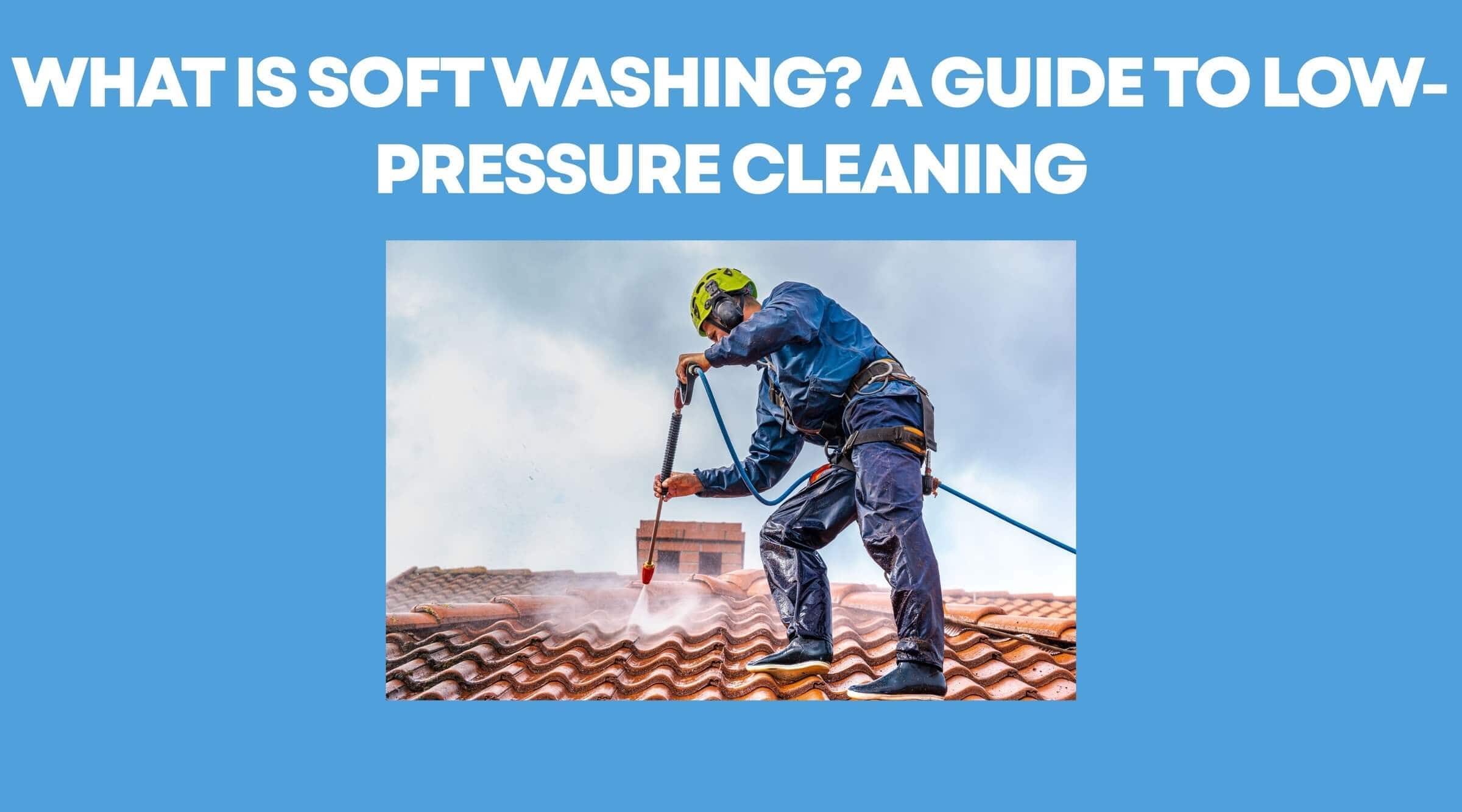
Roof cleaning is one of the most valuable applications. Those unsightly black streaks on asphalt shingles are not dirt but a destructive algae called Gloeocapsa magma. Our low-pressure approach uses professional-grade cleaning solutions to eliminate the algae at its root without damaging the roof surface. This method aligns with the Asphalt Roofing Manufacturers Association guidelines, which warn against high-pressure methods that strip away protective granules, drastically shortening the shingle's lifespan. The same principle applies to safely cleaning tile and metal roofs without causing cracks or removing protective coatings.
Siding and Façade Restoration
High-pressure wands can force water behind vinyl, wood, or stucco siding, leading to trapped moisture, rot, and dangerous mold growth. Soft washing uses a high-volume, low-pressure application to apply cleaning agents that break down organic stains like green algae, mildew, and dirt. The solution does the work, not the force, ensuring a deep clean without the risk of water intrusion or damage to the siding material itself.
Cleaning Other Delicate Surfaces
The versatility of a professional soft wash system extends to numerous other sensitive materials where high pressure would be destructive. This allows contractors to offer comprehensive property cleaning packages. Key examples include:
- Wood Decks and Fences: Cleans away mold and mildew without splintering the wood or causing "furring."
- Painted Surfaces: Removes grime and organic growth without stripping paint or coatings.
- Awnings and Outdoor Fabrics: Gently lifts stains from canvas and synthetic materials without tearing the fabric.
- Soft Stone and Masonry: Safely cleans porous materials like limestone, sandstone, and historic brick without etching or erosion.
Essential Equipment for a Professional Soft Wash System
A professional-grade soft wash system is built from several core components engineered for maximum reliability and chemical resistance. The quality of each part directly impacts your on-the-job efficiency, safety, and the final results you deliver to clients. While systems can be built piece-by-piece for a custom setup, many professionals opt for complete, pre-built skids for turnkey performance. Regardless of the path you choose, every component must be rated for the demands of soft washing.
Pumps & Power Source
The pump is the heart of your system, and its power source dictates your flow rate (GPM) and capability. The three primary types offer distinct advantages for different scales of operation:
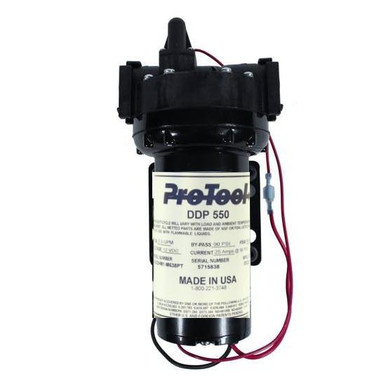
- 12V Electric Pumps:Our ProTool pumps are the industry standard for entry-level and residential systems. They are quiet, simple, and provide reliable flow rates typically between 5-7 GPM.
ProTool Pump 90psi 5.0gpm Demand Switch Spraying
$198.60
ProTool Pump 90psi 5.0gpm Demand Switch SprayingIntroducing the ProTool Pump, a reliable and efficient solution for spraying chemicals with precision and ease. This quality pump… read more
- Gas-Powered Systems:For higher GPM and increased performance on larger commercial jobs, gas-driven pumps deliver superior flow and power to reach greater heights with ease.
- Air Diaphragm Pumps: The ultimate choice for high-volume commercial work, these heavy-duty pumps offer the highest flow rates and unmatched durability for daily, rigorous use.
Tanks, Hoses, and Reels
Proper fluid management is critical for safety and effectiveness. A professional setup requires separate, clearly labeled polyethylene tanks for water, sodium hypochlorite (SH), and surfactant. This prevents cross-contamination and allows for precise chemical mixing. Your hose must be explicitly chemical-resistant to handle corrosive cleaning solutions without failing. Finally, professional-grade hose reels are essential for efficient job site management, protecting your hose and saving valuable time.
Proportioners and Mixing
Move beyond manual batch mixing with a dedicated proportioning system. A device like the Pro-Portioner revolutionizes your workflow by pulling chemicals directly from their respective tanks and blending them accurately on the fly. This eliminates the time-consuming and often inaccurate process of mixing solutions by hand in a separate tank. The result is unparalleled speed, consistency, and the ability to adjust your mix instantly for any surface.
Nozzles, Wands, and Guns
Soft wash application tools are fundamentally different from their pressure washing counterparts. Nozzles are designed for high volume and low pressure to ensure a safe and effective clean. A J-ROD nozzle holder is a popular, versatile tool that holds four different tips for spraying at various distances and patterns. These nozzles are paired with a dedicated soft wash gun, such as a chemical-resistant poly trigger gun, built to withstand corrosive solutions without premature failure.
Building a durable and profitable setup starts with sourcing the right parts. Shop complete soft wash systems and components to find the professional-grade equipment you need to succeed.
Safety First: Professional Soft Washing Protocols
In professional soft washing, delivering exceptional results is the goal, but job site safety is the absolute priority. A comprehensive safety protocol is non-negotiable, protecting your crew, the client, and the property from potential hazards. Adhering to established best practices demonstrates professionalism and mitigates risk, forming the foundation of a successful and reputable exterior cleaning business.
Personal Protective Equipment (PPE)
Your first line of defense against chemical exposure is wearing the correct professional-grade Personal Protective Equipment (PPE). Every member of the crew must be equipped with the following essentials:
- Eye Protection: Mandate the use of safety glasses or, preferably, sealed goggles to protect against chemical splashback and overspray.
- Chemical-Resistant Gloves: Nitrile or other appropriate chemical-resistant gloves are critical for preventing skin contact when handling solutions.
- Respiratory Protection: A respirator with appropriate cartridges is highly recommended, especially when mixing concentrated chemicals, to prevent inhalation of hazardous fumes.
- Protective Clothing: Waterproof boots and full-coverage clothing (long sleeves and pants) shield the skin from accidental contact with cleaning agents.
Property and Landscape Protection
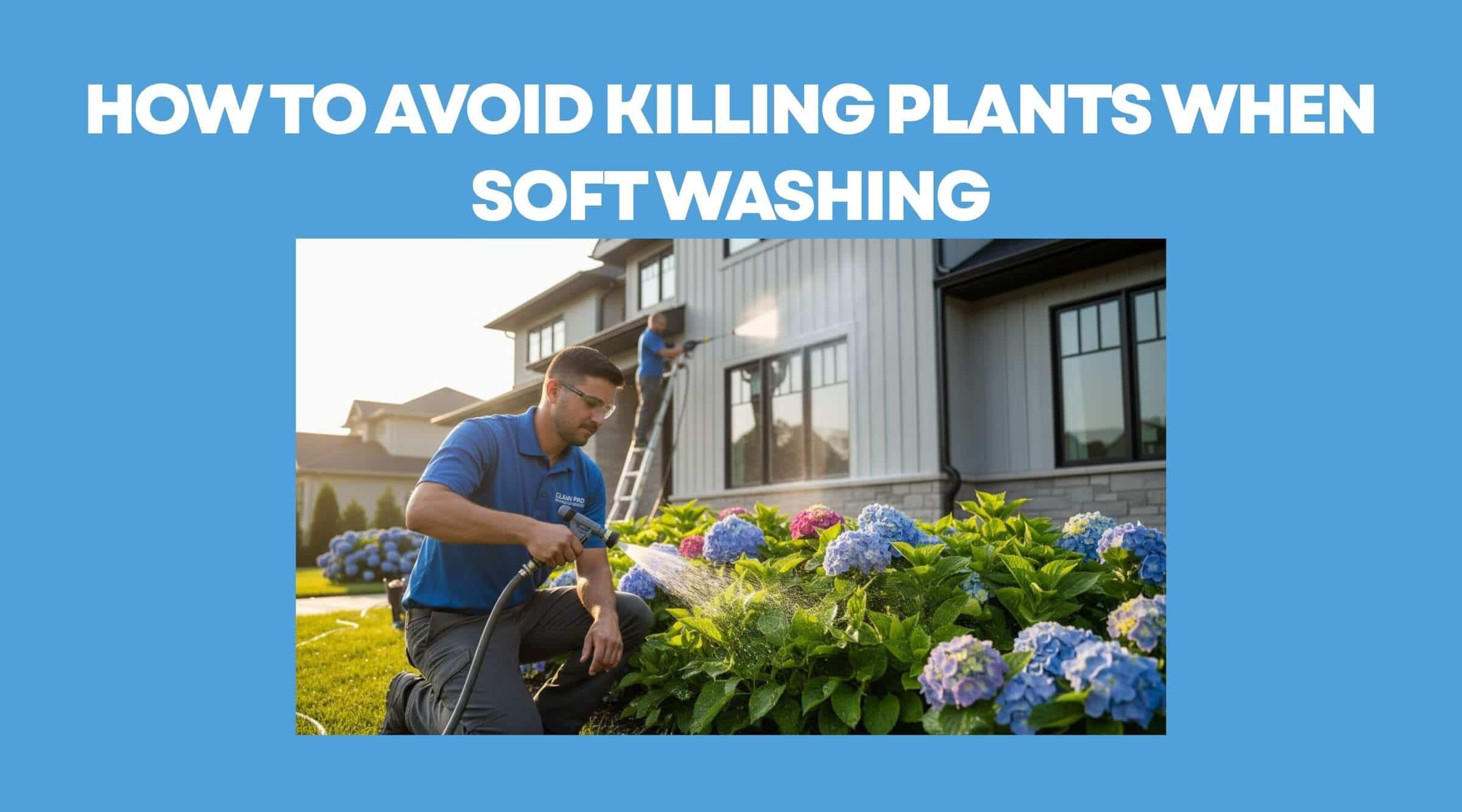
Protecting the client's property is just as important as cleaning it. Before any cleaning solution is applied, a systematic site preparation is required. Start by thoroughly pre-wetting all nearby plants, grass, and landscaping with fresh water. This creates a protective barrier on the vegetation, diluting any accidental overspray.
For particularly delicate plants, flower beds, or sensitive property fixtures like outdoor electrical outlets and ornate door hardware, use heavy-duty plastic sheeting as a physical barrier. Once the job is complete, a thorough final rinse of all surfaces and surrounding vegetation is a critical final step to neutralize and wash away any remaining cleaning solution, ensuring the landscape is left unharmed.
Safe chemical handling is the cornerstone of any professional soft washing operation. Always follow the manufacturer’s guidelines on the Safety Data Sheet (SDS) for mixing, application, and storage. Transport all chemicals in secure, sealed, and clearly labeled containers. Store them in a cool, dry, and well-ventilated area away from direct sunlight and incompatible materials. Equipping your team is the first step; ensuring they are trained in these protocols is what defines a true professional. For a complete inventory of professional-grade safety gear and cleaning solutions, visit jracenstein.com.
Elevate Your Business with Professional Soft Washing
Ultimately, soft washing is more than just low-pressure cleaning; it’s a targeted, science-backed method for safely eradicating organic stains from delicate surfaces like roofing and siding. Understanding the correct chemical solutions and adhering to professional safety protocols are the keys to delivering superior, damage-free results that build your reputation. Mastering this service allows you to tackle jobs that high-pressure systems simply can't handle.
To achieve these professional-grade outcomes, you need durable, reliable equipment. At J Racenstein, we are your partner in success. Shop our complete collection of professional soft washing equipment to find an extensive inventory from leading brands. Our team of industry professionals is ready to offer expert advice to help you select the right system, and with fast nationwide shipping for contractors, you'll be ready for your next job in no time.
Equip your business for success and confidently expand your service offerings today.
FAQs
Can I use my pressure washer for soft washing?
A standard pressure washer can be adapted for soft washing by using a downstream chemical injector and specialized low-pressure nozzles, such as a J-Rod kit. This method lowers the output pressure to under 100 PSI. However, for professional efficiency and higher GPM, a dedicated 12-volt or gas-powered soft wash system is the superior solution. These professional-grade systems are engineered for precise chemical application and optimal flow rates, delivering more consistent and faster results on the job.
How do I calculate the right chemical mix for a roof?
Calculating the correct roof mix depends on the substrate and the level of infestation. For standard asphalt shingles with algae stains, a 3-4% sodium hypochlorite (SH) solution is a common starting point. Heavier growth like moss or lichen may require a 5-6% mix. Always add a professional-grade surfactant to increase dwell time and ensure even coverage. Professionals should always batch mix and perform a test spot in an inconspicuous area to verify solution strength before full application.
Do I need a special license or certification for soft washing?
Specific licensing for soft washing is not standard; however, requirements vary by state and municipality. Professionals must carry a general business license and, critically, possess adequate liability insurance that covers chemical applications. While not legally required, obtaining certifications from industry organizations like the Power Washers of North America (PWNA) or the United Association of Mobile Contract Cleaners (UAMCC) demonstrates a commitment to professional standards, safety protocols, and industry best practices.