
How to Clean Gutters with a Pressure Washer: Pro Workflow

Table of Contents
Roughly 85% of residential gutter jobs can be completed without leaving the ground. For most pressure washing contractors, the old method — ladder every six feet, scoop by hand, reposition, repeat — is a liability sink that eats labor hours and invites falls. Learning how to clean gutters with a pressure washer from the ground isn't optional anymore. OSHA requires specific fall protection for any vertical drop over four feet, and your insurance carrier notices every claim.
This guide covers the equipment specs, workflow, and chemical techniques that make ground-based gutter cleaning fast and profitable. You'll see why GPM matters more than PSI, how U-bend attachments and telescoping wands eliminate ladder transitions, and how to handle tiger stripes and impacted downspouts without disassembling anything.
Why High-Flow Flushing Replaced Manual Scooping
Manual scooping is slow and incomplete. A technician repositioning a ladder every six to eight feet spends up to 70% of total labor time on movement, not cleaning. Worse, hand tools leave a layer of fine silt that hardens between service visits into a solid mass that accelerates corrosion.
High-flow flushing uses water volume — measured in gallons per minute (GPM) — to suspend debris and transport it out through the downspouts. A system running 4–8 GPM generates enough force to push heavy organic sludge the full length of a trough run. PSI gets the attention, but GPM does the actual work on gutter interiors.
The ground-based approach also eliminates the single biggest injury vector in exterior cleaning: ladder transitions. Modern pressure washing equipment — carbon fiber telescoping wands, U-bend nozzle adapters — lets you flush a full second-story gutter run from the driveway. When roof access is unavoidable, proper fall protection equipment is non-negotiable.
Equipment: Wands, U-Bends, and Nozzle Selection
Standard pressure washer wands cannot reach second-story eaves with enough directional control to move debris. Gutter work from the ground demands specialized attachments that compensate for the angle and distance.
Telescoping Wands
Material matters. Fiberglass poles flex badly at full extension and fatigue your arms on multi-house days. Aluminum is more rigid but heavy. Carbon fiber delivers the best weight-to-rigidity ratio — it's the professional standard for a reason. An extension wand rated for your machine's PSI is critical; water fed poles handle low-pressure rinse work but cannot manage the internal pressure of a 4 GPM system.
Kickback management: always start the trigger with the wand at a low angle and raise it gradually. At 20 feet of extension, an abrupt trigger pull can wrench the pole out of your hands.
The U-Bend Attachment
A 180-degree U-bend is mandatory for ground-based gutter flushing. Without it, the spray angle from below is too shallow — you'll blow debris under the shingles or back onto yourself instead of down the trough. The U-bend redirects the stream straight into the gutter channel, giving you the same angle you'd have from a ladder.
Nozzle Selection
Use a 40-degree (white) fan tip or a soap nozzle for gutter interiors. These provide a wide, low-impact pattern that moves debris without denting aluminum or stripping factory finishes. Verify your nozzle orifice matches your machine's GPM and PSI — an undersized orifice creates excessive pressure that damages gutters. Avoid turbo nozzles inside troughs unless you're dealing with a solidified blockage; the rotary action sprays mud onto the siding and doubles your cleanup time.
Your pressure wash hose also needs to be rated for the vertical lift and total run length. Standard hoses experience significant pressure drops on extended wand setups — purpose-built pressure hoses prevent that loss.
The Professional Gutter Flushing Workflow
Step 1: Site Assessment and Downspout Testing
Before you engage the pump, walk the perimeter. Check for loose gutter spikes, bent brackets, and compromised shingle edges along the drip line. If the gutter system is structurally weak, high-flow flushing will make it worse.
Test each downspout with a low-pressure stream to identify existing blockages before you push a full trough of sludge into a clogged exit. Wet down adjacent landscaping and cover delicate plantings — decomposing organic runoff is acidic enough to damage ornamentals.
Step 2: High-Flow Debris Transport
Start at the end farthest from the downspout. Hold the U-bend at roughly 45 degrees and sweep steadily toward the exit point. The goal is sustained momentum — you're using GPM to float and slide the debris, not blast it.
Never spray toward the roofline. Angling upward forces water under shingles and into the building envelope. Keep the stream directed downward into the trough at all times.
Step 3: Downspout Flush and Final Rinse
After the troughs are clear, verify flow through every downspout, including underground drain extensions. If a downspout is clogged, flush it from the bottom up — the water pressure will dislodge the obstruction without requiring disassembly.
Rinse the siding and windows to remove blowback. This is also the staging point for exterior gutter brightening if that service was sold. Walk the site with the client, demonstrate free-flowing downspouts, and leave a clean property. A clean job site is as important as a clean gutter.
Tiger Stripe Removal and Impacted Downspouts
Gutter Brightening
Tiger stripes — those dark vertical streaks on the gutter face — are electrostatically bonded pollutants: asphalt shingle runoff, industrial soot, oxidized metal. Water pressure alone won't break that bond. You need a dedicated gutter brightening chemical.
Products like ProTool Gutter Bomb or Gutter Zap contain surfactants that neutralize the electrostatic charge so the staining rinses off. Apply at low pressure — a soft wash approach — and allow adequate dwell time. High PSI strips the factory finish and creates a permanent dull spot. For heavy striping, light agitation with a soft-bristle brush before the final rinse speeds things up without damaging the coating.
For a deeper breakdown of when to use pressure versus chemical methods, see the J.Racenstein guide on pressure washing vs. soft washing.
Clearing Impacted Downspouts
When standard flushing won't clear a blockage, a sewer jetter attachment or gutter ball nozzle is the next tool. These use rear-facing jets that propel the nozzle forward while scouring the interior walls of the downspout. Effective for subterranean clogs that manual tools can't reach, and they avoid disassembly.
The "air gap" rule: never seal the jetter hose against the downspout opening. If there's no path for water to escape, you'll burst thin-walled aluminum seams or force water into the soffit. Leave a gap — the overflow is your visual indicator that the clog is breaking up.
Rig Maintenance for High-Reach Gutter Work
Pump and Unloader Valve
Extended wands mean frequent trigger cycling as you reposition between runs. Every time the trigger closes, the unloader valve must bypass water. Rapid cycling causes dead-heading — the pump builds heat with nowhere to send the flow. Watch for water dripping from the thermal relief valve; that's your warning that the system is overheating.
Use hoses rated for your machine's full GPM output to minimize backpressure. Understanding unloader valve behavior will save you from premature pump failures.
O-Rings and Couplers
The weight of a 20-foot wand creates leverage at every connection point. That stress flattens Viton O-rings and loosens brass couplers over time. Inspect weekly. A small leak at the pole base translates to a significant PSI loss at the U-bend — your flushing technique becomes ineffective and you won't know why until you check the fittings. Keep replacement O-rings on the truck.
Winterization
Before the first freeze, evacuate all water from the pump, hoses, and wand assemblies. Replace with pump guard or RV antifreeze. Ice expansion cracks manifolds and brass fittings — and a cracked pump head in November means a delayed start to the spring season and a repair bill you didn't budget for.
Products Mentioned
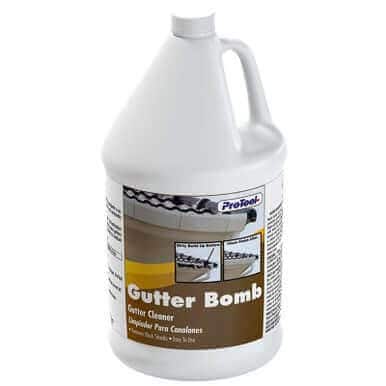 ProTool Gutter Bomb - Gutter Cleaner - Oxidation Remover SKU: 89-82M | 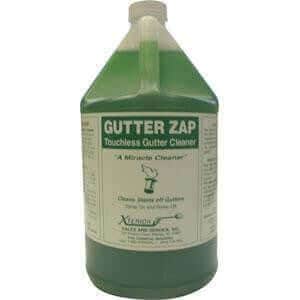 Gutter Zap Gutter Stain Remover SKU: 89-0M |