Professional Gutter Cleaning Tools: Ground-Based Systems, Chemical Upsells, and Rig Building

Table of Contents
- Why Ground-Based Gutter Systems Changed the Math
- High-Reach Vacuum Systems: What the Specs Actually Mean
- Carbon Fiber Poles: Why Weight Matters at 40 Feet
- When You Still Need Hand Tools
- Ladder Accessories When Ground-Based Isn't an Option
- Gutter Brightening: The High-Margin Upsell
- Building Your Gutter Cleaning Rig
- The Service Bundle That Grows Revenue
- Products Mentioned
- FAQs
Professional gutter cleaning tools have reshaped how exterior contractors approach what used to be the most dangerous, lowest-margin service on the truck. Ground-based vacuum systems, carbon fiber pole sets, and chemical brightening workflows now let a single operator clear three-story gutters without touching a ladder — cutting site time roughly in half and dropping insurance exposure at the same time.
This guide covers the equipment categories that matter, the specs that separate professional gear from consumer hardware, and how to build a gutter rig that pays for itself inside a season.
Why Ground-Based Gutter Systems Changed the Math
The traditional bucket-and-ladder method costs you twice: once in labor hours, again in risk. OSHA 1910.23 exists because ladder falls drive more than 164,000 ER visits per year in the U.S. Insurance providers price that in — ladder-free operations often see 10–15% lower workers' comp premiums.
But the real shift is productivity. A technician running a high-reach vacuum system clears 150 linear feet of gutter without repositioning a ladder, eliminating the second crew member who used to spot. That cuts labor cost per foot by roughly 40% and lets you schedule tighter routes. If you're running a window cleaning operation and haven't added gutter work, you're leaving $150–$350 per stop on the table — most residential window clients need gutters cleared at least twice a year.
High-Reach Vacuum Systems: What the Specs Actually Mean
Not all vacuum systems are built for professional gutter work. Consumer blower attachments move dry leaves; they stall on compacted sludge and standing water. Here's what to evaluate:
- Water lift (static lift): The raw pulling power. You need 100+ inches of water lift to clear blocked downspouts and heavy wet debris at height. Anything under that and you're fighting the machine instead of the gutter.
- CFM (Cubic Feet per Minute): Measures air volume. 150 CFM handles dry leaves. Wet sludge — common in coastal and high-rainfall climates — demands 250–300 CFM. If your CFM is under 200, expect frequent clogs in 50mm and 63mm poles.
- Motor configuration: Dual or triple 1500-watt bypass motors maintain suction as the tank fills. Single-motor units lose power fast and burn out under daily use.
- Tank capacity: 75–100 liters is the working range for commercial volume. Smaller tanks mean more dump stops.
- Filtration: Stainless mesh for wet debris, HEPA for fine dry dust. Multi-stage filtration protects motor longevity and keeps you from blowing particulate onto the customer's siding.
Gas-powered vacuums deliver higher airflow (up to 15,000 LPM) and don't need a power outlet — ideal for remote sites. Electric systems run quieter for noise-restricted residential areas. Either way, if you're building a custom rig, confirm your generator handles the 3,000-watt surge typical of industrial electric units.
Carbon Fiber Poles: Why Weight Matters at 40 Feet
Weight is the enemy at height. A 40-foot aluminum pole flexes under suction load, making it nearly impossible to control the vacuum head precisely. High-modulus (24K) carbon fiber offers roughly 3× the rigidity at half the weight — a full 40-foot set comes in under 20 pounds.
Look for tapered or modular clamping mechanisms that maintain an airtight seal between sections. Air leaks kill suction faster than almost anything else. Ergonomic neck tools let you match the pole end to different gutter profiles: standard K-style, half-round, and wide commercial box gutters.
J.Racenstein stocks carbon fiber gutter vacuum poles from Gardiner designed for daily professional use at extended reach. For operators adding camera systems, modern 4K wireless cameras mount at the pole tip for precision cleaning in blind spots — and double as a sales tool when you show the customer a clear gutter on a tablet screen.
When You Still Need Hand Tools
Vacuums handle 90% of residential jobs. The other 10% is where your crew earns its reputation. Properties that haven't been serviced in two years or more develop "gutter gardens" — dense mats of decomposed organic matter with established root systems. No vacuum has the torque to pull those out.
Stock these on every truck:
- Polypropylene scoops: High-impact plastic flexes enough to avoid scratching factory finishes on K-style gutters. Metal scoops gouge.
- Gutter grabbers and tongs: Tools like the Gutter Sense Tongs and the Gutter Hawg let you extract packed debris from the ground with an extension pole — no ladder needed.
- Downspout snakes: The Gutter Down Spout Snake clears deep elbow clogs by pulling debris upward instead of pushing it into the underground drain. Saves 20 minutes per drop versus blind troubleshooting.
- Gutter scoops: The Gutter Getter scoop slides under gutter spikes in deep, narrow troughs.
Ladder Accessories When Ground-Based Isn't an Option
Some jobs force you onto a ladder — steep roof pitches, architectural obstructions, tight access. When that happens, the gear matters more, not less.
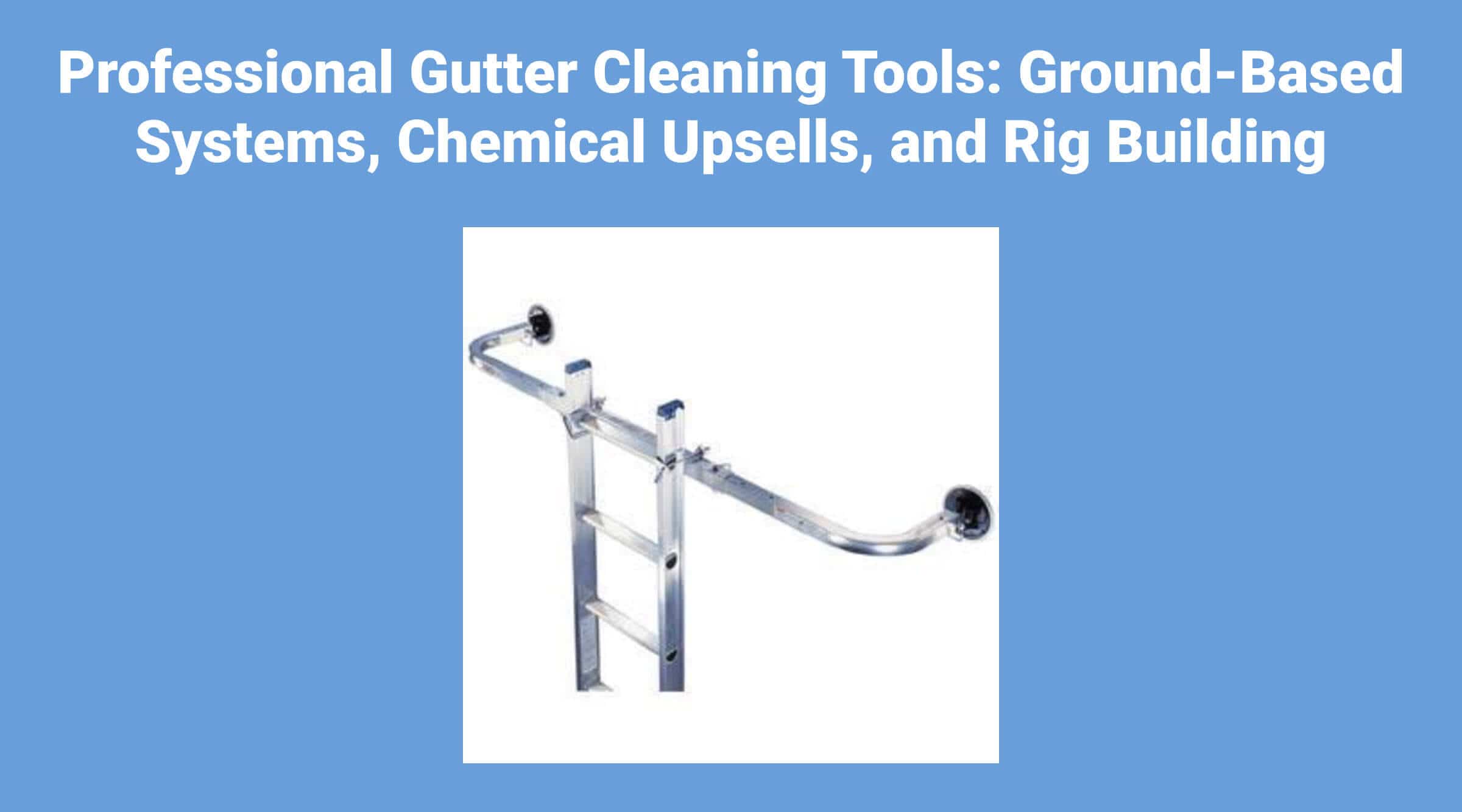
- Stabilizers (stand-offs): The ProTool Ladder StandOff creates a wide stance that prevents lateral movement and keeps the ladder off the gutter itself. A 24-foot extension ladder plus a 200-pound technician will crush thin-gauge aluminum gutters without one.
- Levelers: LeveLok Quick Connect Levelers handle uneven turf — the cause of roughly 65% of ladder-related incidents.
- Tool trays and bucket hooks: Keep hands free during the climb. Three points of contact is non-negotiable.
For jobs requiring harness work, a full-body harness rated to a 5,000-pound anchor point and a stand-off bracket are mandatory. J.Racenstein carries complete roof safety and fall prevention kits built for this scenario.
Gutter Brightening: The High-Margin Upsell
Debris removal is the baseline. The money is in restoration. "Tiger stripes" — those black streaks running down gutter faces — are carbon and inorganic pollutants bonded electrostatically to the aluminum finish. Standard sodium hypochlorite house wash won't touch them.
What works:
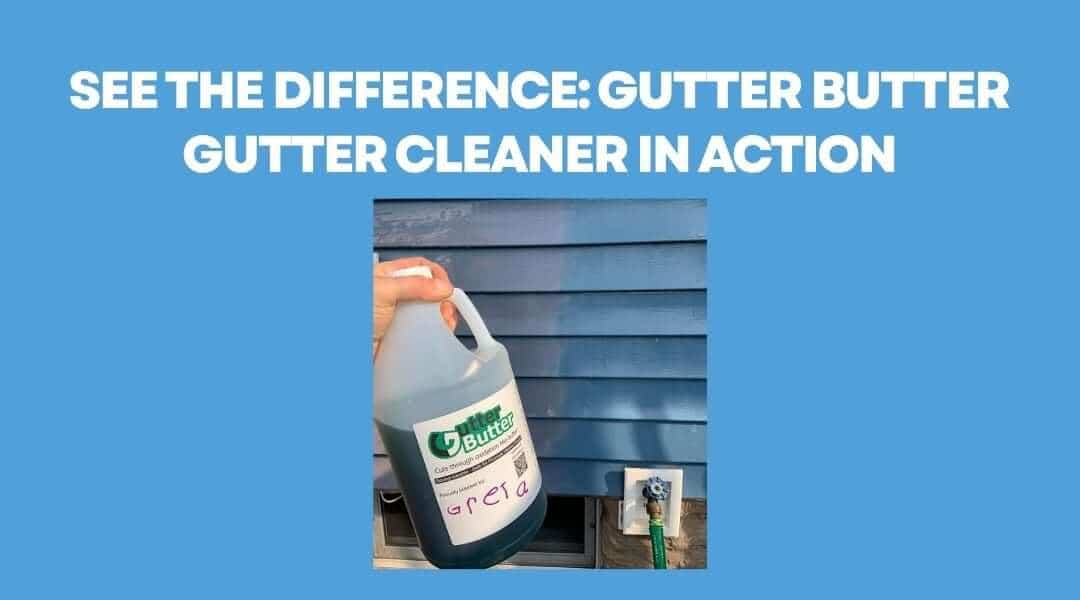
- Specialized degreasers containing sodium metasilicate or butyl-based solvents break the electrostatic bond. ProTool Gutter Bomb or Gutter Zap are purpose-built for this.
- Apply at 10:1 dilution with a pump sprayer or soft wash system.
- Dwell 2–3 minutes without letting it dry.
- Agitate with a soft-bristled, flagged-tip brush on an extension pole — mechanical action is what drives the chemical into the grime layer.
- Rinse at low pressure (800–1,200 PSI max). Exceeding 1,500 PSI risks blowing out mitered corner sealant or damaging gutter brackets.
This service commands $1.50–$3.00 per linear foot on top of the cleaning fee. Pre-saturate landscaping below to dilute runoff, and consider a ProTool Post Rinse neutralizer on sensitive vegetation.
For the pressure washing side, a telescoping wand paired with a J-hook or U-bend nozzle handles ground-based flushing of fine silt and granular shingle runoff. High flow matters more than high pressure for moving heavy sediment. If you're building or upgrading a pressure setup, the pressure washing equipment category covers pumps, hoses, and surface cleaners.
Building Your Gutter Cleaning Rig
The right rig depends on your service volume and the buildings you're working on. Here's a framework:
Solo Operator — Residential Focus
- Dual-motor electric vacuum (2,400–3,000W)
- 30–40 ft carbon fiber pole set
- 75-liter collection tank
- Hand tool kit: scoops, tongs, downspout snake
- Pump sprayer with gutter brightening chemical
- Ladder with stabilizer and levelers as backup
Multi-Crew — Commercial and Multi-Story
- Triple-motor or gas-powered vacuum (3,000W+ / 15,000 LPM)
- 40+ ft modular carbon fiber poles
- 100-liter tank with quick-dump
- Pole-mounted camera system
- Dedicated soft wash pump for gutter brightening
- Full fall protection kit for situations that require height access
Maintenance That Keeps You Running
Daily: empty and rinse the vacuum tank with fresh water. Organic debris solidifies overnight and clogs drain ports. Wipe down every carbon fiber pole section — grit in the clamps acts like sandpaper on the tubes.
Monthly: inspect poles for stress fractures or delamination. Check all rubber gaskets and seals — a 2mm crack drops vacuum pressure 20%.
Every 6 months: replace motor seals and gaskets. Clean HEPA/cloth filters after every 5 jobs and replace entirely at this interval. Clogged filters force motors to run hotter and cut lifespan.
The Service Bundle That Grows Revenue
Gutter work is the natural complement to window cleaning. Most residential window clients already need the service — you're just not offering it yet. Bundling adds $150–$350 per stop without significant travel time. Gutter brightening as a line item pushes the average ticket another 12–18%.
Late fall and early spring — when window demand dips — are peak gutter season. The equipment crosses over: your carbon fiber poles, soft wash systems, and gutter cleaning chemicals serve both services. A contractor carrying a backup kit with sealant tubes, replacement hangers, and downspout screws can offer minor gutter repairs as a value-add, turning a $300 clean into a $400+ invoice.
J.Racenstein stocks over 5,000 SKUs in gutter tools, gutter chemicals, vacuum poles, and fall protection equipment — everything you need to build or scale a gutter cleaning operation.
Products Mentioned
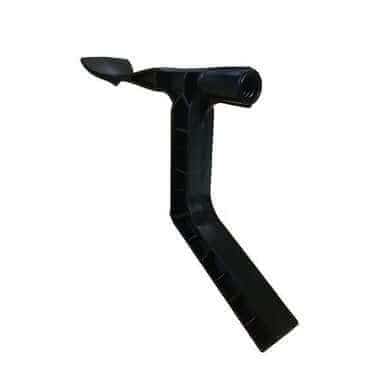 The Gutter Hawg SKU: 55-109 | 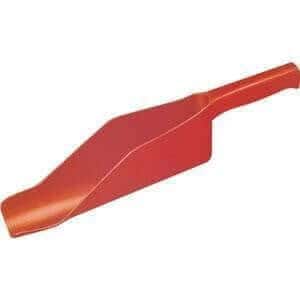 Scoop Gutter Getter (1) SKU: 55-23 | 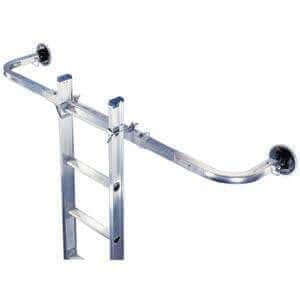 ProTool Ladder StandOff SKU: 73-101 |
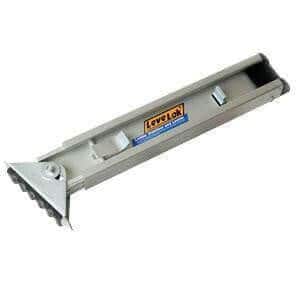 Ladder Levelers Quick Connect LeveLok SKU: 73-25 | 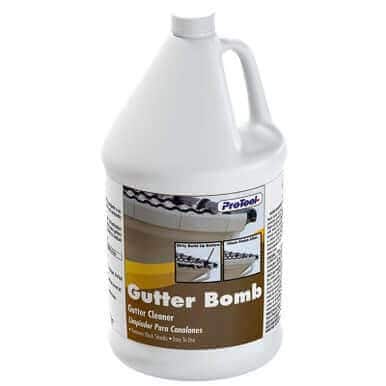 ProTool Gutter Bomb - Gutter Cleaner - Oxidation Remover SKU: 89-82M | 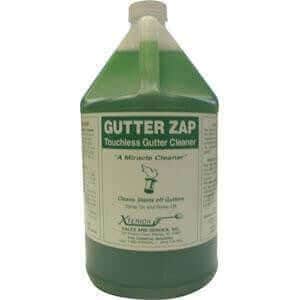 Gutter Zap Gutter Stain Remover SKU: 89-0M |
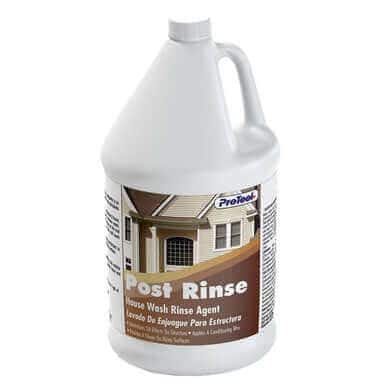 ProTool Post Rinse SKU: 83-03M |