How to Protect Plants when Soft Washing
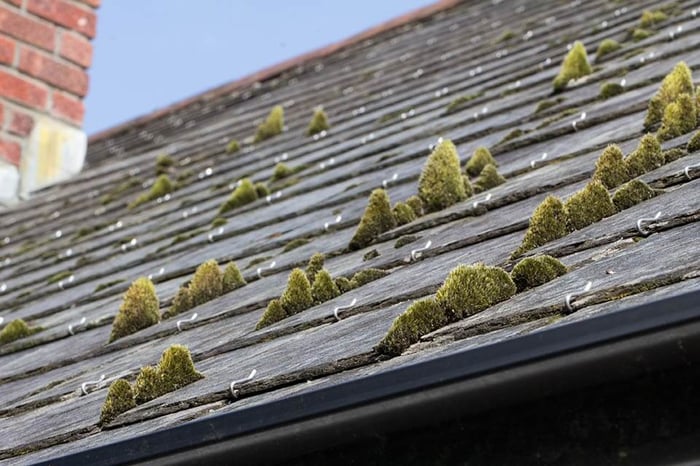
Sodium hypochlorite kills algae, lichen, and Gloeocapsa Magma on contact — and it will do the same to your customer's boxwoods if you let it. Every soft wash job sends chemical runoff into gutters, downspouts, and onto the ground. The difference between a callback and a referral is what you do about that runoff before, during, and after the wash.
These six steps are how experienced soft wash contractors protect plants when soft washing without slowing down production.
1. Bag the Downspouts
Roof cleaning runoff collects in gutters and exits through downspouts — often directly into flowerbeds, foundation plantings, and ornamental shrubs. Fastening a heavy-duty trash bag or 5-gallon bucket to each downspout outlet captures that concentrated bleach runoff before it hits the soil. Dispose of it properly once the job is done.
This single step eliminates the highest-concentration chemical exposure most landscaping faces during a roof wash. It takes two minutes per downspout and prevents the damage that generates the most complaints.
2. Pre-Soak, Mid-Soak, Post-Soak
Hydrated plant cells absorb less sodium hypochlorite. Pre-soaking foliage and root zones with clean water fills those cells before any chemical arrives — dramatically reducing uptake.
- Pre-soak: Drench all plants, shrubs, and grass in the work zone before spraying any cleaning mix.
- During the wash: Assign one crew member to continuously water landscaping while the other applies chemical. On solo jobs, pause between sections to re-wet.
- Post-wash rinse: Once chemical application is complete, rinse all foliage and soil again to flush residual solution.
An X-Jet M5 Variable Spray makes this efficient. Because the X-Jet draws chemical externally, you can twist the nozzle to fan-spray clean water without flushing your pump — switching between chemical application and plant rinsing on the fly.
3. Add a Surfactant to Cut Runoff
A surfactant makes your cleaning mix cling to the surface instead of sheeting off. Less runoff means less chemical reaching the ground, and more dwell time means you can run a lower SH concentration for the same kill.
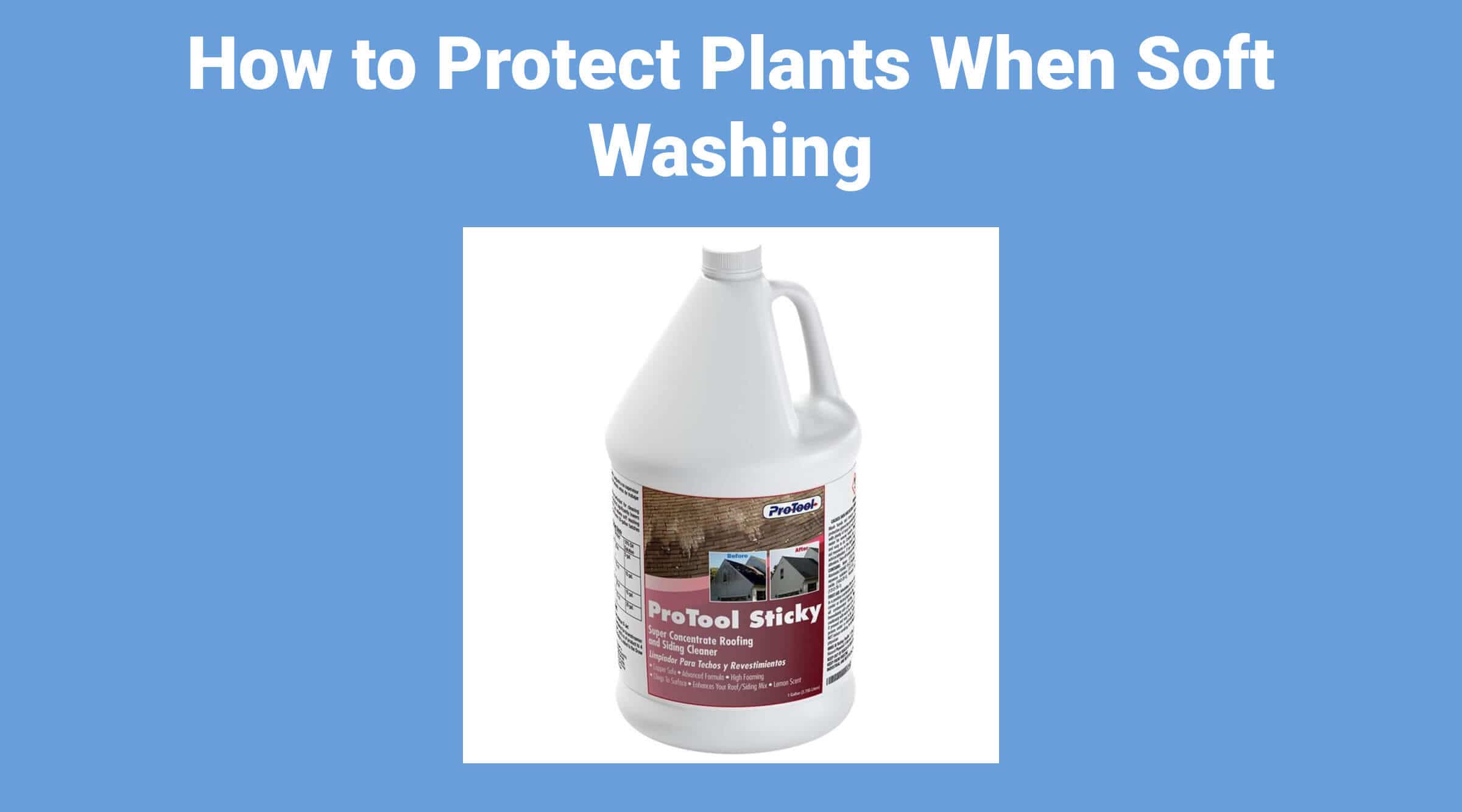
ProTool Sticky is the go-to for most contractors. At 10 ounces per 50-gallon batch, it is one of the most concentrated surfactants available — shipping costs drop roughly 75% compared to diluted alternatives because you are not paying freight on water. The result: better surface adhesion, lower chemical volume on the ground, and the lowest cost per batch in the category.
4. Final Rinse — Don't Skip It
After the cleaning is complete, go back and drench every plant in the work zone one more time. Pay particular attention to foliage directly below rooflines and siding sections where runoff concentrates. Soak the leaves and the soil around the roots. Overspray drift settles on surfaces you did not intentionally treat, and a heavy final rinse dilutes whatever landed there.
5. Neutralize with Post Rinse
Water dilutes SH but does not neutralize it. ProTool Post Rinse does — it chemically deactivates residual sodium hypochlorite on leaves, soil, siding, decks, fences, and metal fixtures. Applied as a spray after the final water rinse, it coats foliage with a protective buffer and stops bleach activity on contact.
For the cost of a few ounces per job, Post Rinse eliminates the lingering chemical that causes leaf burn hours after you leave the property. It also protects metal ornamentation and painted surfaces from chlorine discoloration.
6. Nourish with Plant Wash
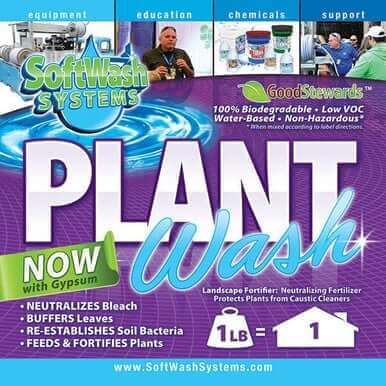
The highest level of plant protection goes beyond neutralization. Plant Wash is formulated specifically to recover landscaping exposed to caustic cleaners like sodium hypochlorite and sodium hydroxide:
- Neutralizes remaining caustic chemistry in the soil.
- Liquid-fertilizes through the leaves, delivering a nutrient boost.
- Coats foliage with a buffering agent for residual protection.
- Replenishes soil nutrients and supports beneficial bacteria around root zones.
Mix it in a pump sprayer and apply over shrubs, flowers, and turf once the job is finished. Plant Wash does not just prevent harm — it actively feeds the landscaping, so plants come out healthier than they went in. That is the kind of detail that turns a one-time customer into a maintenance contract.
The Checklist
- Bag every downspout before you start.
- Pre-soak all plants, shrubs, and grass with clean water.
- Use ProTool Sticky surfactant to reduce runoff volume.
- Rinse all foliage and soil thoroughly after cleaning.
- Neutralize residual SH with ProTool Post Rinse.
- Nourish and buffer with Plant Wash.
Every step adds less than five minutes to the job. Combined, they are the difference between a landscaping complaint and a five-star review. In a business built on referrals, protecting the plants is protecting the revenue.
Products Mentioned
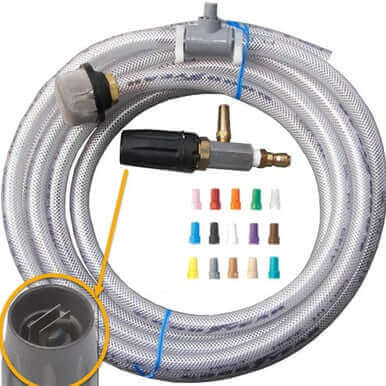 X-Jet M5 Variable Spray SKU: 74-53M | 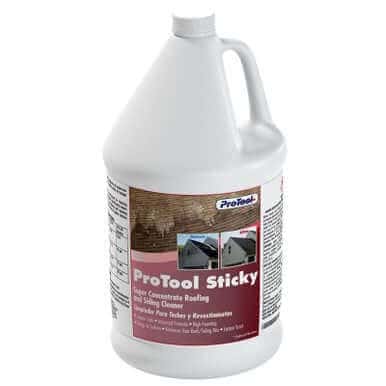 ProTool Sticky SKU: 83-07M | 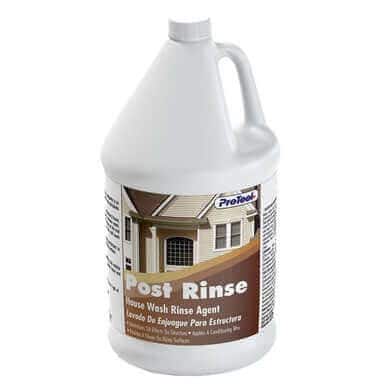 ProTool Post Rinse SKU: 83-03M |
 Plant Wash Powder 25LB SKU: 83-69 | 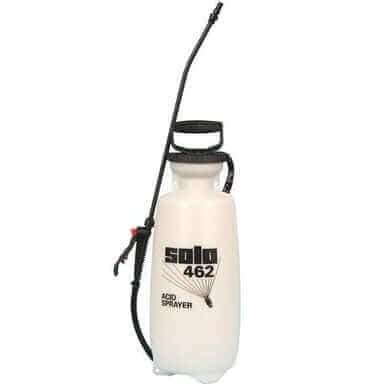 Pump Sprayer 2 Gal Acid Resistant Solo SKU: 515-045 | ProTool Sticky SKU: 83-07M |
ProTool Post Rinse SKU: 83-03M | Plant Wash Powder 25LB SKU: 83-69 |