Oil Stain Remover for Concrete: What Contractors Actually Need to Know

Table of Contents
An oil stain remover for concrete is not optional equipment — it is the difference between a callback and a finished job. Pressure washing alone moves hydrocarbons around; it does not extract them. Most contractors have wasted hours watching a consumer-grade degreaser fail on a commercial parking lot, only to leave a ghost stain that reappears two days later. The wrong chemistry costs you time, risks etching the substrate, and can trigger environmental fines that gut a profitable bid.
This guide covers the science, the product categories, the application process, and the equipment that makes oil extraction repeatable and profitable at commercial scale.
Why Concrete Absorbs Oil — and Why Water Cannot Fix It
Concrete is a rigid mineral sponge. A network of microscopic pores and capillaries pulls hydrocarbon liquids deep into the slab through capillary action. A broom-swept parking lot finish accepts oil faster than a smooth-troweled warehouse floor, but both will absorb contamination if it sits long enough.
Water and oil refuse to mix at a molecular level. Blasting a saturated slab with high-pressure water — without a surfactant — can actually drive oil deeper into the matrix. You need a chemical that penetrates as far as the oil did, breaks the bond, and suspends the contaminant so mechanical force can extract it.
Stain age matters. Fresh oil is still liquid and relatively easy to emulsify. Set-in stains have oxidized and bonded with the concrete's lime and calcium components, essentially becoming part of the substrate. A standard degreaser will not touch a hardened, oxidized stain — you need deep-pore chemistry or bioremediation.
Ignore the subsurface problem and you get "wicking": oil trapped in the pores migrates back to the surface as the slab dries, producing a persistent ghost stain days after the job was supposedly finished.
Four Categories of Professional Oil Stain Remover for Concrete
Match the mechanism to the contamination profile. There is no single product that handles every scenario.
- Solvent-based degreasers — dissolve hydrocarbons for immediate extraction. Citrus-based (d-Limonene) for lighter commercial work; petroleum-based for heavy industrial grease and oxidized oil. These are the fastest option for same-day results.
- Microbial cleaners — specialized bacteria consume hydrocarbons, converting them to water and CO₂. Ideal for high-traffic commercial sites (drive-thrus, fleet lots) with repeat staining. Biodegradable and safer for adjacent landscaping, but they require moisture and moderate temperatures to stay active.
- Enzymatic removers — biological catalysts that break complex hydrocarbon chains into simpler forms bacteria can process. Often paired with microbial cleaners for deep, long-term remediation.
- Poultice cleaners — applied as a thick paste, they dry over hours and create a vacuum effect that wicks emulsified oil out of the pores. Often the only way to resolve ghost stains in high-visibility areas.
Solvent degreasers like Dragon Juice or F9 Double Eagle give you the fastest turnaround on commercial bids. For long-term maintenance contracts where re-staining is inevitable, microbial chemistry reduces repeat visits. For decade-old oxidized stains, a poultice treatment or repeated microbial application is typically the only path to full extraction.
How to Evaluate an Oil Stain Remover Before You Buy
Dwell Time and Labor Cost
Dwell time is the single biggest driver of job-site profitability. A product that needs 45 minutes and two applications on a 10,000-square-foot parking structure will destroy your margin compared to one that works in 15–20 minutes with a single pass. High-performance formulations also rinse cleaner — residual surfactant left on a commercial walkway is a slip-and-fall liability.
Verify whether the product is optimized for hot water. Heat reduces oil viscosity and accelerates emulsification. If you run a hot box or hot water skid, a degreaser formulated for thermal activation can cut your dwell time significantly.
Dilution Ratio and True Cost per Square Foot
Unit price means nothing without the dilution ratio. A $40 gallon that dilutes 10:1 is cheaper per square foot than a $25 gallon applied neat. Always calculate cost-per-square-foot at working strength before comparing products.
Substrate Compatibility
High-pH alkaline cleaners and aggressive solvents can etch or strip topical concrete sealers. Spot-test in an inconspicuous area before full application. If the surface is sealed, a pH-neutral microbial cleaner or mild enzymatic formula avoids damage. After using aggressive chemistry, a neutralization rinse ensures the substrate is stable for re-sealing.
Regulatory Compliance
Wash water containing emulsified oil is not stormwater. The EPA's Construction General Permit requires containment of all washout water to prevent discharge into storm systems. In states like California, any non-stormwater discharge into a storm drain violates the Clean Water Act. Biodegradable, phosphate-free, or low-VOC formulations are not optional — they are risk management.
The updated OSHA Hazard Communication Standard requires employers to update workplace labels, written programs, and training by November 20, 2026. Choosing a supplier that provides compliant Safety Data Sheets and technical documentation is part of running a defensible operation.
The Professional Oil Extraction Process
This is not spray-and-rinse. It is a multi-stage chemical extraction.
- Clear and absorb. Remove loose debris and sediment. If standing oil is present, use a professional absorbent to lift the bulk liquid before introducing wet chemistry.
- Apply on dry concrete. Do not pre-wet. Water in the pores creates a barrier that blocks chemical penetration.
- Distribute evenly. Use a low-pressure sprayer for consistent saturation. Uneven application produces uneven results.
- Manage dwell time. Let the product work for the manufacturer's specified time — but do not let it dry. If the solution evaporates, emulsified oil redeposits into the pores. In direct sun or high heat, mist with water or reapply to keep the chemistry active.
- Agitate. A stiff-bristled brush or walk-behind scrubber breaks surface tension and forces surfactants deeper into the matrix.
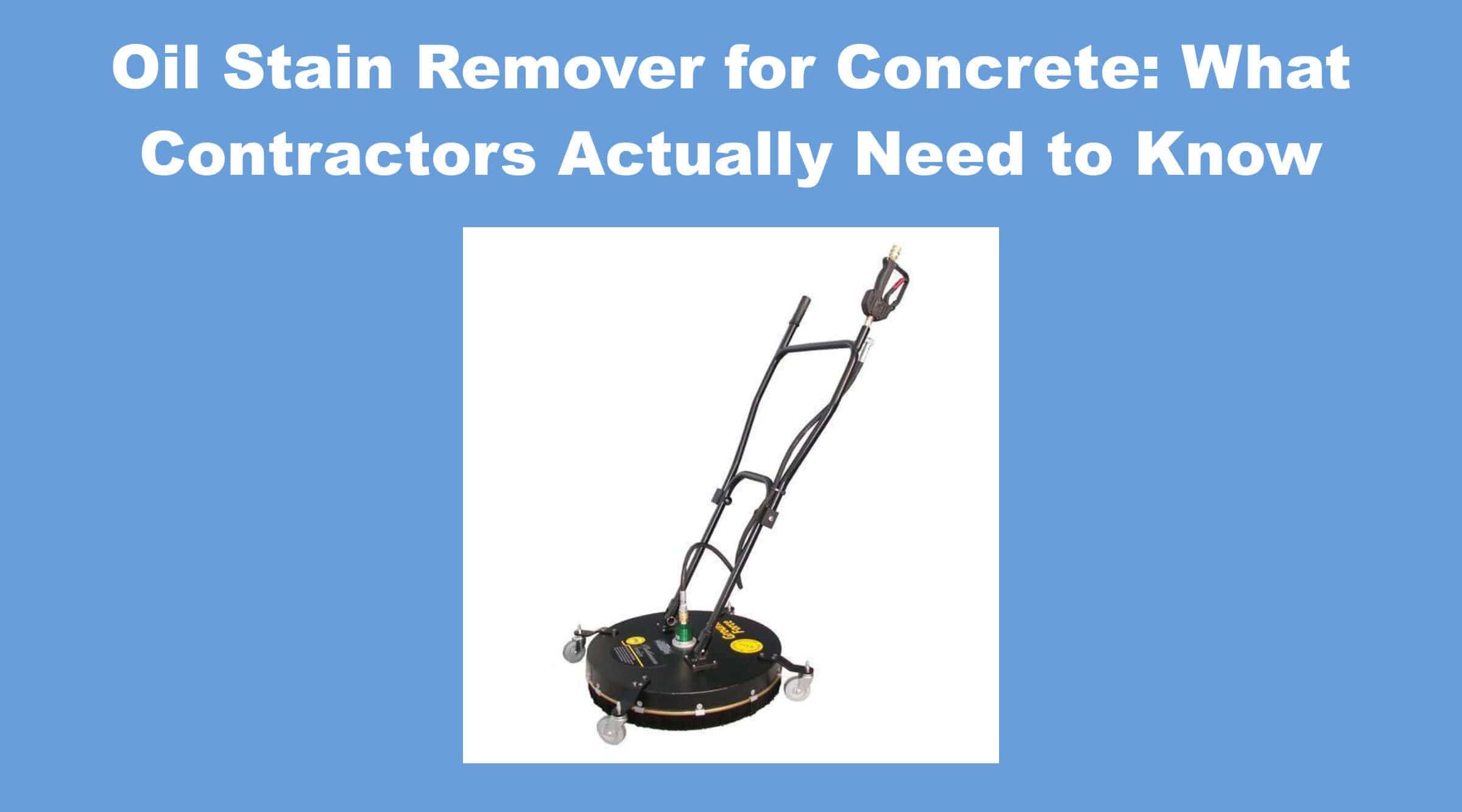
- Extract. Use a surface cleaner on a high-flow pressure washer. Surface cleaners deliver consistent pressure across the path and eliminate the zebra-stripe patterns a standard wand leaves behind.
- Contain and recover. Block every path to the storm system — sand dikes, portable berms, drain covers. For high-stakes commercial contracts, a vacuum recovery system pulls emulsified oil and wastewater into a holding tank for zero-runoff compliance.
- Check pH. Alkaline residue can interfere with future sealers or coatings. Neutralize if needed.
Equipment That Makes the Process Work
Chemistry does the extraction; equipment does the rinsing and recovery. The two are inseparable.
A commercial pressure washer in the 4.0–8.0 GPM range paired with a surface cleaner is the baseline rig for parking lot and garage work. Hot water capability accelerates every solvent-based product you use. For chemical application at scale, a soft wash sprayer skid with metering control lets you dial dilution ratios precisely and cover large areas without hand-pumping a sprayer all day.
Professional-grade hoses, hose reels, and proper safety gear round out the rig. The goal is a repeatable system: consistent chemistry, consistent pressure, consistent containment, consistent results.
Matching the Product to the Job
| Scenario | Best Chemistry | Why |
|---|---|---|
| Fresh spill, same-day service | Solvent degreaser | Fast emulsification, single application |
| Recurring drive-thru / fleet lot stains | Microbial cleaner | Ongoing bio-consumption, fewer repeat visits |
| Decade-old oxidized stains | Poultice + microbial | Deep extraction of hardened hydrocarbons |
| Sealed decorative concrete | pH-neutral enzymatic | No risk of etching or stripping sealer |
| Industrial grease / hydraulic fluid | Petroleum-based solvent + hot water | Maximum dissolving power on heavy contamination |
Products Mentioned
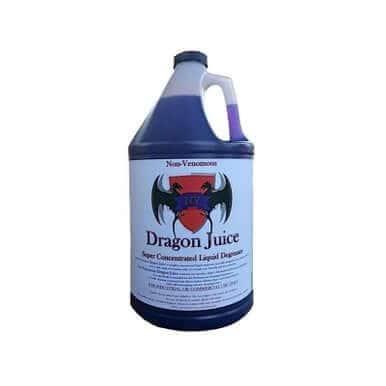 Dragon Juice Super Concentrated Degreaser SKU: 84-9M | 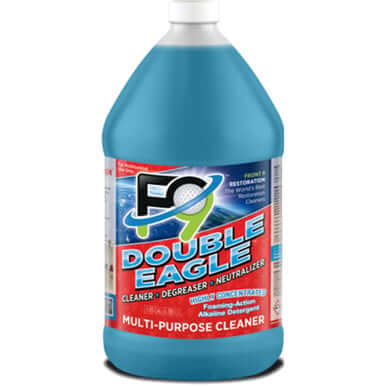 F9 Double Eagle Degreaser Gal SKU: 320-618 | 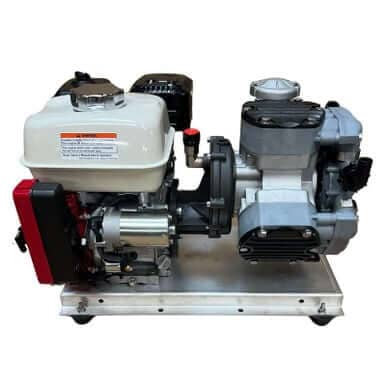 BPX25 - P40 Soft Wash Sprayer Skid SKU: 150-0432M |
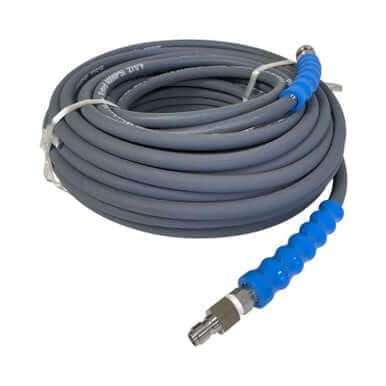 ProTool Pressure Washing Hose 4000psi 1 Wire SKU: 74-36M |