Honda GX690 for Pressure Washing: Specs, Compatibility, and Maintenance

Table of Contents
The Honda GX690 powers some of the most capable pressure washing rigs in the exterior cleaning industry — but bolting a 22-hp V-twin onto a skid doesn't automatically give you a machine that performs. The engine is one component. The pump, drive arrangement, plumbing, and controls determine whether that power translates into cleaning output or just noise and fuel burn.
This guide covers how to identify the exact GX690 variant on your equipment, verify its specs against manufacturer documentation, assess compatibility with your pressure washing system, and maintain it properly. Whether you're evaluating a new rig or troubleshooting an existing one, the approach is the same: treat the engine as part of a system, not the system itself.
Identify the Exact GX690 Before Doing Anything Else
"GX690" is a family name, not a single engine. Shaft configuration, charging system, controls, and regional certifications all vary by suffix. Two machines both labeled GX690-powered can use different components, accept different parts, and have different service requirements.
Find the model designation and serial number stamped on the engine block — not on the pressure washer's nameplate. Record the full string, including every suffix and character. The difference between a GX690RHTXA2 and another variant matters when you're ordering an air filter, selecting oil weight, or confirming mounting dimensions.
Specs worth confirming from the matched Honda documentation
- Displacement: 688 cm³ (for the RHTXA2 configuration)
- Net output: 22.1 hp at 3,600 rpm (configuration-specific — not universal across all GX690 variants)
- Engine type: Air-cooled four-stroke OHV V-twin
- Shaft configuration: Verify against your pump's input requirements
- Dimensions and mounting: Confirm against equipment manufacturer's spec sheet
- Electrical/charging: Relevant for electric-start setups and 12V accessories
Regional versions may differ in emissions equipment and rated output. Treat any general GX690 spec sheet as a starting point, then confirm against documentation matched to the actual model code on your engine.
How the GX690 Fits Into a Pressure Washing System
Engine output means nothing in isolation. A 22-hp engine driving a mismatched pump through an incompatible coupling is an expensive paperweight. The system chain matters:
Engine → Drive connection → Pump → Plumbing and controls → Operating load
Every link must be spec'd for the application. A direct-drive configuration imposes different shaft and speed requirements than a belt-drive setup. The pump's GPM and PSI ratings establish the actual cleaning performance — the engine just needs to deliver enough power to keep the pump running at its rated output without bogging down.
Matching engine to pump
Start with the pressure washer manufacturer's documented engine requirements, then cross-reference with the Honda documentation for your exact model code. Check:
- Shaft diameter, length, and keyway — a direct-drive pump bolts straight to the crankshaft. Wrong dimensions mean it doesn't mount.
- RPM range — the pump is designed to operate at a specific speed. The engine must deliver that without being over- or under-revved.
- Power margin — running the engine at 100% rated output continuously shortens life. A reasonable margin keeps operating temperatures and wear in check.
For contractors running high-output cold water rigs, the GX690 commonly pairs with pumps in the 4.0 GPM class at 4000 PSI or the 8.0 GPM class at 3000 PSI. ProTool and PressurePro build complete skid-mounted systems around this engine — see the ProTool 4.0g 4000psi Cold Direct Drive for one example.
Operating conditions that matter
- Duty cycle: The GX690 is a commercial engine built for sustained operation, but heat management still matters. Enclosed skids need adequate airflow. Trailer rigs fare better than sealed compartments.
- Altitude and temperature: Output drops at elevation and in extreme heat. If you're washing buildings in Denver or Phoenix in July, factor that in.
- Service access: Oil changes, air filter swaps, and spark plug replacements shouldn't require disassembling the skid. Plan the build or choose a rig where the engine's service points are reachable.
Comparing the GX690 Against Other Engine Options
A useful comparison requires like-for-like data — same rating standard, same test conditions, matched to the same pump and drive configuration. Two engines with similar horsepower numbers rated under different standards aren't actually comparable.
| Comparison point | What to verify |
|---|---|
| Rated output | Net HP at a stated RPM, under the same rating standard. Gross HP numbers inflate the comparison. |
| Physical fit | Mounting bolt pattern, shaft dimensions, overall envelope. Measure against your skid or frame. |
| Drive arrangement | Direct drive vs. belt drive compatibility with the pump. |
| Fuel consumption | At rated load, not idle. The GX690's fuel efficiency at continuous operation is a real cost factor on long wash days. |
| Parts and service | Honda's dealer and parts network is extensive. A cheaper engine with scarce parts support costs more in downtime. |
The Honda GX690 has earned its place in the professional pressure washing market through proven reliability and broad parts availability. But "Honda" doesn't automatically mean best fit — it means best fit when the documentation confirms compatibility with your pump, drive, and machine design.
For complete, pre-configured pressure washing rigs where the engine-pump-drive matching is already done, browse pressure washers or pressure washing skids.
GX690 Maintenance: Use the Right Manual, Not a Generic Schedule
The single most common maintenance mistake is applying a generic GX-series schedule to a specific GX690 variant. Oil capacity, filter type, valve clearance specs, and service intervals can vary by configuration. Get the manual matched to your full model code.
Baseline service intervals (GX690 — verify against your manual)
- Initial oil change: First month or 20 operating hours
- Regular oil changes: Every 6 months or 100 hours
- Oil filter: Every 200 hours
- Spark plugs: Every year or 300 hours
- Air filter: Inspect per manual; replace based on operating environment (dusty jobsites shorten intervals significantly)
Keep a service log tied to the engine's serial number. Record date, operating hours, work performed, and parts used. This isn't busywork — it's the difference between predictable maintenance costs and surprise failures mid-job.
Replacement parts like the Honda GX air filter and the GX690 muffler are available through J.Racenstein. Always match the part number to your specific engine model code.
Troubleshooting: what operators should and shouldn't touch
Engine won't start: Follow the manual's starting procedure. Check fuel level, choke position, and the kill switch before anything else. Note any warning indicators.
Irregular running or power loss: Stop and note when the symptom occurs — under load, at idle, cold start only. Check only items the manual identifies as operator-serviceable. Air filter restriction and stale fuel are the two most common culprits on jobsite engines.
Unexpected shutdown: Do not keep restarting. Check for leaks, unusual smells, or visible damage. The thermal relief valve on the pump side may have tripped if the system overheated — a separate issue from the engine itself.
If the manual directs you to qualified service, follow that direction. A field repair that voids the warranty or damages the engine costs far more than the service call.
Choosing GX690-Powered Equipment for Your Operation
The decision isn't "which engine" — it's "which complete machine for my workload." The GX690 is a strong candidate for high-output commercial pressure washing, but only when the entire rig is matched to the work.
Pre-purchase checklist
- Define the work first: Residential driveways and house washes need different GPM/PSI combinations than fleet washing or concrete restoration. The engine follows the application, not the other way around.
- Verify engine-pump-drive compatibility: Confirm that the manufacturer has spec'd all three as a matched system. A belt-drive pump rated for 4.0 GPM at 4000 PSI has specific shaft and RPM requirements.
- Check mounting and fitment: If you're building a custom skid or replacing an engine, measure everything. "GX690" doesn't mean universal bolt pattern.
- Confirm documentation: You need the Honda manual for the exact engine model and the equipment manufacturer's manual for the complete machine. Both, not one or the other.
- Plan for parts and service: Honda's network is a genuine advantage. Confirm your local dealer stocks GX690-specific parts or can get them quickly.
For pre-built, professionally matched systems, J.Racenstein carries complete pressure washing skids and hot water addon boxes designed for commercial exterior cleaning operations.
Products Mentioned
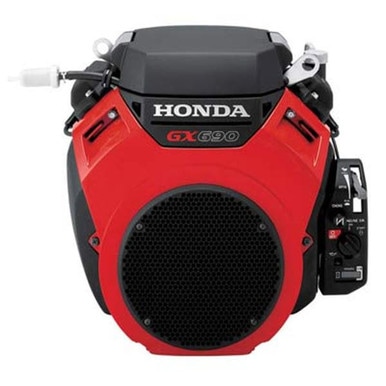 Honda Engine GX690 SKU: 74-7218 | 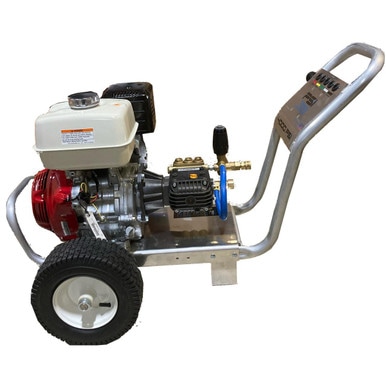 ProTool 4.0g 4000psi Cold Direct Drive Comet SKU: 74-11136 |  Air Filter Honda GX340/390 SKU: 74-7220 |
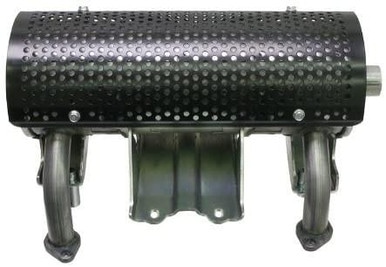 Muffler for Honda Engine GX690 SKU: 74-7219 | 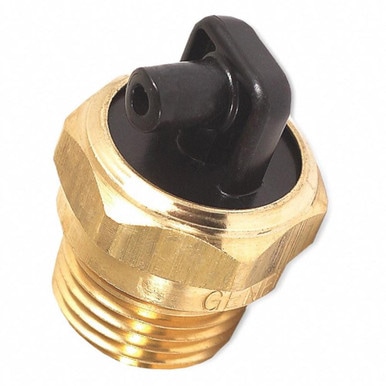 Thermo Relief Valve 1/2in MPT General Pump SKU: 74-7224 | 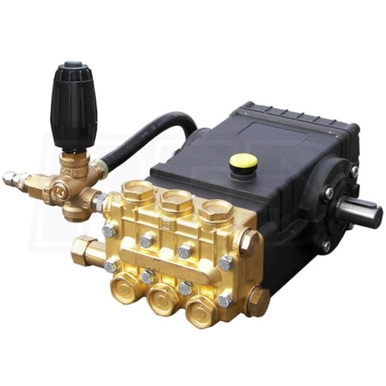 Pump 4000psi 4.0gpm BeltDrive SolidShaft SKU: 74-8106 |