How to Remove Paint from Concrete: Methods That Actually Work
Table of Contents
The most expensive mistake in concrete paint removal isn't the chemical — it's choosing the wrong method for the coating and substrate, then burning hours fixing the damage. A mismatched stripper smears pigment deeper into the pores. An overpowered nozzle etches the cream layer permanently. Knowing how to remove paint from concrete means reading the surface first and building a tiered attack: assess, strip mechanically where possible, apply chemistry where needed, and extract with pressure.
This guide covers the full workflow — coating identification, mechanical prep, chemical dwell management, and pressure washing extraction — along with the PPE and environmental containment that current OSHA and EPA rules require. Whether you're lifting a single coat of latex from a garage slab or stripping decades of layered alkyd off a commercial deck, the sequence is the same. Only the variables change.
Assess the Concrete and Identify the Coating
Skip assessment and you'll pick the wrong stripper, waste labor, and risk damaging the substrate. Every job starts here.
Identify the Coating Material
Rub denatured alcohol on a clean rag and work a small area for 30 seconds. If paint softens or transfers, it's water-based latex. No reaction means oil-based alkyd or epoxy. The distinction dictates your chemical choice and dwell time.
For any structure built before 1978, test for lead with an EPA-approved kit before you touch a grinder or scraper. The disposal rules for lead-contaminated slurry are severe, and the fines for skipping the test are worse.
Observe the failure pattern. Peeling usually signals moisture vapor transmission or poor original adhesion. Chalking points to UV degradation. Fully bonded epoxy won't respond to mild strippers — it needs mechanical force or a benzyl alcohol-based agent.
Understand Concrete Porosity and Surface Profile
Concrete Surface Profile (CSP) runs from 1 (smooth troweled) to 10 (aggressively shot-blasted). Smooth surfaces let you scrape more easily but give new sealers less grip. Broom-finished or weathered concrete holds paint deeper in the matrix, which is why chemical assistance is almost always required on textured slabs.
Run a water drop test on an unpainted section. If water beads, the concrete is dense or previously sealed. If it absorbs within 30–60 seconds, the substrate is porous and paint has likely migrated deep. On compromised surfaces showing spalling or dusting, reduce PSI and lean on chemical dwell time instead of mechanical force — you'll preserve what's left of the surface.
Mechanical Removal: Scraping and Grinding
Mechanical removal is the fastest path when paint has already begun to delaminate. Clearing loose flakes and thick build-up first cuts your chemical volume significantly.
Scrapers for Bulk Removal
Long-handled floor scrapers let you cover square footage fast in an upright position. Keep the blade sharp and the angle consistent — a dull edge rides over the coating instead of shearing it. For tight corners and vertical surfaces, switch to a handheld Champion scraper or cup brush on an angle grinder. Always run guards on power tools; OSHA requires it for mechanical removal, and flying paint chips are a real hazard.
Power Grinding for Stubborn Coatings
Thick industrial epoxies resist scraping entirely. Floor grinders with Polycrystalline Diamond (PCD) segments scrape the coating off rather than grinding it into the pores, which prevents smearing.
- Dry grinding — High visibility, but requires a vacuum-shrouded system to meet OSHA silica standards.
- Wet grinding — Eliminates dust but creates slurry that needs specialized disposal.
- Profile preservation — Avoid aggressive grinding on decorative concrete. You'll permanently change the texture.
Grinding is often the better choice when the end goal is re-sealing: it creates a specific CSP that gives new coatings a superior mechanical bond.
Chemical Stripping: Breaking the Molecular Bond
Consumer-grade solutions — vinegar, dish soap — are useless on high-solids coatings. Commercial-scale paint removal demands agents that penetrate the coating's molecular structure and liquify the resin.
Choosing the Right Agent
The 2024 EPA final rule banned most commercial uses of methylene chloride. The industry has largely shifted to benzyl alcohol-based strippers for oil-based paints and epoxies, and soy-based gels for extended-dwell vertical work. Caustic strippers (sodium hydroxide) still work well on oil-based alkyds on horizontal surfaces, but require a neutralization step before you seal.
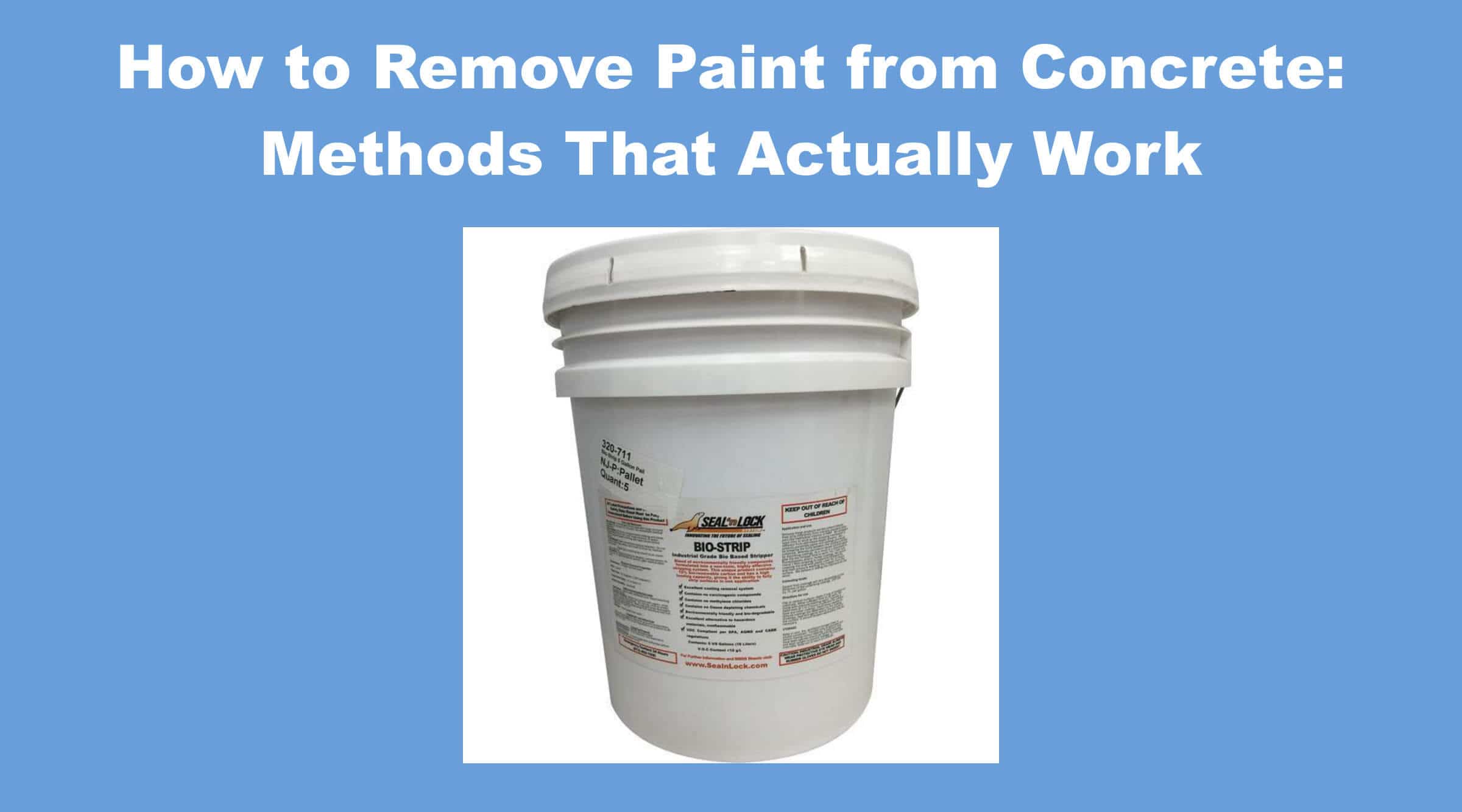
For concrete cleaning and stripping chemistry, F9 GroundsKeeper handles general concrete cleaning, while Bio-Strip is purpose-built for sealer and coating removal on hardscape. Match the agent to the resin type you identified in assessment — an incompatible product smears pigment instead of lifting it.
Application and Dwell Time
Apply strippers 1/8 to 1/4 inch thick. Too thin and the product dries before the reaction completes, doubling your material cost. The "Wrap and Trap" method — covering the treated area with plastic film — prevents evaporation and raises the reaction temperature, keeping the agent active for up to 24 hours on multi-layered coatings.
Always run a patch test. Check every 30–60 minutes. Start extraction too early and you leave ghosting. Wait too long and liquified paint re-bonds to the pores. In cold weather, chemical reactions slow dramatically — extend dwell time or supplement with hot water during extraction.
Pressure Washing for Final Extraction
Once chemistry has liquified the resin and scrapers have cleared the bulk, high-pressure water handles deep-pore cleaning. This is where knowing how to remove paint from concrete shifts from chemistry to hydraulics.
Machine Configuration
Minimum spec: 3,000 PSI at 4.0 GPM. PSI breaks surface tension; GPM flushes waste and prevents pigment from re-settling. High pressure with low volume drives pigment deeper — the opposite of what you want. A 4.0 GPM 4000 PSI cold water skid handles most commercial paint jobs. For stubborn coatings, a hot water pressure washer softens remaining bonds and cuts your total chemical load.
Nozzle Selection
Standard fan tips lack concentrated force for paint. A static 0-degree nozzle gouges the substrate. The turbo nozzle is the correct tool — it delivers a rotating 0-degree stream in a conical pattern, combining pinpoint impact with wide-path efficiency.
Work in overlapping sweeps at 50% overlap to prevent zebra striping. Maintain 6–12 inches of standoff distance. If paint isn't lifting at that range, don't move closer — go back to more chemical dwell time.
Avoiding Surface Damage
- Adjust PSI by concrete age. Older, weathered slabs spall more easily.
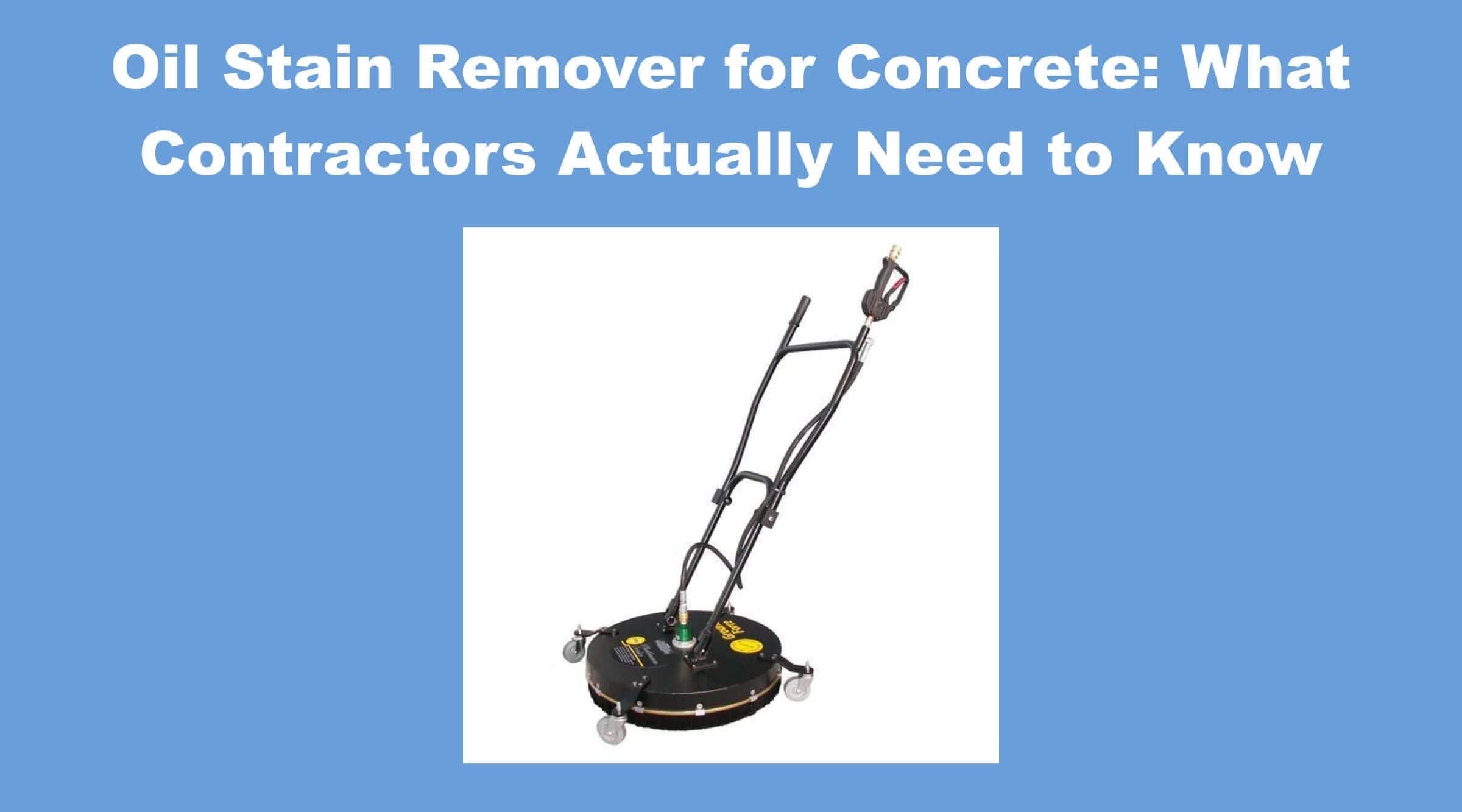
- Use a surface cleaner for the final rinse to get a streak-free finish after aggressive nozzle work.
- Neutralize residual chemistry. A high-volume final rinse removes caustic or acidic stripper residue that would interfere with future coatings.
If stubborn spots remain after extraction, localized wire-brush agitation followed by a hot-water blast usually finishes the job.
PPE and Site Management
Paint removal puts your crew between chemical exposure and mechanical hazards simultaneously. Basic hardware-store masks don't cut it.
Personal Protective Equipment
Nitrile gloves handle mild soy-based agents. For benzyl alcohol-based strippers, switch to butyl rubber or Viton — nitrile won't stop permeation. Use N95 respirators during dry grinding (silica dust) and organic-vapor cartridge respirators during active chemical stripping.
Turbo nozzles throw significant splashback carrying liquified paint and caustic chemicals. Full face shields over safety glasses are required. Industrial pumps exceed 85 dB, so rated hearing protection is mandatory for extended shifts.
Environmental Containment
Federal and local regulations prohibit paint-laden wastewater in storm drains. Use magnetic drain covers or a vacuum recovery system to capture all slurry and rinse water. If you used caustic strippers, neutralize the concrete pH before final cleanup to keep the substrate stable for future coatings.
For vertical or elevated concrete — parking decks, industrial walls — all technicians need certified fall protection equipment before work begins.
Seal the Surface After Removal
Paint removal leaves concrete pores open and absorbent. Without a sealer, the substrate is vulnerable to moisture intrusion, oil staining, and freeze-thaw damage. Apply a professional-grade penetrating sealer like Deco 20 or a topical paver sealer to lock in the restoration work.
Products Mentioned
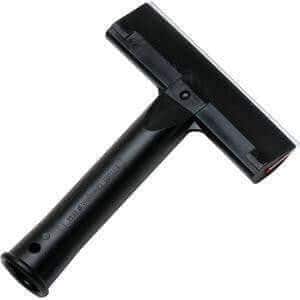 Scraper Champion 05in SKU: 35-12 | 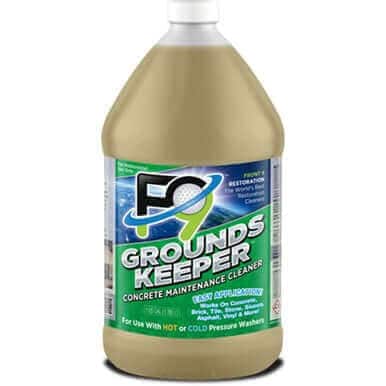 F9 GroundsKeeper Concrete Cleaner Gal SKU: 320-619 | 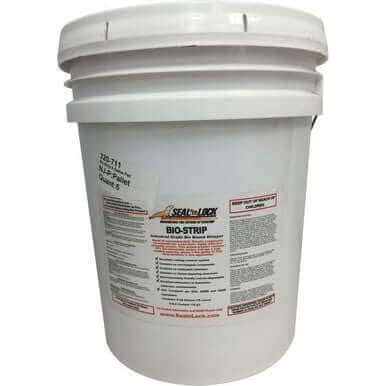 Bio-Strip 5 Gallon Pail SKU: 320-711 |
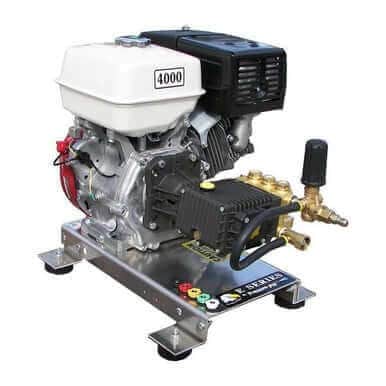 4.0g 4000psi Cold Direct Drive AR Skid SKU: 74-1107 | 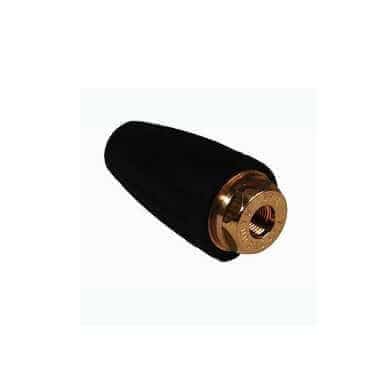 Turbo Nozzle Pressure Washer Tip SKU: 74-57M | 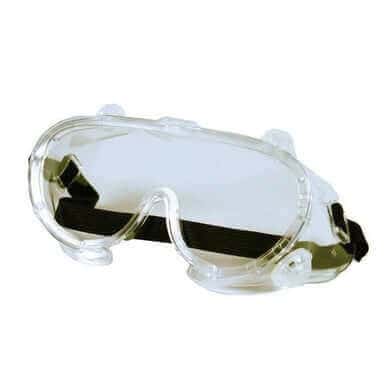 Safety Glasses Clear SKU: 74-7420 |
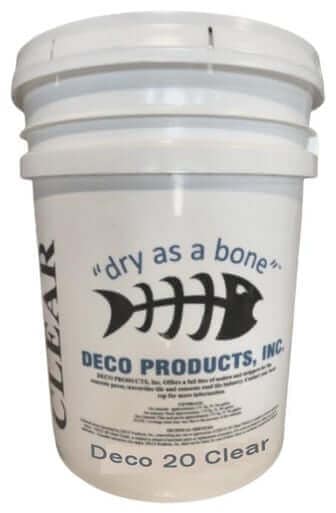 Deco 20 Clear Concrete Sealer Matte Finish SKU: 320-716 |