
How to Choose the Right Concrete Cleaner for Every Job

Table of Contents
The wrong concrete cleaner on the wrong stain costs you product, time, and sometimes the surface itself. A deep-set oil stain requires a fundamentally different chemistry than rust bleed or efflorescence, and guessing wrong means re-treating — or worse, explaining etch marks to a client. Choosing the right concrete cleaner is a diagnostic skill, not a product preference.
This guide gives you the framework: identify the stain, match the chemistry, apply it correctly, and protect everything around it.
Concrete Cleaner Chemistry: Why Pressure Alone Fails
High PSI moves loose dirt. It does not break molecular bonds. Pressure can drive oils deeper into porous concrete and does nothing to dissolve mineral deposits. The chemical does the work; the machine rinses the result.
The practical tool here is the pH scale. Most tough stains are either acidic (minerals, rust) or alkaline (oils, grease). A cleaner on the opposite end of the scale neutralizes and lifts the stain. That single concept — opposite pH dissolves the contaminant — governs nearly every product choice you will make on hardscape.
Alkaline Cleaners (Degreasers) — Oil and Grease
Alkaline degreasers use saponification: they chemically convert fats and oils into a water-soluble substance that rinses clean. Caustic formulas built on sodium or potassium hydroxide deliver maximum cut on hydrocarbons.
Where they earn their money: parking garages, gas station pads, restaurant drive-thrus, dumpster pads, and industrial shop floors. Products like EBC Degreaser and ProTool Oily Man are built for these jobs. Dilution ratios typically range from 10:1 for heavy soiling to 40:1 for maintenance washes — one concentrate covers a wide range of severity.
Acidic Cleaners — Minerals, Rust, and Efflorescence
Inorganic stains — rust, mineral deposits, efflorescence, red clay — require acid. Hydrochloric, phosphoric, oxalic, and buffered acid blends dissolve metallic and mineral-based contamination that alkaline products cannot touch.
Non-negotiable protocol: Pre-wet the surface, spot-test in an inconspicuous area, and neutralize post-cleaning. Skip any of those steps and you risk permanent etching. EBC Restorer is a safer, acid-free alternative for lighter efflorescence and mineral work, while F9 EFFLO handles heavier calcium and efflorescence deposits with a buffered acid approach.
Specialty and Surfactant-Based Cleaners
Surfactants break water's surface tension, letting the primary cleaning agent penetrate deeper into concrete pores. They are not cleaners themselves — they are force multipliers for other chemicals. Products like ProTool Sticky extend dwell time on vertical and horizontal surfaces by helping the solution cling rather than sheet off.
Biocides and mildewcides — typically sodium hypochlorite blends — target organic growth specifically. pH-neutral cleaners exist for sealed or decorative surfaces where aggressive chemistry would cause damage.
Diagnosing the Stain Before You Mix
Misdiagnosis means wasted chemical, repeated labor, and an unhappy client. Run this mental checklist on-site before you open a single container.
Petroleum Stains: Oil, Grease, Hydraulic Fluid
Dark, absorbed patches that have penetrated the pores. Alkaline degreaser, hot water, extended dwell time on older stains. Mechanical agitation with a stiff-bristled brush breaks embedded contaminants free. F9 Double Eagle handles the toughest hydrocarbon jobs and doubles as a bleach-stable degreaser — useful when you are already running SH on the same site.
Organic Growth: Algae, Mold, Mildew
Green, black, or splotchy discoloration in damp, shaded areas. The standard is 12.5% Sodium Hypochlorite (SH) applied via soft wash or downstream injection. Always mix SH with a surfactant — ProTool Sticky or ProTool Stick — to extend dwell time and let the chemical kill growth at the root rather than just bleaching the surface layer.
Rust and Battery Acid Stains
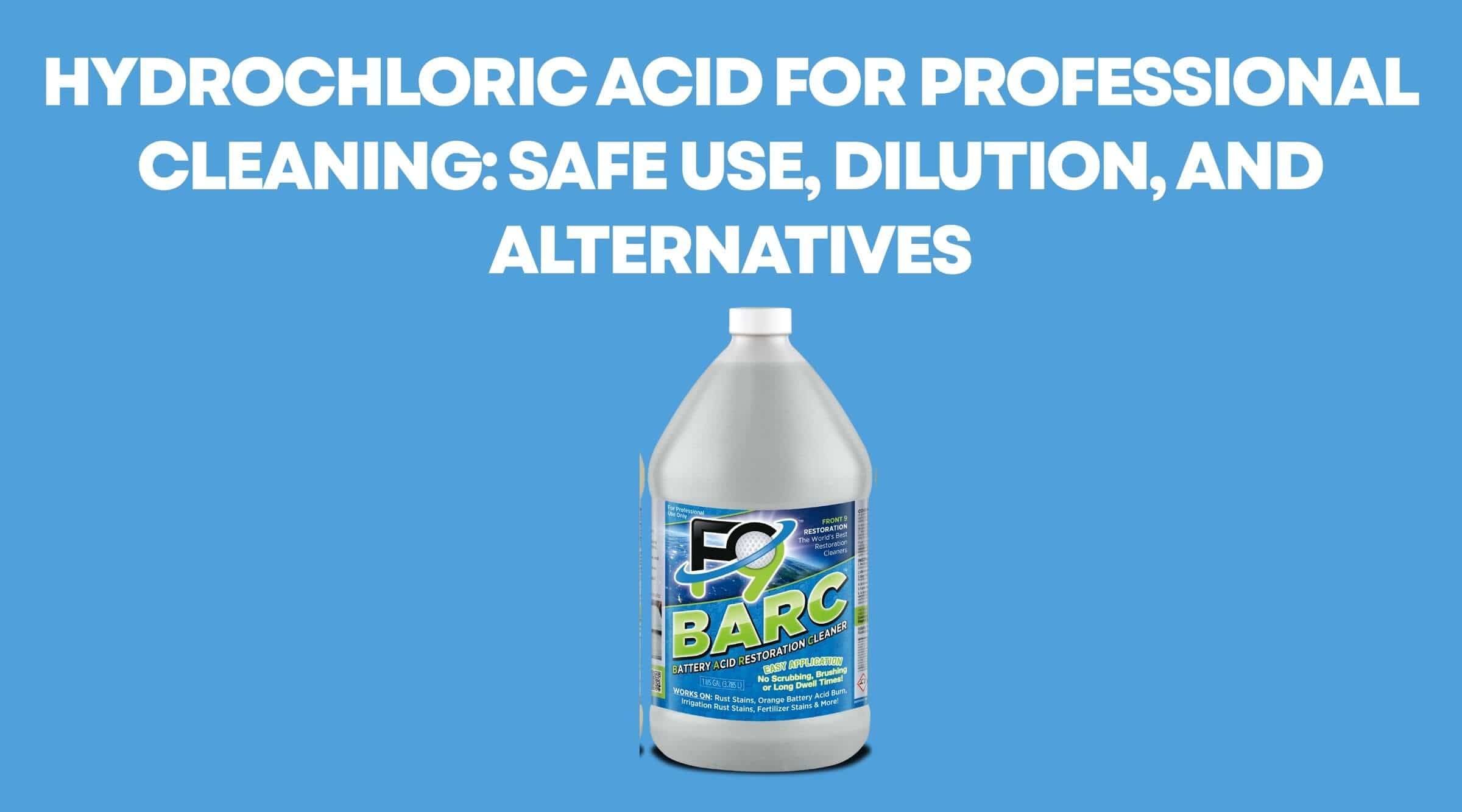
Distinct orange or brown marks from metal runoff, steel furniture, fertilizer iron, or battery acid. These require a specialized acid-based rust remover. F9 BARC is the professional standard — it handles fertilizer rust, battery acid burns, and irrigation-system orange staining on concrete, brick, and pavers. Apply as a direct spot treatment with a chemical-resistant pump sprayer. Always spot-test first.
Efflorescence and Hard Water Stains
Powdery white mineral deposits that appear as moisture evaporates from within the concrete. Use a mild acid concrete cleaner or a dedicated efflorescence remover like F9 EFFLO. Pre-wet the surface thoroughly before application — this prevents the acid from absorbing too deeply. Follow with a high-volume rinse to neutralize and remove all residue.
Application Methods That Maximize Your Chemical
The right chemical applied the wrong way is a waste of money. Application method determines whether the product works at full strength or gets diluted into nothing.
Pressure Washer with Downstream Injection
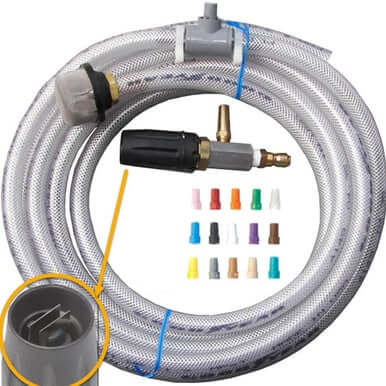
Downstream injection pulls cleaner into the water stream after the pump — the safest method for your equipment and the standard for alkaline maintenance washes. For stronger, more concentrated application, an X-Jet M5 applies chemical at the wand tip, bypassing the pump entirely. This is critical for acids, caustics, and any product you would never want inside your pump. Browse the full range of chemical injectors and downstream systems to match your rig.
Rule: Never run harsh acids or caustics through your pressure washer pump. Rapid corrosion and seal failure follow.
Manual Application: Pump Sprayers and Brushes
For spot treatments and aggressive chemicals, manual application gives unmatched control. Use a dedicated acid-resistant pump sprayer with Viton seals — standard rubber seals fail quickly with strong acids or solvents. For deeply embedded oil or heavy organic growth, apply the cleaner and agitate with a stiff-bristled brush to work product into the pores before rinsing.
Pre-Treat, Then Surface-Clean
The hallmark of a professional concrete job is a uniform, streak-free finish. Pre-treat the entire area with your concrete cleaner, allow 5–15 minutes of dwell time (never let it dry on the surface), then make your passes with a surface cleaner attachment. The chemical loosens the contamination; the surface cleaner lifts it evenly. This two-step process produces results that water alone cannot touch.
Matching Product to Job: A Quick Reference
| Stain Type | Chemistry Needed | Recommended Product |
|---|---|---|
| Heavy oil / grease / hydraulic fluid | Alkaline degreaser | F9 Double Eagle, EBC Degreaser, ProTool Oily Man |
| Rust / battery acid / fertilizer stains | Acid-based rust remover | F9 BARC |
| Efflorescence / calcium / hard water | Buffered acid / efflorescence remover | F9 EFFLO, EBC Restorer |
| Algae / mold / mildew | Sodium hypochlorite + surfactant | 12.5% SH + ProTool Sticky |
| General maintenance / light soil | All-purpose alkaline | F9 GroundsKeeper |
Safety Protocols for Chemical Concrete Cleaning
Before any container opens, read the manufacturer's Safety Data Sheet (SDS). It is not optional reading — it is the definitive guide to handling, PPE, storage, and emergency response for that specific product.
PPE Requirements
- Eye protection: Full-coverage, splash-proof goggles — mandatory during mixing and any low-pressure application.
- Gloves: Heavy-duty nitrile or PVC — standard latex fails against concentrated acids and caustics.
- Respirator: NIOSH-approved with the appropriate cartridge when working with strong acids or in confined areas.
- Footwear: Chemical-resistant, waterproof boots. Sneakers on a concrete cleaning job with acids is a hospital visit waiting to happen.
Protecting Client Property and Landscaping
- Pre-wet and rinse all surrounding vegetation, siding, and windows before, during, and after cleaning to dilute overspray.
- Use heavy-duty tarps or plastic sheeting over delicate plants, painted doors, and sensitive surfaces.
- Control runoff — keep contaminated water out of storm drains per EPA and local regulations.
- Communicate with the client about what you are using and the steps you are taking. Transparency builds trust and repeat business.
Chemical Handling Fundamentals
- Add concentrate to water, never the reverse. Adding water to acid causes an exothermic reaction and violent splashback.
- Label every secondary container with product name and dilution ratio. Unlabeled buckets create dangerous confusion.
- Store chemicals in cool, ventilated areas away from sunlight and incompatible materials. Secure during transport.
- Triple-rinse all equipment after use — sprayers, pumps, hoses, injectors. Residual chemical degrades seals and shortens equipment life.
For a deeper look at the F9 chemical system and how each product pairs with specific stain types, watch this overview from Front 9 Restoration: Concrete Cleaning Chemical Walkthrough on YouTube.
Products Mentioned
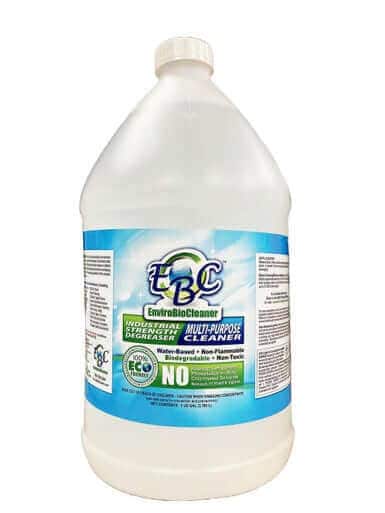 EBC Degreaser, Detergent SKU: 83-81M | 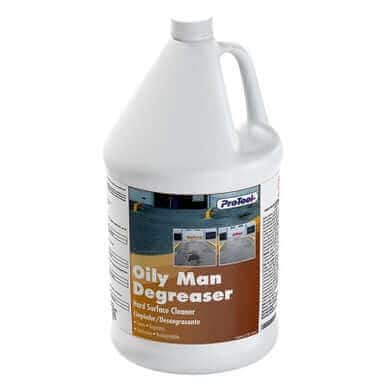 ProTool Oily Man SKU: 83-02M | 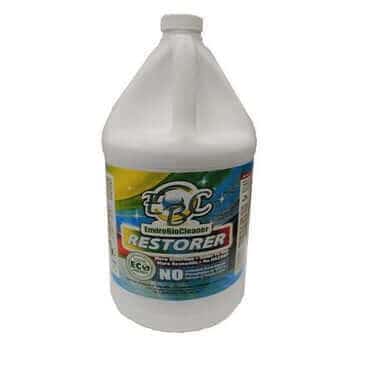 EBC Restorer SKU: 83-82M |
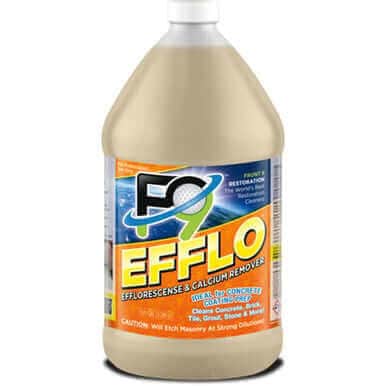 F9 Efflorescence/Calcium Remover Front9 Restoration SKU: 320-62M | 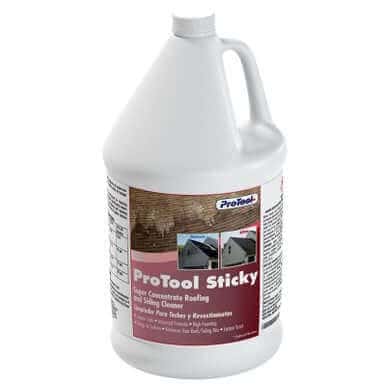 ProTool Sticky SKU: 83-07M | 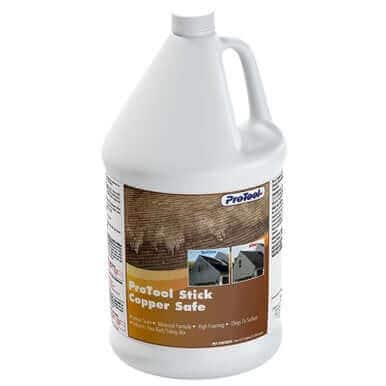 ProTool Stick SKU: 83-06M |
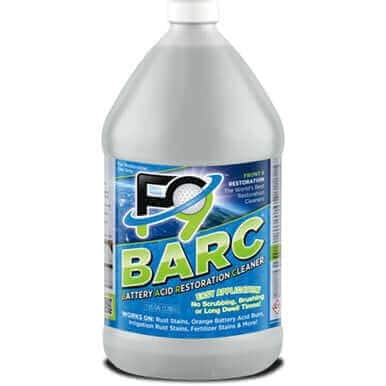 Front9 Restoration Rust Remover F9 B.A.R.C. SKU: 320-61M | 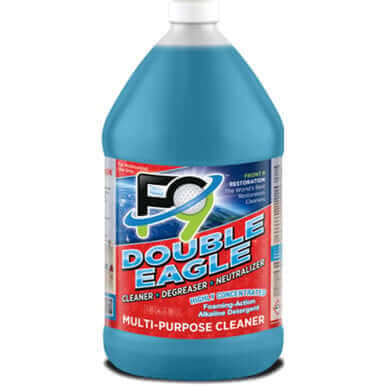 F9 Double Eagle Degreaser Gal SKU: 320-618 |  Sodium Hypochlorite (SH) 12.5 per gallon (NJ Warehouse only) SKU: 83-00 |
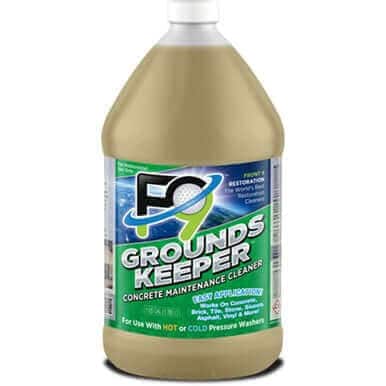 F9 GroundsKeeper Concrete Cleaner Gal SKU: 320-619 | 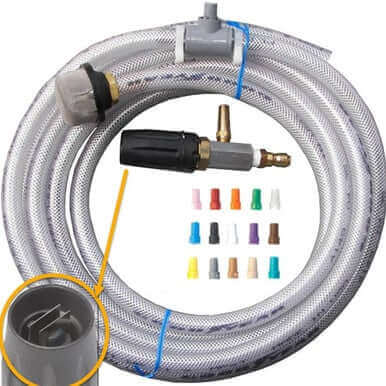 X-Jet M5 Variable Spray SKU: 74-53M | 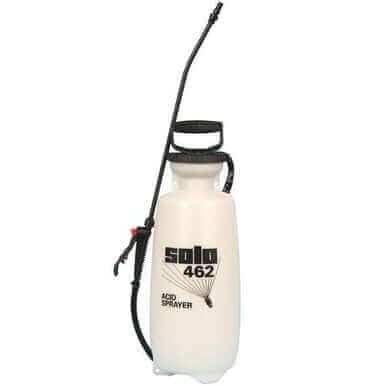 Pump Sprayer 2 Gal Acid Resistant Solo SKU: 515-045 |