Soft Wash System Parts List for Professional Contractors

Table of Contents
A $5 fitting made of the wrong polymer will sideline a $15,000 custom skid mid-season. Chemical stress is the primary enemy of soft wash equipment, and every material decision — seals, hose, manifold block, clamp grade — either extends your uptime or guarantees a callback. This soft wash system parts list covers the components that separate a professional rig from a hobbyist setup: pumps sized for real production rates, metering manifolds that eliminate batch-mixing waste, chemical-resistant plumbing that survives multiple seasons of concentrated SH, and the spare-parts inventory that keeps you running when something inevitably fails.
Pump and Motor Selection
The pump dictates application speed and vertical reach. Soft washing runs under 300 PSI — the work is chemical, not mechanical — so flow rate (GPM) is the metric that matters. A 7 GPM pump saturates a roof roughly 40% faster than a 5 GPM unit. If flow is too low, solution dries before the chemistry finishes, producing streaks and callbacks.
12V and 24V Electric Diaphragm Pumps
12V diaphragm pumps in the 5–5.3 GPM range are the standard residential entry point. They are affordable and simple to maintain, but they demand a robust power strategy — a Group 24 or 27 deep-cycle marine battery with at least 100 amp-hours to sustain a full production day.
24V systems are the common next step. A 24V pump delivers roughly 10 GPM and pushes chemicals through 300 feet of hose with significantly less amperage draw, which means less heat buildup, longer motor life, and the reach needed for three-story apartment complexes or steep commercial roofs. If you are running crews on multi-story work, the 24V upgrade pays for itself in speed alone.
Gas-Powered Diaphragm Pumps
Gas-driven diaphragm pumps — like the Comet P40 or the Udor Kappa 55 — eliminate battery dependency entirely. They deliver higher GPM on demand and are the right choice for high-volume commercial work, fleet operations, or any rig that runs eight-plus hours without a break. The trade-off is weight, noise, and engine maintenance, but for production-focused operations, nothing matches their sustained output.
Chemical Network: Tanks, Plumbing, and Proportioning
If your plumbing isn't chemical-resistant, the entire build fails within a single season. High-density polyethylene (HDPE) is the only acceptable tank material for SH storage — it withstands sodium hypochlorite without becoming brittle. Verify UV rating on every tank; sun exposure degrades standard plastics into leak sources that damage your truck bed or trailer. You need a primary SH tank, a smaller surfactant tank, and a dedicated water tank for buffering and rinsing.
Plumbing diameter is a performance factor most new builders overlook. While 1/2-inch plumbing is common, upgrading main supply lines to 5/8-inch significantly reduces friction loss, letting 7–10 GPM pumps operate at full potential without cavitation. Every connection point requires heavy-duty bulkhead fittings with Viton or EPDM gaskets — standard rubber gaskets dissolve on contact with concentrated bleach.
Tank Sizing
A 50-gallon SH tank paired with a 100-gallon water tank is a standard professional configuration. Surfactant tanks run 7–10 gallons. Secure all tanks with heavy-duty straps rather than bolting through the floor — bolts crack HDPE under the shifting weight of liquid during transport.
Proportioning Manifolds
Batch mixing wastes product and time. Proportioning manifolds let you adjust chemical strength on the fly without dumping a tank. Your manifold build requires:
- Precision metering valves — 1/2-inch or 3/4-inch, rated for bleach. These control your mix percentages with repeatable accuracy.
- Chemical-resistant manifold block — Aluminum and stainless corrode in SH. Use a ProTool poly metering block or the translucent 5-port manifold so you can visually confirm flow.
- Check valves — Prevent water from backing into your SH tank or surfactant contaminating your water supply. A 1/2-inch check valve at each supply line is non-negotiable.
Delivery Hardware: Hoses, Reels, and Spray Applicators
High-concentration SH destroys standard pressure washing hoses and fittings. Every component between the pump and the substrate must be engineered for chemical compatibility.
Hoses
Chemical-rated PVC-blend hoses with smooth interior bores minimize friction loss and resist the brittle degradation bleach causes in standard hose. A 200-foot run is the professional standard — long enough to reach around a 4,000-square-foot residential property, short enough to limit pressure drop. Every additional 50 feet costs you 5–10 feet of spray height depending on pump GPM. For main supply lines from tank to pump, 3/4-inch braided hose keeps flow unrestricted.
Reels
Stainless steel reels are the right choice for coastal or high-SH environments — aluminum corrodes. Electric rewind saves 15–20 minutes of manual labor per job. The swivel is the most-replaced part on any reel because it handles constant rotation under chemical pressure; a stainless steel swivel prevents the leaks that burn through your equipment bed.
Guns, Wands, and Nozzles
Poly-trigger guns are lighter than stainless alternatives, reducing forearm fatigue over an 8-hour shift. Chemical resistance of high-grade polymers handles standard SH mixes without issue. The ProTool Wash Down gun is built for exactly this application.
A 4-way nozzle holder lets technicians switch between a 0-degree stream and a 40-degree fan spray in seconds — no stopping the pump, no carrying multiple wands. Pair it with a ProTool 4-tip soft wash set sized for your GPM. Smaller orifices create tighter, higher-velocity streams for reaching second-story peaks; larger orifices allow high-volume rinsing at lower pressure.
Fittings, Filters, and Seals
The system is only as strong as its weakest connection. Standard plumbing fittings rely on EPDM seals that degrade in SH concentrations above 3%. Viton (FKM) gaskets and O-rings are the professional standard — they handle bleach without swelling or cracking.
Use polypropylene fittings over PVC for their superior impact strength and chemical resistance. Match thread types carefully: NPT for hard-plumbed sections, hose barbs for flexible tubing. Secure every hose barb with 316 stainless steel clamps — 304 stainless lacks the molybdenum needed to resist pitting corrosion from salt and bleach exposure.
Fittings Checklist
- Bulkheads — 3/4-inch bulkhead fittings provide leak-proof tank exits.
- Quick-disconnect couplers — Banjo-style couplers allow pump swaps or line flushes in under 60 seconds.
- Ball valves — Full-port 3/4-inch ball valves prevent flow restriction.
- Sealants — Thick Teflon tape for most plastic threads. For high-vibration areas near the pump, chemical-rated pipe dope ensures a permanent seal.
Strainers and Filtration
Debris is the primary cause of diaphragm failure. A suction-side strainer with a 50-mesh screen is mandatory to catch tank sediment before it reaches the pump valves. On the discharge side, inline filters prevent nozzle clogs and maintain a consistent spray pattern. Clean filtration components every 25–40 hours of operation — a 5-minute fresh-water flush at the end of every workday prevents surfactant buildup from hardening inside the mesh.
Maintenance Inventory and Spare Parts
Downtime costs $100–$200 per hour in lost revenue. A complete soft wash system parts list includes a crash kit on the truck for field repairs — because a blown fuse or leaky O-ring should never end your workday.
Critical Spares Kit
- Diaphragm repair kit for your pump model
- 15+ Viton O-rings in 1/4-inch and 1/2-inch sizes
- Assorted 20-amp and 30-amp fuses
- Spare pressure switch
- Backup check valves
- Extra hose clamps and a hose repair coupling
The pressure switch and internal check valves are the most frequent failure points — salt crystallization and chemical corrosion take them out within the first 6 months of heavy use. Carrying spares means a 5-minute field repair instead of a lost day.
Winterization
In freeze zones, use antifreeze injectors and blow-out plugs to clear water from the manifold and pump housing before storage. Water expansion cracks poly pump heads and brass fittings. A $10 winterization step prevents a $400 pump replacement.
Pre-Built vs. Custom Builds
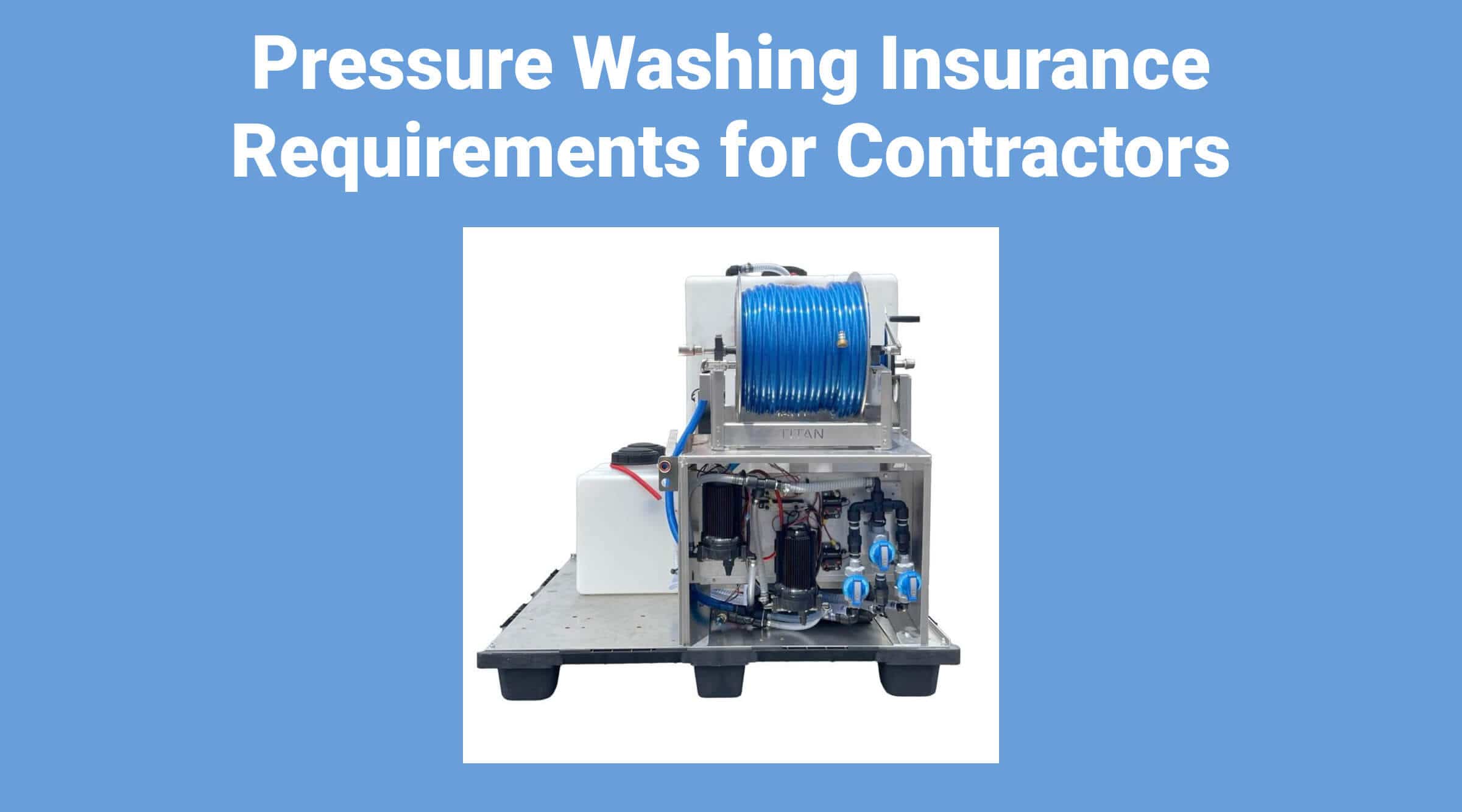
Pre-built skids like the ProTool BPX25 Soft Wash Skid save 20–30 hours of assembly time and ship with optimized plumbing layouts and a factory warranty. If your truck bed demands a custom footprint, J.Racenstein's Custom Builds by ProTool team configures skids to your exact flow, tank, and reel requirements. Either path gets you a rig that works on day one — the choice depends on whether your constraint is time or layout.
For a deeper walkthrough of soft wash assembly, this J.Racenstein soft wash build video covers manifold plumbing and pump wiring step by step.
Products Mentioned
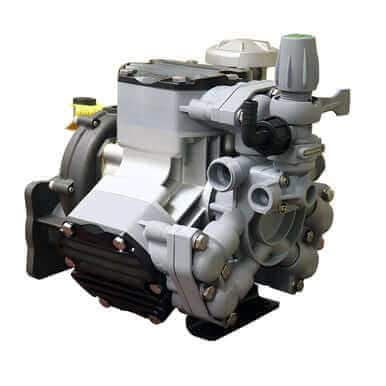 Comet P40 Diaphragm Pump SKU: 150-0428 | 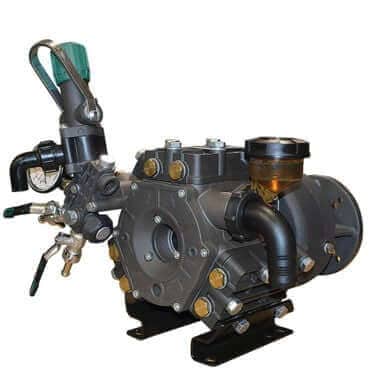 Udor Kappa 55 Diaphragm Pump Only SKU: 150-0431 | 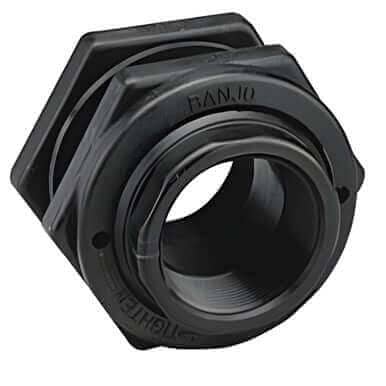 Bulkhead Fitting 1/2in FNPT Banjo SKU: 74-8138 |
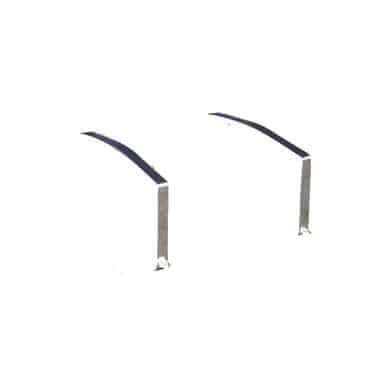 Bands for 100gal Rectangle tank (pair) SKU: 150-04396 | 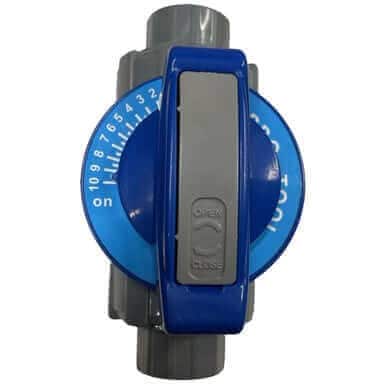 Valve Metering 1/2in ProTool SKU: 74-4969 | 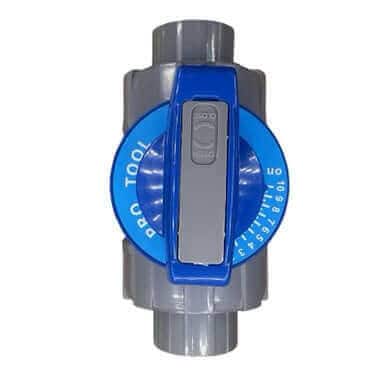 ProTool Metering Valve 3/4 in SKU: 74-49691 |
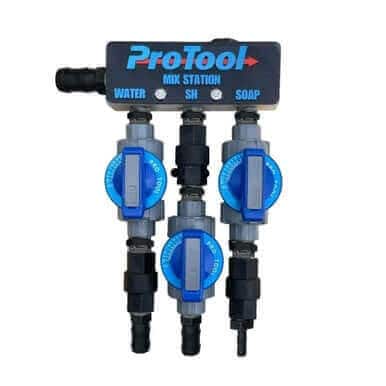 Soft Wash Metering Block SKU: 150-0454M | 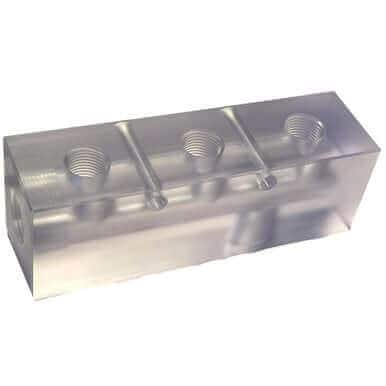 Metering Manifold Translucent 5 Port Softwash (3ea) 1/2in and (2ea) 3/4in SKU: 150-361 | 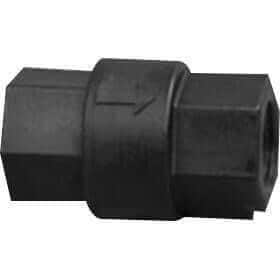 ProTool Check Valve 1/2in Female NPT SKU: 74-8195 |
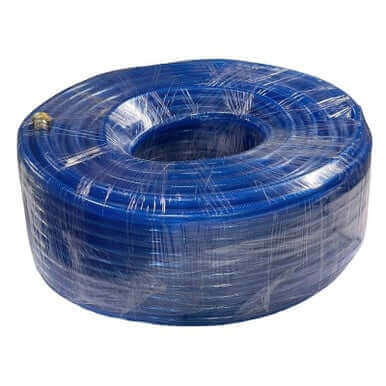 Hose 3/4in Braided By the Ft Blue SKU: 150-0318 | 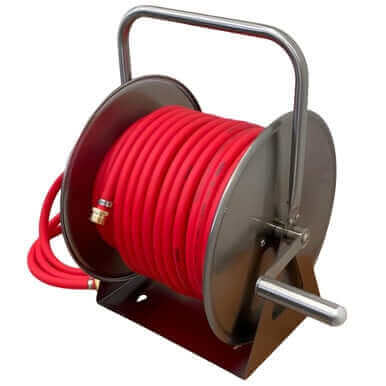 Reel Stainless Steel w/ 125ft 3/8in hose SKU: 68-011 | 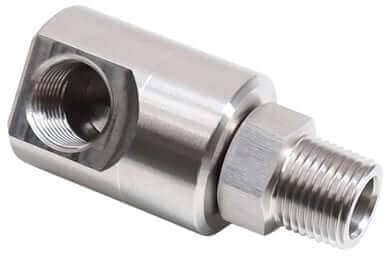 ProTool Swivel 1/2 npt Male, Female SKU: 68-242 |
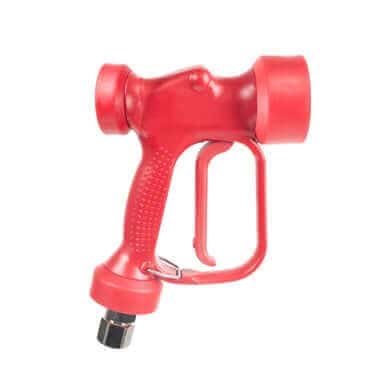 ProTool Wash Down Soft Wash Gun SKU: 74-5204 | 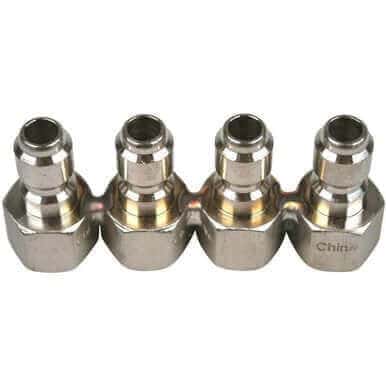 ProTool 4 Tip Nozzle Holder (no tips) SKU: 74-5990 | 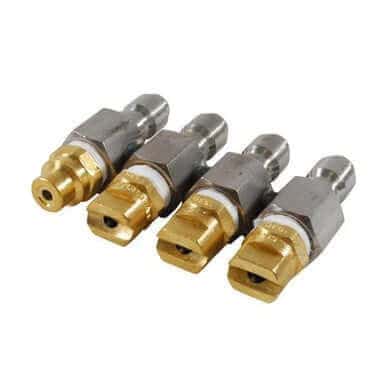 ProTool 4 Tip Soft Wash 0030 1530 2530 4030 Brass SKU: 74-5997 |
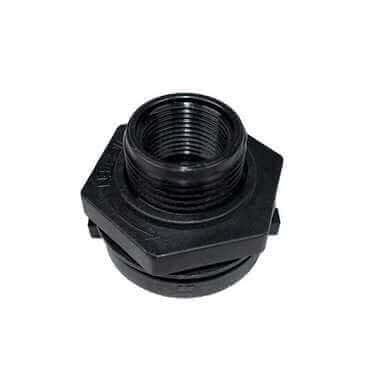 ProTool Bulkhead 3/4 in. Fitting W/Gasket SKU: 74-8140 | 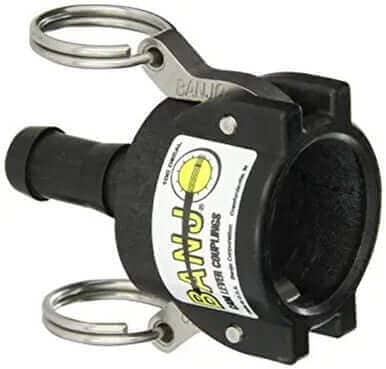 ProTool Coupler 3/4in FM to 1/2in barb Banjo SKU: 74-81526 | 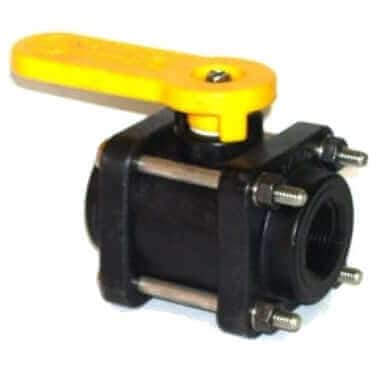 ProTool Valve 2-way 3/4in Banjo Ball Valve SKU: 74-8166 |
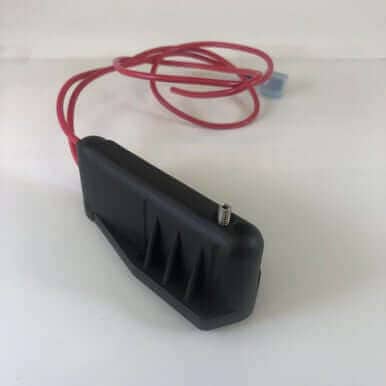 ProTool Pressure Switch 5gpm Chem Wash Pump SKU: 150-738 | 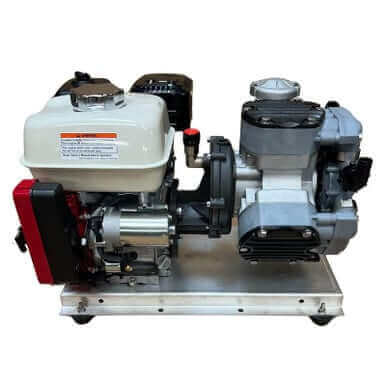 BPX25 - P40 Soft Wash Sprayer Skid SKU: 150-0432M |