Oil Stain Remover for Concrete: What Contractors Actually Need to Know

Table of Contents
An oil stain remover for concrete is not optional equipment — it is the difference between a one-pass job and a callback. Pressure washing alone moves hydrocarbons around inside the slab. The stain ghosts back in 48 hours, the client calls, and you eat the labor twice. The chemistry you choose determines whether you extract the contamination or just relocate it.
This is not a product roundup. It is a framework for matching chemical mechanism to stain profile, picking the right delivery hardware, and staying on the right side of EPA washout rules — all of which directly affect whether a concrete cleaning job makes money or loses it.
Why Concrete Holds Oil and Water Cannot Release It
Concrete is a rigid mineral sponge. Capillary networks created during curing pull hydrocarbon liquids deep into the substrate the moment they hit the surface. A broom-swept parking lot finish — high surface area, open pores — accepts oil fast. A smooth-troweled warehouse floor resists longer, but not indefinitely.
The problem is three-dimensional. Oil occupies internal volume, not just the surface plane. Water alone cannot break the molecular bond between hydrocarbon and pite wall. High-pressure water without a surfactant can actually drive oil deeper into the matrix, making eventual removal harder and more expensive. You need a chemical that penetrates as deep as the oil did.
Stain age changes the equation. Fresh oil is still liquid and relatively easy to emulsify. Set-in stains have oxidized and bonded with the concrete's lime and calcium content — they are chemically part of the slab. A standard degreaser will not touch them. This distinction is the single most important variable when selecting an oil stain remover for concrete, and getting it wrong costs you a return trip.
Four Types of Oil Stain Remover and When Each One Wins
Professional formulations break into four categories. Each has a specific use case, and none is universal.
- Solvent-based degreasers — Emulsify hydrocarbons for immediate extraction. Citrus-based (d-Limonene) solvents handle most commercial work. Petroleum-based solvents are necessary for heavy industrial grease or deeply oxidized oil. These are your same-day-results chemistry.
- Microbial cleaners — Bacteria consume hydrocarbons and convert them to water and CO₂. Best for recurring contamination sites (drive-thrus, fleet yards) where long-term remediation matters more than instant results. They require moisture and moderate temperatures to stay active — apply them on bone-dry concrete in 100°F heat and you kill the colony before it reaches the pores.
- Enzymatic removers — Break complex hydrocarbon chains into simpler forms that bacteria can process. Often paired with microbial cleaners as a two-stage system.
- Poultice cleaners — Applied as a thick paste, they dry over hours and create a vacuum effect that wicks emulsified oil out of the pore structure. This is the only reliable fix for ghosting in high-visibility areas.
F9 Double Eagle and ProTool Oily Man are the solvent-based degreasers most contractors in the J.Racenstein network reach for first. For bioremediation-forward jobs, EBC Degreaser offers a concentrated formula that is biodegradable and safer near landscaping.
Choosing by Performance, Not Price
Unit price is the wrong metric. Total operational cost — chemical cost plus labor time plus callback risk — is the right one.
Dwell Time Drives Margin
Every minute a crew waits for chemistry to react is unbilled labor. High-performance formulations cut dwell time and rinse clean without leaving slippery surfactant residue on commercial walkways. If a product needs three applications where a better one needs one, the "cheaper" drum costs more by the end of the day.
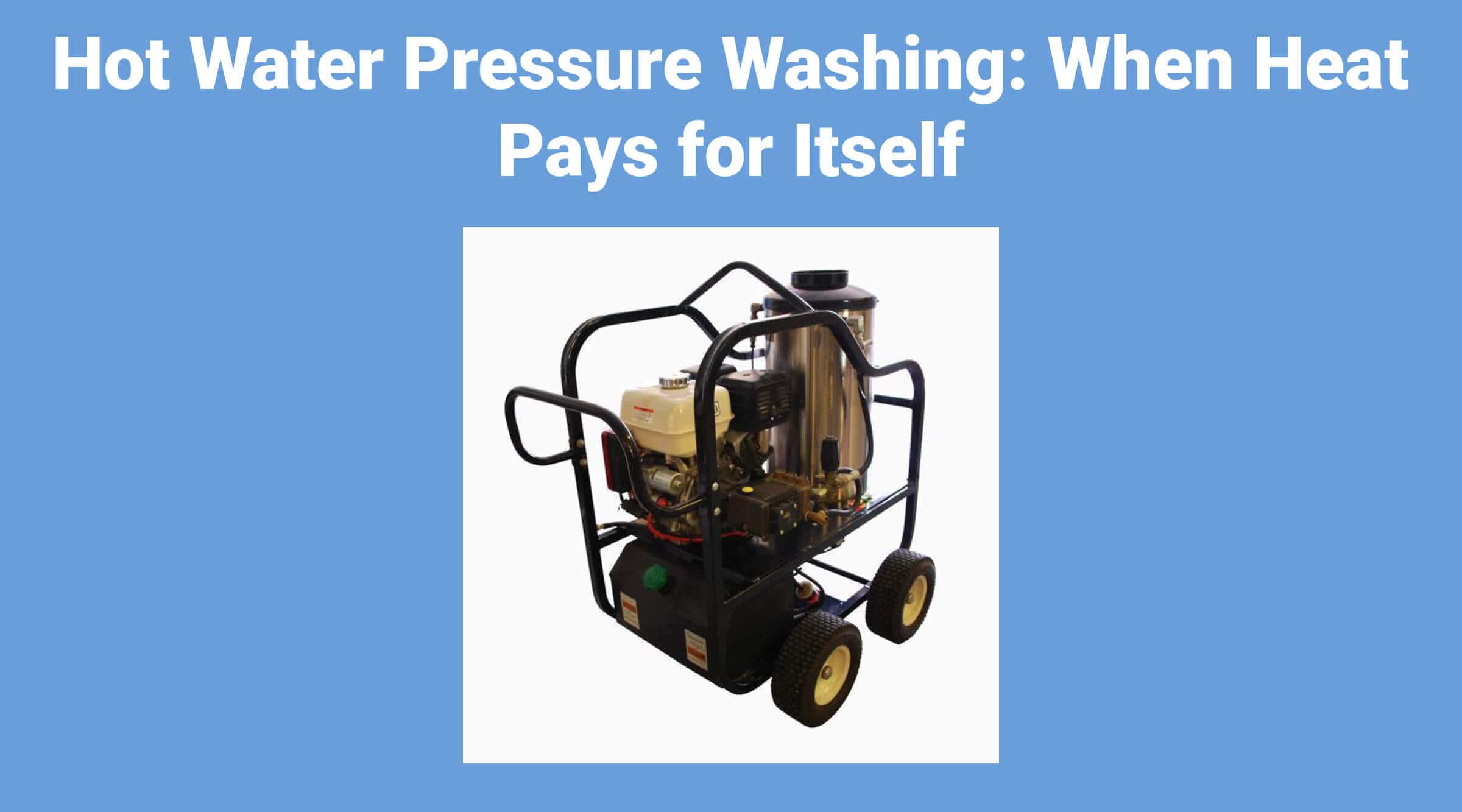
Hot water accelerates emulsification significantly. If you run a hot water pressure washer or a hot box add-on, your effective dwell time drops and chemical consumption per square foot goes down with it.
Surface Compatibility
High-pH alkaline cleaners and strong solvent degreasers can etch or strip topical concrete sealers. Always spot-test. On sealed surfaces, a pH-neutral microbial cleaner or a mild enzymatic formula avoids damage. After using aggressive chemistry, a neutralization rinse stabilizes the substrate for re-sealing or coating.
Regulatory Compliance Is a Cost Center — Manage It
EPA's 2022 Construction General Permit requires containment of all concrete washout water. In many jurisdictions, letting wash water reach a storm drain violates the Clean Water Act and triggers fines that dwarf the cost of a berm kit. Biodegradable, phosphate-free, low-VOC formulations reduce your compliance exposure.
OSHA's updated Hazard Communication Standard requires employers to update workplace labels, written programs, and training for chemical substances by November 20, 2026. Maintaining current Safety Data Sheets and proper labeling is not optional — serious violations carry penalties up to $16,550 per citation. Choose a supplier that ships compliant SDS documentation with every order.
The Extraction Process: Step by Step
Oil removal is a staged extraction, not a spray-and-rinse. Skipping steps causes wicking — the stain migrates back to the surface as the slab dries, and you are back on site unpaid.
- Clear and absorb. Remove loose debris. If there is standing oil, absorb the bulk with a professional-grade absorbent before introducing wet chemistry.
- Apply to dry concrete. Do not pre-wet. Water in the pores blocks chemical penetration. Apply the oil stain remover for concrete evenly with a low-pressure sprayer for complete saturation.
- Dwell — but do not let it dry. 15–30 minutes is typical. If the solution evaporates, emulsified oil redeposits into the pores. Mist to keep it active in direct sun.
- Agitate mechanically. A stiff-bristled brush or walk-behind scrubber breaks surface tension and forces surfactants deeper into the matrix.
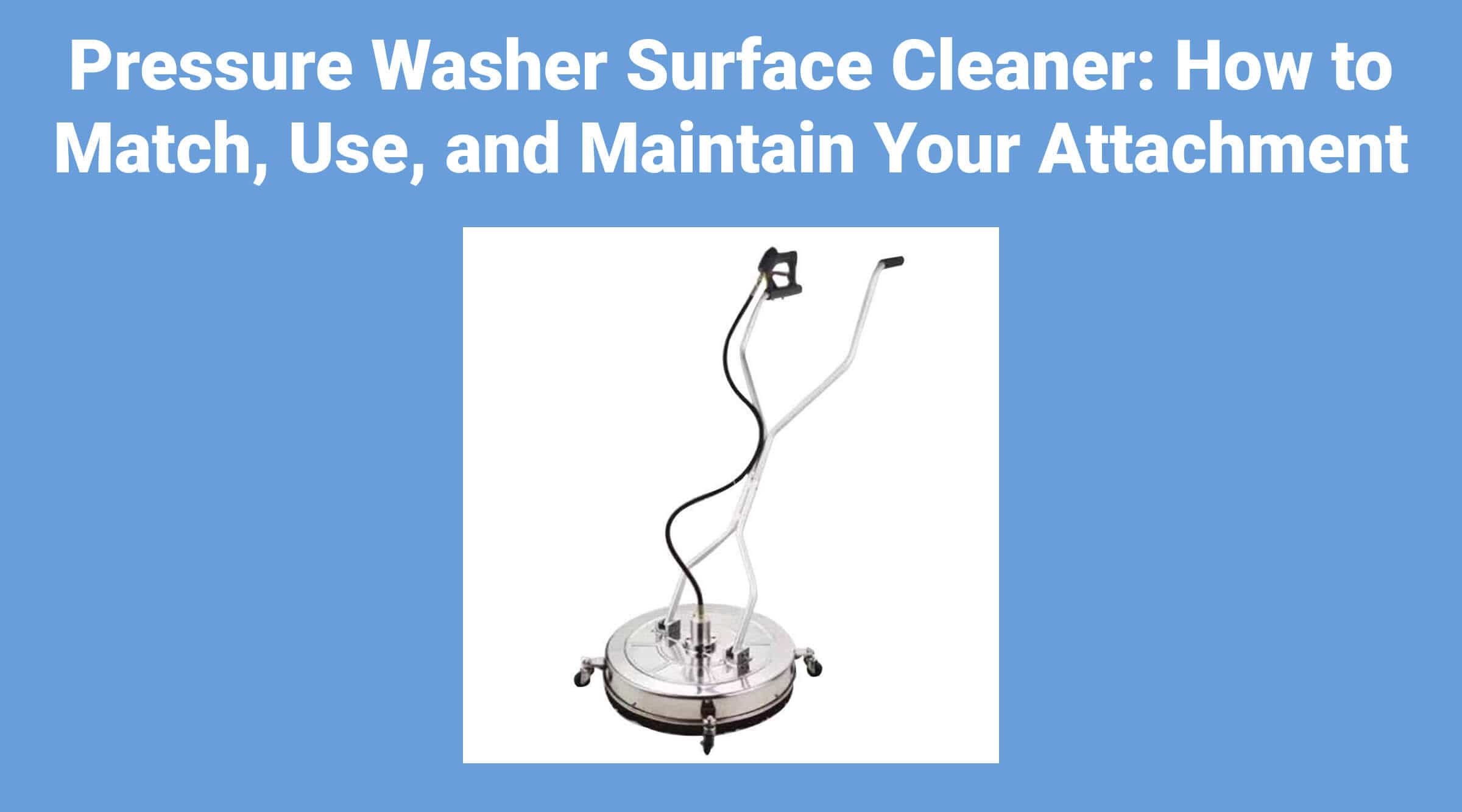
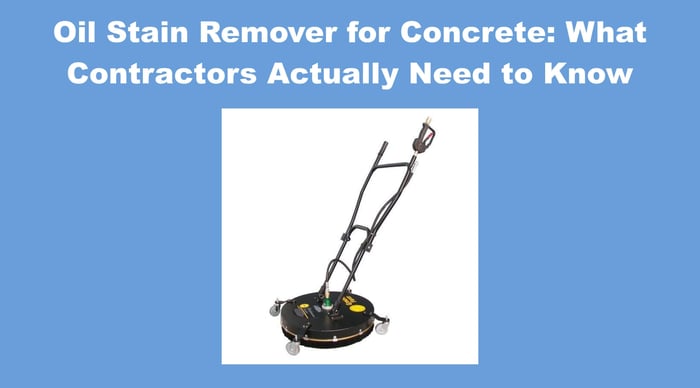
- Extract with a surface cleaner. A surface cleaner attachment on a high-flow pressure washer provides consistent pressure and eliminates the zebra-stripe patterns that standard spray wands leave behind.
- Contain and recover. Sand dikes, portable berms, or drain covers block runoff paths. Vacuum recovery systems pull emulsified wastewater into a holding tank for zero-runoff compliance on high-stakes contracts.
- Check pH and neutralize. Some alkaline cleaners leave residue that interferes with future sealers. A final neutralization step — ProTool Post Rinse works here — ensures the substrate is stable.
Equipment That Makes the Chemistry Work
The best oil stain remover for concrete still underperforms if the delivery and extraction hardware cannot keep up.
- Pressure washers: 4.0 GPM at 4,000 PSI is the practical floor for commercial concrete work. Cold water units handle most degreasing when paired with the right chemistry; hot water machines cut dwell time on heavy industrial jobs.
- Surface cleaners: A ProTool 18" surface cleaner or a Whisper Wash 24" Ground Force delivers uniform extraction without wand lines.
- Chemical injectors: A downstream injector lets you apply degreaser through the pressure washer itself, reducing setup time and ensuring consistent dilution.
- Reclaim gear: For commercial contracts that require zero discharge, a reclaim/recovery vacuum system is the compliance solution.
Products Mentioned
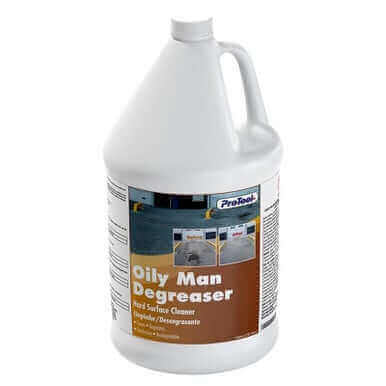 ProTool Oily Man SKU: 83-02M | 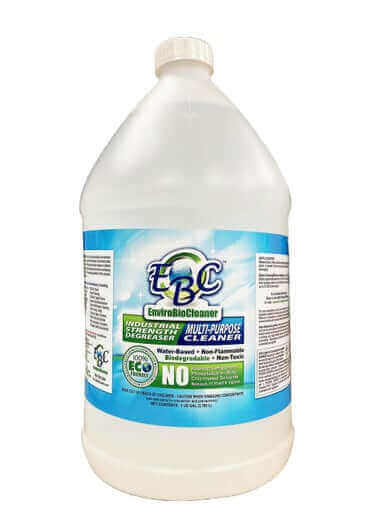 EBC Degreaser, Detergent SKU: 83-81M | 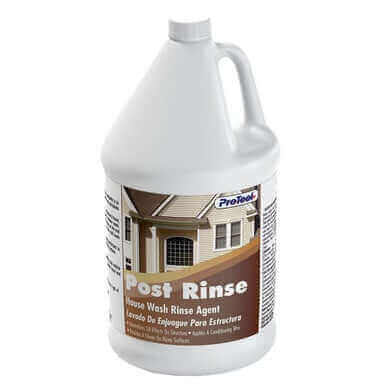 ProTool Post Rinse SKU: 83-03M |
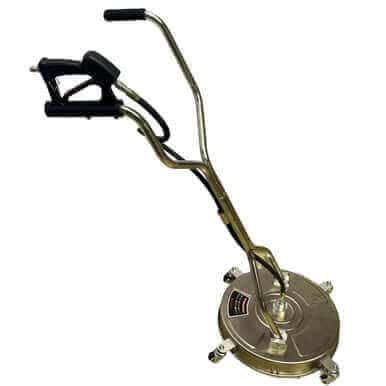 Surface Cleaner 18in Protool 4000psi SKU: 74-3795 | 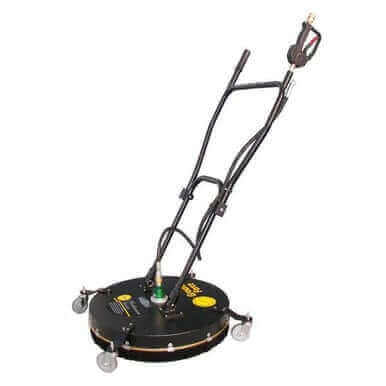 Whisper Wash 24in Ground Force w/wheels SKU: 74-3810 |